What is Intuition Development?
Intuition development refers to the process of enhancing one's innate capacity to understand things immediately, without the need for conscious reasoning. It involves cultivating receptivity to subtle information, often perceived as gut feelings, insights, or premonitions. This practice aims to strengthen the connection between the conscious mind and subconscious or supra-conscious awareness, leading to more accurate perceptions and decisions.
Best Books for Complete Beginners
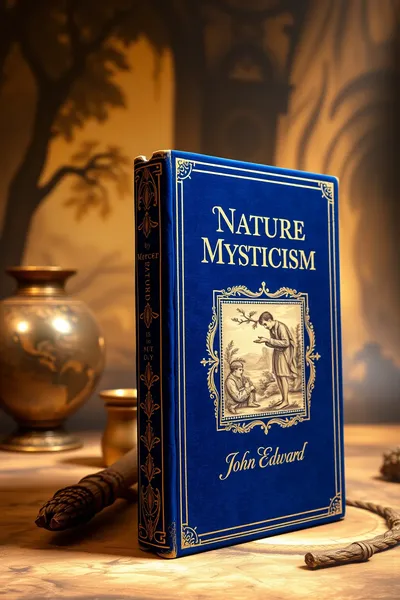
For those new to intuition development, starting with accessible texts is key. Florence Scovel Shinn's 'The game of life and how to play it' offers practical, affirming principles for manifesting desires through focused thought. William Walker Atkinson's 'The Human Aura: Astral Colors and Thought Forms' provides an introduction to energetic fields and their connection to mental states. 'Mysteries Of Mind, Space & Time The Unexplained' offers a broad overview of psychic phenomena, sparking curiosity. 'Nature Mysticism' by John Edward Mercer introduces a contemplative approach to understanding the natural world and its subtle influences.
Intermediate Reading
Building on basic concepts, intermediate texts delve deeper into specific aspects of psychic perception. William Walker Atkinson's 'Clairvoyance and Occult Powers' details various psychic abilities and methods for their cultivation. Camille Flammarion's 'Mysterious Psychic Forces' presents scientific investigations into phenomena beyond conventional explanation. Annie Besant's 'The Basis of Morality' explores ethical frameworks relevant to spiritual and psychic development. 'AE in the Irish Theosophist' by George William Russell offers philosophical reflections on consciousness and its broader implications.
Classical / Advanced Texts
Advanced study often involves engaging with foundational esoteric works. H. P. Blavatsky's 'Isis unveiled, Volume 1' is a monumental work addressing the intersection of science, theology, and occultism. 'Five Years of Theosophy' compiles significant early writings on spiritual science. Proclus' 'Proclus on the Theology of Plato' offers Neoplatonic insights into the nature of divinity and the soul. 'The Apocalypse unsealed' by James Morgan Pryse provides an esoteric interpretation of biblical initiation.
Reading Order — Step by Step
Begin with introductory works like 'The game of life and how to play it' (Shinn) and 'The Human Aura' (Atkinson) in Month 1, focusing on practical application and basic principles. In Month 2, move to 'Clairvoyance and Occult Powers' (Atkinson) and 'Mysterious Psychic Forces' (Flammarion) to understand the scope of psychic phenomena. By Month 3, engage with foundational texts such as 'Isis unveiled, Volume 1' (Blavatsky) and 'Proclus on the Theology of Plato' to grasp deeper philosophical underpinnings. Continue with advanced texts and specific interests thereafter.
Frequently Asked Questions
Which intuition book should I read first?
For a practical and uplifting start, 'The game of life and how to play it' by Florence Scovel Shinn is recommended. It focuses on mental discipline and positive affirmation, foundational for developing intuitive awareness.
Are these books suitable for skeptics?
Some texts, like Camille Flammarion's 'Mysterious Psychic Forces', present empirical investigations that may appeal to skeptics. Others, like Blavatsky's 'Isis unveiled', assume a basis in esoteric principles.
How do I develop intuition from these books?
Apply the principles discussed. Practice techniques for mental focus, cultivate awareness of subtle impressions, and integrate insights gained from reading into daily decision-making.
What is the difference between intuition and psychic ability?
Intuition is a general sense of knowing or understanding. Psychic ability often refers to more specific, demonstrable faculties like clairvoyance or telepathy, which are explored in texts like Atkinson's 'Clairvoyance and Occult Powers'.
Can I develop intuition without studying occultism?
Yes, many approaches exist. While this list includes occult perspectives, texts like Bergson's 'Creative Evolution' or Shinn's 'The game of life' focus on consciousness and mental laws with less emphasis on traditional occult frameworks.
What are 'Thought Forms'?
Thought Forms, as described by authors like William Walker Atkinson, are mental constructs or energetic patterns created by focused thought and emotion. They are believed to influence the environment and individuals.
Is there a specific order to reading these books?
A suggested order is provided in the 'Reading Order — Step by Step' section, moving from beginner to intermediate and then advanced texts to build understanding progressively.