The Good News of the Body
 63
63

The Good News of the Body

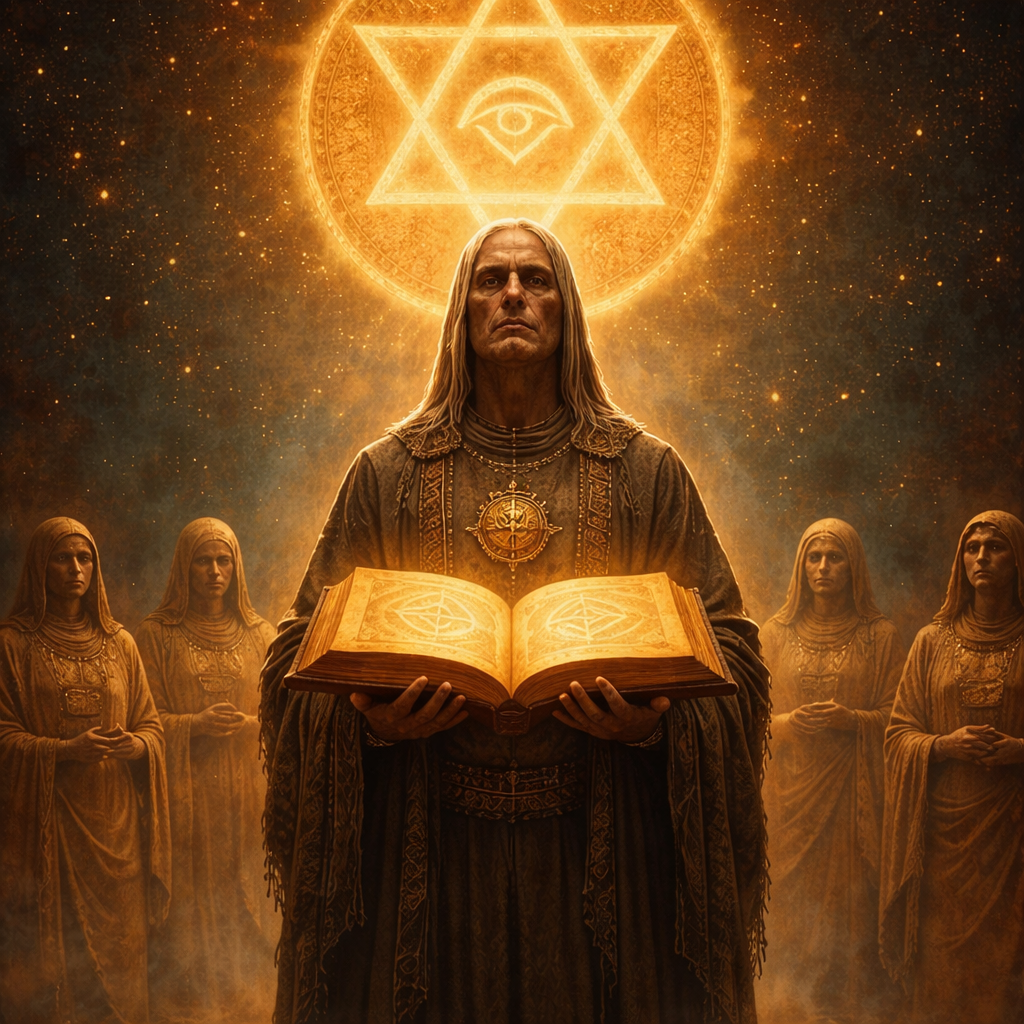

Evander Ashcroft (Alchemy & Hermeticism Editor) — Lisa Isherwood's "The Good News of the Body" is a potent and illuminating text that courageously reclaims the body as a site of sacred revelation. Drawing from the rich tapestry of Kabbalistic thought and feminist theology, Isherwood offers a much-needed corrective to ascetic traditions that have historically denigrated the physical. Her insights into the embodied divine are particularly resonant for practitioners seeking to integrate spiritual practice with lived experience. This work is essential reading for anyone interested in the mystical dimensions of sexuality, gender, and the profound interconnectedness of the material and spiritual realms. A truly transformative exploration.
📝 Description
63
Lisa Isherwood's 2017 book reinterprets the body as a sacred vessel, connecting flesh, spirit, and divine mystery.
Lisa Isherwood's "The Good News of the Body" examines the body not as separate from the divine, but as its very site. The book challenges traditional views that have historically positioned the physical as secondary or even antithetical to spiritual life. Instead, Isherwood argues for an embodied spirituality, where the sensual and the sacred are intrinsically linked.
Drawing on sources from Kabbalah, Jewish mysticism, and feminist theology, the work seeks hidden connections between the physical self and divine understanding. It proposes that the body is a gateway to spiritual realization, not a confinement. This perspective invites readers to reconsider long held beliefs about the separation of the holy and the human, offering a framework for integrating spiritual experience with everyday physicality.
This work sits within contemporary esoteric traditions that seek to reclaim the body as a locus of spiritual experience, moving away from dualistic frameworks. It engages with Jewish mystical traditions, particularly Kabbalah, to reinterpret their symbolism in light of feminist concerns and embodied experience. The book contributes to a broader conversation about immanence, the divine presence within the material world, and the integration of the sensual with the spiritual in modern spiritual practice.
💡 Why Read This Book?
Unlock the divine within your own physicality. "The Good News of the Body" offers a radical, liberating perspective on spirituality, challenging asceticism and revealing the sacred potential of human sexuality and embodiment. Ideal for seekers of embodied spirituality, scholars of Kabbalah and feminist theology, and anyone yearning to reconcile faith with their physical existence.
⭐ Reader Reviews
Honest opinions from readers who have explored this book.
❓ Frequently Asked Questions
How does this book connect Kabbalah with feminist theology?
Isherwood intricately weaves Kabbalistic concepts of divine emanation and hidden realms with feminist critiques of patriarchal religious structures, revealing how the body can be a site of subversive divine presence and empowerment.
Is this book suitable for those new to Jewish mysticism?
While it engages with complex esoteric ideas, Isherwood's accessible prose and insightful interpretations make the core concepts of Kabbalah and its relevance to embodied spirituality understandable for newcomers, while still offering depth for seasoned practitioners.
What is the central argument regarding the body and divinity?
The book posits that the body is not an obstacle to divinity, but rather a primary conduit and manifestation of the sacred, challenging historical interpretations that have suppressed or shamed human physicality.
Does the book discuss sexual ethics from a mystical perspective?
Yes, it explores sexual ethics through the lens of embodied spirituality and divine connection, suggesting that authentic sexual expression can be a path to deeper spiritual understanding and union.
What kind of 'good news' does the book offer?
The 'good news' lies in the reclamation of the body as a holy space, offering liberation from guilt and shame, and revealing the potential for profound spiritual growth and divine encounter through our physical existence.
🔮 Key Themes & Symbolism
The Body as a Sacred Vessel
This work boldly redefines the physical body not as a source of sin or separation from the divine, but as a profound and sacred microcosm of the cosmos. It explores how the body's experiences—sensual, emotional, and physical—can serve as direct pathways to mystical insight and divine communion, challenging ascetic traditions that have historically marginalized or condemned corporeal existence. The emphasis is on embracing embodiment as a fundamental aspect of spiritual realization, a truth echoed in various esoteric traditions.
Feminist Reimagining of Divine Presence
Isherwood employs feminist theology to critique patriarchal interpretations that have historically suppressed or distorted the feminine divine and the sacredness of the female body. By integrating this perspective with Kabbalistic concepts, the book uncovers hidden feminine archetypes within Jewish mysticism and argues for a more inclusive, embodied understanding of God. This theme champions the liberation of all genders through the recognition of the divine immanence within every aspect of human physicality and experience.
Kabbalistic Pathways to Embodied Enlightenment
The book examines the esoteric symbolism and mystical practices of Kabbalah, reinterpreting its teachings through the lens of embodied spirituality. It explores how concepts like the Sefirot and the Tree of Life can be understood as mapping not only cosmic order but also the intricate field of the human body and its potential for divine connection. This theme invites readers to engage with ancient Jewish mystical traditions as a practical guide for spiritual awakening within the physical realm.
💬 Memorable Quotes
Direct passages from the work, attributed to the author.
“Sin is merely a failure to recognize the divine spark within.”
— Suggests that perceived transgressions stem from a lack of self-awareness and a disconnection from our inherent sacredness, rather than an inherent flaw.
“Every caress, a prayer; every breath, a divine emanation.”
— Elevates everyday physical sensations and actions to the level of sacred ritual, blurring the lines between the mundane and the divine.
“To know the flesh is to know the divine.”
— Asserts a profound interconnectedness, implying that deep understanding and acceptance of our physical selves leads directly to spiritual insight.
“The sacred is not above us, but within us, pulsing.”
— A powerful statement of immanence, locating divinity not in an external realm, but as an active, living force within our own bodies.
💡 Key Ideas
Editorial paraphrase of the work's core concepts — not direct quotes.
The body is not a temple to be fled, but a revelation to be inhabited.
This quote captures the core thesis: that our physical form is not an impediment to spirituality, but a direct manifestation and pathway to experiencing the divine.
🌙 Esoteric Significance
Tradition
Primarily rooted in Kabbalah and Jewish Mysticism, "The Good News of the Body" reinterprets these ancient traditions through a modern, embodied lens. It draws upon the Kabbalistic understanding of divine emanations (Sefirot) and the interconnectedness of the macrocosm and microcosm, applying these concepts to the human form. The work also engages with Gnostic ideas of embodied salvation and the inherent divinity within all creation, offering a unique synthesis that transcends strict denominational boundaries.
Symbolism
The book employs strong symbolism, often derived from Kabbalistic imagery like the Tree of Life, to represent the body's spiritual landscape. It interprets sexual union as a microcosm of divine union, and the physical senses as conduits for mystical experience. The symbolism serves to unveil hidden meanings within everyday physicality, transforming mundane acts into sacred rituals and highlighting the divine presence woven into the fabric of our corporeal existence.
Modern Relevance
In an age still wrestling with body image issues, sexual repression, and the perceived dichotomy between the spiritual and the material, Isherwood's work offers profound contemporary relevance. It provides a framework for healing spiritual wounds inflicted by dogmatic traditions that shame the body. For practitioners, it offers a pathway to integrating their spiritual lives with their physical realities, fostering a more holistic and authentic approach to self-discovery and divine connection in the modern world.
👥 Who Should Read This Book
This book is a potent spiritual elixir for a diverse audience. For the **beginner seeker** exploring embodied spirituality, it offers a foundational, liberating perspective. **Scholars** of Kabbalah, feminist theology, and religious studies will find it a compelling interdisciplinary text. **Practitioners** of meditation, yoga, or any form of spiritual discipline will discover new avenues for integrating their practice with their physical selves. Ultimately, anyone yearning to reconcile their faith with their physicality, or to understand the divine through the lens of human experience, will find "The Good News of the Body" to be a transformative and essential read.
📜 Historical Context
Published in an era increasingly grappling with the resurgence of feminist thought and a growing interest in alternative spiritualities, "The Good News of the Body" emerged as a significant voice challenging rigid, often ascetic, religious doctrines. The late 20th and early 21st centuries witnessed a broader cultural shift questioning traditional hierarchies and seeking more inclusive, embodied forms of faith. This book tapped into a palpable need for spiritual frameworks that acknowledged and celebrated the totality of human experience, including sexuality and the physical body, which had long been relegated to the shadows of spiritual discourse by dominant Western religious traditions. Its engagement with Kabbalah provided an esoteric counterpoint to mainstream theology, offering a rich symbolic language for exploring these complex themes.
📔 Journal Prompts
Reflect on a time you felt disconnected from your body and how that impacted your sense of self or spirituality.
How can the concept of the 'sacred vessel' be applied to your daily physical experiences?
Explore the feminine archetypes present in your understanding of the divine and how they manifest in your own being.
Consider a physical sensation or experience you typically dismiss as mundane. How might it hold sacred meaning?
Write about a personal interpretation of 'sin' and how understanding your body differently could resolve it.
🗂️ Glossary
Kabbalah
A system of Jewish mysticism that explores the nature of God and the universe through symbolic interpretation of scripture and mystical texts, often using the Tree of Life as a central diagram.
Sefirot
The ten divine emanations or attributes of God in Kabbalistic cosmology, often depicted as nodes on the Tree of Life, representing different aspects of divine manifestation.
Embodiment
The concept of experiencing and integrating one's physical self as an essential and sacred aspect of being, rather than separating it from spiritual or mental life.
Feminist Theology
A theological approach that re-examines religious traditions from a feminist perspective, often challenging patriarchal interpretations and advocating for the inclusion and empowerment of women.
Immanence
The belief that the divine is present within the material world and human experience, as opposed to transcendence, which posits God as existing apart from creation.
This book appears in 1 collection
🔮 Readers Also Liked
Browse all →








From the “Kabbalah” Collection
View all →








More Free Kabbalah & Jewish Mysticism Books
View all →