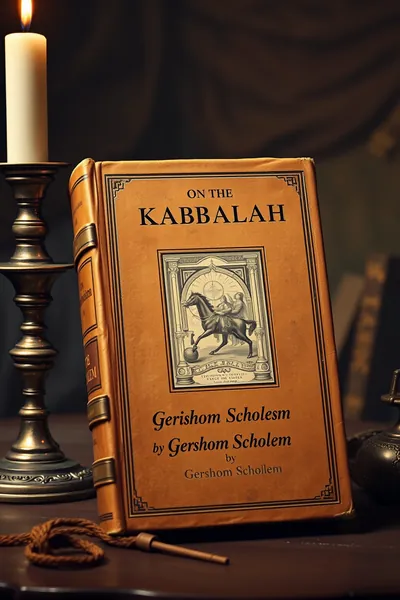
Zur Kabbala und ihrer Symbolik

 69
69

Zur Kabbala und ihrer Symbolik

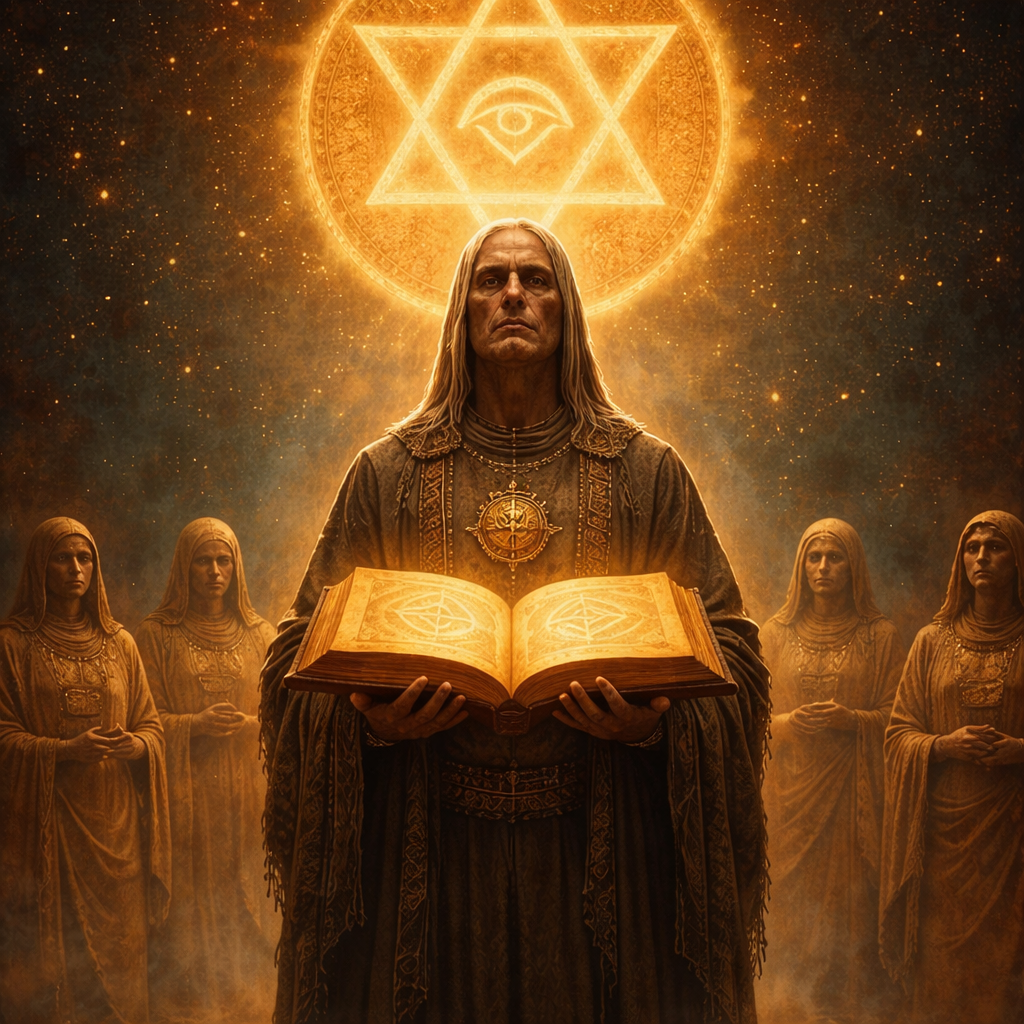

Lorelei Sage (Contemplative Literature Editor) — Gershom Scholem's "Zur Kabbala und ihrer Symbolik" is an indispensable cornerstone for anyone seeking to comprehend the esoteric heart of Jewish mysticism. Scholem's profound erudition and evocative prose illuminate the complex symbolism and philosophical architecture of Kabbalistic thought with unparalleled clarity. He masterfully navigates the historical currents, revealing the enduring power of these ancient teachings. This work is not merely academic; it is a profound invitation to engage with the mystical dimensions of existence. Essential for scholars, seekers of hidden wisdom, and practitioners of contemplative traditions, it offers a richly rewarding intellectual and spiritual journey.
📝 Description
69
Gershom Scholem first published 'Zur Kabbala und ihrer Symbolik' in 1960.
Gershom Scholem's "Zur Kabbala und ihrer Symbolik" examines the symbolic language and philosophical foundations of Kabbalah. The work deciphers the esoteric meanings within ancient Kabbalistic texts. It traces the historical development of this mystical tradition, including concepts like the Golem.
Scholem's scholarship provides a detailed look at Jewish mysticism. He illuminates how Kabbalistic ideas connect the mundane and the sacred. The book is suited for readers interested in divine union, the nature of reality, and symbolic interpretation in spiritual practice. It offers a deep immersion into a complex symbolic universe.
This book situates itself within the study of Kabbalah, a major current of Jewish esoteric thought that emerged in medieval Europe. Kabbalah’s symbolic systems, mystical theology, and cosmologies have long been subjects of specialized interpretation. Scholem’s work is a foundational academic treatment of these traditions, aiming to understand their internal logic and historical trajectory rather than acting as a guide for mystical practice itself.
💡 Why Read This Book?
Uncover the hidden language of the soul and the divine through Gershom Scholem's masterful exposition of Kabbalistic symbolism. This book is for the ardent seeker who desires a profound understanding of Jewish mysticism's esoteric principles, historical development, and philosophical underpinnings. Scholars will find unparalleled depth, while practitioners will discover a rich source of symbolic insight for their contemplative paths. It offers a rare glimpse into a tradition that continues to inspire spiritual exploration.
⭐ Reader Reviews
Honest opinions from readers who have explored this book.
❓ Frequently Asked Questions
What is the primary focus of "Zur Kabbala und ihrer Symbolik"?
The book's primary focus is on the intricate symbolism and philosophical underpinnings of Kabbalistic mysticism, tracing its historical development and its profound impact on Jewish thought and spiritual practice.
Is this book suitable for beginners interested in Kabbalah?
While dense with scholarship, Scholem's work is foundational. Beginners may find it challenging but immensely rewarding as it provides a comprehensive introduction to the core concepts and historical context.
What role does the Golem play in the book?
The Golem serves as a significant symbolic figure within the book, representing humanity's quest to understand and replicate divine creation, and embodying complex themes of artificial life and spiritual aspiration within Kabbalistic lore.
What makes Gershom Scholem a leading authority on Kabbalah?
Scholem is widely regarded as the father of modern Kabbalistic studies. His rigorous academic approach, vast knowledge, and ability to synthesize complex ideas have made his works definitive for understanding this esoteric tradition.
Can this book be read alongside other mystical texts?
Absolutely. Its exploration of symbolism and spiritual philosophy makes it a valuable companion for studying other esoteric traditions, offering comparative insights into universal mystical themes.
🔮 Key Themes & Symbolism
The Language of Divine Revelation
This theme explores how Kabbalah interprets biblical texts and Jewish tradition through a unique symbolic lens. It explores the idea that the divine is immanent within creation, communicated through a complex system of correspondences and allegories. Scholem illuminates how the Hebrew alphabet, numerical values (gematria), and scriptural narratives become conduits for esoteric knowledge, revealing hidden layers of meaning essential for spiritual ascent and understanding the cosmic order.
The Emanation of Divinity and Creation
Central to Kabbalistic thought is the concept of divine emanation, the process by which the infinite, unknowable God (Ein Sof) manifests into the created universe. Scholem details the Sefirot, the ten divine attributes or vessels that form the structure of this cosmic unfolding. This theme explores the intricate relationships between these Sefirot, their symbolic representations, and how their balance or imbalance affects the spiritual and material realms, offering a profound cosmology.
The Quest for Mystical Union and Transformation
This theme focuses on the ultimate goal of Kabbalistic practice: achieving a state of direct communion or union with the divine. Scholem examines the various paths and disciplines undertaken by mystics, including meditation, contemplative prayer, and ethical living, as means to purify the soul and ascend through the levels of reality. The transformative power of this quest, both on an individual and cosmic scale, is a driving force throughout the book.
💬 Memorable Quotes
Direct passages from the work, attributed to the author.
“Symbolism is the language of the soul.”
— This highlights the essential role of symbolic interpretation in Kabbalah, suggesting that true understanding of spiritual truths transcends literal meaning and is accessed through symbolic resonance.
“The divine is not only transcendent but also immanent.”
— This captures a core Kabbalistic principle: God is both beyond human comprehension and intimately present within all aspects of creation, accessible through mystical experience.
“The Golem represents an attempt to create life.”
— This points to the symbolic significance of the Golem legend, representing humanity's desire to harness creative forces and explore the boundaries of existence, often with profound spiritual implications.
“Every letter of the Torah has a secret.”
— This underscores the meticulous attention Kabbalists pay to the smallest details of sacred texts, believing that profound mystical insights are encoded within every element.
💡 Key Ideas
Editorial paraphrase of the work's core concepts — not direct quotes.
The history of Kabbalah is the history of a spiritual movement.
This quote emphasizes that Kabbalah is not merely a static body of knowledge but a dynamic, living tradition that has evolved through the experiences and aspirations of its adherents.
🌙 Esoteric Significance
Tradition
This work is deeply rooted in the esoteric tradition of Kabbalah, a mystical interpretive tradition within Judaism that emerged in medieval Europe. It explores the hidden meanings of Torah, the nature of God, the structure of the cosmos, and the path to spiritual perfection through symbolic language and contemplative practices. The book illuminates the esoteric quest for divine knowledge and union.
Symbolism
Scholem meticulously dissects the rich symbolic language of Kabbalah, including the ten Sefirot (divine emanations), the mystical significance of Hebrew letters and names, and allegorical interpretations of biblical narratives. These symbols are not mere decorative elements but are understood as conduits for divine energy and keys to unlocking profound cosmological and theological truths, essential for the mystic's journey.
Modern Relevance
In an era often characterized by spiritual seeking and a desire for deeper meaning, Scholem's exploration of Kabbalah offers clear insights into the human condition, the nature of consciousness, and the quest for transcendence. Its emphasis on interconnectedness, symbolic understanding, and the pursuit of inner transformation continues to resonate with contemporary seekers across various philosophical and spiritual backgrounds.
👥 Who Should Read This Book
This important work is essential for scholars of religious studies, Jewish history, and comparative mysticism, providing a foundational understanding of Kabbalah. It is also highly recommended for seekers of esoteric knowledge, spiritual practitioners, and anyone drawn to the profound philosophical and symbolic dimensions of Jewish mysticism. While its depth requires dedicated engagement, beginners can approach it as an authoritative introduction to a complex and captivating tradition, uncovering pathways to inner wisdom.
📜 Historical Context
Written during a period of intense scholarly engagement with Jewish mysticism in the mid-20th century, Gershom Scholem's "Zur Kabbala und ihrer Symbolik" emerged from a world grappling with the aftermath of immense historical upheaval and a renewed interest in profound spiritual traditions. The book stands as a monumental effort to systematize and interpret the complex, often heterodox, history of Kabbalah, moving it from the field of esoteric folklore into a recognized field of academic study. Scholem's work was groundbreaking in its rigorous historical methodology, challenging previous interpretations and establishing Kabbalah as a central, albeit often hidden, force within Jewish intellectual and spiritual history. Its influence continues to resonate, shaping how scholars and seekers alike understand the mystical dimensions of Judaism.
📔 Journal Prompts
Reflect on a personal experience where a symbol held profound meaning for you. How did this symbol connect you to a deeper understanding?
Consider the concept of divine emanation. How might the idea of an infinite God manifesting in finite forms influence your perception of the world?
Explore the Golem myth. What does humanity's desire to create life symbolically represent in your own life or in society?
How can understanding esoteric symbolism enhance one's spiritual practice or personal growth?
In what ways does the pursuit of hidden knowledge connect to the search for meaning in your own life?
🗂️ Glossary
Kabbalah
A system of Jewish mysticism that seeks to understand the nature of God and the universe through esoteric interpretation of religious texts and symbolic practices.
Sefirot
The ten divine emanations or attributes through which God manifests and creates the universe, forming the central structure of Kabbalistic cosmology.
Ein Sof
The 'Infinite' or 'Without End,' representing the unknowable, transcendent aspect of God that precedes all creation and manifestation.
Golem
An anthropomorphic animated being created from inanimate matter, often through mystical or magical means, prominent in Jewish folklore and Kabbalistic lore.
Gematria
A method of mystical interpretation in Kabbalah that assigns numerical values to Hebrew letters, exploring hidden meanings and connections between words and concepts.
This book appears in 1 collection
🔮 Readers Also Liked
Browse all →









More by Gershom Scholem
All books →



From the “Kabbalah” Collection
View all →






More Free Kabbalah & Jewish Mysticism Books
View all →