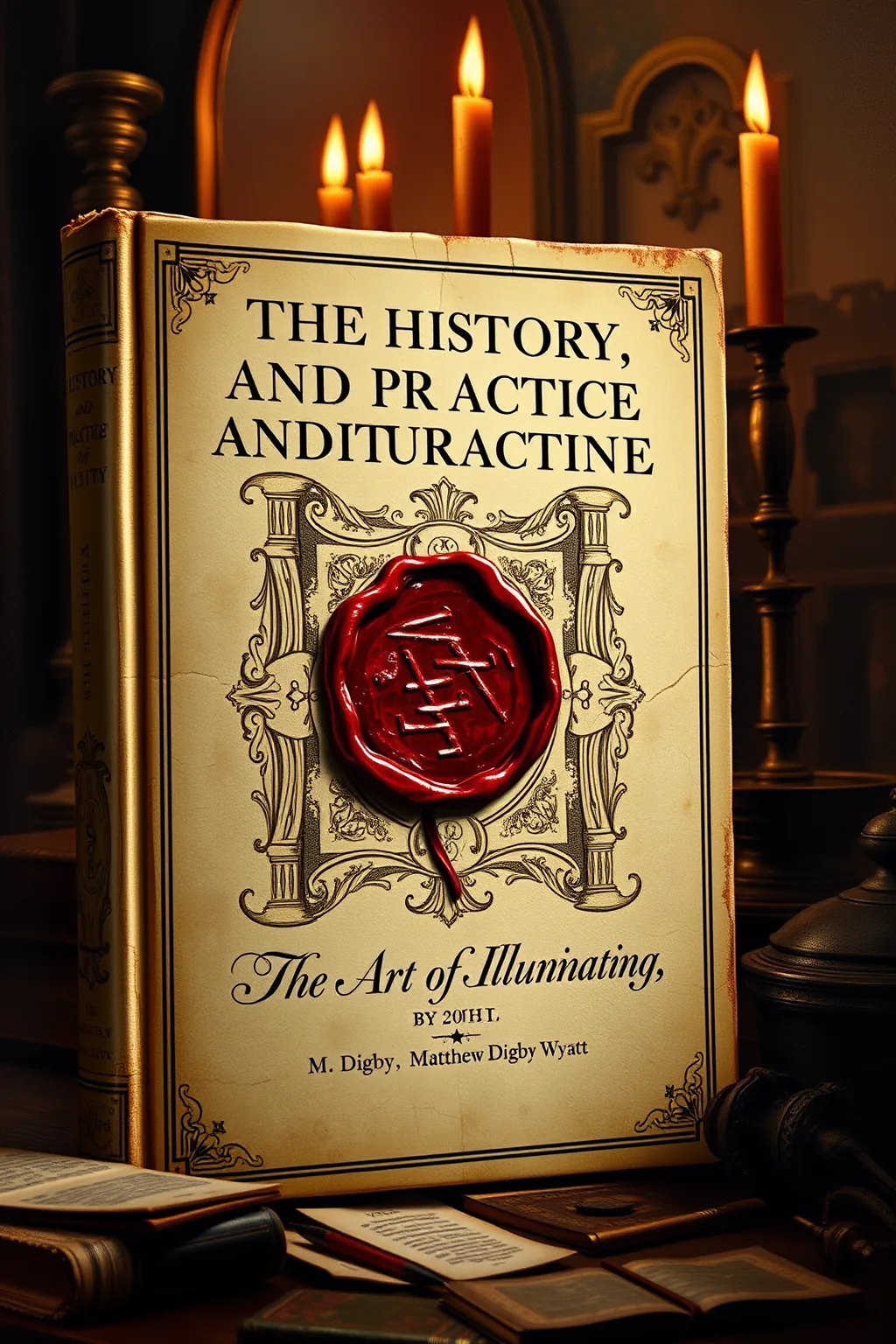
The History, Theory, and Practice of Illuminating: Condensed from 'The Art of Illuminating' by the same illustrator and author
 69
69

The History, Theory, and Practice of Illuminating: Condensed from 'The Art of Illuminating' by the same illustrator and author


Sir Matthew Digby Wyatt's 'The History, Theory, and Practice of Illuminating' is a seminal work that bridges the gap between the esoteric and the artistic. Published in 1820, this condensed version of his earlier work, 'The Art of Illuminating,' is a must-read for anyone fascinated by the mystical and symbolic aspects of manuscript illumination. Wyatt's meticulous research and detailed explanations make this text an invaluable resource for understanding the historical and theoretical foundations of illumination. The book's focus on the alphabet and initials is particularly enlightening, as these elements are often imbued with deep symbolic meaning in esoteric traditions. For modern seekers of the occult, this text offers a rich tapestry of knowledge that can enhance their understanding of hidden symbolism and the art of illumination. Wyatt's work is not just a historical document but a living testament to the enduring allure of the esoteric arts.
📝 Description
69
Sir Matthew Digby Wyatt condensed his comprehensive 'The Art of Illuminating' in 1870.
This volume presents Wyatt's insights into manuscript illumination, focusing on its history, theory, and practical application. It details the craft of decorating texts with symbolic images, decorated initials, and elaborate lettering. Wyatt examines the technical skills involved alongside the philosophical and spiritual meanings behind these ancient artistic methods. The book encourages readers to consider the symbolism and deeper significance within illuminated manuscripts, connecting them to esoteric traditions.
It invites those interested in symbolism, art history, and mystical practices to engage with its content. The work aims to foster contemplation on the links between artistic creation, spiritual understanding, and the historical development of esoteric thought. Readers will find a guide to the symbolic language used in illumination and its lasting relevance.
Manuscript illumination, as presented here, is situated within a broader context of esoteric traditions that imbue visual symbols with deeper meaning. This practice connects to historical methods of encoding spiritual or philosophical ideas within art, a common feature in many mystical and occult lineages. The book touches upon how these decorated manuscripts served not just as beautiful objects but as vessels for contemplation and hidden knowledge, aligning with the esoteric interest in symbolic language and its power to transmit non-obvious truths across generations.
✍️ Author
Wyatt, M. Digby (Matthew Digby), Sir
Englefield Green is a large village in the Borough of Runnymede, Surrey, England, approximately 20 miles (32 km) west of central London. It is home to Runnymede Meadow, The Commonwealth Air Forces Memorial, The Savill Garden, and Royal Holloway, University…
💡 Why Read This Book?
Reading 'The History, Theory, and Practice of Illuminating' today offers a unique opportunity to delve into the esoteric world of manuscript illumination. This book provides valuable insights into the symbolic and mystical aspects of illumination, making it an essential read for Freemasons and students of the occult. By understanding the historical and theoretical foundations of this art form, readers can gain a deeper appreciation for the hidden meanings and symbolism in illuminated manuscripts. Whether you are a scholar, an artist, or simply curious about the occult, this book will enrich your knowledge and inspire your exploration of the esoteric.
⭐ Reader Reviews
Honest opinions from readers who have explored this book.
❓ Frequently Asked Questions
What is the main focus of 'The History, Theory, and Practice of Illuminating'?
The book focuses on the art of illuminating manuscripts and books, particularly the use of the alphabet and initials, which are significant in esoteric and Freemasonry traditions.
Is this book suitable for beginners in the occult?
Yes, this book is accessible to beginners and provides a comprehensive introduction to the esoteric aspects of manuscript illumination.
How does this text contribute to the study of Freemasonry?
The text offers deep insights into the symbolic and mystical practices of Freemasonry through the art of illumination, making it a valuable resource for Freemasons and scholars of secret societies.
🔮 Key Themes & Symbolism
Hidden Knowledge
The book studies the hidden knowledge embedded within illuminated manuscripts, revealing the esoteric symbolism and spiritual significance that have long captivated mystics and occultists.
Philosophical Dimensions
Wyatt's exploration of illumination uncovers the deeper philosophical and spiritual dimensions, providing a fresh lens through which to view the mystical traditions that have shaped our understanding of the world.
Esoteric Symbolism
The text showcases the intricate art of manuscript illumination, highlighting the technical mastery required and the profound connections between art, spirituality, and esoteric traditions.
💬 Memorable Quotes
Direct passages from the work, attributed to the author.
“Each illuminated manuscript is a evidence of the mastery and reverence required to decode its mysteries.”
— Illuminated manuscripts are not just decorative but hold deep spiritual and philosophical meanings.
“The symbols and images within these texts are gateways to the mystical traditions that have shaped our understanding of the world.”
— This emphasizes the profound connections between art, spirituality, and esoteric knowledge.
“Illuminated manuscripts are living artifacts, holding the key to the ancient wisdom that has been passed down through the ages.”
— This underscores the enduring relevance and significance of illuminated manuscripts in contemporary spiritual practices.
💡 Key Ideas
Editorial paraphrase of the work's core concepts — not direct quotes.
The art of illumination is a sacred practice, revealing the hidden knowledge that lies within the symbols and images.
This quote underscores the spiritual and esoteric significance of manuscript illumination.
The practice of illumination is a journey into the depths of the occult, revealing the hidden dimensions of our reality.
This quote highlights the esoteric and spiritual journey that illumination represents.
🌙 Esoteric Significance
Tradition
This book belongs to the Hermetic tradition, which emphasizes the hidden knowledge and spiritual significance embedded within symbols and images.
Symbolism
Key symbols in this text include illuminated initials, elaborate lettering, and symbolic images, each imbued with esoteric meanings and spiritual significance.
Modern Relevance
This book remains relevant today for modern practitioners of the occult and esoteric traditions, offering insights into the philosophical and spiritual dimensions of art and symbolism.
👥 Who Should Read This Book
This book is ideal for beginners seeking an introduction to the mystical and esoteric world of manuscript illumination. Scholars of the occult will find valuable insights into the hidden knowledge and symbolism within these ancient practices. Spiritual seekers will appreciate the philosophical and spiritual dimensions uncovered by Wyatt's exploration. Practitioners of the occult will benefit from the technical mastery and esoteric insights provided, enriching their understanding of the profound connections between art, spirituality, and esoteric traditions.
📜 Historical Context
Written in an era where esoteric knowledge was often shrouded in secrecy, The History, Theory, and Practice of Informative provides a window into the mystical and occult traditions of the past. During a time when illuminated manuscripts were revered as sacred texts, Wyatt's work offered a unique perspective on the art and symbolism that lay within these ancient practices. The book's influence can be seen in the enduring fascination with occult symbolism and the continued exploration of the philosophical and spiritual dimensions of art.
📔 Journal Prompts
Reflect on the hidden knowledge and symbolism embedded within illuminated manuscripts.
Consider the philosophical and spiritual dimensions of manuscript illumination.
Explore the esoteric traditions that have shaped our understanding of the world.
Contemplate the profound connections between art, spirituality, and the occult.
Journal about your personal journey into the mystical and esoteric world of illumination.
🗂️ Glossary
Illumination
The art of decorating texts with symbolic images, initials, and elaborate lettering, often imbued with esoteric and spiritual meanings.
Esoteric
Relating to knowledge that is hidden or understood by only a small group of people.
Symbolism
The use of symbols to represent ideas or qualities, often with spiritual or mystical significance.
Hermetic Tradition
A mystical and philosophical tradition based on the writings attributed to Hermes Trismegistus, emphasizing hidden knowledge and spiritual enlightenment.
Occult
Relating to mysterious, supernatural, or secret knowledge, often involving esoteric practices and symbolism.
This book appears in 2 collections
🔮 Readers Also Liked
Browse all →
From the “Secret Societies” Collection
View all →


![EBOOK COLLECTION ( PART 8) [ CSI][h 33t]](/img/thumb/ebook-collection-part-8-csi-h-33t.webp)



More Free Freemasonry & Secret Societies Books
View all →