Liber XV
 74
74

Liber XV


Silas Hawthorne (Hermetic Studies Editor) — 'Liber XV' offers an indispensable blueprint for the construction of a potent magical locus. Its precise, almost devotional, attention to the altar's form and vestments reveals a deep understanding of sympathetic magic and the power of consecrated space. The directional symbolism, linking the East to Boleskine and Loch Ness, adds layers of geographical and personal resonance. This text is crucial for any practitioner, particularly within the Masonic or Rosicrucian traditions, seeking to elevate their ritual work beyond mere performance into genuine energetic engagement. Its strength lies in its clarity and the inherent power of its detailed instructions, making it a cornerstone for serious occult study.
📝 Description
74
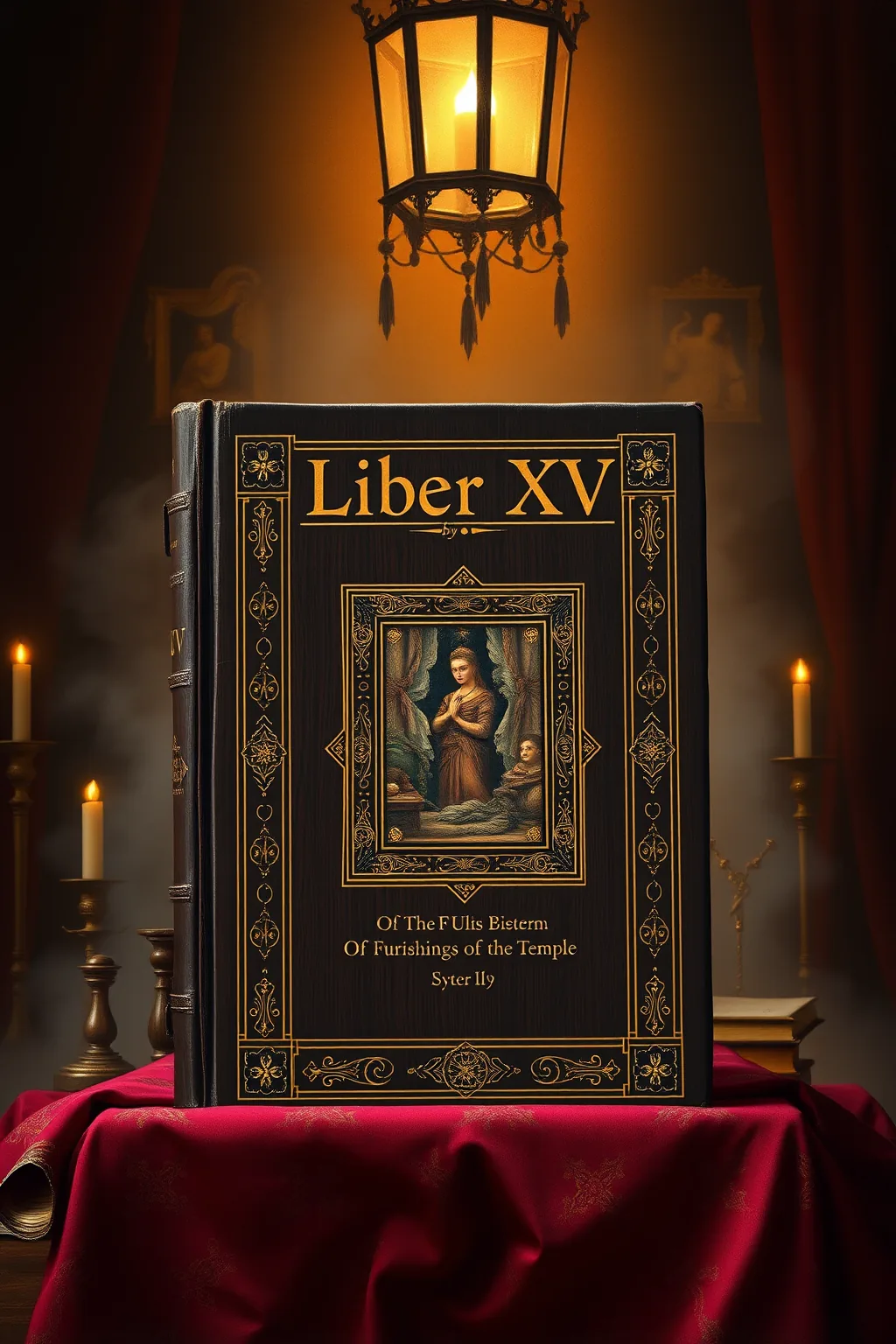
Published in 1919, Liber XV details the symbolic furnishings of a ceremonial temple.
Liber XV, authored by I: OF THE FURNISHINGS OF THE TEMPLE, examines the sacred architecture of ritual spaces. The book details the precise dimensions, symbolic adornments, and deliberate placement of the altar. It describes a crimson altar-cloth embroidered with golden fleur-de-lys or a sunblaze, intended to receive celestial emanations.
The text explains the significance of each element, showing how a physical structure becomes a channel for higher consciousness and spiritual connection. This work is more than a guide to temple construction; it is a philosophical examination of creating sacred reality. It addresses the serious student of ritual, Freemasons, and solitary practitioners aiming to infuse their personal spaces with potent symbolism.
The book guides the reader into consecrated design, where material form communicates divine principles. It reveals secrets of alignment and invocation for those who can perceive its subtle energies.
This text is situated within the Western esoteric tradition, particularly concerning Masonic symbolism and ritual. It focuses on the practical application of esoteric principles in the construction and furnishing of a temple, treating the physical space as a microcosm reflecting celestial order. The emphasis on specific symbolic elements and their placement aligns with traditions that view material objects as conduits for spiritual forces and divine communication. It speaks to a desire to manifest spiritual realities through carefully arranged physical forms.
💡 Why Read This Book?
Uncover the hidden language of sacred space and elevate your ritual practice. 'Liber XV' provides a precise, symbolic guide to creating an altar that acts as a focal point for spiritual energy and arcane communion. Essential for Masons, occultists, and seekers of deeper ritual understanding.
⭐ Reader Reviews
Honest opinions from readers who have explored this book.
❓ Frequently Asked Questions
What is the primary purpose of 'Liber XV'?
The primary purpose of 'Liber XV' is to provide detailed instructions and symbolic rationale for the construction and adornment of a sacred altar, serving as a focal point for ritual and spiritual work.
What does the East direction signify in this text?
In this text, the East direction is symbolically aligned with Boleskine, located near Loch Ness, Scotland, suggesting a potent geographical and spiritual nexus relevant to the ritualistic intent.
What kind of embroidery is suggested for the altar-cloth?
The altar-cloth may be embroidered with a fleur-de-lys in gold, a sunblaze, or other suitable emblems, each carrying specific symbolic weight and energetic resonance.
Who would benefit most from studying 'Liber XV'?
Freemasons, occult practitioners, ritualists, and scholars of esoteric traditions seeking to understand the principles of consecrated space and symbolic architecture would benefit greatly.
Are the dimensions of the altar critical?
Yes, the specific dimensions of the altar (7 feet length, 3 feet breadth, 44 inches height) are presented as critical for establishing a balanced and potent energetic field within the sacred space.
🔮 Key Themes & Symbolism
The Consecrated Altar as a Sacred Nexus
This theme explores the altar not as a mere piece of furniture, but as a meticulously designed hub of spiritual energy. The text emphasizes how precise dimensions, materials, and symbolic adornments transform a physical structure into a potent conduit for divine communication and arcane operations. It is the focal point where the mundane meets the transcendent, facilitating the practitioner's connection to higher planes and hidden forces through intentional design and dedication.
Geographical and Directional Symbolism
The work imbues specific geographical locations, such as Boleskine and Loch Ness, with profound esoteric significance, linking them to the cardinal direction of the East. This highlights the ancient practice of aligning sacred spaces with potent earthly energies and cosmic forces. The directionality is not arbitrary but serves to orient the ritualist within a broader map of spiritual geography, enhancing the efficacy of invocations and meditations by grounding them in specific energetic currents.
The Language of Embellishment and Symbol
The power of visual symbolism is paramount, with suggestions for embroidered emblems like the fleur-de-lys and sunblaze on the altar-cloth. These are not mere decorations but carriers of meaning, intended to resonate with specific archetypes and energies. The selection of such symbols is a deliberate act of magical programming, designed to attract, channel, and manifest desired spiritual influences, transforming the altar into a visual mantra and a beacon for occult forces.
💬 Memorable Quotes
Direct passages from the work, attributed to the author.
“In the East...is a shrine or High Altar.”
— Establishes the primary focus of the text and its sacred orientation.
“Its dimensions should be 7 feet in length, 3 feet in breadth, 44 inches in height.”
— Highlights the precise, almost mathematical, approach to creating a resonant sacred space.
“It should be covered with a crimson altar-cloth...”
— Introduces the concept of symbolic color and its energetic implications for the altar.
“...on which may be embroidered fleur-de-lys in gold, or a sunblaze, or other suitable emblem.”
— Emphasizes the importance of symbolic iconography for attracting specific spiritual influences.
“its direction of Boleskine, which is situated on the South-Eastern shore of Loch Ness in Scotland...”
— Connects the ritual space to potent geographical and mystical locations.
🌙 Esoteric Significance
Tradition
This text is deeply rooted in the Western Esoteric Tradition, particularly drawing from Kabbalistic principles of sacred geometry and directional symbolism. It aligns with ceremonial magic practices found in Freemasonry and Rosicrucianism, where the creation of a consecrated space is paramount for successful invocation and spiritual work. The emphasis on precise measurements and symbolic adornments reflects an understanding of the interconnectedness between the physical and spiritual realms.
Symbolism
The altar itself is a potent symbol of the microcosm, mirroring the macrocosm. The crimson cloth signifies passion, divine love, or sacrifice, while the fleur-de-lys can represent purity, royalty, or the Trinity. The sunblaze is a solar symbol, representing enlightenment, power, and divine presence. The directional placement in the East is universally associated with new beginnings, illumination, and the rising divine light, crucial for spiritual awakening.
Modern Relevance
In an age often characterized by disconnection and superficiality, 'Liber XV' offers a timeless guide to creating intentionality and sacredness in one's environment. Its principles of symbolic design and focused energy remain highly relevant for modern practitioners seeking to deepen their spiritual practice, build personal altars, or design ritual spaces that resonate with power and purpose. The text encourages a mindful approach to the material world, revealing its potential as a vehicle for the sacred.
👥 Who Should Read This Book
This important work is essential for Freemasons seeking to deepen their understanding of temple furnishings and their symbolic meaning. Occult practitioners and ritualists will find it important for designing and consecrating personal altars and sacred spaces. Scholars of esoteric history and comparative religion will appreciate its insights into ritual architecture. Beginners interested in the foundational principles of ceremonial magic and the creation of focused energetic environments will also find 'Liber XV' to be an informative and practical guide.
📜 Historical Context
Emerging from a period rich with occult revival and esoteric exploration, 'Liber XV' reflects the meticulous architectural and symbolic considerations prevalent in late 19th and early 20th-century magical orders. This era saw a renewed interest in ancient mysteries, Kabbalah, and ceremonial magic, often intertwined with fraternal societies like Freemasonry. The precision in its instructions reflects the desire to codify and transmit esoteric knowledge with clarity, akin to alchemical texts or grimoires, ensuring that the practitioner could replicate the conditions for effective ritual. The specific mention of Boleskine suggests a connection to prominent figures or locales within the magical community of the time, grounding its esoteric principles in tangible, albeit symbolically charged, reality.
📔 Journal Prompts
Consider the symbolic meaning of the altar's dimensions in your own life. How can these proportions inform your personal space?
Reflect on the symbolism of crimson and gold. How do these colors resonate with your current spiritual journey?
What 'suitable emblem' would you choose for your own altar, and why? What energies would it attract?
How does the concept of the 'East' as a direction of illumination manifest in your daily life or spiritual practice?
Explore the idea of transforming a mundane object into a sacred one through intention and design. What object could you consecrate in your life?
🗂️ Glossary
Fleur-de-lys
A stylized lily or iris, often used as a decorative motif and carrying symbolic associations with purity, royalty, and spiritual enlightenment in various traditions.
Sunblaze
A representation of the sun, typically depicted as a radiant disc or burst of light, symbolizing divine power, illumination, and life-giving energy.
Consecrated
Set apart for a sacred purpose; dedicated to divine use. In ritual, this involves a formal act of blessing or sanctification to imbue an object or space with spiritual significance.
Arcane
Understood by few; mysterious or secret. Refers to hidden knowledge, mystical practices, or esoteric wisdom.
Invocation
The act of calling upon a divine power, spirit, or deity, often through prayer, ritual, or chant, to be present or to grant assistance.
This book appears in 2 collections
🔮 Readers Also Liked
Browse all →









From the “Secret Societies” Collection
View all →






More Free Freemasonry & Secret Societies Books
View all →