Narasinha Mehta of Gujarat
 82
82

Narasinha Mehta of Gujarat
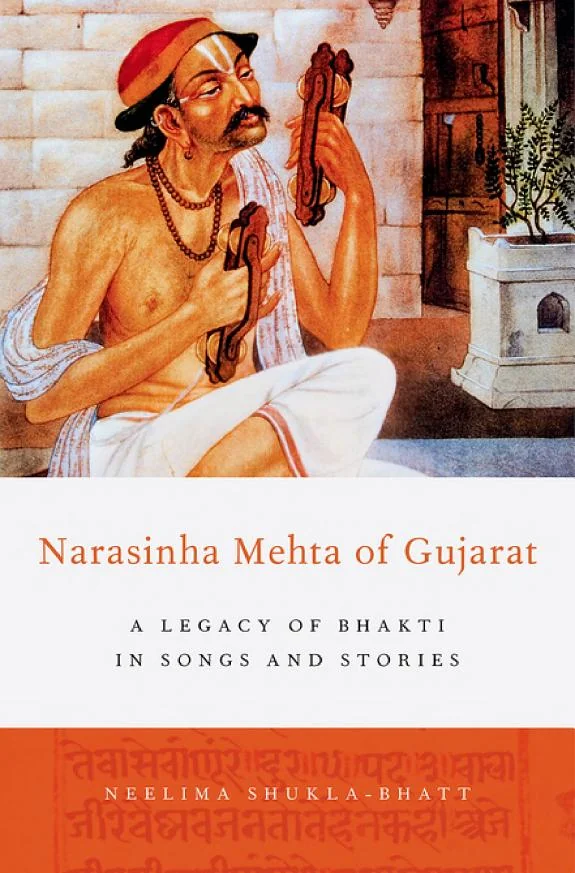
Shukla-Bhatt offers a compelling examination of how the devotional output of Narasinha Mehta, a 15th-century Gujarati poet-saint, has transcended its origins to become a powerful force for moral and social inspiration over five centuries. The book's strength lies in its meticulous tracing of these transformations, moving from medieval manuscripts to modern performances and even to Mahatma Gandhi's appropriation of Mehta's "Vaishnav Jan To" for his social programs. A particularly illuminating section details the performative aspects of transmitting Mehta's hagiographies, showing how audiences and performers actively shape the saint's legacy. While the academic rigor is commendable, the dense prose in certain sections may prove challenging for readers not deeply familiar with South Asian devotional traditions. Nevertheless, the work provides a significant contribution to understanding the fluid and enduring nature of religious influence in public life. It convincingly argues for the sustained relevance of devotional forms in shaping collective identity and moral discourse.
📝 Description
82
Neelima Shukla-Bhatt's 2014 book examines Narasinha Mehta's devotional songs and their reinterpretation.
Neelima Shukla-Bhatt's "Narasinha Mehta of Gujarat" investigates the lasting impact of a medieval Gujarati poet-saint. The study moves past simple biography to analyze how Narasinha Mehta's devotional songs and life stories have been continually reshaped and enacted over centuries. It looks at their adaptation in various religious and secular settings, showing their role as a steady source of moral and social inspiration.
The work is for academics and dedicated students of South Asian religious traditions, comparative literature, performance studies, and the history of devotional movements. It will also interest those who study how historical religious figures and their expressions are used in modern social and political contexts, particularly through figures like Mahatma Gandhi. The book places Narasinha Mehta's devotional poetry within the Bhakti movement, a major pan-Indian reform movement active between the 6th and 17th centuries CE. The analysis extends to the 20th century, detailing how Gandhi used Mehta's works, especially "Vaishnav Jan To", during India's independence movement and his social programs.
This book engages with the devotional traditions of the Bhakti movement in Gujarat, a significant strand within Indian mysticism. It examines how the life and poetry of Narasinha Mehta, a key figure in this lineage, have been transmitted and reinterpreted. The study highlights the flow between religious devotion and its adaptation for social and political purposes, a common dynamic in mystical traditions where spiritual figures and their expressions become touchstones for broader cultural and ethical discourse.
💡 Why Read This Book?
• Gain insight into the dynamic evolution of devotional poetry by examining how Narasinha Mehta's 15th-century Gujarati songs were adapted and performed across centuries, influencing moral discourse. • Understand the complex relationship between religious expression and social reform through the specific example of Mahatma Gandhi's use of "Vaishnav Jan To" in his 20th-century programs. • Explore the performative dimensions of religious legacy, learning how audiences and performers actively shape the narratives and moral authority of figures like Narasinha Mehta.
⭐ Reader Reviews
Honest opinions from readers who have explored this book.
❓ Frequently Asked Questions
Who was Narasinha Mehta and when did he live?
Narasinha Mehta was a prominent 15th-century Gujarati poet-saint and devotional singer, considered one of the most important figures of the Vaishnavite tradition in Gujarat. He lived from approximately 1414 to 1480 CE.
What is the significance of "Vaishnav Jan To"?
"Vaishnav Jan To" is a famous devotional poem by Narasinha Mehta that describes the ideal qualities of a devotee of Vishnu. It was famously adopted by Mahatma Gandhi as a guiding ethical principle during India's independence movement.
How did Mahatma Gandhi use Narasinha Mehta's works?
Mahatma Gandhi utilized Narasinha Mehta's devotional songs and narratives, particularly "Vaishnav Jan To," in his social reconstruction programs. He saw these works as embodying the moral values essential for building a just and equitable society.
What is the Bhakti movement?
The Bhakti movement was a medieval pan-Indian socio-religious movement that emphasized devotion and love towards a personal God. It spanned roughly from the 6th to the 17th century and produced numerous saints, poets, and philosophical traditions.
What does the book mean by 'performative aspects' of religious narratives?
The book uses 'performative aspects' to describe how the stories and songs associated with Narasinha Mehta are brought to life through public recitations, musical renditions, and dramatic enactments. These performances actively shape and reinforce the saint's meaning for contemporary audiences.
Is this book about religious rituals?
While the book touches on devotional songs and narratives, its primary focus is on the historical and cultural transmission of these forms. It examines how they function as sources of moral inspiration and are adapted in various social and political contexts, rather than detailing specific religious rituals.
🔮 Key Themes & Symbolism
The Mutable Saint
The work demonstrates how the figure of Narasinha Mehta has been continuously shaped and reshaped over five centuries. It moves beyond a static hagiographical presentation to reveal a dynamic saint whose stories and songs are actively adapted by performers and audiences. This process highlights how religious figures can remain relevant by accommodating evolving social and cultural landscapes, serving as moral exemplars across disparate historical moments.
Devotion as Social Force
A central argument is that devotional forms, exemplified by Mehta's poetry, possess a potent social and ethical dimension. The book tracks how these expressions, originating in religious contexts, become instrumental in broader social and political movements. The detailed examination of Mahatma Gandhi's use of "Vaishnav Jan To" illustrates how religious ideals can be deliberately employed to foster social reconstruction and inspire ethical action in secular spheres.
Performance and Transmission
The study emphasizes the critical role of performance in the enduring appeal and adaptation of Narasinha Mehta's legacy. It analyzes how medieval manuscripts evolved into living traditions through oral recitation, musical renditions, and theatrical interpretations. This focus on performative aspects reveals the mechanisms by which religious narratives are transmitted, interpreted, and imbued with new meanings by successive generations of practitioners and listeners.
Moral Inspiration Across Time
The book posits that Narasinha Mehta's devotional works have consistently served as a wellspring of moral inspiration. Whether through direct religious devotion or as ethical guidelines in social activism, the narratives and songs associated with Mehta provide a framework for understanding ideal conduct. The study meticulously traces this thread of moral continuity, showing its persistent influence from medieval Gujarat to the 20th-century Indian independence movement.
💬 Memorable Quotes
Direct passages from the work, attributed to the author.
“Performers and audiences have sculpted them into popular sources of moral inspiration.”
— This interpretation highlights that the enduring relevance of Narasinha Mehta's work is not inherent but is actively created through continued engagement. It underscores the collaborative process between creators, performers, and consumers in shaping religious and ethical legacies.
“Gandhi's use of these works in his social reconstruction programs.”
— This specific example illustrates how devotional literature can transcend its religious origins to inform and motivate secular social and political movements, demonstrating the practical application of spiritual ideals in public life.
“Exploring medieval manuscripts, Gandhi's writings, and performances in multiple religious and non-religious contexts.”
— This indicates the broad scope of the book, covering diverse sources and settings to demonstrate the many-sided journey of Narasinha Mehta's devotional heritage across centuries and cultural spheres.
“The book suggests that when religious forms succeed...”
— This hints at a theory of cultural transmission, implying that successful religious forms possess qualities that allow them to adapt and retain influence even when their original context shifts or when applied to secular purposes.
“Hagiographic narratives associated with the saint-poet Narasinha Mehta.”
— This phrase points to the biographical and often idealized accounts of a saint's life and deeds, which are central to understanding how such figures are venerated and their teachings disseminated across generations.
🌙 Esoteric Significance
Tradition
While not explicitly a work of esoteric doctrine in the Western sense (Hermetic, Kabbalistic), this book engages with the esoteric dimensions of devotional traditions within Hinduism, specifically the Bhakti movement. These traditions often involve direct, intuitive communion with the divine, bypassing rigid ritual or intellectual dogma. Mehta's poetry, as explored here, represents a path of intense personal devotion that can be seen as an inner, spiritual technology for transformation, aligning with practices found in many esoteric lineages focused on cultivating divine consciousness.
Symbolism
The primary symbolic figure is Narasinha Mehta himself, representing the realized devotee and the embodiment of divine love. The concept of "Vaishnav Jan To" serves as a potent symbol for the ideal ethical and spiritual person, a benchmark for conduct that transcends social divisions. The devotional songs themselves can be viewed as symbolic vehicles, carrying spiritual truths and emotional resonance that facilitate a connection with the divine, much like mantras or sacred texts in other traditions.
Modern Relevance
Contemporary thinkers and practitioners interested in the intersection of spirituality, ethics, and social action find relevance in Shukla-Bhatt's work. It speaks to modern movements seeking authentic spiritual grounding for social justice and non-violent activism, echoing Gandhi's synthesis. Scholars of comparative religion and performance studies also draw on this analysis to understand the enduring power of devotional forms in shaping cultural memory and public morality in a globalized world.
👥 Who Should Read This Book
• Scholars of South Asian Religions: Researchers investigating the Bhakti movement, Gujarati devotional literature, and the history of religious expression will find detailed analysis and source material. • Students of Performance and Cultural Studies: Individuals interested in how religious narratives are transmitted, adapted, and given new life through performance and audience reception will benefit from the book's focus. • Those interested in Gandhi and Indian History: Readers seeking to understand the cultural and religious underpinnings of Mahatma Gandhi's philosophy and social programs will find a crucial connection explored in depth.
📜 Historical Context
Published in 2015, Neelima Shukla-Bhatt's "Narasinha Mehta of Gujarat" engages with a rich intellectual tradition that has long examined the Bhakti movement and its impact. The book emerges within scholarship that has increasingly focused on the performative and social dimensions of religious expression, moving beyond purely theological or textual analyses. Its context includes the ongoing academic interest in figures like Mahatma Gandhi and his use of cultural resources for nation-building. Specifically, the work directly engages with the legacy of Gandhi, who himself cited Narasinha Mehta's "Vaishnav Jan To" as a foundational text for his ethical philosophy and social programs. This connection places Shukla-Bhatt's study within a discourse that analyzes how historical religious figures and their works are mobilized in modern political and social movements, offering a counterpoint to purely secular nationalist narratives.
📔 Journal Prompts
The continuous sculpting of Narasinha Mehta's legacy by performers and audiences.
Mahatma Gandhi's utilization of "Vaishnav Jan To" for social reconstruction.
The evolution of devotional songs from medieval manuscripts to modern contexts.
Narasinha Mehta's role as a source of moral inspiration across centuries.
The interplay between religious forms and secular application as presented in the book.
🗂️ Glossary
Bhakti Movement
A medieval pan-Indian devotional movement emphasizing intense love and devotion to a personal God. It produced numerous saints and poets who articulated spiritual paths accessible through emotion and personal experience, often challenging caste hierarchies.
Hagiography
The writing of the lives of saints. In the context of Narasinha Mehta, these narratives often idealize his life and deeds, serving to promote devotion and moral instruction.
Vaishnav Jan To
A famous devotional poem by Narasinha Mehta describing the ideal characteristics of a devotee of Vishnu. It became a touchstone for ethical living and was famously adopted by Mahatma Gandhi.
Poet-Saint
An individual recognized for both their significant literary contributions, particularly in poetry, and their spiritual attainment or sanctity within a religious tradition.
Social Reconstruction
The process of rebuilding or reforming societal structures and norms, often guided by philosophical or ethical principles. Mahatma Gandhi employed this term in relation to his vision for post-colonial India.
Devotional Songs
Songs composed with the primary purpose of expressing love, praise, or longing for a deity. In traditions like Bhakti, these songs are central to spiritual practice and community.
Medieval Manuscripts
Handwritten documents produced during the Middle Ages (roughly 5th to 15th centuries). For this book, they represent early forms of Narasinha Mehta's poetry and narratives.
This book appears in 1 collection
🔮 Readers Also Liked
Browse all →








From the “Hinduism” Collection
View all →





More Free Sacred Texts & Gnosticism Books
View all →