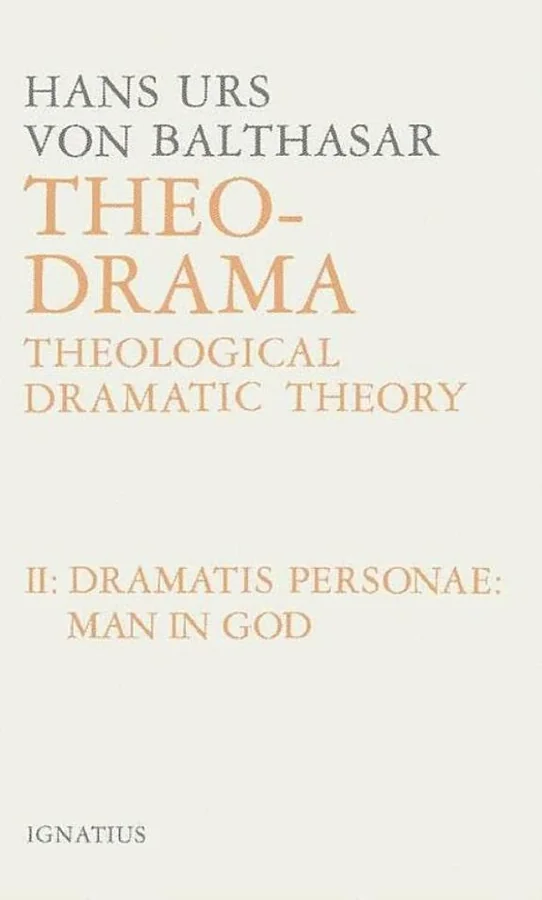
Theo-Drama: Theological Dramatic Theory, Vol. 2
 84
84

Theo-Drama: Theological Dramatic Theory, Vol. 2
Von Balthasar’s exploration of humanity as the *dramatis personae* in the divine theater is, as one would expect, intellectually rigorous. He approaches theological anthropology with a rare combination of philosophical acuity and theological depth, presenting man’s freedom and destiny not as abstract categories but as dynamic elements within a cosmic drama. The strength lies in his ability to synthesize vast theological traditions with literary theory, particularly evident when discussing the biblical narrative as the ultimate dramatic arc. However, the sheer density of the prose, characteristic of von Balthasar, can present a significant barrier to entry for those not already steeped in his complex philosophical vocabulary. A specific passage, for instance, detailing the 'dramatic character' of existence, underscores this density. Ultimately, *Theo-Drama, Vol. 2* offers a singular, albeit demanding, perspective on the human condition within the divine economy.
📝 Description
84
Hans Urs von Balthasar framed creation as drama in his 1990s *Theo-Drama* series.
Volume 2 of Hans Urs von Balthasar's *Theo-Drama* shifts focus from dramatists to the characters of the divine play: humanity. Building on his previous volume's survey of world theater, this installment presents a theological anthropology. It examines human freedom and ultimate destiny as understood through biblical narrative, proposing that a dramatic structure is inherent in human existence itself. Von Balthasar uses this framework to interpret Christian doctrine, exploring the roles individuals play within God's cosmic drama. The work aims to illuminate the theological significance of human action and divine response within this grand narrative. It is a detailed analysis of how theological concepts manifest in the lived experience of humanity. The book continues von Balthasar's ambitious project of interpreting the whole of creation and divine action through a dramatic lens. It is a dense engagement with theological anthropology and the philosophical implications of human existence within a divinely orchestrated scenario.
Published in the early 1990s, *Theo-Drama* emerged from a rich period of 20th-century Catholic theological discourse. Von Balthasar, a significant figure in modern theology, engaged with both contemporary philosophy and classical theological thought. His dramatic theory offered an alternative to purely systematic or existential approaches, drawing implicitly from figures like Karl Barth. This work represents a synthesis that views the universe as a divine stage where human and divine actions create the central narrative, a perspective that can be seen as aligning with certain contemplative traditions that view existence as a divinely ordered play.
💡 Why Read This Book?
• Learn how von Balthasar frames theological anthropology through the metaphor of a divine drama, moving beyond abstract descriptions to understand human freedom and destiny as integral to a cosmic performance, as detailed in his analysis of the biblical narrative. • Grasp the specific concept of the universe as God’s stage, where every human action contributes to a grand, unfolding theological play, a perspective uniquely developed in this volume's focus on the *dramatis personae*. • Understand the profound integration of literary theory and theology, particularly how von Balthasar uses dramatic structure to interpret biblical revelation and the character of human existence, a method distinct from purely systematic theological approaches.
⭐ Reader Reviews
Honest opinions from readers who have explored this book.
❓ Frequently Asked Questions
What is the primary focus of Hans Urs von Balthasar's Theo-Drama Vol. 2?
Volume 2 of Theo-Drama focuses on theological anthropology, specifically describing humanity as the *dramatis personae*—the actors—in God's cosmic drama, exploring human freedom and destiny through biblical revelation.
How does Theo-Drama Vol. 2 build upon the first volume?
While Volume 1 surveyed world dramatists for concepts, Volume 2 shifts focus to the characters of the divine play: humanity itself, detailing their roles and existential drama within God's creation.
What is von Balthasar's central metaphor in Theo-Drama?
The central metaphor is the universe conceived as a divine drama staged by God, with humanity as the principal actors whose freedom and destiny constitute the unfolding plot.
Who would benefit most from reading Theo-Drama Vol. 2?
Theologians, philosophers of religion, literary theorists interested in theological applications, and advanced students of systematic theology seeking a unique perspective on human existence and divine action.
When was Theo-Drama Vol. 2 originally published?
The original publication date for this volume is generally cited around 1990, reflecting von Balthasar's late-career work.
What is theological anthropology according to von Balthasar in this work?
In this context, theological anthropology is presented as the study of man's dramatic character, his freedom to act within the divine play, and his ultimate destiny as revealed in Scripture.
🔮 Key Themes & Symbolism
The Cosmic Stage
The foundational concept posits the universe as a divine drama orchestrated by God. This perspective reframes existence not as a series of contingent events but as a divinely authored play. Human beings are not passive observers but active participants, their lives contributing to the overarching theological narrative. The work explores how this dramatic structure imbues every aspect of creation with meaning and purpose, inviting a deeper understanding of divine providence and human agency within a grand, unified performance.
Theology of the Actor
This theme centers on theological anthropology, viewing humanity as the principal actors (*dramatis personae*) in God's play. It examines the nature of human freedom as the capacity for genuine dramatic improvisation and response within the divine script. Von Balthasar explores how biblical revelation provides the framework for understanding these roles, the inherent conflicts, and the ultimate resolution of individual and collective destinies. It is an investigation into the character, motivation, and existential significance of human beings as theological agents.
Freedom and Destiny
Von Balthasar intricately links human freedom with divine destiny, presenting them not as contradictory but as complementary elements of the dramatic arc. Freedom is the capacity for authentic participation, for choosing one's role and enacting it with genuine intentionality. Destiny, in this context, is the ultimate fulfillment of that role within the divine plan, the cosmic resolution of the drama. The work suggests that true freedom lies in embracing one's divinely appointed destiny, thereby contributing to the perfection of the cosmic performance.
Biblical Revelation as Script
The Bible is presented as the ultimate dramatic script, containing the divine intention, the unfolding plot, and the character arcs of humanity. Von Balthasar interprets biblical narratives and theological pronouncements through the lens of dramatic theory, revealing the inherent dramatic structure within divine revelation. This approach allows for a re-reading of scripture not just as historical accounts or doctrinal statements, but as the very text that guides and informs the cosmic drama, offering insight into God's relationship with creation.
💬 Memorable Quotes
Direct passages from the work, attributed to the author.
“The universe is God’s drama, and man is its principal actor.”
— This concise statement expresses the core thesis: existence is a divinely authored play, and humanity's role as conscious, free participants is central to its unfolding narrative and theological significance.
“Man's freedom is his capacity to enact his assigned role with authentic consent.”
— Here, freedom is not presented as absolute autonomy but as the genuine exercise of will within the dramatic structure God has established, highlighting the interplay between divine sovereignty and human agency.
“Biblical revelation provides the definitive script for the cosmic play.”
— This interpretation emphasizes the Bible's role as the authoritative text that outlines the divine plan, character motivations, and plot resolutions within the grand drama of existence.
“Destiny is the ultimate resolution of the individual's dramatic participation.”
— This points to the culmination of each person's role within the divine drama, framing destiny not as predetermined fate but as the meaningful conclusion to one's freely chosen actions within God's overarching plan.
💡 Key Ideas
Editorial paraphrase of the work's core concepts — not direct quotes.
The dramatic character of existence is its inherent narrative and teleological drive.
This paraphrased concept suggests that the very nature of human life possesses an intrinsic story-like quality and a directed purpose, mirroring the structure of dramatic composition.
🌙 Esoteric Significance
Tradition
While primarily a work of Catholic systematic theology, von Balthasar's *Theo-Drama* appeals to esoteric traditions through its emphasis on the universe as a divinely orchestrated performance and humanity's role as active participants. This appeals to Gnostic ideas of a cosmic drama and the soul's participation in divine unfolding, albeit framed within orthodox Christian doctrine. The focus on hidden meanings within revelation and the architectonic structure of reality echoes Hermetic principles of correspondence and the macrocosm/microcosm relationship.
Symbolism
The central symbol is the 'stage' representing the created order, imbued with divine intention and dramatic structure. Humanity, as the *dramatis personae*, symbolizes conscious agency and free will within this divine play. The 'script' of biblical revelation symbolizes the divinely ordained path and the interpretive key to understanding existence, representing a form of sacred text holding ultimate truths accessible through rigorous study and contemplation.
Modern Relevance
Contemporary thinkers in process theology and existential theology, particularly those exploring narrative and performative aspects of faith, draw upon von Balthasar's dramatic framework. His work continues to inform discussions on theological anthropology and theodicy, offering a unique lens for understanding human freedom and suffering within a coherent divine plan. Practitioners in contemplative traditions might also find value in viewing their spiritual journey as participation in this cosmic drama.
👥 Who Should Read This Book
• Theologians and philosophers of religion seeking to understand theological anthropology through a unique dramatic paradigm, gaining insight into human freedom and destiny as presented in a cosmic play. • Literary theorists interested in the intersection of narrative structure, theological interpretation, and existential thought, who will find a rigorous application of dramatic theory to biblical revelation. • Advanced students of systematic theology looking to engage with a monumental work that bridges classical doctrines with contemporary philosophical and literary discourse, offering a distinct perspective on God's relationship with creation.
📜 Historical Context
Hans Urs von Balthasar’s *Theo-Drama, Vol. 2*, published around 1990, emerged from a fertile period of 20th-century theological and philosophical inquiry. It stands as a significant contribution to Catholic theology, particularly within the Neo-Orthodox current influenced by figures like Karl Barth, though von Balthasar charted his own distinct path. The work arrived at a time when theological discourse grappled with existentialism and phenomenology, offering a robust alternative by framing theological anthropology through the lens of dramatic theory. Von Balthasar’s extensive engagement with literature and philosophy provided a unique synthesis, differentiating his approach from more purely scholastic or existentialist theological methods prevalent at the time. His work was recognized as a monumental effort to integrate aesthetic and dramatic principles into systematic theology, building upon the reception of his earlier theological writings.
📔 Journal Prompts
The cosmic stage: How does viewing existence as a divine drama alter your perception of personal agency?
The *dramatis personae*: Reflect on your own perceived role within the unfolding theological narrative.
The script of revelation: Identify a biblical passage that feels particularly significant as a 'script' for human action.
The enactment of freedom: Consider how your choices contribute to the overall dramatic arc of your life.
Destiny's resolution: Contemplate the meaning of ultimate fulfillment within the context of a divine play.
🗂️ Glossary
Theo-Drama
A theological theory that conceives of the universe, divine action, and human existence as a divinely authored drama, emphasizing narrative structure and character roles.
Dramatis Personae
Latin for 'characters of the play'; in this context, it refers to humanity as the principal actors within God's cosmic drama.
Theological Anthropology
The study of human nature, origin, purpose, and destiny from a theological perspective, here understood through the lens of dramatic participation.
Cosmic Drama
The overarching theological narrative or play orchestrated by God, encompassing all of creation and history.
Divine Revelation
In this work, specifically the biblical narrative and its theological content, serving as the authoritative script for the cosmic drama.
Human Freedom
The capacity of individuals to act authentically and consent to their roles within the divine play, contributing to the drama's unfolding.
Destiny
The ultimate resolution and fulfillment of an individual's role and participation within the grand divine drama.
This book appears in 1 collection
🔮 Readers Also Liked
Browse all →







From the “Revelation” Collection
View all →








More Free Sacred Texts & Gnosticism Books
View all →