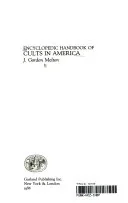
The Encyclopedic Handbook of Cults in America
 74
74

The Encyclopedic Handbook of Cults in America
Melton's 1986 handbook remains a foundational text for its comprehensive, almost anthropological, approach to a highly contentious subject. Its strength lies in its systematic cataloging of groups like the Children of God and the Hare Krishnas, offering detailed descriptions of their practices and internal structures that were rare at the time of publication. However, the work's primary limitation is its perspective, inherently shaped by the era's anxieties; while Melton strives for neutrality, the very act of defining and categorizing these movements can inadvertently reinforce the boundaries and prejudices of the dominant culture. A particularly striking section details the daily routines within some communes, revealing a disciplined, often demanding, existence far removed from simplistic notions of mass delusion. This book is an indispensable, albeit dated, resource for understanding the discourse surrounding new religious movements.
📝 Description
74
J. Gordon Melton's 1986 handbook systematically examined 30 alternative religious movements in America.
First published in 1986, J. Gordon Melton's *The Encyclopedic Handbook of Cults in America* offers a systematic examination of approximately 30 religious movements that gained prominence in the United States. The work details the organizational structures, belief systems, and daily life within these groups. It moves beyond mere description to analyze the phenomenon of cults, including discussions on communal living and the darker aspects of group dynamics like coercion and violence.
This handbook is a resource for anyone seeking to understand new religious movements in America. It is relevant for researchers in sociology, religious studies, and psychology, as well as journalists, policymakers, and individuals with personal connections to or questions about these groups. Melton's approach, characterized by empirical research and a desire for balanced reporting, sought to provide a more considered perspective amidst prevailing anxieties. The book systematically addresses concepts such as 'new religious movements' (NRMs) and investigates sociological and psychological factors contributing to conversion and departure.
Released during a period of heightened public and academic scrutiny of new religious movements, Melton's work emerged as a counterpoint to sensationalized media portrayals and alarmist anti-cult rhetoric. Events like the Jonestown massacre fueled a national conversation about religious freedom versus potential harm. Melton's approach, using empirical research, aimed for balanced reporting on groups often labeled as deviant or dangerous. This book stands as a factual reference against more polemical or fear-driven accounts of these spiritual and social phenomena.
💡 Why Read This Book?
• Understand the societal anxieties surrounding new religious movements in the late 20th century, particularly in the context of events like the 1978 Jonestown massacre, which shaped public perception and academic discourse. • Gain insight into the organizational structures and daily life of specific groups cataloged by Melton, such as the Unification Church or the Hare Krishnas, moving beyond sensationalized media narratives. • Analyze the rhetoric and impact of the anti-cult movement, a significant social and political force that Melton addresses directly, offering a critical perspective on its methods and claims.
⭐ Reader Reviews
Honest opinions from readers who have explored this book.
❓ Frequently Asked Questions
What is the primary focus of J. Gordon Melton's "The Encyclopedic Handbook of Cults in America"?
The book focuses on providing accurate information about approximately 30 "alternative" or "nonconventional" religious movements in America, detailing life within these groups and discussing issues of violence and the anti-cult movement.
When was "The Encyclopedic Handbook of Cults in America" first published?
The book was first published in 1986, making it a significant resource from that era of heightened attention to new religious movements.
Does the book only cover negative aspects of cults?
No, the book aims for accuracy and describes life in "cults" and discusses violence, but it also provides information on the movements themselves, not solely focusing on negative aspects.
Who is the author of "The Encyclopedic Handbook of Cults in America"?
The author is J. Gordon Melton, a prominent scholar of new religious movements and alternative spiritualities.
What kind of "alternative" movements are discussed in the book?
The book covers various "nonconventional" religious movements that were prominent or emerging in America during the late 20th century, offering detailed information on their beliefs and practices.
Is "The Encyclopedic Handbook of Cults in America" still relevant today?
Yes, its historical context and detailed accounts of specific groups provide valuable insights into the study of new religious movements and the societal reactions to them, even decades later.
🔮 Key Themes & Symbolism
Defining New Religious Movements
Melton's work grapples with the challenge of classifying and defining "cults" versus more accepted religious bodies. The book systematically examines numerous groups that emerged in the United States, presenting their origins, doctrines, and social structures. This theme is crucial for understanding how these movements were perceived in the late 20th century and the criteria used to distinguish them from mainstream society, often highlighting the fluidity and contested nature of religious labels.
Life Within Communal Groups
A significant aspect of the handbook is its detailed depiction of daily life within various communal religious organizations. Melton moves beyond abstract theological discussions to explore the practical realities of living in these environments, including routines, social interactions, and communal decision-making processes. This provides a grounded, sociological perspective on how beliefs translate into lived experiences for adherents.
The Anti-Cult Movement
The book dedicates attention to the counter-movement that arose in response to new religious groups. Melton analyzes the rhetoric, activities, and underlying concerns of anti-cult organizations, presenting them as a distinct social phenomenon alongside the movements they opposed. This thematic exploration offers critical insight into the societal polarization and the often-heated debates surrounding religious freedom and group autonomy.
Violence and Control
Addressing one of the most sensitive and debated aspects of cults, Melton discusses instances and allegations of violence and coercive control within some groups. The work aims to provide a factual basis for understanding these complex issues, distinguishing between documented events and public perception. This theme is central to the book's effort to offer a balanced, if sometimes unsettling, account of these movements.
💬 Memorable Quotes
Direct passages from the work, attributed to the author.
“Describes life in a cult.”
— This concise phrase captures the book's commitment to empirical observation of the lived realities within nonconventional religious groups, moving beyond theoretical frameworks to concrete examples of daily existence and practice.
“Discusses violence in cults.”
— This highlights the book's engagement with the controversial and often sensationalized topic of violence associated with cults, indicating a willingness to address difficult subjects with factual reporting rather than pure speculation.
“Provides accurate information on about 30 'alternative' or 'nonconventional' religious movements.”
— This emphasizes the book's foundational goal: to offer a fact-based survey of new religious movements, serving as a reference point for understanding their diversity and characteristics during the period of their heightened public prominence.
“Plus the anti-cult movement.”
— This indicates that the book's scope extends beyond the groups themselves to include the organized opposition, acknowledging the significant social and cultural forces at play in the discourse surrounding these religious phenomena.
💡 Key Ideas
Editorial paraphrase of the work's core concepts — not direct quotes.
The author describes life in a cult.
This paraphrased concept underscores Melton's methodological approach, focusing on ethnographic description and the sociological realities of communal living within these spiritual communities.
🌙 Esoteric Significance
Tradition
While not strictly within a single esoteric lineage like Hermeticism or Kabbalah, Melton's work engages with the broader phenomenon of spiritual seeking and alternative belief systems that often draw from or intersect with esoteric traditions. His cataloging of NRMs implicitly acknowledges the enduring human impulse to explore paths beyond mainstream religious or secular frameworks, many of which incorporate elements found in Western esotericism, Eastern religions, or syncretic spiritualities.
Symbolism
The book itself, as a compendium, doesn't focus on specific esoteric symbols but rather on the symbolic meaning of group identity, doctrine, and ritual for adherents of NRMs. For instance, the adoption of distinctive dress, the creation of unique terminologies, or the adherence to specific dietary laws can be understood as symbolic markers of belonging and separation from the wider society, akin to how symbols function within more defined esoteric orders.
Modern Relevance
Contemporary scholars and practitioners studying new religious movements, alternative spirituality, and the sociology of belief continue to reference Melton's foundational research. His work provides a crucial historical baseline for understanding the evolution of NRMs and societal responses. Thinkers exploring the dynamics of high-demand groups, the ethics of religious conversion, and the boundaries of religious freedom often engage with his classifications and analyses, even as the range of spiritual exploration continues to diversify.
👥 Who Should Read This Book
• Sociologists and religious studies scholars seeking a historical overview of new religious movements in the late 20th century, providing a factual basis for analyzing their emergence and societal impact. • Journalists and researchers investigating the history of cult controversies, offering context on the different groups and the anti-cult movement that J. Gordon Melton documented. • Individuals interested in the sociology of religion and communal living, providing detailed accounts of the daily life and organizational structures of nonconventional religious communities.
📜 Historical Context
Published in 1986, J. Gordon Melton's *The Encyclopedic Handbook of Cults in America* emerged during a period of intense public and governmental scrutiny of new religious movements (NRMs). The preceding decade had been marked by highly publicized events, most notably the 1978 Jonestown massacre involving Jim Jones's Peoples Temple, which fueled widespread fear and calls for action against perceived "cults." This atmosphere was further amplified by media sensationalism and the burgeoning anti-cult movement, which often lobbied for legal interventions and societal condemnation of groups like the Unification Church, founded by Sun Myung Moon. Melton's work, by contrast, aimed to provide a scholarly, fact-based overview, seeking to contextualize these movements within the broader range of American religious history and sociology. His approach stood in contrast to more polemical works and offered a more neutral, descriptive framework, though it still had to contend with the era's prevailing anxieties about religious deviation and brainwashing.
📔 Journal Prompts
The "anti-cult movement" as a documented social force.
Daily routines within specific "alternative" religious movements.
The process of defining "nonconventional" religious groups.
Ethical considerations discussed regarding violence within cults.
Melton's perspective on the Unification Church's presence in America.
🗂️ Glossary
New Religious Movement (NRM)
A broad term used to categorize religious or spiritual groups that have emerged relatively recently, often differing significantly from established religious traditions in their beliefs, practices, or organizational structures.
Anti-cult movement
A social and political movement that emerged primarily in the 1970s and 1980s, advocating against what it perceived as harmful or dangerous "cults," often leading to public campaigns, legal challenges, and media scrutiny.
Communal Living
A lifestyle where members of a group share living spaces, resources, and responsibilities, often as a core component of their religious or spiritual practice and community structure.
Sect
In religious sociology, a term often used to describe a smaller, more exclusive group that has broken away from a larger denomination, typically holding beliefs or practices that deviate from the parent group.
Denomination
A recognized autonomous branch of the Christian Church or another religion, generally characterized by a distinct name, organizational structure, and set of practices or doctrines.
Conversion
The process by which an individual adopts a new belief system, ideology, or religious identity, often involving a significant change in worldview and lifestyle, which Melton explores in the context of joining NRMs.
Coercive Control
A pattern of behavior in relationships or within groups that seeks to dominate another person by making them fearful, and by controlling their everyday behaviour, often involving manipulation, isolation, and threats.
This book appears in 1 collection
🔮 Readers Also Liked
Browse all →








From the “Soul Travel” Collection
View all →






More Free Sacred Texts & Gnosticism Books
View all →