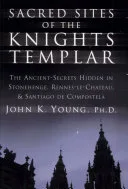
Sacred Sites of the Knights Templar (Nipb)
 75
75

Sacred Sites of the Knights Templar (Nipb)
The "Sacred Sites of the Knights Templar" attempts a bold synthesis, bridging the enduring enigma of European megaliths with the popular mystique of the Templar Order. While the premise is intriguing, the execution relies heavily on speculative connections rather than documented historical evidence. The work shines when it describes the sheer scale and enduring mystery of sites like Avebury or Carnac, prompting contemplation on the lost knowledge of their builders. However, the assertion of direct Templar involvement often feels like an imposition of later narrative onto ancient foundations. The section discussing the potential Templar use of dolmens as initiation chambers, while imaginative, lacks concrete substantiation. Ultimately, this book offers a compelling narrative for those predisposed to see Templar fingerprints on every historical mystery, but it falls short as a critical historical analysis.
📝 Description
75
This 1910 volume examines megalithic structures and their supposed links to the Knights Templar.
The book investigates megalithic structures across Europe, proposing a connection between these ancient monuments and the Knights Templar. It scrutinizes architectural details, possible astronomical alignments, and the enigmatic origins of these enduring stone edifices. The author considers the theory that the Templars may have used or rededicated existing megalithic sites for their own purposes, possibly related to initiatory rites or secret knowledge. The work discusses stone circles and dolmens as potential conduits for ancient power or celestial observation.
This study is for readers interested in esoteric history, particularly the Knights Templar, sacred geometry, and ancient European mysteries. It suits amateur historians, researchers of fringe archaeology, and those seeking different views on Western esotericism and the symbolism within ancient sites. The book acknowledges existing scholarship on prehistoric locations like Stonehenge but introduces the idea of Templar involvement.
This perspective arises from a tradition of speculative history and occult interpretation that grew in the late 19th and early 20th centuries. Such views often looked for hidden links between ancient mysteries and medieval esoteric groups. The central idea is that specific locations are imbued with spiritual or energetic meaning, forming a sacred geography.
This work emerges from a vein of speculative history popular in the late 19th and early 20th centuries. It connects medieval esoteric orders, specifically the Knights Templar, to much older prehistoric sites. This tradition often sought hidden continuities and a shared esoteric lineage stretching back to antiquity. The book's exploration of sacred geography and the symbolic power of megalithic forms aligns with occult interpretations of landscape and ancient monumentality.
💡 Why Read This Book?
• Gain an alternative perspective on the purpose and builders of European megaliths, moving beyond conventional archaeological explanations to consider esoteric influences. • Explore potential symbolic links between Templar symbolism and the geometry of ancient stone circles, challenging established historical narratives. • Understand the historical context of speculative Templar theories that emerged in the late 19th century, providing insight into this particular strand of esoteric thought.
⭐ Reader Reviews
Honest opinions from readers who have explored this book.
❓ Frequently Asked Questions
What specific megalithic sites are discussed in relation to the Knights Templar?
The book examines various sites across Europe, including but not limited to Stonehenge in England and potentially dolmens and stone circles found in France and other regions, proposing Templar connections to these ancient monuments.
Does the book offer archaeological proof of Templar presence at these sites?
The work focuses on interpretative and symbolic connections rather than presenting direct archaeological evidence. It explores theories and potential alignments suggestive of Templar interest or repurposing of existing sites.
Who were the Knights Templar?
The Knights Templar were a Catholic military order founded around 1119, active during the medieval Crusades. They were known for their military prowess, wealth, and eventual suppression in the early 14th century.
What is the significance of megalithic sites?
Megalithic sites, such as stone circles and dolmens, are ancient structures built from large stones. They are often associated with prehistoric rituals, astronomical observation, and burial practices, their exact purposes still debated by scholars.
Is this book based on historical fact or esoteric interpretation?
The book is primarily based on esoteric interpretation and speculative history, connecting historical elements of the Knights Templar with the mysteries of prehistoric megalithic sites.
What is the 'Nipb' in the title?
The 'Nipb' designation likely refers to a specific edition or publisher of the book, possibly indicating a particular printing or imprint rather than a subject matter.
🔮 Key Themes & Symbolism
Templar Sacred Geography
This theme posits that the Knights Templar recognized and utilized the inherent energetic or symbolic power of pre-existing megalithic sites. It explores how these ancient locations, built by unknown prehistoric cultures, might have been reconsecrated or integrated into Templar ritualistic practices. The book examines potential alignments and patterns between these sites, suggesting a deliberate mapping or network established by the order to harness ancient terrestrial energies or celestial movements.
Megalithic Mysteries
The work looks at the enduring enigma surrounding the construction and purpose of megalithic monuments across Europe. It highlights the advanced knowledge of astronomy, engineering, and possibly geomancy attributed to the builders of sites like Stonehenge and Carnac. The focus is on the lost wisdom and sophisticated understanding of the natural world that these enduring stone structures represent, setting the stage for theories of later esoteric groups interacting with them.
Symbolic Continuity
A core concept is the idea of symbolic continuity, suggesting that the Templars adopted or reinterpreted symbols and sacred spaces from earlier traditions. The book explores how elements found at megalithic sites, such as circular forms or specific stone arrangements, might echo in Templar iconography or architectural principles. This theme bridges the gap between prehistoric beliefs and medieval esoteric thought, proposing a hidden lineage of knowledge.
Esoteric Initiation
The book speculates on the role of these sacred sites in Templar initiation rites. It suggests that the Templars may have used megalithic structures, such as dolmens or stone circles, as locations for spiritual or mystical ceremonies. The profound atmosphere and ancient energies of these places are presented as conducive to transformative experiences, linking the physical landscape to inner spiritual journeys within the Templar Order.
💬 Memorable Quotes
Direct passages from the work, attributed to the author.
“These ancient stones are not mere relics, but silent witnesses to forgotten wisdom.”
— This statement emphasizes the enduring, almost sentient quality attributed to megalithic structures. It suggests they hold a form of knowledge or memory that transcends their physical presence, hinting at a deeper, perhaps spiritual, significance.
“The Templars, inheritors of ancient mysteries, may have found in these sites a resonance with their own quest.”
— This interpretation highlights the speculative link between the Templars' spiritual and possibly mystical pursuits and the perceived power or significance of prehistoric sacred sites. It suggests a shared purpose or energetic connection.
“The geometry of the circle in stone carries the cosmic order sought by initiates.”
— This reflects the belief that ancient sites, particularly stone circles, were designed with intentional geometry that mirrored celestial patterns or universal principles, aligning with the esoteric goals of groups like the Templars.
“The Templar cross, a symbol of unity, may have marked sacred ground already hallowed by antiquity.”
— This idea proposes that the Templars' own symbols were placed upon or associated with sites that already held ancient significance, indicating a layering of sacred meaning across different historical periods.
💡 Key Ideas
Editorial paraphrase of the work's core concepts — not direct quotes.
To walk among these megaliths is to tread upon earth charged with primordial power.
This quote conveys a sense of the palpable, almost tangible, spiritual energy that the author believes permeates ancient megalithic locations, suggesting a direct connection to primal forces.
🌙 Esoteric Significance
Tradition
This work aligns with traditions of Western Esotericism that seek hidden continuities between ancient pagan cultures and later mystical or chivalric orders. It draws upon concepts found in Hermeticism and speculative Templarism, focusing on sacred geography and the transmission of esoteric knowledge through physical sites rather than solely through texts or oral traditions.
Symbolism
Key symbols include the stone circle, representing cosmic order, celestial cycles, and initiation gateways; the dolmen, often interpreted as a tomb or portal for ancestral spirits or transition; and the Templar Cross itself, symbolizing divine union and spiritual warfare, here potentially recontextualized within ancient power sites.
Modern Relevance
Contemporary interest in sacred geometry, ley lines, and earth energies can be seen as drawing from this type of speculative exploration. Modern Templar revival groups and practitioners of earth-based spiritualities may find resonance in the idea of Templars interacting with or drawing power from ancient megalithic landscapes.
👥 Who Should Read This Book
• Researchers of Western Esotericism interested in speculative historical connections between medieval orders and prehistoric sites. • Students of Templar lore seeking alternative theories beyond conventional historical accounts. • Enthusiasts of sacred geography and archaeoastronomy looking for interpretations that incorporate mystical and symbolic dimensions.
📜 Historical Context
The exploration of Knights Templar connections to megalithic sites emerged within a broader wave of esoteric and speculative historical writing in the late 19th and early 20th centuries. This period saw a surge of interest in ancient mysteries, secret societies, and alternative interpretations of history, fueled by figures like Helena Blavatsky and the burgeoning Theosophical movement. Authors sought to uncover hidden lineages and connections between ancient civilizations and medieval orders. While mainstream archaeology focused on empirical evidence, writers within esoteric circles often employed comparative mythology, symbolism, and intuitive reasoning. The Templars, with their dramatic history and alleged secrets, became a frequent subject for such speculative inquiries. This work likely engaged with contemporary archaeological discoveries about megaliths while reinterpreting them through the lens of Templar lore, a perspective that contrasted sharply with the more secular or strictly religious historical accounts of the era.
📔 Journal Prompts
Reflect on the concept of 'sacred geography' as presented in the book's analysis of Templar sites.
Consider the symbolic parallels between megalithic forms and Templar symbolism explored within the text.
How might the builders of prehistoric monuments and the Knights Templar have shared a common esoteric objective?
Examine the idea of 'primordial power' attributed to ancient stone circles.
What evidence, if any, could bridge the gap between speculative Templar connections and archaeological findings at megalithic locations?
🗂️ Glossary
Megalithic
Relating to or denoting prehistoric structures built solely of large, undressed stones. Examples include Stonehenge, dolmens, and menhirs.
Knights Templar
A medieval Catholic military order, founded circa 1119, known for its role in the Crusades and its eventual suppression in the early 14th century.
Dolmen
A type of single-chamber megalithic tomb, usually consisting of three or more upright stones supporting a large flat horizontal capstone.
Stone Circle
A ring of standing stones, common in Neolithic and Bronze Age Europe, often associated with ritualistic or astronomical purposes.
Sacred Geography
The concept that certain geographical locations possess inherent spiritual significance, power, or energetic properties.
Esoteric
Intended for or likely to be understood by only a small number of people with specialized knowledge or interest; relating to hidden meanings.
Archaeoastronomy
The study of how people in the past understood and used astronomical phenomena and celestial bodies in relation to their cultures and structures.