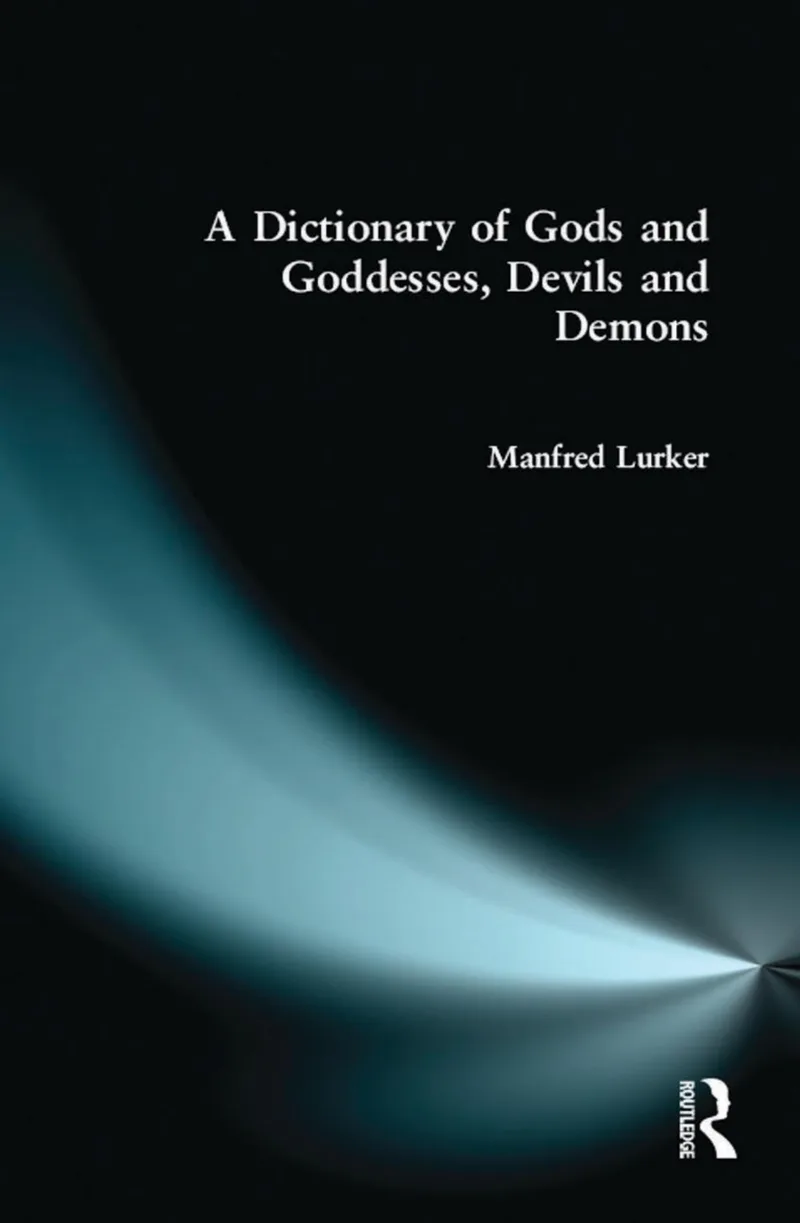
A Dictionary of Gods and Goddesses, Devils and Demons
 83
83

A Dictionary of Gods and Goddesses, Devils and Demons
Manfred Lurker’s *A Dictionary of Gods and Goddesses, Devils and Demons* presents a formidable compilation, successfully gathering some 1,800 entries on supernatural beings. Its strength lies in its sheer breadth, encompassing not only the well-trodden paths of Greco-Roman and Norse mythologies but also extending to less commonly documented traditions, thereby facilitating genuine cross-cultural comparisons. One notable aspect is its extensive cross-referencing, which allows a scholar to trace a concept like 'trickster' across disparate cultures. However, the sheer volume can sometimes lead to brevity in individual entries, offering a starting point rather than deep exegesis. For instance, the entry on the Egyptian god Thoth is concise, prioritizing his inclusion over extensive analysis of his complex roles. Despite this, the work functions as an exceptionally useful, if sometimes superficial, reference for anyone needing a quick overview of the global spiritual and infernal hierarchy.
📝 Description
83
Manfred Lurker's dictionary, first published in 2015, lists roughly 1,800 supernatural entities.
A Dictionary of Gods and Goddesses, Devils and Demons serves as a thorough lexicon of supernatural beings drawn from global mythologies and religions. The volume contains about 1,800 entries, detailing deities from ancient pantheons and figures from modern spiritual paths. Lurker aimed to create a single, easy-to-use reference for a wide range of spiritual and mythological figures, covering both major and minor religious traditions.
This book is a significant resource for those studying comparative religion, mythology fans, and practitioners of esoteric paths who want to understand divine and infernal beings. Its wide reach benefits students of religious history and experienced researchers checking specific figures or tracking the spread of religious ideas across cultures. Anyone interested in the figures that shape human spiritual and mythological narratives will find it valuable.
Manfred Lurker's work continues a long history of encyclopedic efforts in religious and mythological studies. Published in 2015, it adopts a contemporary academic perspective on comparative mythology, informed by archaeological findings and scholarly research unavailable to earlier compilers. The book's appearance reflects a persistent interest, both public and academic, in diverse religious expressions and the figures central to them.
⭐ Reader Reviews
Honest opinions from readers who have explored this book.
❓ Frequently Asked Questions
What is the primary focus of A Dictionary of Gods and Goddesses, Devils and Demons?
The book's primary focus is to catalog and define approximately 1,800 supernatural entities from global mythologies and religions, including deities, devils, and demons from ancient and contemporary traditions.
How does Manfred Lurker's dictionary facilitate cross-cultural comparisons?
It features an extensive network of cross-references, allowing readers to draw connections between similar figures or concepts across different cultural and religious backgrounds.
Which types of religious traditions are covered in the dictionary?
The dictionary covers major world religions, ancient mythologies, and also includes 'lesser' mythologies and religions, providing a broad spectrum of spiritual beliefs.
When was A Dictionary of Gods and Goddesses, Devils and Demons first published?
The book was first published on April 29, 2015, making it a relatively recent compilation in the field of comparative religious studies.
Is this book suitable for beginners in mythology or religious studies?
Yes, with its comprehensive scope and cross-referencing, it serves as an excellent foundational resource for students and enthusiasts new to the study of comparative religion and mythology.
What is the approximate number of entries in the dictionary?
The dictionary contains around 1,800 entries, offering a substantial overview of divine and demonic figures from various global traditions.
🔮 Key Themes & Symbolism
Global Pantheon Survey
This work provides a panoramic view of supernatural beings across the globe, cataloging figures from major religions like Christianity and Hinduism alongside those from indigenous spiritualities. It systematically lists deities, demons, and other mythological entities, highlighting the sheer diversity of human belief systems. The compilation serves as an encyclopedic reference, allowing for the identification and basic understanding of figures encountered in various esoteric texts or comparative religious studies, from the Egyptian pantheon to the Aztec cosmology.
Cross-Cultural Connections
A central feature is the extensive network of cross-references, which actively encourages readers to explore thematic and structural similarities between seemingly disparate traditions. This facilitates comparative analysis, revealing how concepts like creation myths, trickster figures, or underworld rulers manifest with variations across continents and epochs. The dictionary enables scholars and enthusiasts to trace the lineage or parallel development of certain archetypes, fostering a deeper appreciation for the interconnectedness of global spiritual narratives.
Divine and Infernal Hierarchies
The dictionary meticulously organizes beings into categories of gods, goddesses, devils, and demons, reflecting how different cultures classify their supernatural agents. It covers figures from ancient mythologies, such as the Greek Olympians or Mesopotamian deities, alongside those from more recent or ongoing religious practices. This structured approach allows for an examination of the varying roles, powers, and moral standings attributed to these entities, providing insight into the theological frameworks they inhabit.
Mythology and Contemporary Religion
By juxtaposing figures from ancient mythologies with those from contemporary religions, the work implicitly addresses the continuity and transformation of belief. It demonstrates how older archetypes may persist or be reinterpreted within modern spiritual contexts, offering a dynamic perspective on religious evolution. This approach is particularly valuable for understanding the enduring influence of ancient narratives on present-day spiritual and esoteric thought.
💬 Memorable Quotes
Direct passages from the work, attributed to the author.
“The work covers gods of ancient mythology alongside gods of contemporary religion.”
— This statement highlights the dictionary's dual focus, bridging historical religious figures with those still venerated today, illustrating the evolution and persistence of spiritual beliefs.
“It provides an extensive network of cross-references for cross-cultural comparisons.”
— This emphasizes the book's utility as a tool for scholarly analysis, enabling users to trace thematic links and variations in supernatural beings across different global traditions.
“Lesser' mythologies and religions are also fully covered.”
— This points to the dictionary's commitment to inclusivity, extending beyond major world religions to encompass a broader, more diverse range of spiritual and mythological systems.
“The Dictionary will be an invaluable source of information for anyone interested in comparative religion.”
— This interpretation suggests the book's primary intended audience and its significant value proposition for academics and students engaged in the study of religious diversity and commonalities.
💡 Key Ideas
Editorial paraphrase of the work's core concepts — not direct quotes.
Containing around 1,800 entries this Dictionary covers, in one volume, all the important deities and demons from around the world.
This paraphrased concept underscores the sheer scope and ambition of the work, presenting itself as a comprehensive single-volume resource for a vast array of supernatural entities.
🌙 Esoteric Significance
Tradition
While not explicitly aligned with a single esoteric lineage, this dictionary functions as a foundational text for understanding the symbolic language of numerous traditions, including Hermeticism, Gnosticism, and Kabbalism, by providing context for the deities and demons they reference. Its encyclopedic nature allows practitioners to identify and study figures from diverse cosmologies, aiding in the reconstruction of forgotten or syncretic spiritual practices. It departs from singular tradition-focused works by offering a panoramic, cross-cultural survey.
Symbolism
The dictionary implicitly deals with potent symbols. For instance, the serpent motif, appearing across cultures from Eden to Aztec mythology, represents duality—creation and destruction, wisdom and temptation. The archetype of the 'trickster' figure, exemplified by figures like Loki or Coyote, symbolizes chaos, transformation, and the subversion of order, often acting as a catalyst for change. Similarly, celestial deities often symbolize order, divine law, and cosmic governance, representing the structured universe.
Modern Relevance
Contemporary practitioners of modern paganism, witchcraft, and various forms of occultism draw heavily on this work for researching pantheons and developing their magical systems. Thinkers in the field of Jungian psychology might also find its cataloging of archetypal figures useful for understanding the collective unconscious. Its detailed entries on figures from lesser-known traditions are particularly relevant for those seeking to revive or explore marginalized spiritual paths.
👥 Who Should Read This Book
['• Students of Comparative Religion: To build a foundational understanding of global deities and demons, aiding in the analysis of religious texts and practices across cultures.', '• Mythology Enthusiasts: For a comprehensive reference to identify and learn about a vast array of mythological figures beyond common Western traditions.', '• Esoteric Practitioners: To research and cross-reference entities encountered in magical traditions, aiding in spellcraft, ritual, and the understanding of occult symbolism.']
📜 Historical Context
Manfred Lurker's *A Dictionary of Gods and Goddesses, Devils and Demons*, published in 2015, enters a field with a long academic lineage. Compilers like Karlfried Graf von Dürckheim and Éliphas Lévi had previously attempted to synthesize esoteric and mythological knowledge, though often with a more specific, less encyclopedic focus. Lurker’s work benefits from post-World War II advancements in archaeology and religious studies, which have vastly expanded the accessible corpus of ancient texts and artifacts. While not directly engaging with a specific contemporary scholar in its blurb, its comprehensive approach implicitly acknowledges the ongoing academic discourse in comparative mythology and religious history, fields heavily influenced by scholars like Mircea Eliade and Joseph Campbell. The 2015 publication date places it within an era where digital resources are also prevalent, yet the printed dictionary offers a curated, authoritative overview distinct from the often-unfiltered information online. Its reception was likely within academic and serious enthusiast circles, rather than facing public controversy or widespread critical debate.
📔 Journal Prompts
The concept of the 'trickster' archetype as presented across cultures.
Investigate the various interpretations of underworld deities like Hel or Ereshkigal.
Compare the attributes of creator gods from two distinct mythologies.
Reflect on the representation of 'devils' in Abrahamic versus Eastern traditions.
Trace the symbolic meaning of serpent deities across different entries.
🗂️ Glossary
Deity
A god or goddess; a divine being, often a supernatural entity worshipped as a god or goddess.
Demon
An evil spirit or devil, often considered a supernatural being that is not human and is often associated with malevolence or malevolent forces.
Mythology
A collection of myths, especially one belonging to a particular religious or cultural tradition. It often explains natural phenomena or historical events.
Pantheon
All the gods of a particular people or religion collectively. It can also refer to a temple dedicated to all the gods.
Esoteric
Intended for or likely to be understood by only a small number of people with a specialized knowledge or interest; relating to inner, spiritual knowledge.
Comparative Religion
The study of the similarities and differences among the world's religions, often focusing on theological beliefs, mythology, and ritual practices.
Cross-reference
A reference to another part of a book or document, typically indicating where to find related information. In this context, linking related mythological figures or concepts.