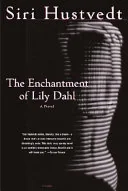
The Enchantment of Lily Dahl
 73
73

The Enchantment of Lily Dahl
Siri Hustvedt's 2004 novel, *The Enchantment of Lily Dahl*, presents a Minnesota town as a stage for a peculiar drama of artistic pursuit and emergent danger. The protagonist, Lily Dahl, a young actress, finds herself entangled with a visiting New York artist and, inadvertently, with a local murderer. Hustvedt excels at rendering the atmosphere of a close-knit community, where eccentricities flourish and hidden motives fester. The strength of the novel lies in its nuanced portrayal of Lily's internal landscape and her evolving perception of those around her. A minor limitation might be the pacing in the middle section, where the mystery element sometimes recedes behind character introspection. The scene where Lily observes the artist at work, attempting to capture the essence of the town's inhabitants, vividly illustrates the novel's exploration of how art both reveals and distorts reality. The narrative ultimately functions as a study of how fascination can lead to peril. It is a precisely observed character study wrapped in a veiled mystery.
📝 Description
73
Siri Hustvedt's 2004 novel, The Enchantment of Lily Dahl, uses a small Minnesota town as its stage.
The story centers on Lily Dahl, a young actress working in a local cafe. This establishment becomes a gathering place for a cast of unusual characters. A New York artist arrives, intending to paint these townsfolk, and begins a relationship with Lily. Their affair is complicated by the presence of a customer who is also a murderer. Lily, drawn into the unfolding mystery, takes on the role of an amateur investigator.
The novel appeals to readers who value psychological depth and stories driven by character. Those interested in the interplay of art, obsession, and the dynamics of small communities will find much to consider. It is suited for readers who prefer mysteries that focus on character and motive rather than a simple 'whodunit' plot. The book also suits those seeking literary fiction that examines identity, perception, and the hidden currents beneath everyday life.
Published in 2004, Hustvedt's novel engages with postmodern literary concerns about reality and artistic representation. The narrative questions authority and how identity is constructed, echoing traditions that examine the subjective nature of perception. The specific American setting connects it to regional literature focused on isolated communities, while the art world backdrop prompts reflection on its own influence and meaning. The book considers enchantment not just as attraction, but as a force that can warp how individuals see themselves and the world around them.
💡 Why Read This Book?
• Gain insight into the subjective nature of perception through Lily's experiences in the Minnesota town, understanding how artistic interpretation and personal desire can alter reality, as depicted in the interactions with the New York artist. • Explore the hidden psychological undercurrents within seemingly placid communities, recognizing how small-town settings can harbor dark secrets and complex motivations, as hinted at by the presence of a murderer among the cafe patrons. • Witness the power of performance and identity, particularly through Lily Dahl's background as an actress, and how this influences her understanding and navigation of the unfolding mystery and her relationships.
⭐ Reader Reviews
Honest opinions from readers who have explored this book.
❓ Frequently Asked Questions
What is the primary setting of The Enchantment of Lily Dahl?
The novel is primarily set in a small, unnamed town in Minnesota, creating a distinct atmosphere of insularity and community that influences the characters and plot.
Who is the main protagonist of the book?
The central character is Lily Dahl, a young actress working in a local cafe, around whom the narrative events and relationships revolve.
What artistic pursuit is central to the plot?
A New York artist comes to the Minnesota town specifically to paint the eccentric inhabitants, a process that becomes intertwined with Lily's own story and the unfolding mystery.
What literary genre does The Enchantment of Lily Dahl best fit?
While featuring a mystery element, the novel is largely considered literary fiction, focusing on character development, psychological exploration, and atmosphere rather than a conventional crime thriller.
When was The Enchantment of Lily Dahl first published?
The book was first published in March 2004, placing it within the early 21st-century landscape of contemporary American literature.
Does the novel explore themes of obsession?
Yes, the book delves into themes of artistic obsession, romantic fascination, and the potentially dangerous allure that can arise from intense focus on individuals or ideas.
🔮 Key Themes & Symbolism
Perception and Reality
The novel scrutinizes how individuals perceive themselves and others, particularly through the lens of art and personal relationships. The artist's intention to paint the town's eccentrics highlights the subjective nature of capturing 'truth.' Lily Dahl's own journey involves questioning her perceptions of the people around her, including the enigmatic New York artist and the threatening presence of a murderer. This theme speaks to occult philosophy's interest in illusion (maya) and the construction of perceived reality, suggesting that what we see is often filtered through our desires, fears, and assumptions.
The Artist and the Muse
The dynamic between the New York artist and Lily Dahl, as well as the artist's focus on the town's inhabitants, explores the complex relationship between creator and subject. The artist seeks to capture the 'essence' of his subjects, a pursuit that can be seen as a form of sympathetic magic or intense energetic projection. Lily, as both a subject of fascination and a potential muse, becomes entangled in this creative process, which carries an inherent risk of objectification and obsession. This reflects esoteric ideas about the transformative power of artistic creation and its potential to influence the psyche.
Hidden Darkness in Mundanity
Hustvedt contrasts the seemingly ordinary backdrop of a small Minnesota town with the presence of darker, more sinister elements. The cafe serves as a microcosm where diverse characters gather, their outward appearances masking inner turmoil or dangerous intentions. The revelation of a murderer among the patrons underscores the occult principle that shadow aspects are inherent in all things, often concealed beneath a veneer of normalcy. The novel invites readers to look beyond surface appearances, a fundamental practice in esoteric inquiry seeking deeper truths.
Enchantment and Its Perils
The title itself, 'The Enchantment of Lily Dahl,' points to a central theme of fascination and its potentially disorienting effects. This enchantment can manifest as romantic allure, artistic captivation, or the seductive nature of mystery. However, it is often fraught with danger, leading characters into situations they cannot control. This aligns with esoteric understandings of 'enchantment' not just as positive magic but as a state that can blind individuals to reality or draw them into dangerous spiritual or psychological currents, blurring the lines between attraction and peril.
💬 Memorable Quotes
Direct passages from the work, attributed to the author.
“She worked in the cafe, a meeting place for many.”
— This establishes the cafe as a symbolic crossroads, a nexus where diverse individuals converge. It serves as the stage upon which the novel's various characters and their interactions unfold, hinting at the variety of lives intersecting.
“One customer was a murderer.”
— This stark statement introduces the element of suspense and danger directly into the seemingly ordinary setting. It signifies the intrusion of a dark force into the community, transforming the narrative's trajectory.
“Lily turned sleuth.”
— This concisely describes Lily Dahl's transition from passive observer to active investigator. It signifies her agency in unraveling the mystery, driven by circumstances and perhaps her innate curiosity and observational skills.
💡 Key Ideas
Editorial paraphrase of the work's core concepts — not direct quotes.
She was an actress, and therefore she knew how to look at people.
This line underscores Lily's inherent ability to observe and interpret human behavior, a skill honed by her theatrical background. It suggests a heightened awareness of performance and motive, crucial for her eventual role as a sleuth.
The artist wanted to paint them, the eccentrics of the town.
This quote sets up the central artistic endeavor and introduces the theme of observing and capturing the unusual. It highlights the artist's external perspective on the town's inhabitants, contrasting with Lily's immersion within it.
🌙 Esoteric Significance
Tradition
While not explicitly tied to a single esoteric lineage, *The Enchantment of Lily Dahl* speaks to Gnostic and Hermetic principles concerning perception, illusion, and the hidden nature of reality. The novel's exploration of how individuals construct their understanding of the world, and how this can be distorted by enchantment or artistic projection, aligns with the Gnostic concern with escaping deception (a form of ignorance) to perceive a deeper truth. The artist's act of 'capturing' the essence of his subjects can be seen through a Hermetic lens of understanding and influencing the world through symbolic representation.
Symbolism
The cafe serves as a potent symbol of the mundane world where diverse energies and personalities converge, representing a threshold space where ordinary life meets potential disruption. The artist's canvas functions as a mirror, reflecting not just the physical form but the perceived inner state of his subjects, symbolizing the power of focused intention and interpretation in revealing or obscuring truth. Lily Dahl herself, as an actress, embodies the theme of performance and the multiplicity of selves, representing the potential for transformation and the fluid boundary between appearance and essence.
Modern Relevance
Contemporary thinkers and practitioners interested in the psychology of perception, the influence of art on consciousness, and the exploration of shadow aspects within communities can draw from Hustvedt's work. The novel's nuanced portrayal of how external observation (the artist) and internal experience (Lily) shape reality remains pertinent to fields like critical theory, art psychology, and even narrative therapy. Its examination of concealed dangers within seemingly normal environments also speaks to current concerns about hidden societal threats and the importance of critical discernment.
👥 Who Should Read This Book
• Readers interested in psychological realism and character studies, particularly those who enjoy exploring the inner lives of protagonists and the subtle dynamics of small-town existence. • Aspiring artists and art enthusiasts who are drawn to narratives that examine the creative process, the relationship between artist and subject, and the interpretation of reality through visual mediums. • Fans of literary fiction that incorporates elements of mystery and suspense, offering a slower-paced, character-focused approach to unfolding secrets and exploring human motivation.
📜 Historical Context
Siri Hustvedt's *The Enchantment of Lily Dahl*, published in 2004, emerged in a literary landscape still deeply engaged with postmodern explorations of identity, narrative, and the subjective nature of reality. The early 2000s saw authors continuing to question objective truth and explore the construction of self through stories and art. Hustvedt's novel fits within this tradition, particularly in its focus on artistic representation and psychological depth. The work engages with the legacy of American regionalism, depicting a specific locale while probing universal human experiences. Contemporaries like Jonathan Franzen, whose *The Corrections* also came out in 2001, were exploring complex family dynamics and societal critiques within literary fiction. While not a direct engagement, Hustvedt's novel participates in the broader cultural conversation about authenticity and perception that characterized literary fiction of the era. Reception at the time often noted Hustvedt's skill in psychological portraiture and atmospheric setting.
📔 Journal Prompts
Lily Dahl's role as an actress and her subsequent turn as a sleuth.
The artist's intention to capture the 'eccentrics' of the Minnesota town.
The cafe as a meeting place for disparate characters and energies.
The nature of 'enchantment' as depicted in Lily's relationships and perceptions.
The contrast between the Minnesota town's outward appearance and its hidden darkness.
🗂️ Glossary
Enchantment
In the context of the novel, enchantment refers to a state of fascination or allure, often a disorienting or captivating influence that can alter perception and lead individuals into potentially dangerous situations or obsessions.
Eccentrics
Individuals exhibiting unusual or peculiar behavior. In the novel, these characters are central to the artist's interest and contribute to the unique atmosphere of the Minnesota town.
Sleuth
A detective or amateur investigator. Lily Dahl assumes this role, driven by circumstances to uncover truths beyond the surface narrative of events.
Minnesota Town
The specific setting, a small community in Minnesota, which serves as a microcosm for exploring themes of insularity, hidden secrets, and collective psychology.
New York Artist
A character whose profession and origin represent an external perspective and artistic drive that significantly impacts the protagonist and the town's inhabitants.
Performance
Relating to Lily's background as an actress, this term signifies the act of presenting oneself or embodying a role, and how this influences perception and reality within the narrative.
Motive
The underlying reason or intention behind a character's actions. Uncovering motives is central to the mystery and psychological exploration within the novel.
This book appears in 1 collection
🔮 Readers Also Liked
Browse all →








From the “Enchantment” Collection
View all →





More Free Occult Philosophy Books
View all →