Being nobody, going nowhere
 74
74

Being nobody, going nowhere
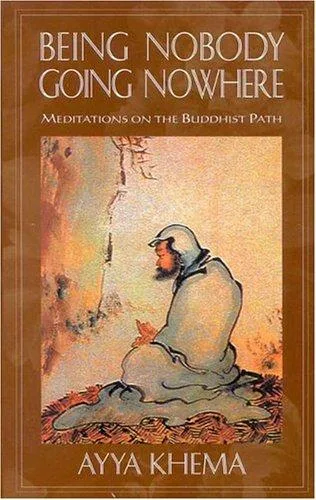
Ayya Khema’s Being Nobody, Going Nowhere cuts through spiritual jargon with the precision of a surgeon. The book’s strength lies in its unwavering focus on direct practice, eschewing intellectualization for the gritty work of observing one's own mind. Khema’s insistence on the practical application of Buddhist principles, particularly concerning the cessation of suffering, is bracingly effective. A passage detailing the impermanence of even pleasant sensations serves as a stark reminder of *anicca* (impermanence) and its role in liberation. Its primary limitation, for some readers, might be its very directness; it offers no easy comforts, demanding rigorous self-inquiry. Nevertheless, for those prepared for the challenge, it’s an invaluable guide to understanding the nature of the self. This is essential reading for serious practitioners of insight meditation.
📝 Description
74
Ayya Khema published 'Being Nobody, Going Nowhere' in 2001, distilling her practical Buddhist teachings.
This book is a guide to direct experience, not a theoretical text. Ayya Khema, a Buddhist nun and meditation teacher, presents her methods for understanding suffering and finding liberation. The focus is on applying Buddhist principles to everyday life, emphasizing the cessation of craving and the cultivation of insight for inner peace.
It is suited for individuals who prefer a clear, direct exposition of Buddhist meditation and philosophy over religious dogma. Students of Vipassanā (insight meditation) and those interested in the practical aspects of emptiness teachings will find its approach particularly useful. The book addresses the earnest seeker ready for self-examination.
Ayya Khema's teachings appeared during a time of growing Western interest in Buddhism, especially Vipassanā, in the late 20th century. Her work, grounded in the Theravāda tradition, provided accessible yet thorough instruction. She offered a direct, unadorned style that differed from more academic or blended interpretations, resonating with Westerners seeking authentic spiritual paths outside established institutions.
Ayya Khema's teachings belong to the Theravāda Buddhist tradition, emphasizing direct realization of core doctrines like non-self and emptiness. Her approach, particularly within the Vipassanā movement, focuses on experiential insight rather than abstract philosophy. This method aligns with contemplative practices across various esoteric traditions that seek liberation through inner transformation and the dissolution of egoic identification.
💡 Why Read This Book?
• Gain a practical framework for understanding and dismantling *dukkha* (suffering) by studying Ayya Khema's specific methods for identifying craving, as detailed in the book's core chapters on the Four Noble Truths. • Develop a direct experiential understanding of *anatta* (non-self) through guided contemplations and exercises presented, which encourage observing the mind's processes without attachment, a key tenet of her teaching. • Learn to apply the principles of Vipassanā meditation to daily life, moving beyond theoretical knowledge to cultivate genuine insight into impermanence and emptiness as outlined in the text.
⭐ Reader Reviews
Honest opinions from readers who have explored this book.
❓ Frequently Asked Questions
What is the core teaching of Ayya Khema in Being Nobody, Going Nowhere?
The core teaching is the cessation of suffering (*dukkha*) through the direct realization of non-self (*anatta*) and emptiness (*sunyata*). Ayya Khema emphasizes practical meditation, particularly Vipassanā, to achieve this.
When was Being Nobody, Going Nowhere first published?
Being Nobody, Going Nowhere was first published in 2001, making its teachings accessible during a period of growing interest in Buddhist meditation in the West.
Who was Ayya Khema?
Ayya Khema was a German-born Buddhist nun and influential meditation teacher. She was instrumental in bringing Theravāda Buddhist teachings, especially Vipassanā, to Westerners.
What is Vipassanā meditation as described in the book?
Vipassanā, or insight meditation, is presented as a method to observe the mind and reality as they truly are, leading to the understanding of impermanence, suffering, and non-self.
Does the book offer a path to enlightenment?
Yes, Ayya Khema presents the path to liberation from suffering, often understood as enlightenment, through diligent practice and the direct seeing of reality as taught in the Buddhist tradition.
Is this book suitable for beginners?
While direct, the book is suitable for beginners willing to engage seriously with meditation and Buddhist philosophy. Ayya Khema’s explanations are clear and practical, avoiding overly academic language.
🔮 Key Themes & Symbolism
The Cessation of Suffering
This theme forms the bedrock of Ayya Khema's teaching. She presents *dukkha* not as an occasional state but as an inherent quality of conditioned existence, arising from craving and attachment. The book meticulously outlines the Four Noble Truths, not as abstract doctrines, but as a diagnostic tool and a practical roadmap. Ayya Khema guides the reader to observe the arising and passing of pleasant, unpleasant, and neutral feelings, demonstrating how clinging to them perpetuates suffering. The ultimate goal is the complete cessation of this cycle through insight into emptiness.
Realizing Non-Self (Anatta)
Ayya Khema challenges the conventional notion of a fixed, permanent self. She explains *anatta* not as nihilism but as the understanding that what we conventionally call 'self' is a composite of ever-changing physical and mental phenomena. Through diligent Vipassanā practice, the reader is encouraged to witness the impermanent nature of thoughts, emotions, and sensations, thereby loosening the grip of ego-identification. This realization is crucial for overcoming possessiveness and the fear of loss, leading to profound freedom.
The Practice of Vipassanā
Central to the book is the emphasis on Vipassanā, or insight meditation. Ayya Khema provides practical instructions for cultivating mindfulness of the breath and body, and for observing mental states with equanimity. This is not about achieving altered states but about seeing reality as it is – impermanent, unsatisfactory, and without a solid self. The book stresses consistency and direct observation over intellectual understanding, positioning Vipassanā as the primary tool for dismantling ignorance and achieving liberation.
Emptiness (Sunyata)
While rooted in Theravāda, Ayya Khema's discussions touch upon emptiness in a way that speaks to broader Mahayana concepts. She presents *sunyata* not as a void, but as the absence of inherent, independent existence in all phenomena. Understanding emptiness helps to dissolve clinging and aversion, as one sees that there is no solid 'self' to protect or 'other' to attack. This perspective is cultivated through the sustained practice of observing impermanence and interdependence.
💬 Memorable Quotes
Direct passages from the work, attributed to the author.
“Suffering is caused by craving. If you want to be free from suffering, you must give up craving.”
— This direct statement captures the Buddhist understanding of suffering's root cause. Ayya Khema uses this principle to guide practitioners towards observing their desires and attachments, showing how relinquishing them leads to peace.
“You must see things as they are, not as you want them to be.”
— This emphasizes the core practice of Vipassanā meditation: cultivating unbiased awareness. Ayya Khema urges readers to confront reality directly, without the filters of hope, fear, or personal preference.
“The mind is the only thing you have to work with.”
— This highlights Ayya Khema's pragmatic approach. All spiritual development and liberation occur within the mind, through direct observation and transformation of one's own mental processes.
💡 Key Ideas
Editorial paraphrase of the work's core concepts — not direct quotes.
There is no 'I' that is born and dies. There is only a process.
This paraphrased concept highlights the doctrine of *anatta* (non-self). It encourages a shift in perspective from a solid, enduring ego to a dynamic flow of interconnected phenomena, which is key to liberation.
When you understand impermanence, you understand emptiness.
This paraphrased concept links two fundamental Buddhist insights. Recognizing that all things are constantly changing (*anicca*) naturally leads to the understanding that nothing possesses a fixed, independent nature (*sunyata*).
🌙 Esoteric Significance
Tradition
Ayya Khema's work is firmly rooted in the Theravāda Buddhist tradition, specifically the Vipassanā (insight meditation) lineage. While Theravāda is often considered the most orthodox school of Buddhism, its emphasis on direct experience, the understanding of *dukkha* (suffering), and the path to liberation through personal effort aligns with broader esoteric principles of self-transformation and uncovering hidden truths about reality. Her teachings depart from purely devotional or ritualistic interpretations, focusing instead on the internal, psychological work of dismantling ignorance and craving.
Symbolism
The book doesn't heavily rely on overt symbolic imagery in the Western esoteric sense, but key concepts function symbolically. The 'path' represents the Noble Eightfold Path, a structured journey toward enlightenment. 'Cessation' symbolizes the ultimate goal of Nirvana, the end of suffering. The 'mind' itself is the primary symbol, representing the locus of both delusion and liberation, the field where the work of insight meditation is performed.
Modern Relevance
Ayya Khema's teachings remain highly relevant today, particularly within the mindfulness and secular Buddhist movements. Contemporary mindfulness-based stress reduction (MBSR) programs and secular meditation apps owe a debt to the practical, de-dogmatized approach she championed. Thinkers and practitioners focused on cognitive science and meditation, as well as those seeking non-religious frameworks for psychological well-being and spiritual inquiry, continue to draw upon her clear exposition of insight meditation principles.
👥 Who Should Read This Book
• Serious practitioners of Vipassanā meditation seeking to deepen their understanding of core Buddhist principles like *dukkha* and *anatta* through Ayya Khema's direct teachings. • Individuals disillusioned with conventional religious or spiritual paths who desire a practical, experiential approach to understanding suffering and finding inner peace. • Students of comparative religion or psychology interested in the practical application of Buddhist philosophy for mental liberation and self-awareness.
📜 Historical Context
Ayya Khema's teachings, brought to prominence in the late 20th century, emerged during a significant period of Western engagement with Theravāda Buddhism, particularly Vipassanā meditation. While figures like S.N. Goenka and Joseph Goldstein were also popularizing these practices, Ayya Khema's approach often stood out for its directness and unwavering focus on the Four Noble Truths and the path to cessation. She trained under prominent Thai Forest Tradition monks, grounding her teachings in a lineage known for its rigor. Her work provided an accessible, yet uncompromising, counterpoint to more syncretic or academic Buddhist movements, emphasizing direct experiential realization over theoretical exploration. Her influence grew through international teaching tours and the establishment of meditation centers, making her a key figure in the secularization and Westernization of Buddhist meditation practices.
📔 Journal Prompts
The arising and passing of pleasant sensations: observe and record.
Identify one instance of craving today and its subsequent effect.
Reflect on the concept of *anatta* as it relates to your daily interactions.
What does 'seeing things as they are' mean in the context of your emotions?
The practice of equanimity towards unpleasant feelings: initial observations.
🗂️ Glossary
Dukkha
A fundamental Buddhist concept often translated as suffering, dissatisfaction, or stress. It refers to the inherent unsatisfactoriness of conditioned existence, arising from impermanence and attachment.
Anatta
The doctrine of non-self or egolessness. It asserts that there is no permanent, unchanging, independent self or soul in any phenomenon, including sentient beings.
Sunyata
Often translated as emptiness. It signifies the lack of inherent, independent existence in all phenomena. It is not a void but the absence of a fixed, self-sufficient nature.
Vipassanā
Insight meditation. A Buddhist meditation practice focused on developing direct, experiential understanding of the true nature of reality, particularly impermanence, suffering, and non-self.
Craving (Tanha)
A psychological state of desire, thirst, or clinging, identified in Buddhism as the primary cause of suffering (*dukkha*).
Noble Eightfold Path
The foundational path in Buddhism leading to the cessation of suffering. It comprises Right Understanding, Right Thought, Right Speech, Right Action, Right Livelihood, Right Effort, Right Mindfulness, and Right Concentration.
Impermanence (Anicca)
The principle that all conditioned things are in a constant state of flux and change. Nothing remains the same; all phenomena are transient.
🔮 Readers Also Liked
Browse all →









More by Ayya Khema
All books →
More Free Occult Philosophy Books
View all →