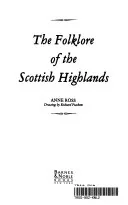
The Folklore of the Scottish Highlands
 75
75

The Folklore of the Scottish Highlands
Anne Ross's "The Folklore of the Scottish Highlands" is a significant scholarly effort, particularly for its meticulous attention to oral tradition. The author’s fluency in Gaelic and her direct engagement with Highland communities in the 1980s (prior to the 1993 publication) lend an undeniable authority to her findings. One particularly compelling aspect is the detailed exploration of specific local legends, moving beyond generalized myth to the granular, verifiable accounts collected from individuals. However, the work’s scholarly tone, while a strength for academic readers, may present a barrier to those seeking a more casual entry into Highland mythology. The section on the influence of Christianity on pre-Christian beliefs, for instance, is rigorous but dense. Despite this, the book remains a vital resource for understanding the deep roots of Scottish Highland folklore, demonstrating its unique character born from language and landscape.
📝 Description
75
Anne Ross's 1993 book examines the oral traditions forming the bedrock of Highland culture.
Published in 1993, The Folklore of the Scottish Highlands by Celtic scholar Anne Ross delves into the oral traditions that form the bedrock of Highland culture. Ross, fluent in Gaelic and intimately familiar with the region, meticulously collected and authenticated tales passed down through generations. The work highlights the connection between the Gaelic spirit, its linguistic heritage, its reverence for the natural world, and its love for the homeland.
Ross's firsthand research in the Highlands allowed her to critically assess published materials against living accounts from local storytellers, ensuring the authenticity of the collected narratives. The book situates Highland folklore within its historical and cultural context, demonstrating how societal changes interacted with enduring traditions. Ancient beliefs and customs continued to shape the worldview of Highland communities even as the modern era encroached.
Key concepts examined include supernatural beings, the significance of landscape in myth, and the role of ritual and belief in daily life. The book offers a scholarly yet accessible examination of archetypal patterns underpinning the folklore, revealing a consistent worldview across diverse tales.
This book situates itself within the study of pagan survivals and folk magic in Western Europe. It examines how ancient beliefs, often tied to the natural world and specific landscapes, persisted and adapted within Highland communities. Ross's work connects these traditions to the linguistic and cultural identity of the Gaelic people, showing their role in shaping worldview and practice.
💡 Why Read This Book?
• Gain an understanding of the specific oral traditions of the Scottish Highlands, moving beyond generalized Celtic myths to authentic, firsthand accounts collected by Anne Ross. • Explore the profound connection between the Gaelic language and the expression of Highland folklore, as detailed in the book's analysis of linguistic nuances. • Discover the historical context of Highland beliefs, including how ancient traditions interacted with Christianity, as illuminated by Ross's research.
⭐ Reader Reviews
Honest opinions from readers who have explored this book.
❓ Frequently Asked Questions
When was 'The Folklore of the Scottish Highlands' originally published?
Anne Ross's seminal work, 'The Folklore of the Scottish Highlands,' was first published in 1993, making it a key text for understanding Highland traditions from the late 20th century.
What is Anne Ross's background related to Highland folklore?
Anne Ross was a Celtic scholar who was fluent in Gaelic and had lived and worked extensively in the Scottish Highlands, enabling her to gather information directly from oral sources.
How does the book differentiate Highland folklore from other Celtic traditions?
The book emphasizes the unique character of Highland folklore, attributing its richness to oral tradition, the specificities of the Gaelic spirit, and a deep connection to the Highland landscape.
Does the book discuss specific supernatural beings or creatures?
Yes, 'The Folklore of the Scottish Highlands' explores various supernatural beings and figures prevalent in Highland oral traditions, examining their roles and significance within the cultural narratives.
What is the significance of oral tradition in this book?
The book argues that oral tradition is central to the richness and authenticity of Highland folklore, preserving the nuances of Gaelic language, culture, and worldview over generations.
Is 'The Folklore of the Scottish Highlands' suitable for beginners?
While comprehensive, the book's scholarly approach makes it particularly valuable for serious students and researchers of folklore and Celtic studies, rather than casual readers seeking introductory material.
🔮 Key Themes & Symbolism
The Gaelic Oral Tradition
The foundational principle of this work is the singular importance of oral tradition in preserving the essence of Scottish Highland folklore. Anne Ross highlights how the Gaelic language, with its inherent love of words and expressive capabilities, served as the primary vehicle for transmitting myths, legends, and beliefs across generations. This focus distinguishes Highland narratives, emphasizing their unique rhythm, cadence, and worldview, shaped directly by the spoken word and the communal act of storytelling.
Spirituality and the Highland Landscape
This book meticulously details the intrinsic link between the Highland environment and its spiritual or folkloric dimensions. Ross illustrates how natural features—mountains, lochs, glens—are not merely backdrops but active participants in the folklore, often imbued with supernatural significance or serving as the dwelling places of ancient beings. This deep symbiosis reflects a worldview where the sacred is intimately woven into the fabric of the land itself.
The Interplay of Belief Systems
A crucial element explored is the dynamic relationship between indigenous Highland beliefs and the influence of external systems, particularly Christianity. Ross examines how older animistic and magical traditions adapted, merged, or persisted alongside Christian doctrines. This section unpacks the complex layering of spiritual ideas, showing how folklore reflects a continuous negotiation between ancient practices and evolving religious landscapes, often preserving pre-Christian elements in disguised forms.
Archetypes of Highland Folklore
The work identifies and analyzes recurring archetypal figures and motifs within Highland narratives. These range from specific supernatural entities, such as the 'Sìth' or water spirits, to broader thematic patterns concerning heroism, fate, and the uncanny. Ross's scholarly approach, grounded in firsthand accounts, reveals these archetypes not as abstract constructs but as living components of a vibrant cultural heritage.
💬 Memorable Quotes
Direct passages from the work, attributed to the author.
“Much of Highland folklore has been handed down by oral tradition.”
— This statement underscores the book's core thesis: that the authenticity and richness of Highland tales are intrinsically tied to their transmission through spoken word, preserving a unique cultural voice.
“It is characteristic of the Gaelic spirit: their love of words, their love of nature, and perhaps above all, their love of their homeland.”
— This captures the essence of what Ross identifies as the driving forces behind Highland folklore – a deep linguistic appreciation, a profound connection to the natural world, and an unwavering patriotism.
“Anne Ross... has lived and worked in the Highlands, which enabled her to collect information first hand.”
— This highlights the author's direct, immersive methodology, emphasizing her credibility and the unique value of her research derived from personal experience and direct interaction with tradition bearers.
“Assessing the veracity of material already published.”
— This points to the critical, scholarly rigor Ross applied, comparing existing written accounts with the living oral traditions to ensure accuracy and authenticity in her collected folklore.
“The richness of the folklore of the Highlands of Scotland is due, in part, to the fact that so much of it has been handed down by oral tradition.”
— This opening observation sets the stage, directly linking the vibrant and extensive nature of Highland folklore to its primary mode of preservation: oral transmission.
🌙 Esoteric Significance
Tradition
While not explicitly aligned with a singular esoteric lineage like Hermeticism or Theosophy, Ross's work functions within the broader tradition of comparative mythology and folklore studies that often inform esoteric thought. It provides source material and context for understanding archetypal patterns and animistic beliefs that are frequently reinterpreted and utilized within modern esoteric practices seeking connection to older, nature-based spiritualities.
Symbolism
The book looks at symbols deeply rooted in the Highland landscape and psyche. Motifs like the 'Sìth' (fairies or spirits) represent the permeable boundary between the human and supernatural realms. Sacred wells and standing stones, often discussed in relation to pre-Christian ritual practices, symbolize ancient connections to earth energies and elemental forces, serving as focal points for communal or personal spiritual engagement.
Modern Relevance
Contemporary practitioners of animism, neo-paganism, and nature-based spiritualities often draw upon the detailed accounts of Highland folklore found in Ross's work. Thinkers exploring ecopsychology or deep ecology might also find resonance in the book's portrayal of an integrated worldview where human identity is inseparable from the natural environment, offering a model for re-establishing this connection in modern society.
👥 Who Should Read This Book
• Students of Celtic and Scottish history seeking an authentic understanding of regional folklore beyond national myths. • Researchers in comparative mythology and folklore interested in the impact of oral tradition on cultural narratives. • Individuals drawn to nature-based spirituality and animistic beliefs who wish to explore historical European roots.
📜 Historical Context
Anne Ross's "The Folklore of the Scottish Highlands," published in 1993, emerged during a period of renewed academic and popular interest in Celtic studies and regional folklore. The late 20th century saw a significant body of work dedicated to preserving and analyzing oral traditions before their potential disappearance. Ross's approach, rooted in direct fieldwork and Gaelic fluency, contrasted with earlier, more generalized compilations. Her work addressed the specific cultural context of the Highlands, a region grappling with the aftermath of the Highland Clearances and the evolving role of Gaelic culture. While not directly engaging in a public debate with a specific contemporary scholar, Ross’s meticulous documentation and focus on oral sources positioned her work as a critical counterpoint to more romanticized or less empirically grounded accounts of Scottish myth. The book mattered by providing a scholarly foundation for understanding a distinct cultural heritage.
📔 Journal Prompts
The concept of the 'Sìth' in Highland folklore.
Reflecting on the connection between Gaelic language and storytelling.
The role of sacred sites in Highland belief systems.
How nature features as an active element in Highland tales.
The persistence of ancient practices alongside Christian influence.
🗂️ Glossary
Sìth
A term often referring to fairies, supernatural beings, or sometimes the fairy folk collectively in Scottish folklore. They are depicted as existing in an otherworldly realm closely connected to the human world.
Gaelic Spirit
Refers to the distinctive cultural and psychological characteristics attributed to the Gaelic-speaking people of Scotland, often emphasizing a love of language, nature, and homeland.
Oral Tradition
The transmission of knowledge, customs, beliefs, and stories from one generation to the next through spoken communication, rather than written records.
Folk Belief
Customs, superstitions, and traditional explanations of natural phenomena held by ordinary people, often predating or existing alongside formal religious or scientific doctrines.
Standing Stones
Large, upright stones erected in ancient times, often found in circles or alignments. In the Highlands, they are frequently associated with ritual, astronomical observation, or mythic events.
Sacred Wells
Natural springs or wells believed to possess special powers or be inhabited by spirits, often serving as sites for healing rituals or votive offerings in traditional belief systems.
Veracity
The quality of being truthful; accuracy. In the context of the book, it refers to the reliability and authenticity of folkloric accounts.
This book appears in 1 collection
🔮 Readers Also Liked
Browse all →







From the “Augury” Collection
View all →




More Free Occult Philosophy Books
View all →