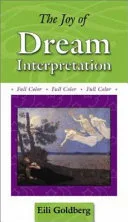
The Joy of Dream Interpretation
 80
80

The Joy of Dream Interpretation
Eili Goldberg’s "The Joy of Dream Interpretation" tackles a vast subject with commendable clarity. The book’s strength lies in its extensive cataloguing of dream symbols, presented with full-colour illustrations that aid in immediate recognition. Unlike purely academic texts, Goldberg’s work prioritizes accessibility, making complex psychological concepts digestible for a general readership. A particularly effective section details the nuanced interpretations of common anxieties, such as falling or being chased, offering concrete guidance rather than vague pronouncements. However, the book’s breadth sometimes leads to a lack of depth in exploring the more intricate, personal layers of dream symbolism. While it provides a solid foundation, advanced practitioners might find the interpretations somewhat generalized. Nevertheless, for anyone seeking a practical, visually-supported introduction to the language of dreams, Goldberg offers a well-organized and useful resource.
📝 Description
80
Eili Goldberg's 2002 guide offers a structured way to understand subconscious dream messages.
Published in 2002, "The Joy of Dream Interpretation" presents a structured method for deciphering the subconscious messages within dreams. The book lists many dream images and emotional states, with interpretations based on common psychological and esoteric connections. Goldberg aims to clarify the often confusing world of dreams, showing them as meaningful communications from within, not just random events.
This book is for anyone interested in personal growth, self-discovery, and exploring their inner world. It is useful for those new to dream analysis who want practical ways to interpret their own dreams. It also serves those with some experience who want to learn more symbols and meanings. The work appeals to readers interested in Jungian psychology, esoteric studies, and consciousness.
Goldberg's work follows a long tradition of dream interpretation that stretches back to ancient Mesopotamia. Building on the psychological insights of figures like Carl Jung, this book makes dream analysis accessible for a contemporary audience. It acknowledges the personal nature of symbols while offering a guide to common archetypes. The book connects dream analysis to broader themes of self-discovery and spiritual development.
💡 Why Read This Book?
• Learn a systematic method for decoding your nocturnal visions, moving beyond guesswork by understanding the structured approach Goldberg outlines for analyzing dream elements and emotional context, as detailed in her comprehensive symbol catalog. • Gain practical tools for self-discovery by exploring how specific dream symbols, such as the recurring motif of flying or encountering deceased relatives, can offer direct commentary on your waking life challenges and aspirations. • Discover the historical roots of dream interpretation, understanding how Goldberg’s 2002 publication builds upon centuries of human fascination with dreams, from ancient traditions to the psychological theories of figures like Carl Jung.
⭐ Reader Reviews
Honest opinions from readers who have explored this book.
❓ Frequently Asked Questions
What is the primary goal of "The Joy of Dream Interpretation"?
The primary goal is to equip readers with the knowledge and tools to understand the meaning of their dreams. It presents a detailed catalog of dream symbols and emotions, offering interpretations to help individuals gain insight into their subconscious.
Who is the author, Eili Goldberg?
Eili Goldberg is the author of "The Joy of Dream Interpretation," first published in 2002. While details about her broader career are not extensively provided, this work positions her as an accessible guide to dream analysis.
Does the book focus on any specific psychological school of thought?
While drawing on general principles of dream analysis that echo Jungian psychology's emphasis on symbols, the book is designed for a broad audience and doesn't strictly adhere to one academic school, focusing instead on practical interpretation.
What makes this dream interpretation guide unique?
Its uniqueness lies in its full-colour presentation and extensive cataloguing of dream pictures and feelings, making it a visually engaging and comprehensive resource for understanding a wide range of dream experiences.
Is "The Joy of Dream Interpretation" suitable for beginners?
Yes, the book is highly suitable for beginners. Its clear structure, accessible language, and detailed explanations of common dream symbols make it an excellent starting point for anyone new to dream interpretation.
What kind of dream content does the book cover?
It covers a vast array of dream content, including common dream pictures like flying, falling, being chased, as well as specific objects, people, and the emotional states experienced within the dream.
🔮 Key Themes & Symbolism
Symbol Lexicon
The book functions as an extensive lexicon, detailing a multitude of dream symbols – from common objects like keys and doors to more abstract concepts like water or light. Each symbol is presented with potential interpretations, encouraging readers to connect these universal motifs to their personal circumstances. Goldberg emphasizes that while symbols have general meanings, their significance is ultimately filtered through the dreamer's individual experience and emotional state within the dream narrative.
Emotional Resonance
Beyond mere imagery, Goldberg places significant importance on the emotional tone of a dream. Fear, joy, anxiety, or peace experienced during a dream are treated as crucial interpretive keys. The book guides readers to consider how specific dream scenarios evoke particular feelings, suggesting that the emotional impact provides vital context for understanding the subconscious message. This focus on affect differentiates it from purely literal dream dictionaries.
Subconscious Communication
A core tenet is that dreams serve as a direct channel for the subconscious mind to communicate with the conscious self. Goldberg frames dream interpretation not as fortune-telling, but as a method of self-understanding. By analyzing dream content, individuals can uncover hidden desires, unresolved conflicts, or emerging potentials that might otherwise remain unrecognized. The book promotes an active dialogue with the inner self through dream recall and analysis.
Personalized Meaning
While providing a framework of common interpretations, the book consistently stresses the deeply personal nature of dream symbolism. Goldberg encourages readers to question and explore what a symbol might mean *to them*, rather than rigidly adhering to a fixed definition. The full-colour illustrations serve as springboards for personal association, inviting subjective engagement with the material presented in the catalog.
💬 Memorable Quotes
Direct passages from the work, attributed to the author.
“Dreams are an inseparable part of our lives.”
— This foundational statement underscores the book's premise: that dreams are not peripheral but integral to human experience, serving as a vital, albeit often overlooked, aspect of our psychological and spiritual existence.
“This full-colour guide presents a detailed list of dream pictures and feelings, and their meaning.”
— This blurb highlights the book's practical, visual approach. It promises a comprehensive resource that connects specific dream imagery and emotions to understandable interpretations, making the complex subject of dream analysis accessible.
“Understanding the emotional tone of your dream is as crucial as interpreting its symbols.”
— This concept emphasizes that the feelings experienced within a dream—fear, joy, confusion—are not mere byproducts but essential components for unlocking the dream's true message, providing context for the symbolic content.
“Consider the personal associations you have with a dream symbol.”
— This advice encourages readers to move beyond generic dictionary definitions, recognizing that a symbol's meaning is deeply influenced by the individual dreamer's unique experiences, memories, and emotional connections.
💡 Key Ideas
Editorial paraphrase of the work's core concepts — not direct quotes.
Your dreams offer insights into your subconscious.
This paraphrased concept articulates the central thesis: dreams act as a direct line to the inner self, revealing hidden aspects of our psyche, including desires, fears, and unresolved issues, that merit conscious attention.
🌙 Esoteric Significance
Tradition
This work aligns with the broader esoteric tradition of seeking meaning beyond the material world, particularly within the area of psychology and consciousness studies influenced by figures like Carl Jung. While not strictly adhering to a single lineage like Hermeticism or Kabbalah, it taps into the universal esoteric principle that the inner world holds profound wisdom accessible through symbolic language, much like alchemical texts or Gnostic scriptures.
Symbolism
Key symbols explored include common archetypes such as the 'house' representing the self, 'water' signifying the unconscious or emotional states, and 'flying' often interpreted as freedom or spiritual transcendence. These symbols are treated not merely as psychological markers but as carriers of deeper, often archetypal, meaning that resonates across cultures and time, connecting the individual dream to a larger symbolic cosmos.
Modern Relevance
Contemporary practices in mindfulness, consciousness exploration, and even therapeutic modalities that incorporate dream work continue to draw upon the principles outlined in books like Goldberg’s. Thinkers and practitioners exploring transpersonal psychology or depth psychology often utilize such guides as foundational tools for understanding the symbolic language of the psyche in an accessible format.
👥 Who Should Read This Book
• Aspiring dream interpreters seeking a structured, visually-rich resource to begin cataloging and understanding their dream experiences, moving from basic symbol recognition to nuanced emotional interpretation. • Individuals interested in Jungian psychology and archetypal symbolism who want a practical, user-friendly guide that translates complex theories into actionable steps for self-analysis. • Anyone undergoing personal development or spiritual growth who wishes to utilize their dreams as a tool for self-awareness, conflict resolution, and uncovering subconscious insights.
📜 Historical Context
Eili Goldberg’s "The Joy of Dream Interpretation," first published in 2002, entered the field of dream analysis during a period of sustained public interest in psychology and self-discovery. This era saw the continued influence of Carl Jung's archetypal psychology and a popular fascination with esoteric practices. While Freud’s emphasis on repressed sexuality dominated earlier interpretations, Jung’s focus on universal symbols and the collective unconscious provided a framework more amenable to accessible guides like Goldberg’s. The book can be seen as part of a broader trend in the late 20th and early 21st centuries, where works like those by Robert A. Johnson (e.g., "Inner Work") made Jungian concepts more palatable to a general audience. Goldberg’s work, with its full-colour presentation, aimed for an even wider reach than some of its more text-heavy predecessors, positioning dream interpretation as a readily available tool for personal insight in the digital age.
📔 Journal Prompts
The recurring symbol of the labyrinth in dreams.
The emotional field of dreams involving water.
Interpreting the act of falling within a dream narrative.
The significance of encountering specific animals in dreams.
Mapping the transition from fear to empowerment in dream recall.
🗂️ Glossary
Archetype
Universal, archaic patterns and images that derive from the collective unconscious and are the psychic counterpart of a biological instinct. In dreams, these often manifest as recurring characters or themes.
Collective Unconscious
A concept introduced by Carl Jung, referring to a layer of the unconscious mind that is shared by all humanity, containing archetypes and inherited predispositions.
Dream Symbols
Images, figures, or actions within a dream that represent deeper, often unconscious, meanings or concepts. Their interpretation is key to understanding the dream's message.
Subconscious Mind
The part of the mind of which we are not fully aware but that influences our actions and feelings. Dreams are considered a primary way the subconscious communicates.
Nightmare
A dream that evokes feelings of fear, terror, or distress. While unpleasant, nightmares can signal unresolved issues or anxieties that require attention.
Lucid Dreaming
A state of dreaming in which the dreamer is aware that they are dreaming and may even exert some control over the dream's content or narrative.
Personal Unconscious
In Jungian psychology, this refers to the part of the unconscious mind comprising repressed memories, forgotten experiences, and undeveloped aspects of the personality unique to the individual.