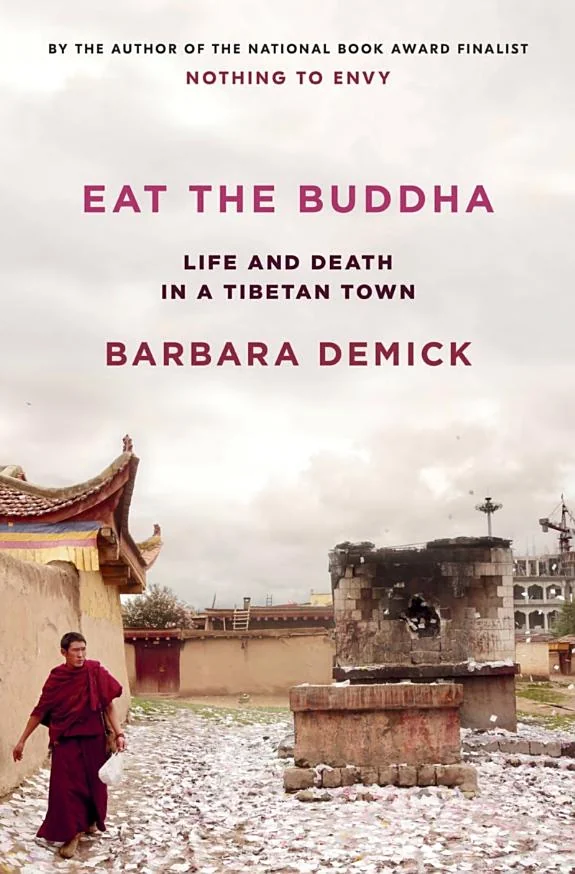
Eat the Buddha
 79
79

Eat the Buddha
Demick’s "Eat the Buddha" avoids the usual pitfalls of historical reporting by centering its narrative on the visceral experiences of individuals. The strength lies in its unflinching portrayal of how grand political movements fracture into deeply personal tragedies. A particularly striking section details the destruction of ancient temples and artifacts, illustrating the literal "eating" of cultural identity that the title implies. However, the book's relentless focus on suffering, while necessary for its impact, can feel overwhelming. The sheer weight of individual accounts, without extensive contextualization of the broader political machinations beyond the immediate circles of those interviewed, occasionally leaves the reader yearning for a wider analytical lens. Despite this, Demick crafts a powerful and necessary record of a period few Western accounts capture with such intimate detail.
📝 Description
79
Barbara Demick's 2020 book examines the Cultural Revolution through personal stories.
Published in 2020, Barbara Demick's "Eat the Buddha" is not a spiritual text but a journalistic account of the Cultural Revolution's impact on ordinary Chinese lives. The book uses individual narratives to show the societal upheaval and ideological shifts of the era. Demick focuses on people caught in Mao Zedong's political campaigns, revealing the human cost of extreme ideology.
This work is suitable for readers interested in 20th-century Chinese history, especially the Cultural Revolution (1966-1976). It appeals to those who prefer understanding history through personal stories over broad surveys. Students of political science, sociology, and those interested in totalitarianism's consequences will find its case studies valuable. It is also for readers who appreciate narrative journalism that examines the human condition under pressure.
The Cultural Revolution, launched in 1966, aimed to purge capitalist and traditional elements and reassert Maoist ideology. This decade brought political purges, social chaos, and economic disruption. Demick's book counters official histories by detailing the intimate, often brutal, experiences of those who lived through it. Its publication allows for reflection on long-term repercussions and the suppression of historical narratives in China.
While "Eat the Buddha" is a work of journalism, its focus on the human cost of extreme ideology and the suppression of personal experience within a totalitarian system can be seen as an esoteric inquiry into the nature of belief and societal control. The book examines how abstract political slogans reshape individual lives and relationships, mirroring a broader esoteric interest in the forces that shape consciousness and collective behavior, even when those forces are political rather than spiritual. It uncovers the hidden motivations and devastating consequences behind a historical period that sought to remake society through ideological fervor.
💡 Why Read This Book?
• Gain insight into the devastating personal impact of the Chinese Cultural Revolution (1966-1976) through the specific experiences of individuals like Wei, whose factory work and personal life were irrevocably altered. • Understand the symbolic destruction of tradition, as exemplified by the literal smashing of Buddhist statues, offering a concrete metaphor for ideological extremism. • Appreciate narrative journalism that prioritizes human testimony over abstract political analysis, revealing how societal upheaval manifests in individual lives.
⭐ Reader Reviews
Honest opinions from readers who have explored this book.
❓ Frequently Asked Questions
What is the central metaphor behind the title 'Eat the Buddha'?
The title 'Eat the Buddha' is a metaphor for the destructive zeal of the Cultural Revolution, representing the systematic dismantling and consumption of traditional culture, religious icons, and moral values under Maoist ideology.
Which specific historical period does 'Eat the Buddha' primarily cover?
The book extensively covers the period of the Chinese Cultural Revolution, which officially lasted from 1966 to 1976, detailing its profound and often brutal effects on ordinary citizens.
What type of journalism does Barbara Demick employ in 'Eat the Buddha'?
Demick employs narrative journalism, focusing on personal testimonies and detailed individual stories to illustrate the broader historical events and societal changes of the Cultural Revolution.
Are there specific locations in China that are central to the book's narrative?
Yes, the book focuses heavily on the experiences of people in Beijing and the surrounding rural areas, particularly those whose lives were shaped by the political climate in the capital during the Cultural Revolution.
How does 'Eat the Buddha' differ from more general histories of the Cultural Revolution?
Unlike broad historical surveys, 'Eat the Buddha' prioritizes intimate, first-person accounts, humanizing the immense societal disruption by showing its effects on individual families and personal relationships.
Who are some of the key figures or types of individuals whose stories are told?
The book features the stories of ordinary citizens caught in the political storm, including factory workers, intellectuals, students, and families whose lives were upended by Red Guard activism and ideological purges.
🔮 Key Themes & Symbolism
Ideological Fanaticism's Toll
The work dissects how fervent adherence to Maoist ideology during the Cultural Revolution (1966-1976) led to the destruction of personal relationships and societal norms. It illustrates how abstract political slogans became justifications for cruelty and betrayal, forcing individuals to choose between loyalty to the Party and their loved ones. The book meticulously documents the pervasive atmosphere of suspicion and the psychological toll of constant political scrutiny, revealing how extreme belief systems can warp human empathy and ethical considerations.
Destruction of Heritage
"Eat the Buddha" vividly portrays the systematic annihilation of China's cultural and religious heritage under the banner of revolution. This included the physical destruction of ancient temples, artworks, and historical artifacts, a concept starkly represented by the book's title. The work explores how this razing of the past was intended to sever ties with traditionalism and create a completely new society, but in practice, it led to an irreparable loss of historical memory and cultural identity.
The Personalization of Political Upheaval
Demick excels at translating the vast, chaotic events of the Cultural Revolution into intimate, personal narratives. The book focuses on individuals like Wei, showing how sweeping political campaigns directly impacted their daily lives, employment, family structures, and emotional well-being. It underscores that historical events are not abstract forces but are experienced through the concrete realities of individual existence, highlighting the resilience and suffering of ordinary people during extraordinary times.
Silenced Histories and Memory
The work implicitly addresses the challenge of historical memory in post-Mao China, where certain narratives of the Cultural Revolution remain suppressed or officially sanctioned. By bringing forward the voices of those who suffered, Demick attempts to counter the dominant historical discourse and preserve accounts that might otherwise be lost. The book serves as a evidence of the importance of individual testimony in understanding periods of state-sponsored trauma and historical amnesia.
💬 Memorable Quotes
Direct passages from the work, attributed to the author.
“Children were encouraged to denounce their parents.”
— This highlights the extreme breakdown of family structures and loyalty during the Cultural Revolution. It illustrates how ideological fervor overrode fundamental human bonds, forcing individuals into morally compromising positions.
“The period saw widespread public denunciations and beatings.”
— This points to the pervasive use of public humiliation and physical violence as tools of political control and ideological enforcement during the Cultural Revolution, demonstrating the brutal methods employed.
“Even simple acts of kindness could be interpreted as counter-revolutionary.”
— This emphasizes the climate of paranoia and suspicion that permeated society. It shows how the revolutionary fervor distorted normal human interactions, making basic empathy a dangerous act.
“The book focuses on the lived experience of the Cultural Revolution.”
— This interpretation underscores the book's method of grounding historical events in personal narratives, prioritizing individual testimonies over abstract political analysis to convey the human impact.
💡 Key Ideas
Editorial paraphrase of the work's core concepts — not direct quotes.
The destruction of Buddhist statues is a literal enactment of the title.
This paraphrased concept refers to the physical dismantling of religious icons during the Cultural Revolution. It serves as a potent symbol for the broader eradication of traditional beliefs, cultural artifacts, and moral frameworks that the book's title captures.
🌙 Esoteric Significance
Tradition
While not explicitly an esoteric text, "Eat the Buddha" engages with themes of ideological deconstruction that resonate with certain philosophical and quasi-mystical critiques of dogma. Its focus on the destruction of traditional symbols and beliefs echoes Gnostic ideas of confronting false demiurges or the destructive potential of rigid, materialistic ideologies that obscure deeper truths. The book's examination of how belief systems can pervert human nature touches upon perennial philosophical questions about good, evil, and the nature of consciousness under duress.
Symbolism
The titular "Buddha" serves as a potent symbol for traditional values, religious faith, and cultural heritage systematically targeted for destruction during the Cultural Revolution. The act of "eating" it signifies a violent consumption and annihilation of these foundational elements. Other symbols include the Red Guards, representing revolutionary fervor often detached from reasoned morality, and the pervasive atmosphere of fear, symbolizing the oppressive weight of ideological control that stifles individual expression and authentic connection.
Modern Relevance
In contemporary discourse, "Eat the Buddha" remains relevant for understanding the dangers of unchecked ideological movements and the manipulation of mass psychology. Thinkers and activists concerned with political extremism, the weaponization of nationalism, and the suppression of historical truth can draw parallels. Its narrative serves as a case study for how easily societal structures can be dismantled and how individual lives are devastated when political dogma eclipses humanistic values, offering cautionary lessons for navigating polarized modern societies.
👥 Who Should Read This Book
• Students of 20th-century Asian history seeking granular, personal accounts of the Cultural Revolution's impact beyond official records. • Readers interested in narrative journalism and testimonial literature who appreciate how individual stories illuminate broad historical events. • Individuals examining the psychological effects of political extremism and societal upheaval, looking for case studies on human resilience and suffering under oppressive regimes.
📜 Historical Context
Published in 2020, "Eat the Buddha" arrives decades after the tumultuous Chinese Cultural Revolution (1966-1976). This era, initiated by Mao Zedong, sought to purge capitalist and traditional elements, resulting in widespread social chaos, political purges, and immense suffering. Demick’s work emerges within a broader global academic and public interest in understanding this period, offering a counterpoint to officially sanctioned narratives. While historians like Frank Dikötter have documented the state apparatus of the revolution, Demick's approach centers on the intimate, personal impact on ordinary citizens, particularly in Beijing. The book’s reception highlights a continued, albeit sometimes fraught, engagement with this history, especially within China where open discussion remains sensitive. Its publication allows for a retrospective examination of the revolution's long shadow on Chinese society.
📔 Journal Prompts
The destruction of Buddhist statues as a metaphor for cultural erasure.
Wei's personal compromises during the Cultural Revolution.
The psychological impact of pervasive fear described in the book.
Examining the concept of 'revolutionary fervor' versus reasoned action.
How familial loyalty is tested by political ideology.
🗂️ Glossary
Cultural Revolution
A socio-political movement in China from 1966 to 1976, initiated by Mao Zedong, aiming to preserve communist ideology by purging remnants of capitalist and traditional elements from Chinese society.
Red Guards
Student paramilitary social movements organized by Mao Zedong during the Cultural Revolution. They were encouraged to attack authority figures and traditional elements of Chinese society.
Mao Zedong
The founding father of the People's Republic of China, who led the Communist Party and initiated the Cultural Revolution.
The Four Olds
A campaign during the Cultural Revolution targeting 'Old Customs, Old Culture, Old Habits, and Old Ideas,' leading to widespread destruction of artifacts and suppression of traditional practices.
Public Denunciation Rally
Mass gatherings during the Cultural Revolution where individuals accused of political crimes or ideological deviations were publicly humiliated, insulted, and often physically assaulted.
Beijing
The capital of China, which was a primary center of activity and upheaval during the Cultural Revolution, heavily featured in the book's narratives.
Bourgeoisie
A term used in Marxist theory to describe the capitalist class who own the means of production. During the Cultural Revolution, it was applied broadly to anyone seen as adhering to capitalist ideals.
🔮 Readers Also Liked
Browse all →






More by Barbara Demick
All books →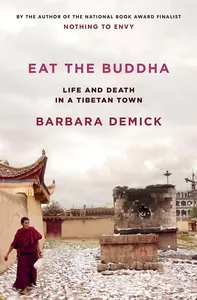
More Free Occult Philosophy Books
View all →