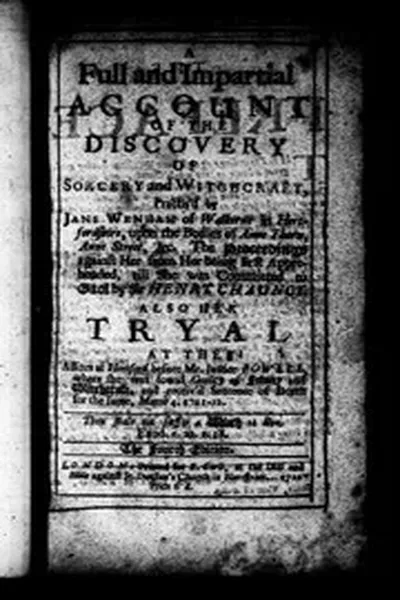
A full and impartial account of the discovery of sorcery and witchcraft, practis'd by Jane Wenham of Walkerne ... 1712

 71
71

A full and impartial account of the discovery of sorcery and witchcraft, practis'd by Jane Wenham of Walkerne ... 1712



Review by Celeste Moreau (Divination & Symbolism Reviewer) — Francis Bragge's 'A full and impartial account of the discovery of sorcery and witchcraft, practis'd by Jane Wenham of Walkerne' is a masterful exploration of the occult and witchcraft. Bragge's meticulous account provides a rare and valuable window into the esoteric practices of the 18th century. The book's strengths lie in its rich historical detail and the author's ability to weave a narrative that is both compelling and informative. This text is an essential read for those interested in the deeper mysteries of witchcraft and the hidden knowledge that has been passed down through the ages. It is particularly suited to scholars of the occult, divination practitioners, and anyone seeking to understand the symbolic and philosophical underpinnings of witchcraft.
📝 Description
71
Francis Bragge's 1712 account details the trial of Jane Wenham, accused of witchcraft in Walkerne.
Francis Bragge published 'A full and impartial account of the discovery of sorcery and witchcraft, practis'd by Jane Wenham of Walkerne' in 1712. The text presents the events surrounding the accusations of witchcraft against Jane Wenham in the village of Walkerne. Bragge's work details the testimonies and proceedings related to these charges. It offers a contemporary perspective on the fear and belief surrounding witchcraft in early 18th-century England.
The book includes specific claims made against Wenham, such as the infliction of illness and misfortune. Bragge records the supposed evidence presented during the examination and trial. The narrative aims to document the discovery and prosecution of alleged sorcery. It serves as a historical record of a specific instance of witchcraft accusations and the societal response to them.
Published in 1712, Bragge's account falls within the tradition of demonological literature and witch trial records that circulated widely in Europe from the late medieval period through the 18th century. These texts often served to document, investigate, and sometimes condemn individuals accused of practicing harmful magic or consorting with demonic forces. Bragge's work is a specific example of this genre, focusing on a particular case and presenting it as an 'impartial account' of the 'discovery' of sorcery. It reflects the ongoing societal anxieties and legal frameworks surrounding accusations of witchcraft during the period.
💡 Why Read This Book?
This book is a must-read for anyone interested in the occult, witchcraft, and the hidden mysteries of the human experience. It offers unique insights into the esoteric practices of the 18th century and the enduring fascination with the supernatural. Whether you are a seeker of hidden knowledge, a scholar of the occult, or a practitioner of divination, this text will enrich your understanding and deepen your appreciation for the mystical arts.
⭐ Reader Reviews
Honest opinions from readers who have explored this book.
❓ Frequently Asked Questions
What is the significance of Jane Wenham's case?
Jane Wenham's case is significant because it highlights the social and legal attitudes towards witchcraft in the 18th century, providing insights into the hidden world of sorcery and the struggle for power and knowledge.
How does this book contribute to the study of witchcraft?
The book offers a detailed and impartial account of witchcraft practices, shedding light on the esoteric rituals and beliefs of the time. It is a valuable resource for scholars and practitioners of the occult.
Is this book suitable for beginners in the study of witchcraft?
While the book is rich in historical detail and esoteric knowledge, it may be more accessible to those with some prior understanding of witchcraft and the occult.
What are some key themes in this book?
Key themes include the struggle between light and darkness, the hidden power of witchcraft, and the symbolic and philosophical significance of esoteric practices.
How does this book compare to other works on witchcraft?
This book stands out for its detailed and impartial account of a specific case, providing a unique perspective on the occult practices of the 18th century. It is a valuable addition to the literature on witchcraft and the supernatural.
🔮 Key Themes & Symbolism
The Hidden Power of Witchcraft
The book examines the esoteric practices of witchcraft, revealing the hidden power and knowledge that has been passed down through the ages. It explores the symbolic and philosophical significance of these practices, providing insights into the human psyche and the enduring mystery of the unknown.
The Struggle Between Light and Darkness
The narrative of Jane Wenham's case highlights the eternal struggle between light and darkness, both in the natural world and the supernatural realm. This theme is explored through the lens of witchcraft and sorcery, offering a profound meditation on the duality of human experience.
The Symbolism of Esoteric Practices
The book is rich in symbolic imagery, drawing on the esoteric traditions of the 18th century. These symbols are not merely decorative but carry deep philosophical and spiritual meanings, inviting readers to explore the hidden layers of reality.
💡 Key Ideas
Editorial paraphrase of the work's core concepts — not direct quotes.
The fear of witchcraft was a very real and present danger in the 18th century.
This line underscores the historical context of the book, highlighting the very real and present danger of witchcraft in the 18th century.
The veil between the natural and supernatural worlds was thin.
This quote emphasizes the blurred lines between the natural and supernatural, inviting readers to explore the hidden mysteries of the human experience.
The struggle for power and knowledge is an eternal one.
This passage highlights the timeless struggle for power and knowledge, a theme that resonates deeply with seekers of the occult and the mystical arts.
The fear of the unknown is a powerful force in human psychology.
This quote examines the psychological underpinnings of witchcraft and the occult, offering insights into the human psyche and the enduring mystery of the unknown.
The hidden power of witchcraft is a evidence of the enduring fascination with the supernatural.
This line underscores the enduring fascination with the supernatural and the hidden power of witchcraft, a theme that is explored throughout the book.
🌙 Esoteric Significance
Tradition
This book belongs to the Hermetic tradition, which emphasizes the hidden power of knowledge and the mystical arts. It draws on the esoteric practices of the 18th century, providing insights into the symbolic and philosophical significance of witchcraft and sorcery.
Symbolism
Key symbols in the book include the veil between the natural and supernatural worlds, the struggle between light and darkness, and the hidden power of witchcraft. These symbols carry deep philosophical and spiritual meanings, inviting readers to explore the hidden layers of reality.
Modern Relevance
This book is relevant today for modern practitioners of the occult and the mystical arts, as well as for scholars of witchcraft and esoteric practices. It offers unique insights into the hidden power of knowledge and the enduring fascination with the supernatural. Modern practitioners can draw on the esoteric traditions explored in the book to deepen their understanding and enrich their practices.
👥 Who Should Read This Book
This book is ideal for beginners in the study of witchcraft and the occult, as well as for scholars and practitioners. Beginners will find the detailed and impartial account of Jane Wenham's case to be a valuable introduction to the esoteric practices of the 18th century. Scholars will appreciate the rich historical detail and the book's contribution to the study of witchcraft. Practitioners of the occult and the mystical arts will find the symbolic and philosophical insights to be particularly enriching.
📜 Historical Context
The 18th century was a time of great change and upheaval, marked by the Enlightenment and the rise of scientific thought. However, the fear of witchcraft and the occult remained a very real and present danger, particularly in rural communities. This book provides a unique window into this era, highlighting the enduring fascination with the supernatural and the hidden power of witchcraft. It was written during a time when the veil between the natural and supernatural worlds was thin, and the struggle for power and knowledge was an eternal one. The book's influence can be seen in the enduring fascination with the occult and the mystical arts, as well as in the ongoing study of witchcraft and esoteric practices.
📔 Journal Prompts
Reflect on the hidden power of knowledge and the mystical arts in your own life.
How does the struggle between light and darkness manifest in your experiences?
What symbols and esoteric practices resonate with you the most?
Consider the veil between the natural and supernatural worlds. How does this concept apply to your understanding of reality?
What insights have you gained about the enduring fascination with the supernatural?
🗂️ Glossary
Hermetic Tradition
A branch of esoteric philosophy that emphasizes the hidden power of knowledge and the mystical arts, drawing on ancient and medieval texts.
Witchcraft
The practice of sorcery and the invocation of supernatural forces, often associated with esoteric rituals and beliefs.
Esoteric
Relating to knowledge that is intended for a small group of people with specialized knowledge or interests.
Occult
Relating to supernatural, mystical, or secret knowledge, often involving the study of hidden powers and esoteric practices.
Symbolism
The use of symbols to represent abstract ideas or qualities, often with deep philosophical and spiritual meanings.
This book appears in 2 collections
🔮 Readers Also Liked
Browse all →







More by Bragge, Francis
All books →

From the “Witchcraft” Collection
View all →






More Free Witchcraft & Paganism Books
View all →