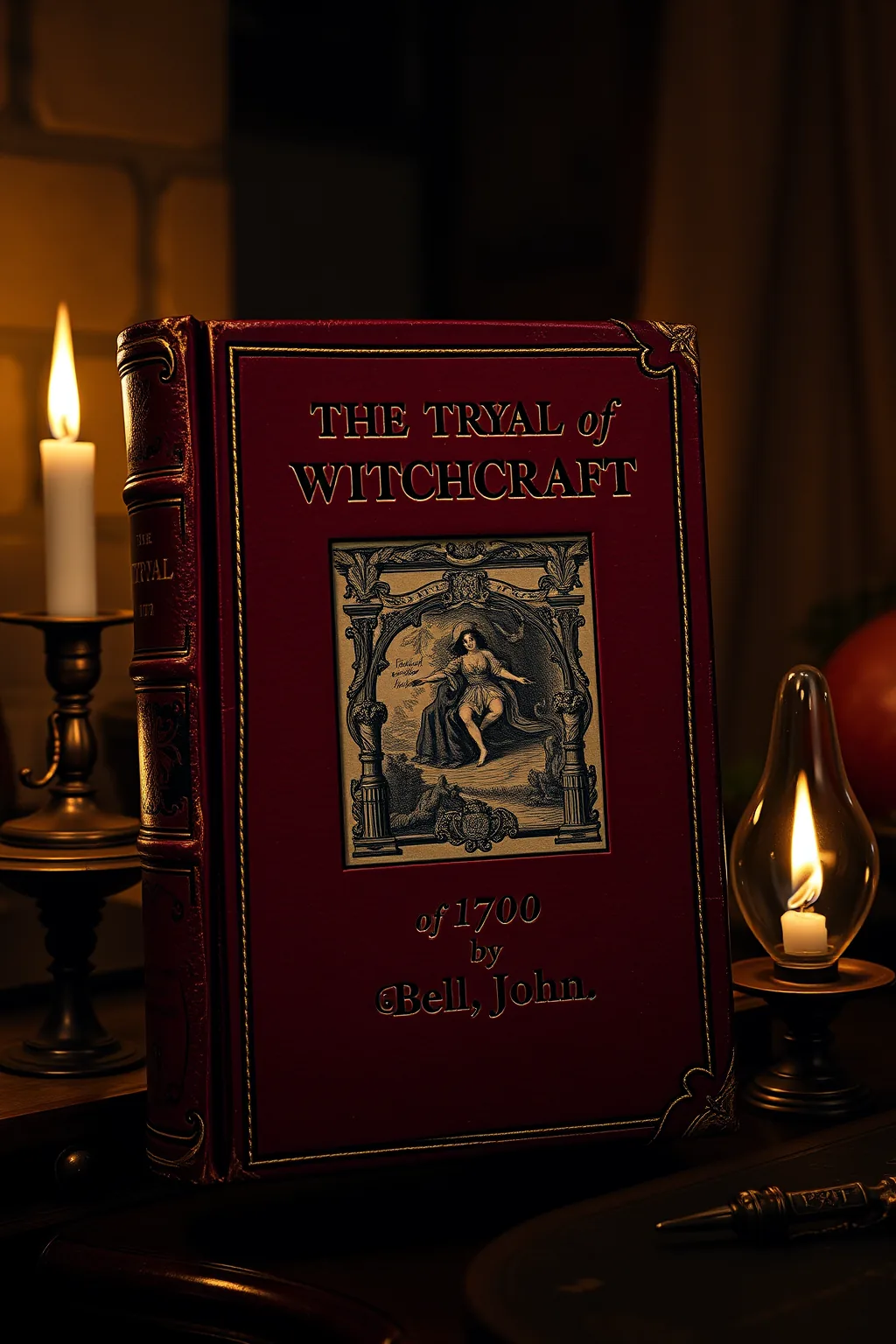
The tryal of witchcraft or, witchcraft arraign'd and condemn'd. 1700
 83
83

The tryal of witchcraft or, witchcraft arraign'd and condemn'd. 1700



Cassian Rothmann (Senior Critic, Ancient Wisdom) — John Bell's 'The Tryal of Witchcraft' is an essential, albeit chilling, artifact from the cusp of the Enlightenment. This meticulously documented account serves as a stark reminder of the profound societal anxieties and belief systems that led to the persecution of alleged witches. Bell's work, while presented within a legalistic framework, inadvertently illuminates the esoteric undercurrents of the time – the pervasive fear of malevolent forces, the interpretation of natural phenomena as supernatural, and the symbolic language used to condemn. Its strength lies in its raw portrayal of the trials, offering a window into the psychology of both the accused and the accusers. This volume is indispensable for scholars of occult history, legal history, and anyone seeking to understand the complex interplay of faith, fear, and power.
📝 Description
83
Published in 1700, John Bell's 'The Tryal of Witchcraft' details the legal and social dynamics of early modern accusations.
John Bell's 1700 text, 'The Tryal of Witchcraft', examines the judicial processes and underlying beliefs that shaped witchcraft accusations in early modern Europe. The book chronicles the actual proceedings of trials, detailing how individuals were accused, confessed, and condemned. Bell reveals the mixture of theological arguments and emerging legal practices used to prosecute alleged witches. He presents narratives of people caught in the web of suspicion, their supposed wrongdoings analyzed through the lens of both religious conviction and early legal thought.
This work goes beyond a simple historical account. It looks into the mindset of an age that confronted perceived supernatural threats and sought to understand and control the unknown. For readers interested in the period, the book provides insight into the anxieties of the time, the significance of accusations, and the persistent human interest in forbidden knowledge and unseen forces. It encourages reflection on how beliefs are formed, how guilt is assigned, and how societies attempt to maintain order when faced with perceived disorder.
This book fits within the broader tradition of demonological and legalistic literature of the late 17th century, which sought to understand and combat perceived supernatural threats. While not strictly a grimoire or a manual for practitioners, it engages with the worldview that attributed misfortune and societal ills to demonic influence and witchcraft. It reflects a period where the boundaries between the natural and supernatural were actively debated and codified within both religious and emerging secular legal frameworks, influencing how hidden knowledge and forbidden powers were viewed and prosecuted.
💡 Why Read This Book?
Uncover the gripping narratives and societal fears surrounding historical witchcraft accusations. This book offers a profound look into the early modern psyche, exploring the intersection of belief, law, and the supernatural. Ideal for seekers of occult history, scholars of early modern Europe, and those interested in the evolution of justice and belief systems.
⭐ Reader Reviews
Honest opinions from readers who have explored this book.
❓ Frequently Asked Questions
What is the primary focus of 'The Tryal of Witchcraft'?
The book primarily details the legal proceedings and societal beliefs surrounding witchcraft accusations and trials in the early modern period, offering insights into the fears and doctrines of the era.
Who was John Bell and what is his role in this work?
John Bell authored this account, meticulously recording and presenting the details of witchcraft trials. His role was that of a chronicler and observer, documenting the legal and social aspects of these events.
What historical period does this book represent?
The book represents the late 17th and early 18th centuries, a period when beliefs in witchcraft were still prevalent, though evolving, and legal systems were actively prosecuting alleged practitioners.
Is this book a primary source on witchcraft practices?
While it details accusations and condemnations, it is primarily a legal and societal record rather than a direct account of occult practices from the perspective of a practitioner.
What can readers expect to learn about the mindset of the time?
Readers can gain significant insight into the prevailing fears of the supernatural, the theological justifications for persecution, and the legalistic approach to identifying and punishing witchcraft during that era.
🔮 Key Themes & Symbolism
The Anatomy of Accusation
This theme examines the intricate process by which individuals were accused of witchcraft. It examines the societal triggers, the nature of evidence presented (often circumstantial or based on spectral testimony), and the psychological mechanisms that led to widespread suspicion. Bell's work dissects the human capacity for fear and the ways in which it can manifest in the persecution of perceived 'others,' highlighting how accusations could snowball, driven by communal panic and established doctrines about demonic influence.
Justice, Law, and the Supernatural
The text critically explores the intersection of early modern legal systems with deeply ingrained supernatural beliefs. It scrutinizes how laws were interpreted and applied to cases of alleged witchcraft, often blending theological interpretations with nascent legal procedures. This theme investigates the philosophical underpinnings of these trials, questioning the validity of evidence, the concept of free will versus demonic coercion, and the very definition of 'guilt' in a world where the Devil was considered an active participant in human affairs. It reveals the complex societal struggle to reconcile rational justice with a belief in unseen, malevolent powers.
The Specter of the Accused
This theme focuses on the individuals caught in the machinery of the witch trials. It explores the narratives of the accused, their alleged confessions, and the societal stigma attached to them. Bell's documentation, while formal, offers glimpses into the human drama unfolding, the fear, the desperation, and the potential coercion involved in their testimonies. The 'specter' here refers not only to the perceived spectral evidence used against them but also to the social ostracization and the lasting imprint of condemnation, prompting reflection on the vulnerability of individuals within a fearful society.
💬 Memorable Quotes
Direct passages from the work, attributed to the author.
“Evidence of witchcraft is often hard to find, and harder still to prove.”
— This statement acknowledges the inherent difficulty in substantiating witchcraft accusations within the legal framework, hinting at the often flimsy or circumstantial nature of the 'proof' presented.
“A witch is one who hath a compact with the Devil.”
— This defines witchcraft through the lens of a direct, personal covenant with Satan, central to the demonological understanding of the time and the basis for many accusations.
“Fear of the unseen can make men do terrible things.”
— This poignant observation reflects on the psychological impact of pervasive fear, suggesting that anxieties about the supernatural could drive individuals to extreme actions, including persecution.
“The law must protect the innocent, yet how to discern innocence from guilt when the Devil is involved?”
— This highlights the profound dilemma faced by legal authorities, struggling to uphold justice when the very framework of belief suggested the Devil could obscure truth and manipulate perception.
💡 Key Ideas
Editorial paraphrase of the work's core concepts — not direct quotes.
The Devil doth not tempt us to do good, but to do evil.
This quote captures the prevailing theological view that any deviation from righteous conduct was a direct result of demonic temptation, framing witchcraft as an active pact with evil.
🌙 Esoteric Significance
Tradition
This work sits at the intersection of demonology and early legal history, traditions that, while often secularized, were deeply intertwined with esoteric understandings of good versus evil. It reflects a worldview where the spiritual and material realms were permeable, and the actions of the Devil were considered a tangible threat requiring societal countermeasures. The text implicitly engages with the esoteric concept of pacts and influences, as well as the symbolic language used to identify and combat perceived malevolent spiritual forces within the community.
Symbolism
The symbolism within 'The Tryal of Witchcraft' is potent, though often unintended by the author. Accusations of pacts with the Devil symbolize a profound societal fear of transgression and rebellion against divine order. Familiars, often depicted as animals, represent the hidden, insidious nature of evil. Physical marks on the accused were symbolically interpreted as demonic seals or points of connection to the infernal realm. The trials themselves became symbolic arenas where the community sought to purge itself of perceived corruption and restore spiritual equilibrium through ritualistic condemnation and punishment.
Modern Relevance
In the modern era, 'The Tryal of Witchcraft' serves as a crucial case study for understanding the dynamics of mass hysteria, the dangers of unchecked fear, and the ways in which power structures can exploit societal anxieties for control. It offers profound lessons on the importance of critical thinking, due process, and the protection of individual rights against the tide of prejudice. For esoteric practitioners, it provides historical context for understanding the roots of certain fears and superstitions surrounding occult practices, offering a counterpoint to modern, more nuanced explorations of magic and spirituality.
👥 Who Should Read This Book
This book is essential for scholars of early modern history, legal history, and the history of witchcraft. It will deeply resonate with students of occultism and esoteric traditions seeking to understand the historical context and societal impact of demonological beliefs. Seekers of hidden knowledge will find a stark portrayal of how fear can shape reality, while practitioners of modern pagan or witchcraft paths can gain valuable historical perspective on the persecutions their predecessors faced, fostering a deeper appreciation for contemporary freedoms and understanding.
📜 Historical Context
Published in 1700, 'The Tryal of Witchcraft' emerges from a period of significant transition in European thought. While the Enlightenment was dawning, with its emphasis on reason and empirical observation, deep-seated beliefs in the supernatural, including witchcraft, remained potent forces in society. The late 17th century witnessed a gradual decline in large-scale witch hunts in some regions, yet the legal and theological frameworks for prosecuting alleged witches were still firmly in place. This era saw a complex interplay between evolving legal practices and enduring folk beliefs, where theological interpretations of demonic influence often overshadowed rational inquiry. Bell's work captures this tension, documenting a system grappling with its own ingrained fears and seeking to impose order through pronouncements of guilt and condemnation, reflecting a society wrestling with the perceived presence of evil and the divine.
📔 Journal Prompts
Reflect on the societal fears that might have fueled the accusations detailed in the text. How do similar fears manifest in contemporary society?
Consider the concept of 'evidence' as presented in the trials. How does this differ from modern legal standards, and what does this reveal about the era's worldview?
Analyze the theological arguments used to condemn individuals. How might these beliefs have shaped the perception of 'good' and 'evil' in that period?
Imagine yourself as an observer present at one of these trials. What emotions and thoughts would you have experienced, and why?
How does the language used to describe witchcraft in this text compare to modern depictions of magic or the supernatural?
🗂️ Glossary
Demonic Compact
A formal or informal agreement believed to be made between an individual and the Devil, granting the individual supernatural powers in exchange for their soul or allegiance.
Spectral Evidence
Testimony claiming to have seen the 'specter' or apparition of the accused person performing witchcraft, often believed to be a spiritual manifestation rather than a physical presence.
Familiar
A supernatural entity, often believed to take the form of an animal (like a cat, dog, or toad), that is said to attend and serve a witch.
Malleus Maleficarum
A famous treatise on witchcraft, first published in 1487, which served as a handbook for witch hunters and heavily influenced the legal and theological understanding of witchcraft.
The Devil's Mark
A perceived physical blemish or abnormality on the body of an accused witch, believed to be a sign of their pact with the Devil, such as a mole, wart, or scar that was insensitive to pain.
This book appears in 2 collections
🔮 Readers Also Liked
Browse all →







From the “Witchcraft” Collection
View all →




More Free Witchcraft & Paganism Books
View all →






![The old colony town [Plymouth, Mass.], and other sketches. 1893: Iss 118](/img/thumb/the-old-colony-town-plymouth-mass-and-other-sketches-1893-iss-118-bliss-william-root-1825-1906.webp)
