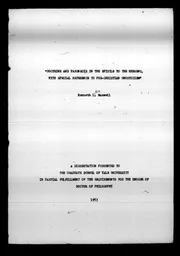
The Dead Sea Scrolls
 84
84

The Dead Sea Scrolls
Peter W. Flint's 2013 examination of the Dead Sea Scrolls moves beyond mere cataloging, presenting the latest findings with a scholar's precision. The inclusion of recent discoveries, particularly the "movement behind the Scrolls in their own words," is a significant contribution, offering direct textual evidence of the community's self-understanding. Flint's strength lies in synthesizing complex textual evidence into a coherent narrative, illuminating the Essene sect's unique theological framework. However, the sheer volume of material and the technical nature of manuscript studies can present a steep learning curve for the uninitiated. The detailed analysis of the "Community Rule" is particularly illuminating, showcasing the meticulous organizational and ritualistic structure of the sect. While the book succeeds in presenting new information, a more explicit discussion of how these findings challenge or corroborate existing scholarship on early Jewish heterodoxy would have been beneficial. Flint’s work is a valuable, albeit dense, resource for those committed to understanding this foundational textual corpus.
📝 Description
84
Peter W. Flint's 2013 book examines the Dead Sea Scrolls, ancient Jewish manuscripts from the Second Temple period.
Discovered between 1947 and 1956, the Dead Sea Scrolls offer a window into Jewish religious and sectarian thought during the Second Temple era. These manuscripts, predating many biblical texts, reveal the diverse spiritual currents in ancient Judea.
Flint's work synthesizes recent discoveries and analyses concerning the community that produced and safeguarded these texts. It is a valuable resource for those studying ancient Judaism, early Christianity, and the historical background of Abrahamic faiths. The book also addresses ongoing research into unpublished scrolls and the origins of the Qumran community.
The scrolls emerged from a period of significant religious development, roughly 516 BCE to 70 CE. They detail various interpretations of Jewish law and messianic ideas prevalent among groups like the Pharisees, Sadducees, and Essenes. Many scrolls are linked to the Essenes, highlighting their focus on apocalyptic visions and ritual purity.
The Dead Sea Scrolls represent a crucial link in understanding early Jewish mysticism and sectarianism, movements that contributed to later esoteric traditions. The texts reveal a community deeply concerned with divine knowledge, prophecy, and the interpretation of sacred law, often in ways that diverged from mainstream rabbinic thought. Their focus on purity, ritual, and eschatological expectations provides a counterpoint to other contemporary spiritual paths and informs the development of Gnostic ideas that would emerge later.
💡 Why Read This Book?
• Gain direct insight into the Essenes' self-perception through their own writings, as presented by Flint's analysis of recently unearthed texts, offering a perspective unavailable in earlier overviews. • Understand the concept of the "new covenant" as articulated by the Qumran community, a key theological driver that shaped their apocalyptic worldview and communal practices. • Grasp the historical significance of the 1947-1956 discoveries in the context of Second Temple Judaism, understanding how these finds reshaped scholarly understanding of the period's religious diversity.
⭐ Reader Reviews
Honest opinions from readers who have explored this book.
❓ Frequently Asked Questions
What is the primary significance of the Dead Sea Scrolls for understanding ancient Judaism?
The Dead Sea Scrolls provide direct textual evidence of diverse Jewish beliefs and practices during the Second Temple period (c. 516 BCE – 70 CE), revealing the existence of sects like the Essenes and their distinct theological viewpoints on covenant, messianism, and eschatology.
When were the Dead Sea Scrolls discovered and by whom?
The initial discovery was made by a Bedouin shepherd in a cave near Qumran in 1947. Subsequent excavations and discoveries by archaeologists continued until 1956, unearthing thousands of manuscript fragments.
What does Peter W. Flint's book add to existing knowledge about the Dead Sea Scrolls?
Flint's 2013 work incorporates new information about previously unpublished scrolls and offers fresh translations of key passages, alongside recent analyses that identify the "movement behind the Scrolls" through their own documented words.
Are the Dead Sea Scrolls related to the Bible?
Yes, many of the scrolls are the oldest known copies of books that later became part of the Hebrew Bible, and they also contain many other texts that offer crucial context for biblical studies and the development of religious thought.
What is the "Community Rule" mentioned in relation to the Dead Sea Scrolls?
The "Community Rule" (or Serekh Hayahad) is a significant sectarian document found among the scrolls, detailing the Essene community's rules, organization, beliefs, and communal practices, offering a window into their way of life.
What is the "movement behind the Scrolls"?
This refers to the specific Jewish sect, widely believed to be the Essenes, who produced, collected, and preserved the Dead Sea Scrolls. Flint's work aims to present their self-understanding directly through their own texts.
🔮 Key Themes & Symbolism
Sectarian Identity and Community
The scrolls provide an unprecedented look into the self-identity of a specific ancient Jewish sect, widely identified with the Essenes. Flint's work highlights how these texts, particularly documents like the "Community Rule," articulate a distinct worldview centered on ritual purity, communal living, and a unique interpretation of divine law. This theme explores the group's separation from mainstream Judean society and their rigorous internal organization, emphasizing their role as a chosen community awaiting divine intervention.
Covenant and Eschatology
A central concern within the Dead Sea Scrolls is the concept of a "new covenant" and imminent eschatological events. The texts reveal a community convinced they were living in the end times, awaiting a divinely ordained victory over their enemies. Flint's analysis unpacks the varied messianic expectations, often pointing to both a priestly and a kingly figure, and the detailed apocalyptic scenarios depicting a final cosmic struggle between forces of light and darkness.
Textual Transmission and Interpretation
The very existence of the Dead Sea Scrolls challenges traditional views on the textual history of the Hebrew Bible and early Jewish literature. Flint's work addresses the ongoing process of discovery, translation, and interpretation of these fragmented manuscripts. It underscores the importance of these texts for understanding the diversity of biblical interpretation in the Second Temple period and how different groups engaged with scripture and tradition.
Purity Laws and Ritual Practice
The emphasis on ritual purity is a defining characteristic of the community associated with the scrolls. Flint's exploration details the stringent regulations governing daily life, communal meals, and temple service, as outlined in texts like the "Damascus Document" and the "Temple Scroll." This focus on purity was not merely physical but also spiritual, seen as essential for maintaining the covenant relationship with God and participating in the anticipated messianic age.
💬 Memorable Quotes
Direct passages from the work, attributed to the author.
“The movement behind the Scrolls in their own words.”
— This phrase expresses the core aim of recent scholarship, including Flint's, to let the discovered texts speak for themselves, revealing the self-perception and theology of the Qumran community without relying solely on external historical accounts.
“Translations of key passages.”
— This highlights the critical work of making the ancient Hebrew, Aramaic, and Greek texts accessible, allowing modern readers to engage directly with the theological arguments, legal rulings, and prophetic visions contained within the scrolls.
“The "Community Rule" codifies the sectarian way of life.”
— This refers to a specific foundational text that details the Essene community's organizational structure, ethical guidelines, and communal responsibilities, offering a blueprint for their unique religious and social existence.
“New information about unpublished Dead Sea Scrolls.”
— This points to the ongoing nature of Dead Sea Scrolls research, indicating that Flint's work includes recent analyses and insights derived from manuscripts that were not widely available or understood until relatively recently.
“Diverse spiritual field of ancient Judea.”
— This concept underscores that the Dead Sea Scrolls demonstrate that Judaism in the Second Temple period was not monolithic, but comprised various competing or coexisting sects and interpretations of religious law and belief.
🌙 Esoteric Significance
Tradition
The Dead Sea Scrolls are foundational to understanding the esoteric dimensions of Second Temple Judaism, particularly within what might be termed proto-Gnostic or proto-Hermetic streams that emphasized hidden knowledge, dualistic cosmologies, and a purified elect community. While not fitting neatly into later Kabbalistic or Theosophical frameworks, the Essene preoccupation with divine mysteries, angelic realms, and detailed calendrical and purity rituals aligns with an esoteric impulse seeking direct communion with the divine or understanding of cosmic order.
Symbolism
Key symbols include light and darkness, representing the cosmic struggle between good and evil, a Manichaean-like dualism prevalent in Essene thought. The "sons of light" are pitted against the "sons of darkness," a motif deeply embedded in their eschatological expectations. Another significant symbol is the "new covenant," not merely a legal agreement but a spiritual re-initiation into a purified community, promising salvation and participation in a divinely ordered future kingdom. The meticulous purity laws themselves function symbolically, representing the internal spiritual state required for proximity to God.
Modern Relevance
Contemporary esoteric practitioners and scholars of Western esotericism often revisit the Dead Sea Scrolls for their insights into communal living, spiritual discipline, and apocalyptic worldviews. The emphasis on purity, hidden knowledge, and a distinct "chosen" status appeals to various modern intentional communities and spiritual movements. Thinkers exploring the roots of Gnosticism, early Christian mysticism, and the historical Jesus often draw upon the Scrolls to understand the diverse spiritual milieu from which these traditions emerged.
👥 Who Should Read This Book
• Students of ancient religions and comparative theology: To grasp the diverse theological currents of the Second Temple period and the specific beliefs of the Essene sect. • Researchers of early Jewish mysticism and apocalyptic literature: To engage with primary source material that illuminates concepts of divine revelation, angelic hierarchies, and eschatological timelines. • Those interested in the historical context of Christianity: To understand the Jewish milieu in which Jesus and early Christianity emerged, appreciating shared concepts and distinct divergences.
📜 Historical Context
The Dead Sea Scrolls emerged from the vibrant and often tumultuous Second Temple period (c. 516 BCE – 70 CE), a time when Judea was under Persian, Hellenistic, and later Roman rule. This era saw the proliferation of diverse Jewish movements, including the Pharisees, Sadducees, and the Essenes, each offering distinct interpretations of Mosaic Law and messianic expectations. The discovery of the scrolls, beginning in 1947, occurred in the shadow of World War II and amidst the formation of the State of Israel, a period of intense historical and archaeological focus on the ancient Near East. These manuscripts, largely associated with the Essenes, provided direct textual evidence of a group deeply invested in apocalyptic thought and ritual purity, offering a significant counterpoint to the more widely known Pharisaic traditions. The reception of the scrolls was initially slow due to political complexities and scholarly debate, but they soon became central to understanding the origins of both Rabbinic Judaism and early Christianity.
📔 Journal Prompts
The concept of the "new covenant" as interpreted by the Qumran community.
Eschatological visions and their role in the Essene worldview.
The Essene emphasis on ritual purity and its implications for communal life.
The "sons of light" versus the "sons of darkness" motif.
The organizational structure and daily life depicted in the "Community Rule."
🗂️ Glossary
Second Temple Period
The historical era in Judea from the rebuilding of the Jerusalem Temple around 516 BCE until its destruction by the Romans in 70 CE. This period was marked by diverse Jewish sects and evolving religious thought.
Essenes
A Jewish sect active during the Second Temple period, widely believed to be responsible for the Dead Sea Scrolls. They were known for their asceticism, communal living, and emphasis on ritual purity.
Community Rule (Serekh Hayahad)
A key sectarian document found among the Dead Sea Scrolls, outlining the Essene community's statutes, organization, initiation rites, and daily practices.
Messianism
Belief in a future divinely appointed leader or savior. The Dead Sea Scrolls reveal varied messianic expectations, often including both a priestly and a kingly figure.
Eschatology
The study of end times and final events. The scrolls are rich in apocalyptic literature, detailing cosmic battles and the imminent establishment of God's kingdom.
Purity Laws
Regulations concerning ritual cleanliness. The Essenes adhered to exceptionally strict purity laws, believing them essential for maintaining a covenant relationship with God.
New Covenant
A concept central to the Qumran community, referring to a renewed or purified covenant relationship with God, often seen as a fulfillment of earlier biblical covenants.
This book appears in 1 collection
🔮 Readers Also Liked
Browse all →








From the “Dead Sea Scrolls” Collection
View all →




More Free Sacred Texts & Gnosticism Books
View all →