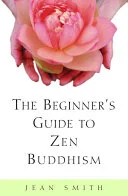
The Beginner's Guide to Zen Buddhism
 71
71

The Beginner's Guide to Zen Buddhism
Jean Smith's "The Beginner's Guide to Zen Buddhism" addresses a clear need: providing an unvarnished introduction for those standing at the threshold of this profound practice. Unlike many books that romanticize the path, Smith focuses on the practicalities. Her explanation of zazen posture, for instance, is direct and devoid of unnecessary spiritual jargon, which is a significant strength. However, the historical section, while informative, feels somewhat condensed, particularly when discussing the various lineages that emerged in the West. A more detailed exploration of the differences between Soto and Rinzai schools, for example, would have been beneficial. The book’s greatest value lies in its straightforward approach to meditation and the zendo environment. It offers a grounded perspective for newcomers. For those seeking an accessible, no-nonsense entry into Zen, this guide serves its purpose adequately.
📝 Description
71
Jean Smith's 2015 guide introduces Zen Buddhism's core practices and philosophy.
This book serves as an introduction to Zen Buddhism, designed for those new to its principles and practices. It systematically details the fundamental elements of meditation, including posture and breath awareness, while also addressing common hesitations about beginning a spiritual path. The text clarifies the basic philosophical ideas of Zen and introduces key scriptural works that have influenced the tradition.
Readers will find guidance on navigating the experience of a Zen meditation hall, or zendo, with information on its atmosphere and expected conduct. The book also explains the significance of the teacher-student relationship within Zen, a dynamic central to the transmission of teachings. A historical overview traces Zen's development from its beginnings in India to its spread and adaptation in the West, offering a chronological understanding of its evolution.
Zen Buddhism, originating from Mahayana traditions in India and developing through China and Japan, represents a path focused on direct experience and insight rather than solely on scripture or ritual. Its emphasis on meditation (zazen) and the realization of one's inherent Buddha-nature places it within contemplative and mystical streams of religious thought. This guide unpacks these core elements, making them accessible to a modern audience seeking to understand a practice that bypasses intellectualization in favor of embodied understanding.
💡 Why Read This Book?
• Gain practical instruction on zazen meditation, including specific guidance on posture and breath techniques, as detailed in the chapter on meditation practice. • Understand the crucial teacher-student relationship within Zen, a concept elaborated upon when discussing the structure of Zen training. • Grasp the historical development of Zen Buddhism from its Indian roots to its presence in Western countries, as presented in the chronological overview.
⭐ Reader Reviews
Honest opinions from readers who have explored this book.
❓ Frequently Asked Questions
What are the basic requirements for starting Zen meditation?
The book outlines essentials like proper posture, focusing on the breath, and suitable clothing. It emphasizes that minimal external requirements are needed to begin practicing zazen.
What is a 'zendo' and what happens there?
A zendo is a Zen meditation hall. The book describes the typical environment, the quietude, and the communal practice of sitting meditation (zazen) observed in these spaces.
What are the main historical branches of Zen Buddhism?
The guide touches upon the lineage tracing back to Bodhidharma and discusses the major schools that developed, particularly noting their presence and adaptation in Western contexts.
Is Zen Buddhism suitable for complete beginners?
Yes, the book is specifically designed for those new to Zen. It addresses common questions and provides a foundational understanding of practice and philosophy.
What role does a teacher play in Zen?
The teacher-student relationship is central. The book explains how a qualified teacher offers guidance, corrects practice, and transmits the essence of Zen.
Are there specific texts beginners should read?
The book introduces some basic teachings and mentions key texts that form the foundation of Zen philosophy, providing context for their study.
🔮 Key Themes & Symbolism
The Practice of Zazen
Central to Zen is the practice of zazen, or seated meditation. This guide meticulously details the physical and mental components, from establishing correct posture to mindful breathing. It presents zazen not as a complex ritual, but as a direct, accessible method for cultivating presence and insight. The emphasis is on the 'how-to,' clarifying the process for those encountering it for the first time, highlighting its role as the gateway to understanding Zen principles.
Understanding Core Zen Concepts
Beyond mere technique, the book elucidates fundamental Zen concepts such as emptiness (sunyata), impermanence (anicca), and non-duality. It translates these often abstract philosophical ideas into digestible terms, connecting them to the practice of meditation. The aim is to provide a conceptual framework that supports, rather than overshadows, the direct experience of sitting.
The Role of the Teacher and Tradition
Zen transmission historically relies heavily on the teacher-student relationship. This guide explains the significance of this dynamic, outlining expectations for both practitioner and instructor. It clarifies how lineage and qualified guidance are essential for authentic practice and understanding within the Zen tradition, preventing common misinterpretations.
Historical Development and Schools
The book traces the lineage of Zen from its origins in India, through China and Japan, to its contemporary manifestations in the West. It introduces the major schools, such as Soto and Rinzai, and provides context for their distinct approaches. This historical perspective helps readers appreciate the evolution and adaptability of Zen.
💬 Memorable Quotes
Direct passages from the work, attributed to the author.
“Posture is the foundation of zazen.”
— This statement underscores the physical grounding required for seated meditation. It implies that a stable, upright posture is not merely an external form but a prerequisite for achieving mental clarity and focus.
“The teacher guides, but the practice is your own.”
— This highlights the balance between external instruction and personal effort in Zen. While a teacher's wisdom is invaluable, the ultimate responsibility for diligent practice and realization rests with the individual.
“Enlightenment is not a destination, but a way of being.”
— This interpretation suggests that the goal of Zen practice is not a future attainment but a present realization of one's true nature. It shifts the focus from achieving something external to recognizing what is already present.
“The zendo is a space for stillness and awareness.”
— This emphasizes the function of the meditation hall as a dedicated environment. It is a place designed to foster concentration, quiet the mind, and cultivate a heightened sense of present-moment awareness.
“Meditation begins with the breath.”
— This points to the breath as a primary anchor in Zen meditation. It suggests that by observing and regulating the breath, one can begin to calm the mind and enter a state of focused attention.
🌙 Esoteric Significance
Tradition
While Zen Buddhism itself is a major branch of Mahayana Buddhism, its approach to direct experience and non-conceptual understanding aligns with certain esoteric currents that seek knowledge beyond rational discourse. Its emphasis on immediate realization rather than adherence to dogma can be seen as resonating with mystical traditions across various faiths. This work, by focusing on the practical application of Zen principles, acts as a bridge, making these potentially esoteric insights accessible through disciplined practice.
Symbolism
The practice of zazen itself is symbolic, representing the upright posture of awareness and stability. The breath, often used as an anchor, symbolizes the flow of life and the constant, yet often unnoticed, rhythm of existence. The concept of 'emptiness' (sunyata), while philosophical, functions symbolically to deconstruct rigid notions of self and reality, clearing the way for direct perception.
Modern Relevance
Contemporary mindfulness movements and secularized meditation practices often draw heavily from Zen principles, even if not explicitly acknowledging the source. Thinkers and practitioners exploring embodied cognition, non-dual awareness, and the integration of contemplative practices into daily life frequently reference Zen concepts and methods. The book's accessibility ensures its continued relevance for those seeking practical entry points into these broader contemporary discussions.
👥 Who Should Read This Book
["• Individuals curious about meditation and mindfulness who seek a practical, non-dogmatic introduction to a major contemplative tradition.\n• Students of comparative religion or philosophy looking for a clear overview of Zen Buddhism's core teachings and historical development.\n• Aspiring practitioners who want to understand the essential elements of Zen practice, such as zazen posture and the zendo environment, before committing to a formal group.", '• Those seeking to understand the teacher-student dynamic within spiritual disciplines and its importance in Zen transmission.\n• Readers interested in the historical journey of Buddhism from Asia to the West and its cultural adaptations.', '• Anyone looking for guidance on how to approach a new spiritual practice with realistic expectations and a clear understanding of fundamental concepts.']
📜 Historical Context
Published in 2007, Jean Smith's "The Beginner's Guide to Zen Buddhism" emerged during a period of significant Western interest in Eastern spiritual traditions. The late 20th and early 21st centuries saw a surge in the popularization of mindfulness and meditation, often drawing from Buddhist roots. Zen, with its emphasis on direct experience and its historical connection to figures like D.T. Suzuki, had already established a foothold. Smith's work entered a landscape populated by established figures and texts, aiming to explain the practice for a broad audience. While influential figures like Shunryu Suzuki had published seminal works decades prior (e.g., "Zen Mind, Beginner's Mind" in 1970), Smith's book sought to provide an even more foundational, step-by-step approach. It arrived in an era where comparative religion studies were maturing, but also where popular interpretations sometimes simplified or secularized Buddhist concepts.
📔 Journal Prompts
The fundamental posture of zazen.
Expectations upon visiting a zendo.
The teacher-student relationship in Zen.
Key historical figures in Zen transmission.
The concept of emptiness (sunyata) in practice.
🗂️ Glossary
Zazen
The practice of seated meditation central to Zen Buddhism. It involves specific postures, breath awareness, and mental focus, aiming for present-moment awareness and insight.
Zendo
A hall or room specifically designated for Zen meditation practice. It is typically a quiet, uncluttered space conducive to sitting.
Sunyata
A central concept in Mahayana Buddhism, often translated as 'emptiness' or 'voidness.' It refers to the lack of inherent existence or self-nature in all phenomena.
Bodhidharma
Considered the founder of Zen Buddhism in China. Legend states he brought the practice from India to the Shaolin Monastery.
Soto School
One of the two major schools of Zen Buddhism, originating in Japan. Emphasizes 'shikantaza' (just sitting) as the primary practice.
Rinzai School
The other major school of Zen Buddhism in Japan, known for its use of koans (paradoxical riddles) to break down conceptual thinking.
Koan
A paradoxical anecdote or riddle used in Zen practice, particularly in the Rinzai school, to provoke doubt and test a student's progress in Zen practice.