Kalachakra Tantra
 71
71

Kalachakra Tantra
The Dalai Lama's presentation of the Kalachakra Tantra offers an unparalleled window into a complex Tibetan Buddhist system. His Holiness’s commentary, delivered with characteristic clarity and compassion, grounds the intricate ritualistic and cosmological elements in accessible language. Professor Hopkins' introduction is a scholarly achievement, meticulously dissecting the multilayered symbolism of the mandala and its associated practices. The strength of this volume lies in its direct translation of a live initiation, providing an authentic experiential dimension often missing in purely academic texts. However, the sheer density of the material, particularly the astronomical and psycho-somatic correlations, may prove daunting for readers unfamiliar with Buddhist cosmology. A particularly illuminating section is the explanation of the "inner Kalachakra" which links cosmic cycles to human physiology. This book serves as a vital bridge between ancient esoteric knowledge and contemporary seekers.
📝 Description
71
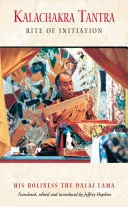
The Dalai Lama conferred the Kalachakra initiation in Washington D.C. in 2011, a ritual detailed in this volume.
This book presents a complete English translation of the Kalachakra initiation ritual, as given by the Dalai Lama in 2011. It includes his direct commentary on the teachings and an extensive introduction by Professor Jeffrey Hopkins. Hopkins details the rich symbolism and meaning inherent in the Kalachakra system.
The Kalachakra, or 'Wheel of Time,' is a complex framework in Tibetan Buddhism. It combines cosmology, psychology, and ritual to map temporal cycles, both celestial and personal. The system proposes a path for transforming a practitioner's physical and mental components into a Buddha-body and mind. Key practices involve purifying the five aggregates and realizing the union of bliss and emptiness.
Originating in India and brought to Tibet in the 10th century, the Kalachakra is a significant lineage within Tibetan Buddhism. Its transmission to the West, particularly through public initiations by the Dalai Lama, represents a major phase in its global spread. This volume documents one such significant event, making accessible a practice that has been central to Tibetan Buddhist spiritual development for over a thousand years.
💡 Why Read This Book?
• Gain a comprehensive understanding of the Kalachakra initiation ritual as performed in 2011, offering a direct link to a major event in Tibetan Buddhism's global dissemination. • Explore the intricate symbolism of the Kalachakra mandala, understanding its representation of both external cosmology and internal psycho-physical processes as explained by the Dalai Lama. • Grasp the core theoretical framework of "Wheel of Time" tantra, including concepts like the purification of the five aggregates and the union of bliss and emptiness, presented with scholarly depth by Professor Hopkins.
⭐ Reader Reviews
Honest opinions from readers who have explored this book.
❓ Frequently Asked Questions
What is the primary purpose of the Kalachakra initiation?
The Kalachakra initiation is a complex ritual designed to empower practitioners and introduce them to the Kalachakra tantric system, with a stated aim of promoting world peace and individual enlightenment.
When and where was the initiation translated in this book performed?
The initiation translated in this book was conferred by His Holiness the Dalai Lama in Washington D.C. in July 2011.
Who is Professor Jeffrey Hopkins and what is his contribution?
Professor Jeffrey Hopkins is a renowned scholar of Tibetan Buddhism who provided a comprehensive introduction to the book, exploring the Kalachakra's symbolism and meaning.
Is this book suitable for beginners in Buddhism?
While the book contains valuable introductory material, the Kalachakra Tantra itself is an advanced system. Beginners may find it challenging but can benefit from the introductory sections and the Dalai Lama's accessible commentary.
What does 'Kalachakra' mean?
'Kalachakra' is a Sanskrit term meaning 'Wheel of Time,' referring to the cyclical nature of time and the tantric system that analyzes and transforms these cycles.
Does the book discuss world peace in relation to the Kalachakra?
Yes, the Kalachakra is explicitly associated with the promotion of world peace, and this aspect is explored within the context of the initiation and commentary.
🔮 Key Themes & Symbolism
Cosmic and Personal Time
The Kalachakra system meticulously maps the cycles of time, extending from vast cosmic ages to the subtle internal rhythms of the human body. It posits that understanding and harmonizing these external and internal temporal flows is key to spiritual liberation. The work explores how celestial movements and biological processes are interconnected, forming a complex 'Wheel of Time' that practitioners can learn to influence and ultimately transcend.
Mandala as Sacred Space
The Kalachakra mandala is not merely a symbolic representation but a blueprint for a transformed reality and the enlightened mind. This volume details the intricate structure of the Kalachakra mandala, explaining its palaces, deities, and symbolic elements as a psycho-cosmological map. The initiation ritual involves entering this sacred space, symbolically purifying the practitioner's perception and transforming their environment into an enlightened realm.
Tantric Path to Enlightenment
This work outlines the advanced tantric methods for achieving Buddhahood, focusing on the Kalachakra's unique approach. It details the stages of practice, including visualization, mantra recitation, and the subtle energy body work, all aimed at purifying the practitioner's physical and mental aggregates. The ultimate goal is the union of bliss and emptiness, leading to the attainment of the Buddha-body and mind.
Peace Through Inner Transformation
The Kalachakra Tantra is deeply connected to the aspiration for global harmony. The book elucidates how the individual's inner transformation—cultivating compassion, wisdom, and equanimity through tantric practice—directly contributes to outer peace. The initiation itself is seen as a global event, seeding the potential for peace within all participants and by extension, the world.
💬 Memorable Quotes
Direct passages from the work, attributed to the author.
“The Kalachakra - or 'Wheel of Time' - tantra is one of the most detailed and encompassing systems of theory and practice within Tibetan Buddhism.”
— This statement highlights the Kalachakra's comprehensive nature, positioning it as a system that integrates vast theoretical knowledge with profound practical application in the Tibetan Buddhist tradition.
“Associated with the promotion of world peace...”
— This phrase emphasizes a key ethical and practical dimension of the Kalachakra, linking its intricate spiritual practices to a tangible aspiration for global harmony and well-being.
“This book contains a complete translation of the Kalachakra initiation ritual as it was conferred by His Holiness the Dalai Lama in Washington DC in July 2011.”
— This points to the book's unique value as a primary source, offering direct access to a specific, significant ritual event performed by a globally recognized spiritual leader.
“along with his commentary and a comprehensive introduction by Professor Jeffrey Hopkins”
— This highlights the dual layers of spiritual guidance and scholarly analysis provided, making the complex tantric system accessible through both the living transmission of the Dalai Lama and the academic rigor of Professor Hopkins.
“explores the Kalachakra's strong symbolism, meaning, and...”
— This indicates that the book offers an in-depth examination of the multi-layered symbolic language inherent in the Kalachakra system, promising a deep dive into its profound philosophical and spiritual significance.
🌙 Esoteric Significance
Tradition
The Kalachakra Tantra is a central text within the Vajrayana (Tibetan) Buddhist tradition, often considered the pinnacle of its tantric systems. While rooted in Mahayana philosophy, its methods are distinctly esoteric, employing complex visualizations, mantra, and internal energy manipulation that depart from the more common exoteric practices found in other Buddhist schools. It shares a lineage with other Indian tantric traditions but represents a unique synthesis and development within the Tibetan context.
Symbolism
Key symbols include the Kalachakra mandala itself, a complex palace representing the cosmos and the enlightened mind, populated by deities and geometric patterns. The 'Wheel of Time' motif signifies the cyclical nature of existence, from gross astronomical cycles to subtle biological rhythms. The 'five aggregates' (skandhas) are also central, representing the components of sentient existence that are to be purified and transformed into the five Buddha-bodies.
Modern Relevance
Contemporary practitioners and scholars, including many associated with the Gelug school of Tibetan Buddhism (the Dalai Lama's tradition), continue to study and practice the Kalachakra. Its emphasis on peace, environmental harmony, and the interconnectedness of mind and body speaks to modern concerns in fields like positive psychology, transpersonal psychology, and even theoretical physics, which explores concepts of time and interconnectedness.
👥 Who Should Read This Book
• Advanced practitioners and scholars of Tibetan Buddhism seeking a detailed textual and ritualistic understanding of a major tantric system. • Students of comparative religion and mysticism interested in esoteric traditions and their global transmission. • Individuals drawn to the Dalai Lama's teachings and seeking deeper insight into the philosophical and spiritual underpinnings of his peace initiatives.
📜 Historical Context
The Kalachakra Tantra, originating in India around the 10th century, represents a pinnacle of Indian Mahayana Buddhist tantric development that found fertile ground in Tibet. Its transmission to Tibet, notably in 1027 CE by the Indian master Atisha Dipamkara Shrijnana, established it as a major lineage. The system integrates complex cosmological diagrams (mandala), intricate ritual procedures, and profound philosophical teachings on time, causality, and the nature of reality. In the 20th and 21st centuries, the Kalachakra has become increasingly visible in the West through public initiations conferred by His Holiness the Dalai Lama, beginning with Bodh Gaya in 1974 and continuing with major events like the 2011 Washington D.C. initiation documented in this book. This public dissemination has occurred amidst the broader global interest in Tibetan Buddhism, spurred by figures like the Dalai Lama and scholars such as Robert Thurman, who have actively engaged in translating and explaining these traditions, often in dialogue with Western philosophical and scientific thought.
📔 Journal Prompts
The Kalachakra's mapping of external and internal time.
The symbolism of the Kalachakra mandala as a representation of the enlightened mind.
The connection between individual tantric practice and the promotion of world peace.
The concept of purifying the five aggregates within the Kalachakra system.
The significance of the 'Wheel of Time' motif in understanding cyclic existence.
🗂️ Glossary
Tantra
A genre of esoteric traditions within Indian religions (Hinduism, Buddhism, Jainism) that emphasizes ritual, meditation, and the use of mantras and visualizations to achieve spiritual goals.
Vajrayana
The 'Diamond Vehicle' or 'Thunderbolt Vehicle,' the branch of Buddhism practiced in Tibet, Bhutan, Mongolia, and parts of Japan, characterized by its use of tantric methods.
Mandala
A symbolic diagram, typically circular, used in Vajrayana Buddhism as a visual aid for meditation and ritual, representing the cosmos or the enlightened mind.
Initiation (Abhisheka)
A ritual empowerment or consecration in Vajrayana Buddhism, granting the practitioner permission and transmission to engage in specific tantric practices.
Five Aggregates (Skandhas)
The five components that constitute a sentient being's experience: form, feeling, perception, mental formations, and consciousness. The Kalachakra aims to purify these.
Union of Bliss and Emptiness
A core concept in Mahayana and Vajrayana Buddhism, referring to the non-dual realization of ultimate reality, where profound joy (bliss) is inseparable from the understanding of emptiness (lack of inherent existence).
Buddhahood
The state of perfect enlightenment achieved by a Buddha, characterized by complete wisdom, compassion, and the cessation of all suffering and defilements.