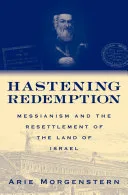
Hastening Redemption
 75
75

Hastening Redemption
Arie Morgenstern’s "Hastening Redemption" offers a revisionist perspective on the origins of modern Jewish settlement in the Land of Israel. By focusing on the first half of the nineteenth century, specifically the immigration spurred by the 1840 Messianic expectation, Morgenstern provides a compelling counter-narrative to the late nineteenth-century genesis of political Zionism. The book’s strength lies in its meticulous detailing of this often-overlooked period of religious-motivated aliyah. A particular passage detailing the logistical challenges and spiritual fervor of immigrants arriving from North Africa provides vivid historical texture. However, the work’s singular focus on religious impetus might underemphasize the socio-economic and political factors that also shaped these migrations. The argument for this specific wave being a direct precursor to later political Zionism warrants further scholarly debate. Nonetheless, "Hastening Redemption" stands as a crucial text for understanding the deep, religiously informed roots of Jewish presence in the Land of Israel.
📝 Description
75
Arie Morgenstern's 2012 book argues that the roots of Zionism extend to the early 19th century.
Arie Morgenstern's "Hastening Redemption" challenges standard accounts of Zionism's origins. The book contends that the movement's ideological and demographic groundwork was laid much earlier than commonly believed, specifically in the first half of the nineteenth century. Morgenstern details a significant period of Jewish immigration to the Land of Israel, fueled by messianic hopes and the anticipation of the Messiah's arrival around 1840. Thousands of Jews from across the Ottoman Empire and North Africa were drawn to the region during this time.
The work is important for scholars of Jewish history, religious studies, and political thought. It will also interest readers concerned with Messianism, early modern Jewish history, and the complex beginnings of national movements. Those who examine the intersection of faith and political action, or the influence of eschatological beliefs on historical migrations, will find "Hastening Redemption" especially instructive. It speaks to individuals seeking a deeper, less conventional view of historical developments.
"Hastening Redemption" reshapes the story of Zionism's emergence, pushing its beginnings back into the pre-nineteenth-century period. This era saw widespread messianic excitement in Jewish communities, partly due to Sabbateanism and other mystical traditions that persisted despite efforts to suppress them. Morgenstern's analysis situates this immigration wave within a larger context of Jewish communal endurance and the persistent desire for national and spiritual renewal. It contrasts with later, more secular forms of Zionism that arose in the late nineteenth century, underscoring a continuity of religious motivation.
This book engages with the historical currents of Jewish mysticism, particularly the lingering influence of Sabbateanism and other messianic movements. It examines how these esoteric beliefs, often suppressed but never fully extinguished, motivated collective action and migration. Morgenstern connects these mystical impulses to the formation of national consciousness, suggesting that the desire for redemption, deeply rooted in kabbalistic thought, predated and informed later political expressions of Zionism.
💡 Why Read This Book?
• Gain a nuanced understanding of Jewish immigration to the Land of Israel driven by Messianic fervor, specifically examining the 1840 expectations, a driver often overshadowed by later political Zionism. • Discover the social and religious landscape of Jewish communities across the Ottoman Empire and North Africa in the early 19th century, and how these factors coalesced into significant migration patterns. • Challenge conventional historical timelines of Zionism by exploring the "pre-Zionist" religious motivations and collective consciousness that predated the formal political movement.
⭐ Reader Reviews
Honest opinions from readers who have explored this book.
❓ Frequently Asked Questions
What is the primary argument of Arie Morgenstern's "Hastening Redemption"?
The book argues that the roots of Zionism extend further back than the late 19th century, tracing a significant wave of Jewish immigration to the Land of Israel in the first half of the 19th century, driven by Messianic expectations around 1840.
When was "Hastening Redemption" first published?
"Hastening Redemption" by Arie Morgenstern was first published on June 22, 2006.
What historical period does "Hastening Redemption" focus on?
The book primarily focuses on the first half of the nineteenth century, detailing immigration to the Land of Israel motivated by the expectation of the Messiah's arrival in 1840.
Which geographic regions are mentioned as sources of immigration in the book?
The book mentions thousands of Jews immigrating from throughout the Ottoman Empire and North Africa.
What event does the book connect to the 1840 Messianic expectation?
The book connects the 1840 Messianic expectation to a large-scale wave of Jewish immigration to the Land of Israel, forming what Morgenstern argues are early foundations for Zionism.
What is the main departure from traditional Zionism narratives in this book?
The main departure is its emphasis on religious and eschatological motivations for immigration in the early 19th century, predating the more commonly cited late 19th-century political and secular origins of Zionism.
🔮 Key Themes & Symbolism
Messianic Expectation as a Driver
The core of "Hastening Redemption" lies in its exploration of Messianic expectation not as a passive belief, but as an active force compelling historical action. Morgenstern details how the specific anticipation of the Messiah's arrival in 1840 galvanized thousands of Jews across the diaspora. This religious fervor directly translated into tangible movements, primarily large-scale immigration to the Land of Israel, challenging the notion that such movements were solely driven by nascent political ideologies.
Pre-Zionist Religious Impulses
Morgenstern introduces the concept of "pre-Zionist" religious impulses, suggesting that the desire for national and spiritual redemption in the Land of Israel existed in potent form long before the formal political movement of Zionism. This work highlights a continuity of hope and action rooted in tradition, eschatology, and a deep connection to the Holy Land, visible in the early 19th-century migrations he documents.
Diaspora Resilience and Migration
The book examines the socio-religious conditions within Jewish communities throughout the Ottoman Empire and North Africa that fostered both the desire and the capacity for migration. It illustrates a remarkable resilience and agency, where collective faith in divine redemption spurred significant demographic shifts. The text details how these communities, inspired by eschatological calendars, undertook arduous journeys, demonstrating a profound commitment to their spiritual heritage.
Reframing Historical Narratives
"Hastening Redemption" serves as a critical intervention in the historiography of Zionism and modern Jewish history. By pushing the chronological origins back and emphasizing religious motivations, Morgenstern compels a re-evaluation of established narratives. The work encourages scholars and readers to consider a more complex, multi-layered genesis for modern Jewish aspirations concerning the Land of Israel, integrating spiritual and mystical currents.
💬 Memorable Quotes
Direct passages from the work, attributed to the author.
“Thousands of Jews from throughout the Ottoman Empire, North Africa, a”
— This excerpt points to the scale and diverse origins of the immigration wave discussed. It emphasizes the widespread nature of the Messianic fervor that prompted these journeys from various diasporic communities toward the Land of Israel.
“Inspired by an expectation for the coming of the Messiah in the year 1840”
— This highlights the precise eschatological dating that served as a catalyst for action. It underscores how specific prophecies and calendar-based Messianic hopes directly fueled historical events like mass migration.
“Its roots go back even further.”
— A concise statement challenging the conventional understanding of Zionism's origins. It signals the book's central thesis: that foundational elements of the movement predate the late nineteenth century.
“A large-scale wave of immigration during the first half of the nineteenth century.”
— This phrase defines the historical phenomenon Morgenstern investigates. It frames the early 19th-century migration as a significant demographic event with deep historical implications.
“Accounts of the history of Zionism usually trace its origins to the late nineteenth century.”
— This sets up the contrast for Morgenstern's argument. It identifies the prevailing historical narrative that his work seeks to revise and expand upon.
🌙 Esoteric Significance
Tradition
The work deeply engages with Jewish Messianism, a central tenet within Kabbalistic and Rabbinic traditions. It explores the practical manifestations of these esoteric beliefs, particularly their role in inspiring collective action like migration. While not strictly a mystical text itself, it analyzes historical events through the lens of eschatological consciousness, a concept deeply intertwined with Kabbalistic thought and its historical interpretations.
Symbolism
The primary symbolic element is the year '1840' itself, which, within certain Messianic calculations, represented a potential harbinger of redemption. The 'Land of Israel' functions as a potent symbol of spiritual restoration and national rebirth, a focal point for diasporic longing. The concept of the 'Messiah' serves as the ultimate symbol of divine intervention and the culmination of historical suffering.
Modern Relevance
Contemporary discussions on Jewish identity, religious Zionism, and the study of Messianic movements continue to draw from deeper historical roots. Thinkers and communities who emphasize the spiritual and redemptive aspects of Jewish return to the Land of Israel, as well as scholars examining the sociology of religion and collective belief systems, find resonance in Morgenstern's analysis of early 19th-century motivations.
👥 Who Should Read This Book
• Scholars of Jewish history and religious studies seeking to challenge conventional timelines of Zionism and explore the role of Messianism. • Readers interested in the socio-religious dynamics of the Ottoman Empire and North Africa during the 19th century, focusing on migration and communal aspirations. • Individuals exploring the intersection of eschatological beliefs and historical events, particularly how spiritual expectations can drive tangible collective action.
📜 Historical Context
Published in 2006, "Hastening Redemption" emerged during a period of ongoing scholarly engagement with the complex origins of Zionism and modern Jewish identity. The late 19th century, often cited as the birth of political Zionism with figures like Theodor Herzl, was indeed a crucial period. However, earlier religious and mystical movements, including the lingering influence of Sabbateanism and the Hasidic movement, provided a fertile ground for Messianic hopes. Morgenstern’s work situates itself against this backdrop, arguing that the religious impetus for return to the Land of Israel was a potent, continuous force. While not a direct contemporary, scholars like Gershom Scholem, who extensively studied Jewish Messianism and mysticism, provided foundational work on the historical significance of these beliefs that Morgenstern builds upon. The book’s emphasis on religious motivation as a primary driver for immigration in the early 19th century implicitly engages with debates that often foreground secular nationalism in historical analyses of the period.
📔 Journal Prompts
The 1840 Messianic expectation and its impact on Jewish migration.
Jewish communal resilience within the Ottoman Empire during the early 19th century.
The concept of 'pre-Zionist' religious impulses and their historical significance.
Analyzing the connection between eschatological dating and historical action.
The socio-economic conditions influencing Jewish immigration to the Land of Israel.
🗂️ Glossary
Messianism
A belief in the coming of a Messiah, a divinely appointed savior who will bring an era of peace, justice, and redemption to humanity. In Jewish tradition, it is a core eschatological concept.
Ottoman Empire
A vast empire that controlled much of Southeastern Europe, North Africa, and the Middle East from the 14th to the early 20th century. Jewish communities existed within its diverse territories.
Diaspora
The dispersion of any people from their original homeland. In Jewish context, it refers to the Jews living outside the Land of Israel.
Eschatology
A branch of theology concerned with the final destiny of the soul and of mankind, as well as the world. It often involves beliefs about the end times and a coming redemption.
Aliyah
The Hebrew word for 'going up,' commonly used to refer to Jewish immigration to the Land of Israel.
Zionism
A nationalist movement that espoused the establishment of, and support for, a Jewish state in the land of Israel. Its origins and motivations are debated.
North Africa
The region of Africa that lies north of the Sahara Desert, including countries like Morocco, Algeria, Tunisia, and Libya. Historically home to significant Jewish populations.