The Crown And The Abyss
 74
74

The Crown And The Abyss
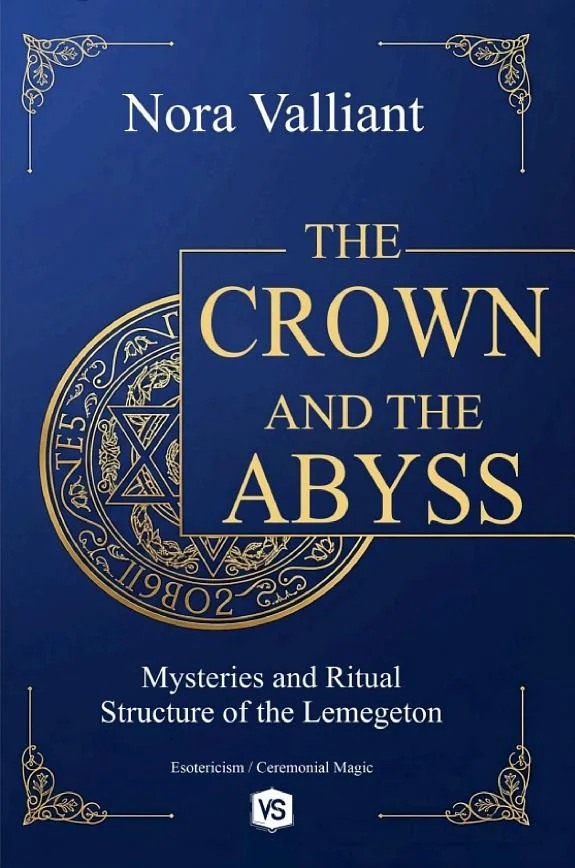
Nora Valliant and Virginia Santos's "The Crown And The Abyss" tackles the Lemegeton with a refreshing emphasis on ritual structure and ethical discipline. Rather than rehashing common interpretations, the authors focus on the practical scaffolding of these ancient rites. Their breakdown of the "Crown" and "Abyss" as internal states to be integrated, rather than external forces to be conquered, offers a nuanced perspective. The insistence on rigor and ethics as foundational elements for any practitioner is a particular strength, grounding the potentially volatile subject matter in a responsible framework. A limitation, however, lies in the density of the material; readers unfamiliar with the Lemegeton's foundational texts might find the initial chapters demanding. The exploration of the "ancestral ritual structures" within the Lemegeton, presented as blueprints for self-knowledge, is particularly compelling, highlighting how formalized magical practice can serve as a vehicle for profound introspection. This book offers a sober, methodological approach to a complex body of magical literature.
📝 Description
74
Published in 2025, "The Crown And The Abyss" examines the Lemegeton's ritual structures.
"The Crown And The Abyss" offers a disciplined approach to the Lemegeton, moving past superficial interpretations. The authors, Nora Valliant and Virginia Santos, focus on the practical application of the grimoire's principles, underscoring the importance of ethics and the practitioner's internal development. This work constructs a model for comprehending the connection between personal transformation and the performance of historical rites, distinguishing clearly between theory and lived experience.
This book is for serious students of Western esotericism, particularly those engaged with ceremonial magic and grimoire study. It suits individuals seeking a structured, ethically sound method for approaching the Lemegeton, rather than sensationalized accounts. The intended reader will grapple with complex ritual mechanics and commit to self-reflection as a central part of their magical practice.
The Lemegeton, a collection of texts primarily from the 17th century, holds a significant place in Western magical history. Its origins lie in earlier grimoires and reflect a period of deep engagement with angelology and demonology. "The Crown And The Abyss" connects with this historical background, a time when occult knowledge was being gathered and codified. The book also enters into the ongoing academic and practical discussions about grimoires that have grown since the late 19th century, a period marked by figures like Aleister Crowley.
💡 Why Read This Book?
• You will learn a methodical approach to understanding the Lemegeton's ritual architecture, moving beyond esoteric lore to practical application, as detailed in the section on "ancestral ritual structures." • You will gain a framework for ethical magical practice by internalizing the book's emphasis on "rigor" and "ethics" as essential components of self-knowledge. • You will explore the symbolic interplay of "Crown" and "Abyss" as a model for personal integration and spiritual ascent, offering a unique perspective not commonly found in introductory texts.
⭐ Reader Reviews
Honest opinions from readers who have explored this book.
❓ Frequently Asked Questions
What specific version of the Lemegeton does "The Crown And The Abyss" focus on?
The book primarily engages with the ritual structures and concepts found within the 17th-century compilation known as the Lemegeton, often referred to as the Lesser Key of Solomon. It analyzes its operational framework rather than a single textual variant.
Is "The Crown And The Abyss" suitable for complete beginners in magic?
While it introduces core concepts, the book's depth regarding ritual structure and ethical rigor makes it more suitable for intermediate practitioners or those with some familiarity with grimoire traditions, particularly the Lemegeton.
What does the book mean by 'ancestral ritual structures'?
This refers to the established, time-tested methods and protocols within the Lemegeton. The authors present these as a systematic framework for practitioners to follow, emphasizing their role in facilitating internal transformation.
How does the book approach the concept of 'ethics' in magic?
Ethics are presented not as an external moral code but as an intrinsic aspect of effective magical practice. The book argues that rigor and ethical conduct are essential for achieving balance and true self-knowledge.
When was 'The Crown And The Abyss' first published?
The book was first published on August 12, 2025, by Nora Valliant and Virginia Santos.
Does the book offer practical rituals to perform?
The book focuses on the principles and structure behind the rituals of the Lemegeton, providing a theoretical and ethical foundation. While it illuminates the mechanics, it emphasizes the practitioner's informed application rather than providing ready-made spell instructions.
🔮 Key Themes & Symbolism
Ritual Structure Discipline
This theme dissects the Lemegeton not as a collection of entities but as a system of structured operations. The book emphasizes the importance of precise methodology and adherence to established 'ancestral ritual structures'. It argues that discipline in ritual execution is paramount for achieving specific outcomes and for the practitioner's internal development, transforming chaotic intent into ordered manifestation. This focus highlights the practical, almost architectural, aspect of ceremonial magic.
The Abyss as Inner Terrain
The 'Abyss' is reframed from a potentially terrifying void into a crucial inner landscape that the practitioner must confront and integrate. This theme explores the concept as the unmanifested potential and the shadow aspects of the self. Navigating this 'Abyss' through rigor and ethical practice is presented as essential for accessing deeper self-knowledge and achieving the balance symbolized by the 'Crown'.
Ethics and Self-Knowledge
Central to the book's argument is the inextricable link between ethical conduct and genuine self-knowledge. It posits that the pursuit of esoteric power without a strong ethical foundation leads to imbalance and self-deception. The 'tools of self-knowledge' emerge as the primary instruments for mastering the complexities of the Lemegeton, ensuring that the practitioner's ascent is guided by wisdom rather than unchecked ambition.
Balance of Light and Shadow
This theme addresses the necessity of integrating seemingly opposing forces within the self and the magical practice. The 'Crown' represents illuminated consciousness and mastery, while the 'Abyss' signifies the primal, unformed potential. The book advocates for a balanced approach, where the practitioner actively works to reconcile these dualities, achieving wholeness through the disciplined engagement with both 'light' and 'shadow'.
💬 Memorable Quotes
Direct passages from the work, attributed to the author.
“Each line is a silent invitation to cross one’s own abysses and ascend through rigor, ethics, and the pursuit of balance between light and shadow.”
— This highlights the book's core thesis: that engaging with the Lemegeton's structures is a path to personal transformation. It emphasizes that true ascent requires internal work, guided by ethical principles and the integration of one's own internal complexities.
“A path is revealed where mystery and discipline intertwine to guide the seeker through hidden territories and ancestral ritual structures.”
— This sentiment points to the book's dual approach: acknowledging the inherent mystery within esoteric traditions while stressing the necessity of structured, disciplined practice to navigate them effectively.
“Ascend through rigor, ethics, and the pursuit of balance between light and shadow.”
— This is a core directive from the text, framing the process of magical and spiritual development not as a passive reception of knowledge, but as an active, demanding journey requiring ethical grounding and internal integration.
“Crossing one's own abysses...”
— This evocative phrase captures the personal challenge presented by the book. It suggests that engaging with esoteric systems like the Lemegeton necessitates confronting one's own psychological depths and limitations.
💡 Key Ideas
Editorial paraphrase of the work's core concepts — not direct quotes.
The tools of self-knowledge emerge as keys to unlocking the deepest aspects of oneself, informative...
This paraphrased concept underscores the book's focus on introspection. It suggests that the practical application of esoteric knowledge, particularly from texts like the Lemegeton, ultimately serves as a catalyst for profound self-discovery and inner illumination.
🌙 Esoteric Significance
Tradition
This work fits squarely within the Western Esoteric Tradition, specifically focusing on the ceremonial magic lineage derived from grimoires like the Lemegeton. It departs from purely historical or academic analyses by emphasizing the practical, ritualistic application and the ethical framework required for its successful implementation. It builds upon, rather than replaces, earlier understandings of Solomonic magic, offering a structured approach for modern practitioners.
Symbolism
The central symbols are the 'Crown,' representing spiritual attainment, inner sovereignty, and perfected consciousness, and the 'Abyss,' symbolizing the primordial, chaotic potential, the unmanifested depths, and the shadow self. The book explores how these are not opposing forces to be feared but integral aspects of the totality that must be understood and integrated through disciplined ritual and ethical practice.
Modern Relevance
Contemporary practitioners of ceremonial magic, particularly those involved with the reconstructionist movements focusing on historical grimoires, draw heavily on the methodological rigor advocated in this book. Thinkers exploring the psychological dimensions of magic and the ethical responsibilities of the practitioner also find resonance with its balanced approach to power and self-knowledge.
👥 Who Should Read This Book
• Serious students of ceremonial magic and grimoire traditions seeking a structured, ethical approach to the Lemegeton. • Practitioners interested in understanding the underlying ritual mechanics and psychological underpinnings of esoteric systems. • Comparative religion scholars and historians of Western esotericism examining the practical application and evolution of occult texts.
📜 Historical Context
The Lemegeton, the primary subject of "The Crown And The Abyss," coalesced in the mid-17th century, a period marked by intense intellectual ferment in England and Europe. This era saw the continuation of Renaissance magical traditions alongside burgeoning scientific inquiry. While figures like Isaac Newton were laying groundwork for classical physics, occult studies remained influential in certain circles. The Lemegeton itself draws upon older grimoires, reflecting a lineage of ceremonial magic that had been developing for centuries. Its compilation occurred during a time when occult texts were often circulated in manuscript form, and interest in demonology and angelic invocation was significant, albeit often viewed with suspicion by mainstream religious authorities. The work implicitly engages with the ongoing scholarly debate concerning the historical accuracy and practical efficacy of such texts, a discourse significantly shaped in the late 19th and early 20th centuries by occultists like Aleister Crowley and scholars analyzing Western esotericism.
📔 Journal Prompts
The interplay of 'Crown' and 'Abyss' in your personal practice.
Reflections on the necessity of 'rigor' in navigating esoteric texts.
Ethical considerations when approaching complex ritual structures.
The role of 'balance between light and shadow' in self-knowledge.
Interpreting 'ancestral ritual structures' for contemporary application.
🗂️ Glossary
Lemegeton
A 17th-century grimoire, often referred to as the Lesser Key of Solomon, containing five distinct books on demonology, angelic magic, and related subjects. It is a foundational text in Western ceremonial magic.
Ceremonial Magic
A form of magic involving elaborate rituals, symbolic gestures, and the invocation of divine or spiritual entities, often based on historical grimoires and structured systems.
Grimoire
A textbook of magic, typically containing instructions on how to create magical tools, perform rituals, cast spells, and understand the nature of supernatural beings.
Rigor
In this context, the strict adherence to precise methods, ethical guidelines, and disciplined practice required for effective and safe engagement with esoteric systems.
Self-knowledge
The process of understanding one's own character, motivations, strengths, and weaknesses, often facilitated through introspection and the application of esoteric principles.
Esotericism
A broad category of spiritual or mystical traditions, beliefs, and practices that are typically secret, hidden, or accessible only to a select few initiates.
Ancestral Ritual Structures
The established, time-tested methodologies and protocols inherent in ancient magical texts like the Lemegeton, presented as a systematic framework for practice.
This book appears in 1 collection
🔮 Readers Also Liked
Browse all →






From the “Goetia” Collection
View all →



More Free Occult Philosophy Books
View all →