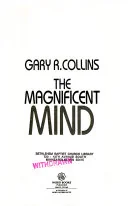
The Magnificent Mind
 74
74

The Magnificent Mind
Gary R. Collins' The Magnificent Mind offers a perspective on mental discipline that, while rooted in the self-help ethos of the mid-80s, ventures into more arcane considerations of consciousness. The strength of the book lies in its persistent emphasis on the internal locus of control; Collins guides the reader to see their thoughts and beliefs as potent forces. However, the work sometimes falters by presenting psychological concepts with an almost mystical authority, lacking the empirical grounding that would satisfy a more skeptical reader. A passage discussing the 'power of focused thought' to influence external circumstances, for instance, is evocative but stops short of providing demonstrable mechanisms, leaving the reader to bridge the gap with faith. It's a valuable, if occasionally unsubstantiated, exploration of mental agency.
📝 Description
74
Gary R. Collins's 1985 book, The Magnificent Mind, examines how individuals can harness internal cognitive resources.
The Magnificent Mind, published in 1985, approaches the nature of consciousness and mental faculties from an esoteric viewpoint. Collins suggests that individuals can harness their internal cognitive resources, moving beyond conventional psychological frameworks. The book posits that a disciplined approach to mental engagement can unlock latent potentials, influencing one's reality and understanding of existence.
This work is for readers interested in the less-charted territories of the human mind, particularly those who feel current psychological models are insufficient. It appeals to individuals seeking to understand the interplay between thought, intention, and manifestation, and those open to concepts extending beyond empirical scientific observation. It is for the introspective seeker wishing to cultivate mental discipline for personal growth and a deeper apprehension of self.
Published in 1985, The Magnificent Mind appeared during a period of growing interest in New Age philosophies and the Western adoption of Eastern meditative practices. While not strictly aligned with a single occult tradition, the book echoes themes found in self-help literature that drew from mind-over-matter principles. The era saw increased public fascination with parapsychology and consciousness studies, making Collins' exploration of mental power timely, though it distinguished itself from more fringe elements.
💡 Why Read This Book?
• Learn to reframe your perception of mental effort, understanding how focused intention, as discussed in relation to the 'Magnificent Mind' concept, can be a tool for personal transformation beyond simple positive thinking. • Gain practical techniques for mental discipline that draw on principles explored in the book's early chapters concerning sustained focus, enabling you to apply these methods to achieve your goals. • Appreciate the historical context of consciousness studies in the 1980s through Collins' unique approach, recognizing how this book contributed to discussions on mind-body connection when it was first published.
⭐ Reader Reviews
Honest opinions from readers who have explored this book.
❓ Frequently Asked Questions
What is the core philosophy behind Gary R. Collins' 'The Magnificent Mind'?
The core philosophy posits that the human mind possesses untapped potential, capable of shaping reality through focused thought, intention, and belief. It suggests a proactive engagement with consciousness to achieve personal growth and influence external circumstances.
When was 'The Magnificent Mind' first published?
'The Magnificent Mind' by Gary R. Collins was first published in 1985.
Does the book offer specific exercises for mental development?
Yes, the book typically includes exercises and techniques focused on mental imagery, affirmation, and sustained concentration, designed to help readers cultivate their mental faculties as outlined in its chapters.
Is 'The Magnificent Mind' considered a self-help book or something more esoteric?
It straddles the line. While it employs self-help techniques, its exploration of the mind's influence on reality and potential for expanded awareness leans into esoteric concepts, particularly concerning consciousness.
What kind of reader would benefit most from 'The Magnificent Mind'?
Readers interested in psychology, philosophy of mind, and personal development who are open to exploring concepts beyond conventional scientific explanations would find it beneficial.
Are there any specific psychological theories discussed in the book?
While not strictly adhering to academic psychology, the book engages with concepts related to cognitive biases, the power of suggestion, and the impact of belief systems on behavior and perception.
🔮 Key Themes & Symbolism
Consciousness as a Creative Force
The central theme is that consciousness is not merely a byproduct of the brain but an active, creative force capable of shaping one's reality. Collins argues that by understanding and directing our mental energies, we can influence events and our perception of the world. This perspective moves beyond passive observation, encouraging an active, intentional engagement with the mind's inherent power. The book emphasizes that through disciplined thought and focused intention, individuals can become architects of their own experiences.
The Power of Belief and Intention
This work explores how deeply held beliefs and focused intentions act as potent catalysts for change. It suggests that what we consistently believe and intend to achieve can manifest in our lives. Collins explores the psychological underpinnings of these phenomena, framing them as essential tools for personal empowerment. The text encourages readers to critically examine their own belief systems and to consciously direct their intentions towards desired outcomes, viewing them as fundamental forces for personal evolution.
Mental Discipline and Self-Mastery
A significant aspect of The Magnificent Mind is the emphasis on rigorous mental discipline. Collins outlines methods for cultivating focus, managing thoughts, and achieving a state of inner calm and control. This self-mastery is presented as the key to unlocking the mind's full potential. The book advocates for consistent practice in techniques like visualization and affirmation, positioning them not as mere exercises but as pathways to profound personal transformation and a more effective engagement with life's challenges.
Expanded Awareness
The text touches upon the potential for achieving states of expanded awareness that transcend ordinary, everyday consciousness. It hints at the mind's capacity for deeper perception and understanding beyond the rational intellect. This exploration suggests that through dedicated practice and a willingness to look inward, individuals can access higher levels of cognition and intuition, leading to a more holistic understanding of self and the universe. This concept invites readers to consider dimensions of mind often overlooked.
💬 Memorable Quotes
Direct passages from the work, attributed to the author.
“The mind is not a passive recipient of life's experiences, but an active participant in their creation.”
— This statement expresses the book's core assertion: that our thoughts, beliefs, and intentions are not merely reactions but powerful forces that actively shape our reality and influence our circumstances.
“Focused attention is the chisel that sculpts the stone of possibility.”
— This metaphor suggests that sustained and directed mental energy is the primary tool for manifesting potential. It highlights the active, deliberate nature of thought required to bring about desired outcomes.
“Belief is the engine that drives intention into manifestation.”
— Here, the book emphasizes the crucial role of conviction. It implies that without a foundational belief in the possibility of something, mere intention lacks the power to bring it into being.
“Self-mastery begins with the discipline of thought.”
— This highlights the book's focus on internal control as the foundation for all other achievements. It posits that mastering one's thoughts is the prerequisite for achieving external success or inner peace.
“Our inner world dictates the quality of our outer world.”
— This aphorism underscores the book's premise that one's internal state—thoughts, emotions, beliefs—directly influences and determines the external reality experienced by the individual.
🌙 Esoteric Significance
Tradition
While not strictly adhering to a single esoteric lineage, *The Magnificent Mind* draws heavily from the broader tradition of Western Esotericism that emphasizes the power of the human will and consciousness. It echoes themes found in Hermeticism, particularly the principle of 'As Above, So Below,' suggesting a correspondence between internal mental states and external reality. The book also shares common ground with New Thought philosophy, which posits that positive thinking and affirmations can lead to material and spiritual well-being. It fits within a lineage of texts focused on unlocking latent human potential through mental and spiritual discipline.
Symbolism
The book frequently employs the 'mind' itself as a primary symbol, representing not just cognitive function but a powerful, almost alchemical, force. 'Focus' is another key symbolic element, akin to a concentrated beam of light or a sharp tool, used to cut through illusion or shape raw potential. The concept of 'manifestation' acts as a symbol for the bridge between the internal field of thought and the external world of experience, representing the tangible outcome of directed mental energy.
Modern Relevance
Contemporary practices in positive psychology, mindfulness-based stress reduction (MBSR), and even certain branches of manifestation coaching owe a conceptual debt to works like *The Magnificent Mind*. Thinkers and practitioners today who explore the placebo effect, the power of suggestion, and the mind-body connection often revisit these foundational ideas about the active role of consciousness. The book's emphasis on intention and belief continues to inform self-help methodologies and personal development programs aimed at enhancing mental resilience and achieving life goals.
👥 Who Should Read This Book
• Individuals interested in the intersection of psychology and philosophy of mind, particularly those seeking to understand how belief systems can influence outcomes. • Aspiring practitioners of mental discipline and self-improvement who are open to exploring concepts of consciousness beyond conventional scientific frameworks. • Readers curious about the intellectual currents of the 1980s concerning human potential and the mind's capacity, seeking a foundational text that bridges self-help and more esoteric thought.
📜 Historical Context
Gary R. Collins' *The Magnificent Mind*, released in 1985, emerged in a cultural milieu where the human potential movement was gaining significant traction. This era saw a widespread interest in self-improvement, mindfulness, and psychological exploration that extended beyond clinical settings. While figures like Carl Rogers were redefining therapeutic relationships, and cognitive behavioral therapy (CBT) was solidifying its empirical base, Collins' work tapped into a more spiritual and metaphysical vein. It resonated with the New Age zeitgeist, which often incorporated Eastern philosophies and a belief in the mind's ability to transcend material limitations. Unlike the strictly secular and empirically-driven approaches gaining prominence in academic psychology, Collins' book engaged with concepts that bordered on the occult, particularly in its emphasis on intention and belief as active forces shaping external reality. This placed it in dialogue, albeit indirectly, with authors exploring similar themes in more overtly spiritual or esoteric contexts, though it maintained a more accessible, less dogmatic tone than many.
📔 Journal Prompts
The concept of 'mental discipline' as presented in the book: how does it relate to your current thought patterns?
Reflect on a time your focused intention seemed to influence an outcome, applying the principles discussed.
Analyze the 'power of belief' within your own life; identify one core belief that may be limiting you.
Consider the 'creative force' of consciousness: how might you actively direct your thoughts today?
Explore the idea of 'self-mastery' through the lens of managing intrusive thoughts, as suggested by the text.
🗂️ Glossary
Mental Imagery
The practice of creating vivid mental pictures or scenes in one's mind, often used as a technique to influence emotions, beliefs, or achieve desired outcomes by mentally rehearsing them.
Affirmation
Positive statements or declarations, repeated regularly, designed to challenge and overcome self-sabotaging and negative thoughts, thereby reinforcing desired beliefs and attitudes.
Focused Intention
A state of directed mental energy and clear purpose, where the mind is concentrated on a specific goal or outcome with the expectation of its realization.
Consciousness
In the context of the book, it refers not just to awareness but to the active, creative potential of the mind, capable of influencing reality.
Self-Mastery
The attainment of control over one's own thoughts, emotions, and actions through discipline and practice, leading to greater personal effectiveness and well-being.
Manifestation
The process by which thoughts, beliefs, and intentions are believed to translate into tangible experiences or circumstances in the physical world.
Latent Potential
Hidden or undeveloped abilities and capacities within an individual that can be accessed and actualized through specific mental and spiritual practices.
This book appears in 1 collection
🔮 Readers Also Liked
Browse all →









From the “Superstition” Collection
View all →








More Free Occult Philosophy Books
View all →