Dwarves and Other Nature Spirits
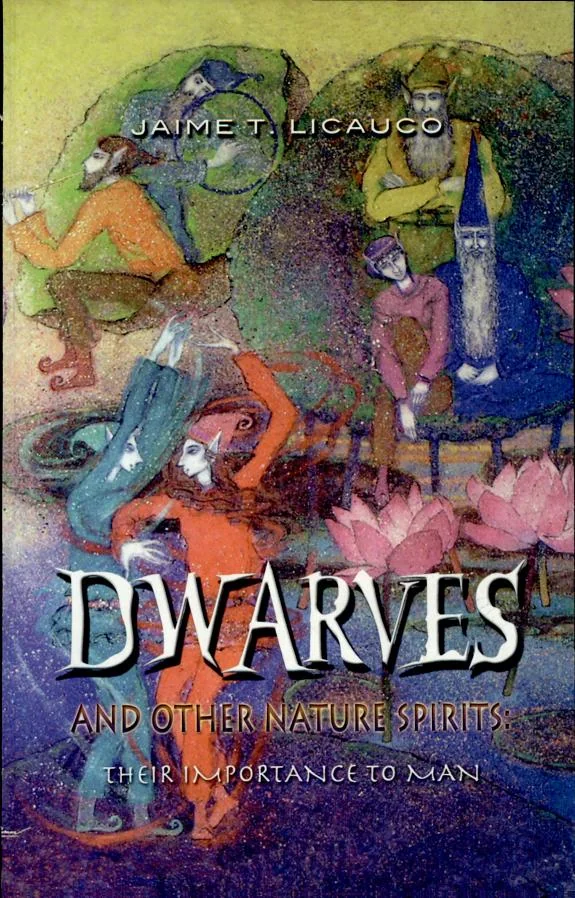
 74
74

Dwarves and Other Nature Spirits
Licauco’s approach to nature spirits in Dwarves and Other Nature Spirits is refreshingly direct, sidestepping New Age platitudes for a more grounded, albeit still esoteric, examination. He presents a compelling case for understanding these entities not as quaint fairy tales but as active forces influencing our reality. The strength lies in his synthesis of diverse anecdotal evidence and historical occult references, particularly his discussion of how elemental consciousness might interact with human perception. However, the book occasionally feels repetitive, especially in its early chapters, as it circles back to establishing the fundamental premise of elemental existence. A more focused analysis of specific elemental types, perhaps a deeper dive into the "dwarf" archetype beyond its common association with mining and earth, would have elevated the work further. Despite this, Licauco's exploration of the subtle energies attributed to these beings offers a unique perspective on the unseen mechanics of the natural world.
📝 Description
74
Jaime T. Licauco's 2005 book examines elemental beings as potent spiritual forces.
First published in 2005, Jaime T. Licauco's book, Dwarves and Other Nature Spirits, looks at elemental and earth spirits. It moves past simple folklore to discuss these beings as active powers in psychic and spiritual life, using many mystical traditions and personal accounts. The work is for those already interested in the occult, comparative mythology, or subtle energies. It is particularly useful for readers wanting to understand non-human intelligences connected to the natural world, and for people open to accepting these beings exist beyond superstition.
Licauco categorizes elementals by their connection to earth, air, fire, and water. The book discusses their possible functions, how they affect the human mind, and ways to sense or connect with them. It suggests these entities are not just imaginary but are essential parts of a conscious universe.
This book engages with a long history of interest in elemental spirits, a topic explored by figures like Paracelsus in the 16th century. Licauco's work appears during a period of renewed interest in nature spirituality and animism, influenced by Neo-Paganism and ecological mysticism. It positions these beings not as mere myth but as integral components of a living cosmos.
💡 Why Read This Book?
• Gain a framework for understanding elemental beings, moving beyond folklore to their role in psychic and spiritual phenomena, as explored in Licauco's 2005 publication. • Discover the potential interactions between human consciousness and nature spirits, offering new ways to perceive the subtle energies of the environment. • Explore the historical lineage of elemental studies, connecting modern esoteric thought to ancient and Renaissance occult traditions.
⭐ Reader Reviews
Honest opinions from readers who have explored this book.
❓ Frequently Asked Questions
When was Dwarves and Other Nature Spirits first published?
Dwarves and Other Nature Spirits by Jaime T. Licauco was first published in 2005, making it a relatively contemporary work within the esoteric literature landscape.
What are elemental spirits according to Licauco?
Licauco discusses elemental spirits as non-human intelligences associated with the classical elements: earth, air, fire, and water, positing they are active forces rather than mere myths.
Does the book discuss communication with nature spirits?
Yes, the work touches upon methods and considerations for perceiving or interacting with elemental beings, viewing such possibilities within a broader esoteric framework.
What is the author's background?
Jaime T. Licauco is known for his extensive writings on parapsychology, esoteric subjects, and spiritual healing, often drawing from both Eastern and Western traditions.
Is this book suitable for beginners in occult studies?
While accessible, the book assumes some familiarity with esoteric concepts. Beginners interested in nature spirits will find it informative but might benefit from introductory texts on occultism first.
What distinguishes this book from other folklore collections?
Unlike purely folkloric accounts, Licauco's book frames nature spirits within a metaphysical and energetic context, exploring their potential reality and influence on the psyche.
🔮 Key Themes & Symbolism
Elemental Consciousness
The book posits that elemental beings are manifestations of conscious energy tied to the natural world's building blocks. Licauco explores their classification, often aligning them with Paracelsus's four classical elements: earth (gnomes/dwarves), air (sylphs), fire (salamanders), and water (undines). This consciousness is presented not as human-like emotion, but as an intrinsic aspect of planetary life, influencing ecosystems and psychic phenomena.
Psychic Interaction
A significant theme is the potential for human consciousness to interact with these elemental intelligences. Licauco studies how focused human thought or psychic sensitivity might create a bridge, allowing for perception or even communication. This interaction is framed within esoteric psychology, suggesting that our inner states can resonate with the energies of nature spirits.
Animism and Subtle Energies
The work champions a form of animism, suggesting that nature itself possesses a vibrant, conscious spirit. It discusses subtle energies that permeate the environment, asserting that elemental beings are key components of this energetic matrix. This perspective encourages readers to view the natural world not as inert matter but as a living, dynamic system.
Folklore as Archetype
Licauco interprets folkloric accounts of dwarves, fairies, and other nature spirits as distorted or symbolic representations of genuine elemental presences. He suggests that these legends, while often embellished, contain kernels of truth about beings that exist on planes of reality accessible through esoteric means, moving them from myth to potential metaphysical entities.
💬 Memorable Quotes
Direct passages from the work, attributed to the author.
“Elemental beings are not mere figments of imagination but active participants in the Earth's energetic system.”
— This statement captures Licauco's core thesis: that nature spirits possess a tangible, albeit subtle, reality and play a role in the planet's energetic and spiritual functioning.
“Our perception of nature spirits is often filtered through cultural folklore and personal biases.”
— This highlights the challenge in understanding elemental beings, suggesting that common narratives can obscure a more direct or esoteric comprehension of their true nature.
“The elemental kingdom is intrinsically linked to the physical and psychic well-being of the planet.”
— This interpretation emphasizes the interconnectedness between nature spirits and the Earth, implying that their state reflects and influences the health of the environment and its inhabitants.
“To understand nature spirits, one must look beyond anthropomorphic projections.”
— This advises against assuming human-like qualities in elemental beings, encouraging a more detached, esoteric perspective to grasp their unique consciousness and existence.
“Subtle energies are the medium through which elemental consciousness expresses itself.”
— This connects the concept of elemental beings directly to the idea of subtle energies, proposing that these unseen forces are the very fabric of their manifestation and interaction.
🌙 Esoteric Significance
Tradition
This work draws heavily from Western esoteric traditions, particularly those influenced by Paracelsian elementalism and later Theosophical concepts of nature spirits. It fits within the broader Hermetic framework of understanding the macrocosm and microcosm, suggesting that elemental beings are integral parts of the planetary consciousness. Licauco's approach departs from purely academic or folkloric studies by positing these beings as active, perceptible entities within an energetic universe.
Symbolism
Key symbols include the 'dwarf' or 'gnome,' representing the earth element, stability, and the hidden treasures within the earth, both literal and metaphorical. Water spirits (undines) symbolize emotion, intuition, and the subconscious depths. These symbols are not merely decorative but are seen as conduits for understanding the fundamental forces and intelligences that govern the natural world and influence human psychology.
Modern Relevance
Contemporary practitioners of animistic traditions, eco-spiritualists, and those exploring nature-based magic often find Licauco's work a valuable resource. It informs modern understandings of ley lines, earth energies, and the concept of a 'genius loci' (spirit of place). Thinkers and groups interested in re-enchanting the natural world and fostering a deeper connection with non-human intelligences may draw inspiration from its perspectives.
👥 Who Should Read This Book
• Students of esoteric philosophy and comparative mythology seeking to understand the role of elemental beings across cultures and historical periods. • Individuals interested in animism and nature spirituality who wish to explore the concept of conscious forces within the natural world. • Parapsychology enthusiasts and researchers looking into anecdotal evidence and esoteric theories concerning non-human intelligences and subtle energies.
📜 Historical Context
Jaime T. Licauco's *Dwarves and Other Nature Spirits* emerged in 2005, a period marked by a renewed interest in esoteric traditions and the perceived interconnectedness of consciousness and the environment. This resurgence was fueled partly by the popularization of concepts from Theosophy and Anthroposophy, which had long discussed elemental beings. Licauco's work entered a landscape where thinkers like Rudolf Steiner had already extensively theorized about the spiritual hierarchy of nature. While Steiner's approach was more systematic and spiritual-scientific, Licauco's contribution leans more towards synthesizing anecdotal evidence and occult lore. The book's focus on nature spirits can be seen as a continuation of a lineage that includes 16th-century figures like Paracelsus, who also attempted to categorize and understand these entities. The reception of such works in the early 21st century often falls within niche esoteric communities, distinct from mainstream academic discourse, yet it reflects a persistent human curiosity about the unseen forces shaping our world.
📔 Journal Prompts
The concept of elemental consciousness and its manifestation as dwarves.
Reflecting on the connection between human perception and elemental beings.
Exploring the symbolic representation of water spirits (undines) in personal experience.
Considering the role of subtle energies in the Earth's energetic system.
The integration of folkloric accounts with esoteric understanding of nature spirits.
🗂️ Glossary
Elementals
Non-human beings or spirits believed to be composed of and associated with the four classical elements: earth, air, fire, and water.
Gnomes
Often synonymous with dwarves in esoteric literature, these are elemental beings associated with the earth, representing stability, grounding, and the hidden forces within the planet.
Sylphs
Elemental spirits attributed to the element of air, often described as ethereal beings associated with winds, weather, and the atmosphere.
Salamanders
Elemental beings associated with the element of fire, often depicted as fiery entities or spirits that inhabit or govern flames and heat.
Undines
Elemental spirits of water, associated with rivers, lakes, oceans, and rain, often symbolizing emotions, intuition, and the subconscious.
Subtle Energies
Invisible forces or energies that are believed to permeate the universe and living beings, distinct from physical forces, often discussed in esoteric and spiritual contexts.
Animism
The belief that natural objects, phenomena, and the universe itself possess souls or consciousness; a worldview where spirits inhabit the natural world.
This book appears in 2 collections
🔮 Readers Also Liked
Browse all →








From the “Nature Spirits” Collection
View all →



More Free Occult Philosophy Books
View all →