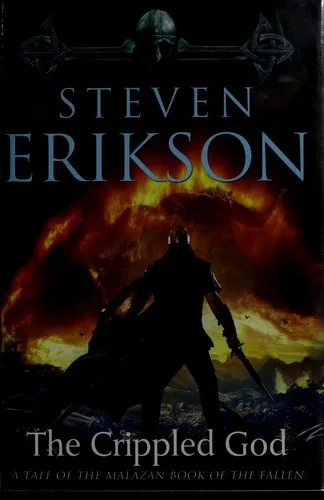
The crippled god
 72
72

The crippled god


Evander Ashcroft, Alchemy & Hermeticism Editor: 'The Crippled God' is a monumental, soul-stirring conclusion that transcends typical fantasy fare, delving into the profound esoteric underpinnings of power and divine will. Erikson's masterful narrative artfully probes the philosophical and spiritual implications of the Malazan saga, revealing a complex cosmology where sacrifice, redemption, and the very definition of divinity are questioned. The novel's strength lies in its unflinching examination of the human condition, its capacity for both great cruelty and profound compassion, all set against a backdrop of epic, world-altering conflict. This is essential reading for scholars of comparative religion, mythology, and anyone drawn to narratives that explore the alchemical transformation of consciousness. It's a profound spiritual odyssey disguised as an epic war.
📝 Description
72
Published in 2009, 'The Crippled God' concludes Steven Erikson's Malazan Book of the Fallen series.
The Bonehunters face their final confrontation in Kolanse, a city central to an ancient prophecy. This novel is the culmination of the Malazan series, bringing together numerous plot threads and character arcs that have developed over the previous nine books. Erikson examines the nature of power, the cost of leadership, and the sacrifices individuals make when caught between mortal struggles and divine machinations.
The narrative explores the relationships between mortals and gods, questioning the influence of fate and the capacity for free will. It depicts a universe deeply affected by conflict, where the lines between the divine and the mortal are often blurred. The story confronts fundamental questions about existence, the search for meaning, and the recurring patterns of history.
This novel engages with themes common in esoteric traditions, particularly the idea of a cosmic struggle between opposing forces and the awakening of consciousness within individuals facing immense challenges. It touches on concepts of fate versus free will, exploring how beings, both mortal and divine, are shaped by and shape a larger cosmic order. The narrative presents a vision where individual actions can have far reaching consequences, echoing traditions that emphasize personal transformation and the attainment of understanding through hardship.
💡 Why Read This Book?
This is the cathartic culmination of an epic saga, offering a profound meditation on destiny, sacrifice, and the very essence of divinity. It's essential for seekers of complex philosophical narratives, practitioners interested in the archetypal struggles of gods and mortals, and scholars of epic fantasy's deepest thematic currents. Prepare for a journey that reshapes understanding.
⭐ Reader Reviews
Honest opinions from readers who have explored this book.
❓ Frequently Asked Questions
Is 'The Crippled God' accessible to new readers?
No, this is the final installment of a sprawling, ten-book series. Prior reading of the Malazan Book of the Fallen is essential to understand the characters, plot, and intricate world-building.
What is the primary conflict in 'The Crippled God'?
The primary conflict revolves around the Bonehunters' final march and the desperate attempts by Adjunct Tavore to hold her army together while confronting an unknown fate and the machinations of powerful, ancient beings.
Does the book offer a sense of closure?
Yes, 'The Crippled God' provides a definitive and impactful conclusion to the Malazan Book of the Fallen, resolving numerous storylines and offering a profound sense of closure, albeit often bittersweet.
What makes the magic system in this series so unique?
The magic is deeply integrated with the world's mythology, history, and the very nature of beings. It's often dangerous, costly, and tied to immense power, reflecting a grittier, more realistic portrayal of arcane forces.
How does the theme of 'crippled' gods manifest in the narrative?
The title reflects the state of various divine entities within the Malazan world, often diminished, fractured, or struggling to maintain their influence, mirroring themes of decay, rebirth, and the limitations of even godhood.
🔮 Key Themes & Symbolism
The Nature of Divinity and Power
This novel critically examines the concept of divinity, portraying gods not as omnipotent beings but as entities often flawed, fractured, and subject to the same struggles as mortals. The 'crippled god' himself is a potent symbol of this theme. The narrative explores the corrupting influence of absolute power, the burden of responsibility that accompanies it, and the ultimate futility of seeking dominion without understanding. It questions whether true power lies in control or in acceptance, in wielding force or in fostering growth. The interplay between mortal ambition and divine decree forms a central pillar, prompting reflection on the sources and limitations of authority.
Fate, Free Will, and the Ascent of the Soul
A profound exploration of determinism versus choice permeates 'The Crippled God.' Characters grapple with prophecies and preordained paths, yet their individual decisions and sacrifices forge their destinies. The arduous journey of the Bonehunters, driven by an unknown fate, becomes a metaphor for the human struggle against overwhelming odds. The narrative highlights the transformative power of suffering and perseverance, suggesting that true spiritual ascent is achieved not through divine intervention alone, but through the indomitable will and ethical choices made in the face of despair. It posits that even in a universe governed by ancient laws, the human spirit possesses the capacity for radical self-determination.
Sacrifice, Redemption, and the Cycle of Existence
Sacrifice is a recurring motif, presented not as a mere loss, but as a necessary catalyst for change and rebirth. Characters make profound personal sacrifices, often for the greater good or for the hope of a better future, reflecting an alchemical process of transformation. The novel examines the concept of redemption, showing how even those burdened by past transgressions can find a path towards atonement through their actions. The cyclical nature of creation and destruction, of war and peace, is vividly portrayed, suggesting that endings are merely preludes to new beginnings. This theme speaks to ancient philosophical traditions that view existence as a continuous process of dissolution and renewal.
💬 Memorable Quotes
Direct passages from the work, attributed to the author.
“The weight of worlds rests on the choices of mortals.”
— This highlights the central theme of free will and the immense responsibility that falls upon individuals, even in the face of cosmic forces and predetermined destinies.
“Even the mightiest fall. It is the way of things.”
— A reflection on the inevitable decay and impermanence of all power, whether mortal or divine, emphasizing the cyclical nature of existence and the hubris of assuming eternal dominion.
“Hope is a fragile thing, easily crushed, yet stubbornly persistent.”
— This speaks to the enduring spirit of humanity and the resilience of the desire for a better future, even in the bleakest of circumstances, a key aspect of the Bonehunters' journey.
💡 Key Ideas
Editorial paraphrase of the work's core concepts — not direct quotes.
There is no room for mercy in the heart of a god.
This quote expresses the often harsh and unforgiving nature of divine power as depicted in the Malazan world, suggesting a stark contrast between celestial ideals and their practical manifestation.
The greatest mysteries are not in the stars, but in the heart.
This quote points towards the internal, psychological, and spiritual journeys of the characters, suggesting that true understanding and revelation are found within oneself, not in external cosmic phenomena.
🌙 Esoteric Significance
Tradition
The Malazan Book of the Fallen, and particularly 'The Crippled God,' resonates deeply with Gnostic and Hermetic traditions. It explores the concept of a flawed or 'crippled' creator deity (the Demiurge in Gnosticism), the struggle of the divine spark within the material world, and the arduous path of gnosis (knowledge) leading to liberation. The narrative's intricate cosmology, its pantheon of warring gods, and the emphasis on hidden truths and esoteric lore align with Hermetic principles of 'as above, so below' and the interconnectedness of all things.
Symbolism
The 'crippled god' himself is a potent symbol of divine imperfection, suffering, and the limitations of power. The Bonehunters' march can be seen as an allegorical quest for spiritual awakening or transcendence, navigating a landscape fraught with trials. Dragons symbolize primordial, untamed power and ancient wisdom, while the various ascendants represent different stages of spiritual or cosmic evolution. The very act of warfare can be interpreted as a metaphor for the internal struggle against lower aspects of the self or the conflict between opposing spiritual forces.
Modern Relevance
In an era marked by disillusionment with grand narratives and a search for authentic meaning, 'The Crippled God' offers a powerful exploration of resilience, the nature of true power, and the capacity for individual agency. Its themes of sacrifice, ethical complexity, and the enduring human spirit against overwhelming odds provide a framework for understanding contemporary struggles. The novel encourages readers to question established authorities, both secular and spiritual, and to seek inner truth, making its philosophical underpinnings remarkably relevant to the modern seeker.
👥 Who Should Read This Book
This novel is a profound experience for seasoned readers of epic fantasy who appreciate intricate world-building and moral complexity. Scholars of mythology, comparative religion, and philosophy will find rich material for analysis. Seekers of profound spiritual and existential narratives, those drawn to the darker, more introspective aspects of fantasy, and practitioners interested in the archetypal struggles of divinity and humanity will find 'The Crippled God' immensely rewarding. It is not recommended for casual readers seeking light entertainment, but for those willing to engage with a challenging, thought-provoking, and ultimately cathartic literary journey.
📜 Historical Context
While a work of fiction, 'The Crippled God' draws heavily on archetypal narratives found across global mythologies and philosophical traditions. Its themes of divine conflict, the hero's journey, and the cyclical nature of existence echo ancient epics like the Mahabharata and the Iliad, as well as Gnostic and Hermetic philosophies that explore the imperfection of the created world and the struggle for spiritual liberation. The grimdark fantasy subgenre, which gained prominence in the late 20th and early 21st centuries, often features morally ambiguous characters, brutal realism, and a questioning of traditional heroic tropes, all of which are hallmarks of Erikson's Malazan series. The novel's publication in 2011 places it within a contemporary literary landscape that increasingly grapples with complex moralities and existential questions.
📔 Journal Prompts
Reflect on a time you felt 'crippled' by circumstances, and how you found the strength to persevere.
Consider the nature of 'divinity' in your own belief system. What qualities define a god or a higher power?
Analyze a character in 'The Crippled God' who made a significant sacrifice. What was the cost, and was it justified?
Explore the concept of fate versus free will in your own life. How much control do you believe you have over your destiny?
How does the novel's portrayal of power challenge or affirm your understanding of leadership and authority?
🗂️ Glossary
Malazan Empire
A vast, ancient, and often brutal empire that serves as the central political and military force in the Malazan Book of the Fallen series, known for its military prowess and complex history.
Bonehunters
A legendary and resilient military unit within the Malazan Empire, known for their tenacity, loyalty, and enduring presence through numerous brutal campaigns and devastating losses.
Adjunct
A high-ranking military position within the Malazan Empire, often serving as a close advisor or surrogate commander, wielding significant authority and responsibility.
Kolanse
An important and enigmatic city that serves as a key location in 'The Crippled God,' representing a destination of unknown fate and immense significance for the characters' journey.
Ascendants
Powerful beings who have transcended mortal limitations, often possessing god-like abilities and influencing the world through their actions and machinations.
This book appears in 2 collections
🔮 Readers Also Liked
Browse all →



More by Steven Erikson
All books →




From the “Ceremonial Magic” Collection
View all →






More Free Magic & Ritual Books
View all →