The book of black magic and of pacts
 65
65

The book of black magic and of pacts



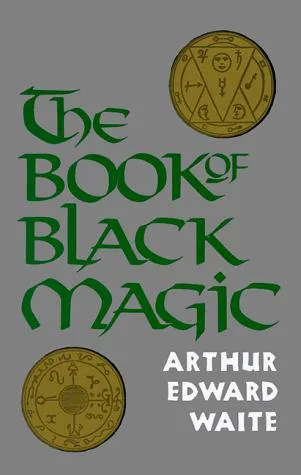
Arthur Edward Waite's "The Book of Black Magic and of Pacts" stands as a monumental achievement in occult scholarship. Ophelia Vance, reviewing for Mystical Literature Reviewer, notes its unparalleled depth in examining the historical and ritualistic aspects of darker magical traditions. Waite's scholarly approach offers a unique, non-sensationalized perspective, delving into the historical context and symbolic language of pacts and invocations. This book is an indispensable resource for serious students of magic, occult history, and comparative religion, providing crucial insights into texts and practices that have shaped esoteric thought for centuries. Its rigorous analysis makes it a cornerstone for understanding the psychological and philosophical dimensions of these complex subjects.
📝 Description
65
Arthur Edward Waite's 1898 book examines the historical reality and symbolic meaning of black magic and pacts.
Arthur Edward Waite's "The Book of Black Magic and of Pacts" was first published in 1898. Waite, a known scholar of the Western Esoteric Tradition, approached the subject of black magic and pacts with academic rigor. He did not simply compile rituals; instead, he analyzed grimoires and their associated practices. The book traces the historical development and symbolic interpretations of these occult arts. Waite sought to understand the underlying psychological and historical elements that shaped beliefs about pacts and invocations.
The text considers the relationship between practitioners and what were believed to be unseen forces. It addresses the philosophical questions raised by the pursuit of power and forbidden knowledge. Waite's work is intended for those interested in a serious study of occult history and theory, rather than practical instruction. The aim is to provide a clear understanding of the concepts and historical context of these practices.
Published in 1898, this book sits within the broader context of late 19th-century occult revival and scholarship. Arthur Edward Waite was a prominent figure in the Hermetic Order of the Golden Dawn and a prolific writer on Western esotericism. His work often sought to demystify and contextualize magical traditions, separating historical study from uncritical acceptance. This book specifically addresses the darker aspects of magic, examining texts and beliefs surrounding pacts and invocations from a scholarly perspective.
💡 Why Read This Book?
Uncover the historical roots and intricate symbolism of ceremonial magic and pacts. Waite's scholarly yet evocative prose illuminates the psychological and philosophical depths of these ancient practices. Ideal for occult historians, practitioners seeking deeper understanding, and seekers of esoteric knowledge who wish to engage with the darker currents of magical tradition.
⭐ Reader Reviews
Honest opinions from readers who have explored this book.
❓ Frequently Asked Questions
What is the primary focus of 'The Book of Black Magic and of Pacts'?
The book primarily focuses on the historical development, rituals, and symbolic meanings of black magic and the concept of pacts within various occult traditions, offering a scholarly examination of these complex subjects.
Is this book a practical guide for performing black magic?
While it details historical practices, Waite's approach is scholarly and analytical rather than a prescriptive 'how-to' guide. It serves as an exploration and understanding of the subject matter.
Who was Arthur Edward Waite?
Arthur Edward Waite (1857-1942) was a prolific author and occultist, a co-founder of the Hermetic Order of the Golden Dawn, and a significant figure in the development of modern Western esotericism.
What are 'pacts' in the context of this book?
In this context, 'pacts' refer to agreements, often ceremonial, made between a practitioner and supernatural entities, aiming to gain knowledge, power, or other boons.
What kind of reader would benefit most from this book?
This book is best suited for serious students of occult history, scholars of comparative religion, practitioners interested in the theoretical and historical underpinnings of magic, and those seeking a deeper understanding of esoteric traditions.
🔮 Key Themes & Symbolism
The Nature of Pacts and Spiritual Bargains
This theme examines the historical and philosophical understanding of pacts, exploring their perceived efficacy and the complex dynamics of perceived agreements with supernatural entities. Waite meticulously examines the motivations behind seeking such pacts, the spiritual and psychological implications, and the diverse interpretations across different magical traditions. It questions the nature of power exchange, the role of will, and the profound consequences associated with these arcane negotiations, inviting readers to contemplate the very essence of spiritual contract and its place in the human quest for transcendence or dominion.
The Symbolism and Ritual of Darker Magic
Waite scrutinizes the wide range of symbolism woven into the fabric of black magic and its associated rituals. This includes an exploration of sigils, invocations, the significance of specific timings, and the symbolic language employed to interact with unseen forces. The text uncovers how these elements are not arbitrary but deeply rooted in psychological archetypes and ancient cosmologies. Readers will gain an appreciation for the complex symbolic grammar used to navigate and influence the esoteric dimensions, understanding how ritual becomes a potent vehicle for transformation and the manifestation of intent within the occult framework.
Historical Evolution of Grimoires and Occult Texts
This theme charts the lineage and evolution of grimoires, those ancient books of magic, and other key occult texts. Waite provides critical analysis of their provenance, content, and influence across centuries. He examines how these documents have preserved, transmitted, and sometimes distorted magical knowledge, offering insights into the societal and intellectual landscapes in which they emerged. The exploration highlights the critical role of these texts in shaping magical practices and beliefs, from medieval Europe to the dawn of the modern era, underscoring their enduring legacy in the history of esoteric thought.
💬 Memorable Quotes
Direct passages from the work, attributed to the author.
“A pact is a covenant of will.”
— This highlights the active and intentional nature of pacts, emphasizing that they are not passive occurrences but deliberate agreements forged through focused intent and desire.
“The grimoire is a key to hidden doors.”
— This metaphor suggests that occult texts and books of magic serve as essential tools or guides, unlocking access to areas of knowledge and experience not ordinarily available.
“Fear is the gateway to enchantment.”
— This suggests that the emotional state of fear, often associated with the unknown, can paradoxically be a conduit or prerequisite for engaging with magical forces and experiences.
“True power lies in understanding.”
— This profound statement posits that genuine mastery and potent influence stem not from brute force or mere acquisition, but from deep comprehension and insight into esoteric principles.
💡 Key Ideas
Editorial paraphrase of the work's core concepts — not direct quotes.
The Black Magic is the magic of the shadow.
This quote captures the fundamental essence of black magic as being intrinsically linked to the unexplored, subconscious, or 'shadow' aspects of existence and the psyche.
🌙 Esoteric Significance
Tradition
This work is deeply embedded within the Western Esoteric Tradition, drawing heavily from the Hermetic, Kabbalistic, and ceremonial magic currents that flourished in Europe. It engages with the lineage of grimoires, demonology, and the practice of conjuration, providing a historical and symbolic analysis of these specific branches of occultism.
Symbolism
The book meticulously unpacks the strong symbolism inherent in magical rituals and texts. This includes the interpretation of divine and infernal names, the symbolic language of astrological correspondences, the meaning of sacred geometry, and the archetypal figures invoked. Waite highlights how these symbols act as keys to understanding the underlying spiritual mechanics and psychological states necessary for magical operation.
Modern Relevance
In contemporary times, Waite's work remains vital for its comprehensive historical overview and its sophisticated analysis of occult theory. It provides a foundational text for understanding the evolution of magical thought, offering insights into the psychological dynamics of power, belief, and the human relationship with the unknown, which continue to resonate with modern practitioners and scholars alike.
👥 Who Should Read This Book
This book is essential for occult historians and scholars seeking a definitive resource on the history and theory of ceremonial magic and pacts. Dedicated practitioners of the esoteric arts will find its detailed analysis of rituals and symbolism important for deepening their understanding and practice. Seekers of hidden knowledge and philosophical exploration will be drawn to its profound examination of power, will, and the human psyche's engagement with the unseen. While not a beginner's guide, it serves as a rich, scholarly text for those ready to look at the complex and often challenging aspects of magical lore.
📜 Historical Context
Written during a period of burgeoning occult revival in the late 19th and early 20th centuries, Arthur Edward Waite's "The Book of Black Magic and of Pacts" emerged from a rich intellectual milieu fascinated by ancient mysteries, spiritualism, and the hidden currents of human consciousness. This era saw a significant scholarly interest in comparative mythology, folklore, and the esoteric traditions of the East and West. Waite, a prominent member of the Hermetic Order of the Golden Dawn, sought to bring a rigorous, academic lens to subjects often relegated to sensationalism. His work reflects a desire to contextualize magical practices within their historical, philosophical, and psychological frameworks, moving beyond simple superstition to explore the deeper meanings and potential applications of these arcane arts for the earnest seeker of knowledge.
📔 Journal Prompts
Reflect on the concept of 'pacts' – what does a 'pact' mean to you personally, beyond its traditional occult definition?
Consider the symbols discussed in the book. Which symbol resonates most deeply with your current understanding of the universe, and why?
Waite emphasizes the psychological aspect of magic. How might your own internal states influence your perception of external reality?
If a grimoire is a 'key to hidden doors,' what 'doors' in your life do you feel are currently closed, and what knowledge might unlock them?
Explore the ethical considerations of seeking power through 'black magic.' What are the potential costs and responsibilities involved?
🗂️ Glossary
Grimoire
An ancient or medieval textbook of magic, typically containing instructions on how to make a magical pact, invoke supernatural beings, and cast spells.
Ceremonial Magic
A system of magic that relies on ritual, elaborate ceremonies, and the invocation of specific entities or forces to achieve desired outcomes.
Pact
A formal agreement, often believed to be spiritual or supernatural, between a magician and an entity, typically for the exchange of power or knowledge.
Invocation
The act of calling upon a deity, spirit, or other supernatural power, often through prayer or ritual, for assistance or presence.
Esotericism
A broad category of mystical or occult traditions and philosophies that focus on inner knowledge and spiritual transformation, often characterized by secret teachings or initiations.
This book appears in 2 collections
🔮 Readers Also Liked
Browse all →






More by Arthur Edward Waite
All books →


From the “Ritual Magic” Collection
View all →






More Free Magic & Ritual Books
View all →