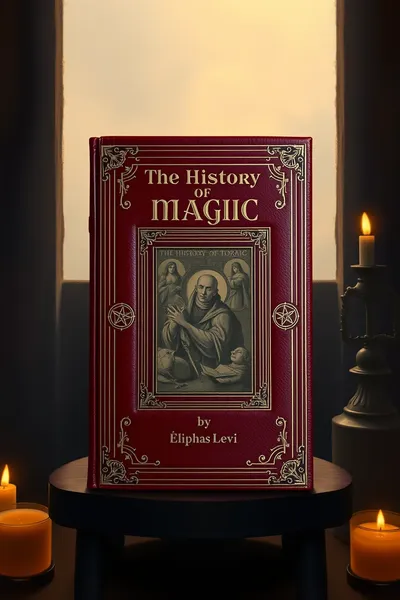
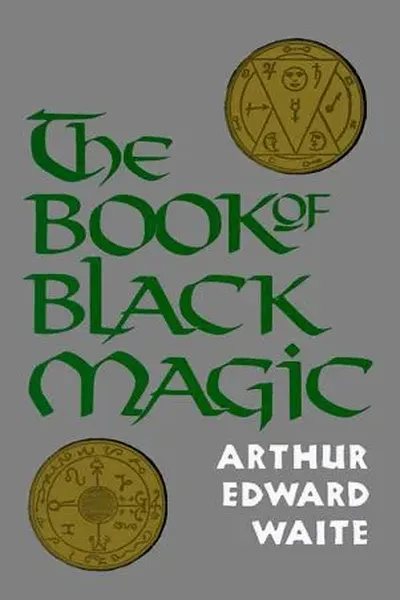
The Book of Black Magic and Ceremonial Magic: The Secret Rituals and Occult Traditions in Goëtia

 82
82

The Book of Black Magic and Ceremonial Magic: The Secret Rituals and Occult Traditions in Goëtia
Arthur Edward Waite's ambitious examination of ceremonial magic, particularly Goëtia, offers a scholarly lens on traditions often shrouded in secrecy and sensationalism. The strength of this work lies in Waite's rigorous approach to textual analysis and historical context, presenting a critique of the occult movement from within its own ranks. His detailed exploration of the "Literature of Ceremonial Magic" provides invaluable insight into the evolution of ritualistic thought. However, Waite's evident personal biases and his tendency to view certain magical practices with skepticism can sometimes color his interpretations, leading to a less than fully objective portrayal of the material he analyzes. A notable passage is his dissection of the perceived differences between "white" and "black" magic, highlighting how such distinctions are often constructs of social and historical perspective rather than inherent qualities of the practices themselves. This book serves as a crucial, albeit sometimes opinionated, historical document on the intellectual currents of occultism at the turn of the 20th century.
📝 Description
82
Arthur Edward Waite's 1910 book analyzes ceremonial magic, particularly Goëtia.
Published in 1910, Arthur Edward Waite's *The Book of Black Magic and Ceremonial Magic* offers a scholarly look at occult traditions, with a focus on Goëtia and ritual practices. Waite compiled his research into spirit summoning, magical ceremonies, and the symbolic systems behind these arts. This is not a practical guide for performing magic but rather a critical examination of the literature and beliefs associated with ceremonial magic.
The book is for students of Western Esotericism, scholars of comparative religion, and historians of occultism. It suits readers who approach magical traditions analytically. Those interested in the intellectual history of magic, the development of ritual, and the critical study of occult texts will find considerable material. It addresses the underlying principles of magical systems.
Waite's work comes from a time, the late 19th and early 20th centuries, when spiritualism and occult revival were popular. He was part of groups like the Hermetic Order of the Golden Dawn but often maintained a critical distance. This book discusses figures such as Eliphas Lévi and other ceremonial magicians of his era, providing a different perspective from uncritical acceptance of ancient rites. Parts of this work appeared before the major occult revivals of the mid-20th century.
This work belongs to the study of Western Esotericism during the late 19th and early 20th centuries. Waite, a significant figure in occult scholarship and a member of the Hermetic Order of the Golden Dawn, approached magical traditions with a critical eye. His book engages with the historical development and conceptual underpinnings of practices like Goëtia, situating them within the broader intellectual currents of his time. It offers a scholarly counterpoint to more uncritical or purely devotional engagements with occultism.
💡 Why Read This Book?
• Gain a critical historical perspective on Goëtia and ceremonial magic, understanding Waite's analysis of the "Literature of Ceremonial Magic" from the early 20th century. • Explore Waite's scholarly examination of "spirit summoning" and occult traditions, moving beyond sensationalist interpretations to understand their historical and theoretical underpinnings. • Appreciate the detailed presentation of original "icons, symbols, seals and illustrations" that Waite includes, offering visual anchors to the complex concepts discussed.
⭐ Reader Reviews
Honest opinions from readers who have explored this book.
❓ Frequently Asked Questions
Is Arthur Edward Waite's *The Book of Black Magic* a practical guide for performing rituals?
No, this work is primarily a scholarly and critical examination of ceremonial magic and its literature, not a step-by-step manual for ritual execution. Waite analyzes historical texts and traditions rather than providing instructions.
What is Goëtia as discussed in this book?
Goëtia, as explored by Waite, refers to a branch of ceremonial magic focused on the invocation and evocation of spirits, often drawing from texts like the Lesser Key of Solomon. Waite critically analyzes its historical context and textual basis.
Does the book contain actual black magic spells?
The book does not present a collection of active spells for "black magic." Instead, it discusses the historical concept and literature associated with what was often termed "black magic" within occult traditions, offering a critical perspective.
What kind of illustrations are included in this edition?
This edition features Waite's original "icons, symbols, seals and illustrations" that were part of his historical research and commentary on ceremonial magic, providing visual context for the occult traditions discussed.
When was Arthur Edward Waite active in occult studies?
Arthur Edward Waite was a prolific writer and occult scholar active primarily in the late 19th and early 20th centuries, a period of significant revival and scholarly interest in esoteric subjects.
What is the "Literature of Ceremonial Magic" section about?
This section of Waite's work systematically reviews and analyzes the historical texts, grimoires, and writings that form the foundation of ceremonial magical practices across different eras and traditions.
🔮 Key Themes & Symbolism
The Literature of Ceremonial Magic
Waite meticulously catalogues and analyzes the foundational texts of ceremonial magic, tracing their development and influence through history. He examines grimoires and esoteric writings, scrutinizing their content and the ritualistic traditions they represent. This section is crucial for understanding the intellectual lineage of occult practices and how different texts shaped magical theory and application over centuries, offering a critical academic perspective on sources.
Goëtia and Spirit Evocation
The work provides an in-depth examination of Goëtia, a specific branch of ceremonial magic concerned with the summoning of spirits. Waite studies the historical context and theoretical frameworks surrounding these practices, analyzing the phenomena of spirit summoning as described in various occult traditions. His approach is critical, seeking to understand the historical and psychological dimensions rather than endorsing the practices uncritically.
Symbolism and Ritual
Central to Waite's study is the interpretation of symbols, icons, and seals used within ceremonial magic. He highlights how these visual elements are integral to the structure and meaning of occult rituals. The book's inclusion of the author's original illustrations serves to illuminate the symbolic language of magic, offering a visual glossary for practitioners and scholars interested in the semiotics of esoteric traditions.
Defining 'Black Magic'
Waite addresses the often-misunderstood concept of "Black Magic." He critically unpacks how this term has been applied historically, distinguishing between genuine magical operations and the moralistic judgments often imposed upon them. His analysis aims to explain the subject by examining its roots in occult lore and societal perceptions rather than accepting sensationalized definitions.
💬 Memorable Quotes
Direct passages from the work, attributed to the author.
“The phenomena of spirit summoning.”
— This phrase expresses Waite's focus on the historical and theoretical aspects of interacting with non-physical entities within magical frameworks, emphasizing the 'phenomena' as subjects of study.
“The ritualistic traditions which have surrounded the occult movement for centuries.”
— This highlights Waite's dedication to tracing the deep historical roots and continuous evolution of structured magical practices, positioning occultism as a long-standing, complex tradition.
“He notes various texts, and how they each had a bearing upon the practice of the occult and of magical ceremony.”
— This points to Waite's textual-critical method, emphasizing his examination of specific occult documents and their direct impact on the development and execution of magical rites.
“The Secret Rituals and Occult Traditions in Goëtia.”
— This phrase directly indicates the core subject matter: hidden or esoteric ceremonial practices specifically within the domain of Goëtia, a significant area of occult study.
“Waite examines the ritualistic traditions...”
— This signifies the book's analytical approach, focusing on the structures, historical development, and underlying principles of magical ceremonies rather than a simple compilation of spells.
🌙 Esoteric Significance
Tradition
This work primarily falls within the Western Esoteric Tradition, specifically engaging with Hermeticism, Kabbalah, and ceremonial magic. Waite, while deeply knowledgeable in these areas, often presented them with a critical, academic detachment. His approach departs from purely devotional or practical occultism by emphasizing historical analysis and textual critique, positioning the book as a scholarly resource on these traditions rather than a direct manual for their practice.
Symbolism
The book frequently references key esoteric symbols such as the pentagram, hexagram, and various divine names and angelic seals, particularly those associated with Goëtia. These symbols are presented not merely as decorative elements but as integral components of ritual efficacy and spiritual communication within ceremonial magic. Waite analyzes their historical usage and perceived power within the context of summoning and consecration rites.
Modern Relevance
Contemporary scholars of Western Esotericism and historians of religion continue to cite Waite's work for its foundational research into the history of magic and occultism. Practitioners interested in the historical underpinnings of ritual, particularly Goëtia, often consult this text for its detailed examination of source materials and Waite's critical commentary, even if they diverge from his conclusions.
👥 Who Should Read This Book
• Students of Western Esotericism seeking a critical historical overview of ceremonial magic and Goëtia, understanding Waite's academic perspective. • Researchers in comparative religion and occult history interested in the textual traditions and intellectual currents of magic from the late 19th and early 20th centuries. • Occult practitioners who wish to contextualize their studies with a scholarly analysis of historical practices, including the "secret rituals" discussed by Waite.
📜 Historical Context
Arthur Edward Waite's *The Book of Black Magic and Ceremonial Magic*, first published in portions before 1910, emerged during a fervent period of occult revival in late Victorian and Edwardian England. This era saw renewed interest in esoteric traditions, fueled by societies like the Hermetic Order of the Golden Dawn, of which Waite was a prominent, albeit often critical, member. His work engaged directly with contemporaries and predecessors such as Eliphas Lévi, whose theoretical frameworks for magic were highly influential. Waite's scholarly, often skeptical, approach distinguished him from more purely devotional or experimental occultists. The book's detailed dissection of grimoires and ritualistic texts provided a crucial historical counterpoint to the widespread, often uncritical, embrace of occultism, positioning it as an object of serious academic inquiry as well as a subject of personal practice. The reception of such works was varied, with some embracing Waite's scholarship and others finding his critical distance problematic.
📔 Journal Prompts
The "Literature of Ceremonial Magic" as a foundation for modern occult study.
Waite's interpretation of "spirit summoning" phenomena.
The role of "icons, symbols, seals and illustrations" in Goëtia.
Analyzing the historical evolution of "occult traditions" presented in the book.
Reflecting on the concept of "Black Magic" as critiqued by Waite.
🗂️ Glossary
Goëtia
A branch of ceremonial magic concerned with the evocation of spirits, often associated with grimoires like the Lesser Key of Solomon. Waite analyzes its historical texts and practices critically.
Ceremonial Magic
A formalized system of magical practice involving elaborate rituals, often incorporating elements of astrology, kabbalah, and theurgy, aimed at spiritual attainment or influence over events.
Grimoire
A textbook of magic, typically containing instructions on how to create magical tools, perform rituals, and summon spirits. Waite critically examines many such texts.
Spirit Summoning
The practice within magical traditions of invoking or evoking entities from other realms or planes of existence, a key focus of Waite's analysis in this work.
Occult Traditions
Systems of belief and practice concerning hidden or secret knowledge, often related to magic, mysticism, and esotericism, that have developed over centuries. Waite explores their historical context.
Icons, Symbols, Seals and Illustrations
Visual elements used in ceremonial magic to represent spiritual forces, entities, or concepts. Waite includes and discusses original examples from historical sources.
Theurgy
A branch of magic focused on invoking divine or spiritual beings for the purpose of achieving spiritual purification and union with the divine.
This book appears in 1 collection
🔮 Readers Also Liked
Browse all →








From the “Ceremonial Magic” Collection
View all →







More Free Magic & Ritual Books
View all →