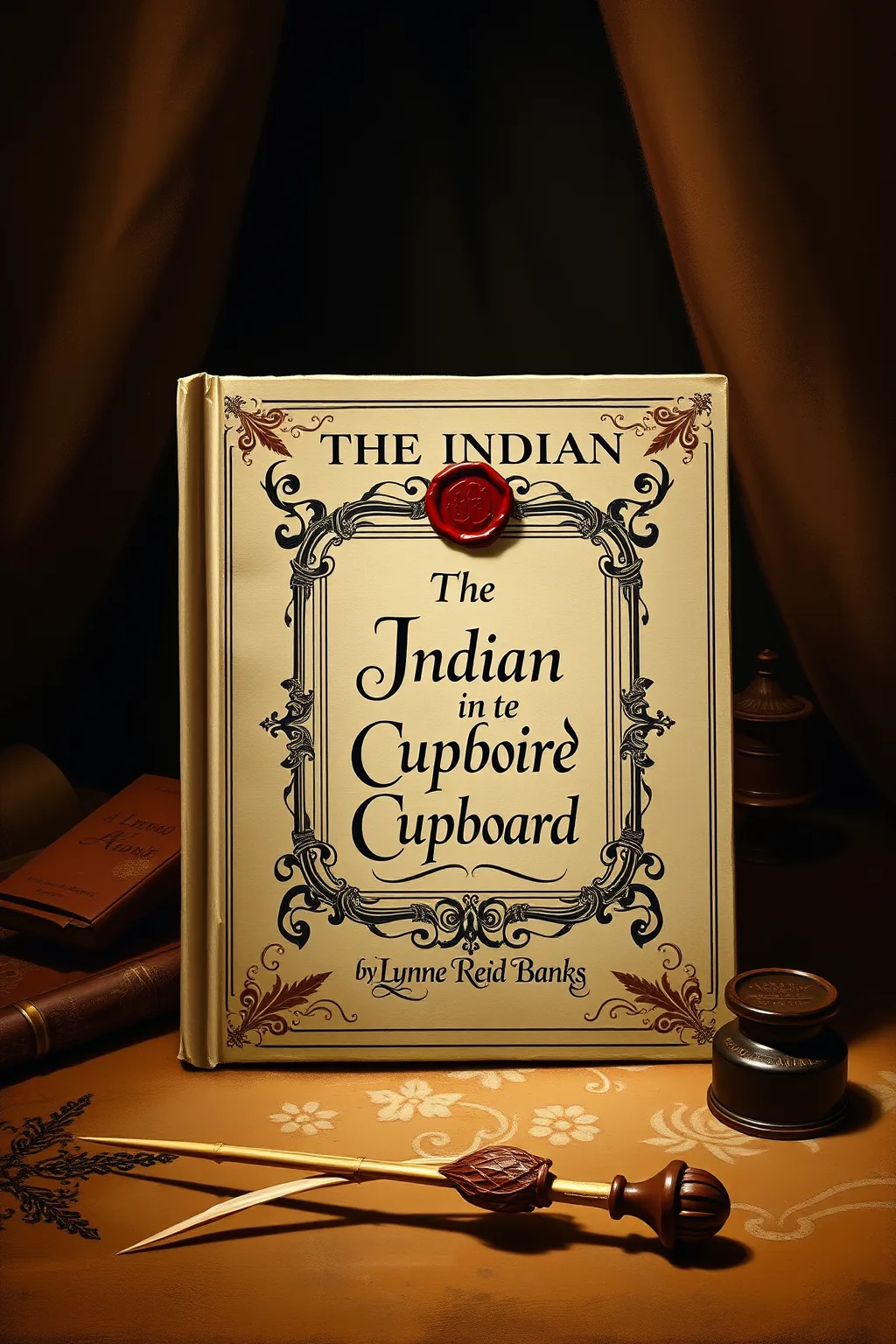
The Indian in the Cupboard
 74
74

The Indian in the Cupboard


Sophia Crane (Associate Editor) — 'The Indian in the Cupboard' masterfully conjures an atmosphere of potent enchantment, transcending its juvenile fiction label to offer profound esoteric insights. Lynne Reid Banks crafts a narrative where the sacred spark of life is bestowed upon inanimate objects, echoing ancient creation myths and the animistic beliefs found in many primal traditions. The bond that forms between Omri and Little Bear transcends the physical, exploring themes of spiritual connection, responsibility, and the ethical considerations of manipulating life forces. This work is a compelling study for young seekers and mature scholars alike, illuminating the hidden potential within the seemingly mundane and the deep resonance of ancestral spirits. Its strength lies in its gentle yet powerful exploration of magic as an inherent aspect of existence, not merely an external force.
📝 Description
74
Lynne Reid Banks' 1980 novel, 'The Indian in the Cupboard,' begins with a plastic toy.
The story centers on a young boy named Omri who receives a small plastic Native American figure. Through a mysterious cupboard and a specific ritual, he animates the toy, bringing a miniature Iroquois warrior, Little Bear, to life. This act immediately presents Omri with the serious consequences of his newfound power. He must care for Little Bear, protect his secret, and grapple with the ethical questions of controlling another being, even a miniature one.
The narrative follows Omri and Little Bear as they navigate their vastly different worlds. Omri learns about the warrior's culture and his past, while Little Bear experiences the strangeness of the modern world and the confinement of the cupboard. The book examines the responsibilities that come with enacting such magic, focusing on the need for respect, understanding, and the potential for both connection and conflict between disparate realities.
This novel touches on themes found in various esoteric traditions, particularly those concerning the animation of figures or idols, often referred to as golemancy or homunculi in Western occultism. The idea of imbuing an object with life and the subsequent moral obligations is a recurring motif. It also resonates with animistic beliefs where spirits or life forces can inhabit objects, and with concepts of sympathetic magic where a representation can influence the real. The act of bringing a miniature being into existence from a mere effigy raises questions about creation, control, and the spiritual significance of seemingly mundane items.
💡 Why Read This Book?
This book is essential for seekers of hidden knowledge and those fascinated by the intersection of magic and everyday life. It offers a unique lens through which to view the power of intention, the respect due to ancestral spirits, and the subtle energies that animate the world. Ideal for young readers discovering the wonders of the metaphysical, and for scholars interested in the symbolic representation of creation and spiritual connection.
⭐ Reader Reviews
Honest opinions from readers who have explored this book.
❓ Frequently Asked Questions
What is the primary magical element in the story?
The core magical element is the ability to bring a toy figure to life using an ancient Egyptian amulet, transforming it into a sentient being with the capacity for thought and action.
What is the significance of the amulet?
The amulet acts as a conduit for primal life-giving energy, echoing ancient rituals and the concept of animating the inanimate through sacred artifacts. It represents a tangible link to potent, primordial forces.
Does the book explore Native American spirituality?
Yes, it subtly incorporates elements of Native American beliefs and respect for nature through the character of Little Bear, highlighting themes of spiritual connection to the land and ancestral wisdom.
Is this book suitable for very young children?
While a children's book, its themes of responsibility and the ethical implications of magic might resonate more deeply with older children (8+) and adults who appreciate allegorical storytelling.
What is the philosophical takeaway of the story?
The book encourages contemplation on the nature of life, the power of belief and intention, the ethical responsibilities that come with power, and the interconnectedness of all things, seen and unseen.
🔮 Key Themes & Symbolism
The Animating Spark of Life
This theme examines the profound concept of imbuing the inanimate with sentience, a recurring motif in mythology and esoteric traditions. The story explores the 'spark' of life, not as a scientific phenomenon, but as a mystical force that can be awakened through belief, intention, and ancient artifacts. It prompts reflection on what constitutes life and the inherent spirit within all things, regardless of their perceived form. This is explored through the magical transformation of a toy, mirroring ancient creation myths where deities breathe life into clay or wood.
Responsibility and the Ethical Use of Power
The narrative offers a potent lesson in the ethical implications of wielding extraordinary abilities. Omri's newfound power to bring a miniature world to life comes with significant responsibility. He must learn to protect his creation, understand its needs, and grapple with the consequences of his actions. This theme speaks to occult principles concerning the proper stewardship of magical energies and the importance of intention, demonstrating that true mastery lies not just in the ability to perform magic, but in the wisdom to use it responsibly and with reverence.
Bridging Worlds and Ancestral Echoes
The story acts as a bridge between the modern, mundane world and the vibrant, spiritual area of the past, personified by the Native American warrior, Little Bear. It highlights the enduring presence of ancestral spirits and wisdom, suggesting that these echoes can be accessed and respected. This theme encourages an appreciation for diverse cultures and their connection to the natural world, inviting readers to consider the spiritual landscape that lies just beyond our immediate perception, where ancient traditions and their inherent magic continue to resonate.
💬 Memorable Quotes
Direct passages from the work, attributed to the author.
“It was not that Omri didn't appreciate Patrick's birthday present to him.”
— This opening subtly hints at a deeper, unexpressed value or potential within the gift, setting the stage for the extraordinary transformation that is to come and hinting at magic beyond initial perception.
“He knew he had to be careful. This was not a game.”
— A central realization of the immense responsibility that accompanies wielding supernatural power, emphasizing the seriousness and ethical weight of bringing a living being into existence.
“Little Bear was more real than many people Omri knew.”
— Highlights the profound, almost spiritual connection formed, suggesting that authenticity and inner life can transcend physical form and conventional societal definitions of 'realness'.
“The cupboard was a place where magic happened.”
— Establishes the ordinary setting as a vessel for the extraordinary, underscoring the esoteric principle that magic can be found in unexpected places and within mundane objects.
“He was a spirit, not just a toy.”
— Defines the core magical transformation, emphasizing the awakening of consciousness and the essence of a being beyond its material form, aligning with animistic beliefs.
🌙 Esoteric Significance
Tradition
The novel speaks to animistic traditions, where spirits are believed to inhabit objects and nature, and with the broader Hermetic principle of 'As Above, So Below,' suggesting that macrocosmic forces can be mirrored and invoked in microcosmic realms. It also echoes concepts found in sympathetic magic, where an image or effigy is used to influence the real entity it represents.
Symbolism
The plastic Indian figure symbolizes the potential for spirit and consciousness dormant within all matter, waiting for the right catalyst. The cupboard serves as a liminal space, a threshold between worlds, embodying the concept of a portal or sacred grove. The amulet represents an ancient key, a repository of power and a link to primordial energies. Little Bear himself embodies the archetype of the shaman or wise elder, bringing ancient knowledge into the present.
Modern Relevance
In an increasingly digitized and disconnected world, 'The Indian in the Cupboard' offers a potent reminder of the magic inherent in tangible objects, imagination, and authentic connection. It speaks to the modern seeker's desire to find meaning beyond the material, encouraging a reverence for the 'spirit' in all things and fostering an understanding of the ethical considerations that accompany any form of power, whether mundane or mystical.
👥 Who Should Read This Book
This book is a treasure for young readers beginning their journey into magical realism and fantasy, offering a gentle introduction to concepts of spiritual connection and responsibility. Scholars of children's literature and comparative mythology will find its symbolic depth and thematic resonance compelling. Seekers interested in the nature of creation, the power of belief, and the spiritual essence of objects will find profound reflections within its pages. Practitioners of esoteric arts may appreciate its allegorical exploration of animating forces and the ethical stewardship of such energies.
📜 Historical Context
Published in 1980, 'The Indian in the Cupboard' emerged during a period where fantasy literature for young readers was exploring more complex themes and the boundaries of imagination. The late 20th century saw a renewed interest in mythology, folklore, and the occult within popular culture, influencing narrative arcs that blended the mundane with the magical. Lynne Reid Banks' work taps into this zeitgeist, offering a narrative that, while seemingly simple, touches upon deep-seated human desires for connection, wonder, and the exploration of the unknown. The novel's depiction of a Native American character, while fictionalized, reflects a growing, albeit sometimes imperfect, engagement with non-Western spiritual traditions in children's literature, prompting dialogues about cultural representation and the universality of spiritual experiences.
📔 Journal Prompts
If you could bring one inanimate object to life, what would it be and why?
What are the responsibilities that come with having a special power?
How can we show respect for the history and 'spirit' of objects around us?
What does it mean for something to be 'real' beyond its physical form?
Reflect on a time when you felt a connection to something ancient or spiritual.
🗂️ Glossary
Amulet
An object believed to possess mystical powers, often worn for protection or to invoke specific energies. In the story, it acts as a catalyst for animating the toy figure.
Animism
The belief that spirits inhabit inanimate objects, plants, and natural phenomena. The story's core magic draws from this concept, imbuing a toy with a spirit.
Catalyst
An agent that provokes or speeds up a significant change or action. The ancient amulet serves as the catalyst for the toy's transformation.
Esoteric
Intended for or likely to be understood by only a small number of people with a specialized knowledge or interest. The hidden meanings and spiritual themes in the book are esoteric.
Liminal Space
A transitional or in-between state or place. The cupboard in the story functions as a liminal space, bridging the mundane and the magical realms.
This book appears in 2 collections
🔮 Readers Also Liked
Browse all →




More by Lynne Reid Banks
All books →
From the “Ceremonial Magic” Collection
View all →





More Free Magic & Ritual Books
View all →