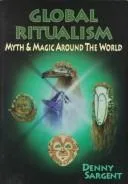
Memories of ice
 83
83

Memories of ice
Steven Erikson’s "Memories of Ice" operates on a scale that few fantasy novels dare to attempt, a sprawling, multi-continental saga that here hones in on the frozen wastes of Genabackis. The sheer density of lore and the interlocking fates of disparate characters are staggering. While the sheer volume of characters and plot threads can occasionally feel overwhelming, the payoff in terms of narrative depth and emotional resonance is immense. A particular strength lies in the portrayal of the T'lan Imass, a race wrestling with an eternal curse, whose plight is rendered with a chilling gravitas. The limitation, however, is that newcomers to the series might find the intricate history and established conflicts disorienting without prior context from the preceding volumes. The pivotal siege of Pale, a brutal and protracted conflict, exemplifies Erikson’s unflinching depiction of war's true cost. Ultimately, "Memories of Ice" solidifies the Malazan series as a unique and demanding, yet deeply rewarding, epic.
📝 Description
83
Published in 2001, Steven Erikson's 'Memories of Ice' confronts the Malazan Empire's conflict with the T'lan Imass.
This third volume in the 'Malazan Book of the Fallen' series shifts its focus to the continent of Genabackis. It chronicles the escalating war between the Malazan Empire and the T'lan Imass, an ancient, near-immortal race facing extinction. The narrative weaves together ancient pacts, the burdens of memory, and the vast, often violent forces that shape the Malazan world.
Erikson's approach here is for readers who appreciate expansive world-building and characters grappling with moral complexity. The novel engages with political maneuvering, morally grey protagonists, and a deep dive into the history and mythology underpinning the fantasy setting. It will appeal to fans of military fantasy and sprawling epic sagas who seek mature themes and a challenging narrative.
'Memories of Ice' emerged during a period of resurgence for epic fantasy, yet it distinguished itself by eschewing traditional tropes. Erikson's work is noted for its mature themes, vast scope, and intricate plotting. It challenges readers with darker aspects of power, conflict, and the consequences of wielding immense strength, drawing comparisons in its scale to historical epics.
Within the broader context of speculative fiction, 'Memories of Ice' engages with themes often found in esoteric traditions, particularly concerning cycles of existence and the burden of ancient knowledge. The T'lan Imass, with their millennia-long existence and pacts, echo concepts of cosmic cycles and karmic debts. The exploration of Warrens, as distinct planes of magic and habitation for powerful entities, touches upon ideas of hidden dimensions and spiritual hierarchies. The novel examines how history, memory, and immense power affect individual and collective consciousness, reflecting a philosophical interest in the deep currents that shape reality.
💡 Why Read This Book?
• Gain a deep understanding of the T'lan Imass, an ancient race whose struggle for survival and their millennia-long pacts are central to the narrative's unique historical scope. • Experience the intricate magic system of Warrens and Ascendants, learning how these forces shape the world and the destinies of its inhabitants, a concept distinct from typical fantasy magic. • Witness the brutal realities of war and the moral complexities faced by characters during the Siege of Pale, offering a nuanced perspective on conflict rarely explored with such detail.
⭐ Reader Reviews
Honest opinions from readers who have explored this book.
❓ Frequently Asked Questions
Is "Memories of Ice" a good starting point for the Malazan series?
No, "Memories of Ice" is the third book in the Malazan Book of the Fallen series. It is highly recommended to start with the first book, "Gardens of the Moon," to fully grasp the complex world-building and character introductions.
What is the primary conflict in "Memories of Ice"?
The primary conflict involves the Malazan Empire's campaign on the continent of Genabackis, specifically the siege of Pale, and the ancient struggle of the T'lan Imass against the Jaghut.
Who are the T'lan Imass?
The T'lan Imass are an ancient, nomadic race of warriors who made a pact with Hood, the god of death, to gain immortality in exchange for eternal war against the Jaghut. Their story is a significant focus of the novel.
What role do the gods play in "Memories of Ice"?
Gods and ascendants play significant roles, often manipulating events from behind the scenes or directly intervening. Their power is immense, and their relationships are complex and often adversarial.
What is the significance of the Jaghut?
The Jaghut are an ancient, powerful, and often solitary race. Their history and their conflict with the T'lan Imass, particularly the Jaghut Tyrant, are crucial elements driving the plot in "Memories of Ice."
How does "Memories of Ice" explore themes of history and memory?
The novel explores these themes through the ancient history of races like the T'lan Imass and Jaghut, the persistent echoes of past events, and the characters' own struggles with remembering and processing trauma.
🔮 Key Themes & Symbolism
Ancient Pacts and Eternal Conflicts
The novel heavily features the ancient pact between the T'lan Imass and the god Hood, a foundational element of their existence and a driving force behind their centuries-long war against the Jaghut. This theme explores the burden of history, the nature of oaths, and the corrosive effects of unending conflict on a race's identity and spirit. The T'lan Imass' struggle is not merely physical but an existential one, deeply tied to the promises made long ago and the consequences that ripple through millennia.
The Weight of History and Memory
"Memories of Ice" emphasizes how past events and the collective memory of races profoundly shape the present. The ancient history of the T'lan Imass and Jaghut is not merely background but an active force influencing current actions and motivations. Characters grapple with the legacy of their ancestors, the forgotten atrocities, and the very nature of what it means to remember or forget, especially in the face of immense suffering and loss.
The Nature of Immortality and Sacrifice
Through the T'lan Imass, the novel questions the desirability of immortality when it is tied to eternal war and suffering. It contrasts this with the sacrifices made by mortal races, whose shorter lifespans are often filled with more meaningful connections and choices. The book explores the different forms of sacrifice—personal, racial, and cosmic—and their ultimate costs, challenging conventional notions of power and longevity.
The Role of Gods and Ascendants
The divine and semi-divine beings, known as Ascendants, are not distant deities but active participants in the world's affairs. Their interventions, rivalries, and manipulations drive much of the plot, often with devastating consequences for mortals. The novel portrays a pantheon that is as flawed and driven by ambition as mortals, blurring the lines between divine power and personal will, and questioning the nature of true authority.
💬 Memorable Quotes
Direct passages from the work, attributed to the author.
“We are the T'lan Imass. Our vengeance is eternal.”
— This declaration speaks to the core identity and driving motivation of the T'lan Imass. Their ancient pact and the resulting millennia-long war against the Jaghut define their existence and their place in the world's history.
“The world is what you make of it. What you do with it is your own responsibility.”
— This reflects a central theme of personal agency and responsibility within a vast, often chaotic world. It suggests that even in the face of overwhelming forces, individual choices and actions have significant consequences.
“History is a wound that never heals.”
— This aphorism captures the pervasive influence of the past on the present in the Malazan world. It suggests that historical events, especially traumatic ones, leave indelible scars that continue to affect individuals and societies.
“There are no gods. There are only powers.”
— This statement challenges traditional religious beliefs, reframing divine entities as powerful beings rather than benevolent creators. It implies that power, not divinity, is the true currency of influence in the Malazan universe.
💡 Key Ideas
Editorial paraphrase of the work's core concepts — not direct quotes.
The Jaghut were the first, and they were terrible.
This quote expresses the primal and fearsome nature of the Jaghut, one of the oldest races in Erikson's world. It hints at their power and the ancient conflicts that define the Malazan history.
🌙 Esoteric Significance
Tradition
While not strictly adhering to a single esoteric tradition, "Memories of Ice" draws heavily on themes prevalent in Gnosticism and Hermeticism, particularly the idea of ancient, fallen races (akin to Gnostic Archons or fallen aeons) and the struggle against oppressive cosmic forces. The concept of Warrens as magical realms and the power of Ascendants can be seen as a unique interpretation of magical systems and divine hierarchies found in various occult traditions.
Symbolism
The ice and snow of Genabackis symbolize stagnation, harshness, and the preservation of ancient, unyielding forces, like the Jaghut. The T'lan Imass' ritualistic scarring represents their deep connection to ancient pacts and their enduring history, a visible manifestation of their eternal struggle. The various Warrens, such as "Telgar" or "Omtose Phellack," function as symbolic representations of different magical energies and planes of existence, each with its own inherent nature and dangers.
Modern Relevance
Contemporary practitioners of intricate world-building and those exploring darker, more philosophical aspects of fantasy often cite Erikson's work. Thinkers interested in the phenomenology of war, the long-term psychological impact of historical trauma, and the ethics of power find fertile ground in "Memories of Ice." Its complex narrative structure and exploration of ancient mythologies continue to influence writers and readers engaging with the limits of epic fantasy.
👥 Who Should Read This Book
• Readers interested in the lasting impact of ancient history on present conflicts: This book offers a deep dive into the millennia-long struggles of races like the T'lan Imass and Jaghut. • Students of intricate magic systems and cosmology: The novel elaborates on the Malazan Warrens, Ascendants, and the underlying forces that shape reality. • Those seeking morally complex narratives about war and survival: The siege of Pale and the existential plight of ancient races present a nuanced and often brutal exploration of these themes.
📜 Historical Context
Released in 2001, "Memories of Ice" arrived in a fantasy landscape dominated by authors like Robert Jordan and Terry Brooks, who often presented more conventional heroic narratives. Steven Erikson's Malazan series, however, distinguished itself with its ambitious scope, mature themes, and a deliberate subversion of common fantasy tropes. While the series did not achieve immediate mainstream bestseller status comparable to contemporaries like George R.R. Martin's "A Song of Ice and Fire" (the first book of which was published in 1996), it cultivated a dedicated following that appreciated its intricate plotting and philosophical depth. Erikson's work was often noted for its challenging complexity, demanding reader engagement with its vast history and morally ambiguous characters. Unlike many contemporaries who focused on single protagonists, Erikson presented a vast ensemble cast and a world shaped by ancient races and cosmic forces, creating a unique niche for readers seeking a more demanding epic experience.
📔 Journal Prompts
The T'lan Imass' eternal pact and its consequences.
Reflect on the symbolism of ice in relation to the Jaghut and the continent of Genabackis.
Consider the responsibility of Ascendants and gods for the suffering of mortals.
Analyze the concept of history as a wound, as presented through the ancient races' conflicts.
Examine the nature of sacrifice in the context of the T'lan Imass' existence.
🗂️ Glossary
T'lan Imass
An ancient, near-immortal race of warriors who made a pact with the god Hood for eternal life in exchange for waging an unending war against the Jaghut.
Jaghut
An ancient and powerful race, known for their immense strength and often solitary nature. Their history is intertwined with the T'lan Imass' eternal war.
Warren
A specific realm or pathway of magic within the Malazan universe, each associated with different energies, principles, and entities.
Ascendant
A mortal who has achieved immense power, often through arcane means or divine intervention, becoming god-like. They frequently interfere in mortal affairs.
Hood
The Malazan god of death, who made a pact with the T'lan Imass, granting them immortality in return for their service as eternal warriors.
Genabackis
A continent in the Malazan world, primarily characterized by its cold climate and the setting for significant events in "Memories of Ice."
Siege of Pale
A major military campaign depicted in the novel, where the Malazan Empire attempts to conquer the city of Pale, involving immense conflict and loss of life.
🔮 Readers Also Liked
Browse all →







More by Steven Erikson
All books →




More Free Magic & Ritual Books
View all →