Witches
 74
74

Witches
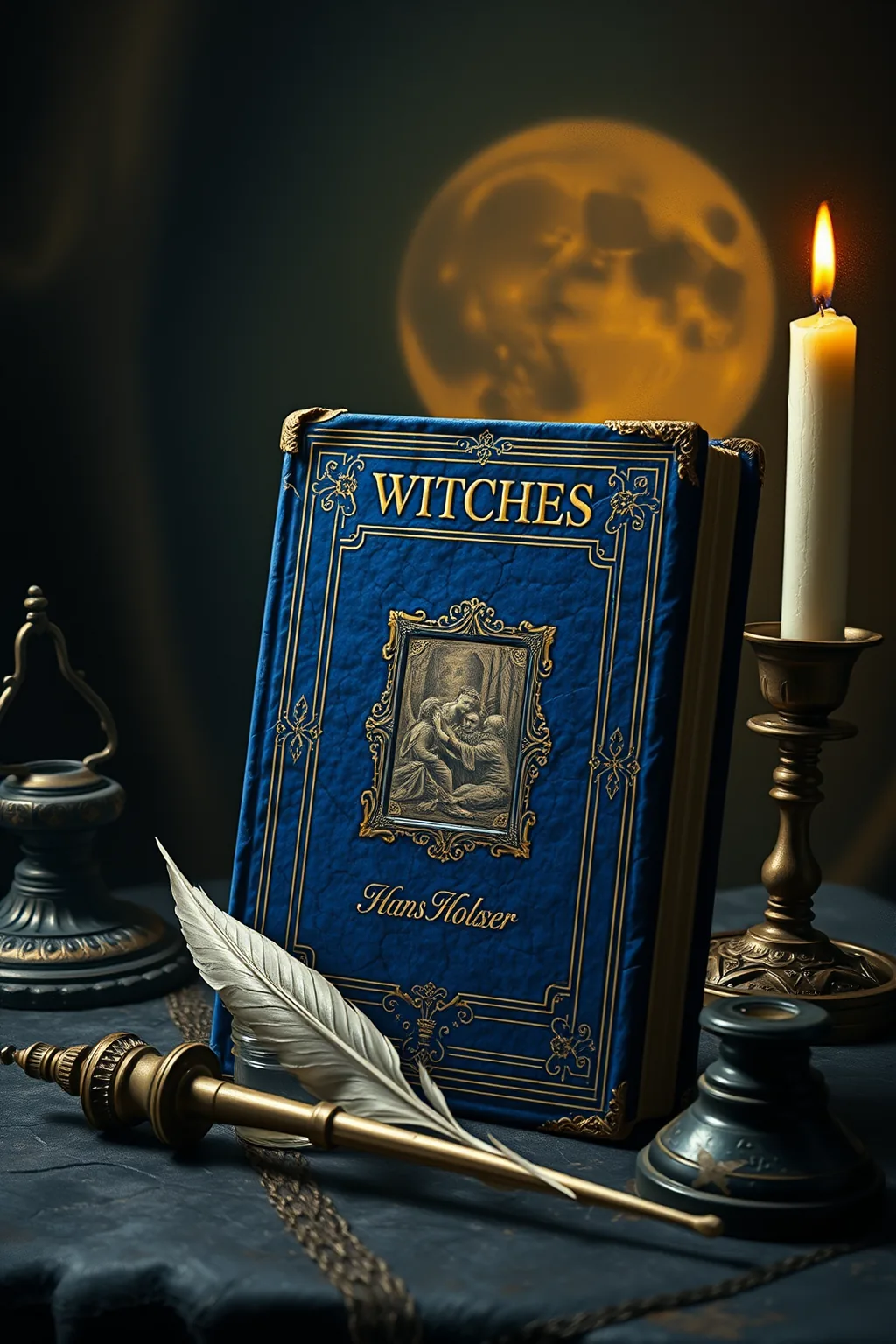
Hans Holzer’s "Witches" presents a broad sweep of the phenomenon, attempting to untangle historical reality from myth. While the book commendably tries to avoid sensationalism, its scope sometimes leads to a superficial treatment of complex historical periods, such as the detailed analysis of the Malleus Maleficarum's influence. A notable strength is Holzer’s effort to contextualize witchcraft within broader societal anxieties, particularly the fear of female independence and heterodoxy. However, the work occasionally falters in providing deep dives into specific cases, often relying on broad strokes rather than granular evidence. The exploration of the Sabbat, for instance, is covered but doesn't offer the groundbreaking detail found in some specialized academic studies. Overall, "Witches" serves as a competent, if not exhaustive, overview for the general reader.
📝 Description
74
Hans Holzer's 2009 book "Witches" examines witchcraft beyond sensationalism.
Hans Holzer’s "Witches" is a historical and sociological study that moves past sensationalism to examine witchcraft across cultures and eras. The book scrutinizes the historical witch trials, looking at the societal anxieties that fueled them and how the figure of the witch was seen through different historical viewpoints. Holzer seeks to separate popular folklore and religious persecution from genuine magical practices, offering a more complex view of a multifaceted phenomenon.
This work is suited for readers interested in the history of magic, folklore, and religious studies, particularly those who prefer an academic approach. It will appeal to anyone curious about the social and psychological reasons behind historical accusations of witchcraft. Students and scholars of cultural anthropology and sociology will find its analytical method useful.
Published in 2009, Holzer's "Witches" engages with a long tradition of scholarship on witchcraft, building on figures like Jeffrey Burton Russell. It connects historical events, such as the European witch hunts peaking between the 15th and 18th centuries, to broader patterns of religious persecution and societal fear. The book also acknowledges the suppression of earlier pagan beliefs, placing the phenomenon within a wider historical arc of spiritual and cultural conflict.
💡 Why Read This Book?
• Gain insight into the societal pressures and fears that fueled historical witch trials, particularly the period of intensified persecution in Europe. • Understand the archetype of the witch as a cultural construct, evolving from pre-Christian traditions to its demonization by religious authorities like those associated with the Malleus Maleficarum. • Explore the distinction Holzer draws between historical accusations, folklore, and the potential for genuine magical practices, offering a more nuanced perspective than common narratives.
⭐ Reader Reviews
Honest opinions from readers who have explored this book.
❓ Frequently Asked Questions
What is the primary focus of Hans Holzer's "Witches"?
The book examines the historical and sociological aspects of witchcraft, differentiating between folklore, religious persecution, and actual magical practices. It explores the evolution of the witch archetype across cultures and eras.
When was "Witches" by Hans Holzer first published?
Hans Holzer's "Witches" was first published in 2009, engaging with contemporary scholarship on the subject.
Does "Witches" discuss the European witch trials?
Yes, the book extensively covers the European witch trials, analyzing the societal anxieties and religious doctrines that contributed to the widespread accusations and persecutions during the 15th to 18th centuries.
What is the 'witch archetype' according to Holzer?
Holzer presents the 'witch archetype' as a fluid cultural construct, often shaped by patriarchal societies and religious institutions to represent societal fears, particularly concerning women who deviated from established norms.
Is "Witches" a practical guide to practicing magic?
No, "Witches" is primarily an academic and historical examination. It focuses on the study of witchcraft's history, cultural perception, and societal impact, rather than providing instructions for magical practice.
Who would benefit most from reading "Witches"?
Readers interested in history, sociology, folklore, and religious studies, especially those seeking a nuanced understanding of witchcraft beyond sensationalized accounts, will find this book valuable.
🔮 Key Themes & Symbolism
The Witch as Cultural Construct
Holzer scrutinizes how the image and role of the 'witch' have been shaped by societal forces rather than a singular reality. From ancient pagan figures to the demonized accused of the European witch hunts, the archetype shifts. The book examines how patriarchal structures and religious doctrines, particularly those articulated in texts like the Malleus Maleficarum (1487), contributed to a generalized fear and persecution of those labeled as witches, often women who defied societal expectations or possessed knowledge outside the mainstream.
Societal Anxiety and Persecution
A significant portion of "Witches" addresses the societal anxieties that fueled the historical witch trials. Holzer connects accusations of witchcraft to broader societal fears, including religious heresy, political instability, and anxieties surrounding female autonomy and sexuality. The book explores how marginalized individuals, often women, became scapegoats during times of crisis, with accusations serving to reinforce social order and religious conformity. This theme highlights the human element behind historical events, moving beyond simple notions of malice.
Folklore vs. Historical Reality
The work attempts to disentangle the body of folklore surrounding witches from the documented historical reality of accusations and trials. Holzer considers how legends of Sabbats, pacts with the devil, and supernatural powers became intertwined with the lives of accused individuals. By examining various historical periods and cultural contexts, the book seeks to understand what elements of these stories originated from genuine belief systems, what stemmed from propaganda, and what was pure invention driven by fear and sensationalism.
The Evolution of Belief
"Witches" traces the transformation of beliefs about magic and the supernatural across different historical epochs. It touches upon the suppression of pre-Christian nature-based spiritualities and their subsequent reinterpretation through the lens of demonology. Holzer examines how the concept of witchcraft evolved from potentially localized folk magic to a universally feared, Satanic conspiracy, particularly during the height of the Inquisition and subsequent witch hunts in Europe, reflecting changing religious and philosophical landscapes.
💬 Memorable Quotes
Direct passages from the work, attributed to the author.
“The figure of the witch is a mirror held up to society's fears.”
— This interpretation suggests that the accusations and persecutions of witches were less about the individuals themselves and more about what they represented to the prevailing social and religious order. The 'witch' became a symbol for anything feared or deemed dangerous by the establishment.
“History shows us that accusations often served to reinforce social control.”
— This highlights the sociological function of witchcraft accusations. By targeting specific individuals or groups, societies could enforce conformity, suppress dissent, and reinforce established power structures, particularly those related to gender and religious dogma.
“Folklore created a potent image, often overshadowing the human beings accused.”
— This points to the power of narrative and myth-making. The sensational stories and legends surrounding witches became more compelling than the often mundane or tragic realities of the people who were persecuted, distorting historical understanding.
“Understanding the witch requires looking beyond demonology to societal pressures.”
— This encourages a shift in perspective from solely theological explanations for witchcraft to a more grounded analysis of the social, economic, and political conditions that led to the phenomenon of witch hunting.
“The archetype of the witch has transformed significantly through the ages.”
— This emphasizes the dynamic nature of the 'witch' concept. It acknowledges that the meaning and perception of witchcraft have not been static but have evolved considerably, reflecting changing cultural values, religious beliefs, and societal anxieties over time.
🌙 Esoteric Significance
Tradition
While not strictly adhering to a single esoteric lineage, Holzer's "Witches" touches upon themes relevant to modern witchcraft and pagan traditions. It examines the historical suppression of pre-Christian spiritual practices, which are foundational to many contemporary nature-based religions. By analyzing the demonization of female figures and ancient rites, the work provides context for the reclamation of these traditions. It departs from purely academic histories by implicitly acknowledging the possibility of genuine magical currents that were persecuted, aligning with a perspective often found in Hermetic or occult studies.
Symbolism
The book implicitly engages with symbols surrounding the witch archetype. The 'Sabbat,' often depicted as a clandestine ritual, symbolizes forbidden knowledge and community outside societal control. The 'familiar,' typically an animal companion, represents a connection to the natural world and intuitive forces, often suppressed by mainstream religions. The 'pentagram,' while not extensively detailed, is a symbol historically associated with both protection and occult power, its interpretation often demonized during the witch hunts.
Modern Relevance
Contemporary practitioners of Wicca and other Neo-Pagan paths often draw upon historical narratives of witchcraft, seeking to reclaim and reinterpret figures and practices that were demonized. Holzer's work offers a historical backdrop for understanding the societal forces that led to this demonization. Modern folklorists and cultural anthropologists also utilize such analyses to understand the enduring power of the witch archetype in popular culture and its connection to discussions of female empowerment and the suppression of marginalized voices.
👥 Who Should Read This Book
• Students of history and sociology seeking to understand the social dynamics and anxieties behind historical witch trials. • Readers interested in folklore and mythology who want to explore the origins and evolution of the witch archetype beyond sensationalized tales. • Individuals exploring modern pagan or witchcraft traditions who wish to gain historical context on the persecution and subsequent reclamation of these practices.
📜 Historical Context
Published in 2009, Hans Holzer's "Witches" arrived in an era where witchcraft studies had evolved significantly from earlier, often sensationalist, accounts. The book engages with the legacy of the intense European witch hunts, which saw a peak in accusations and executions between the 15th and 18th centuries, fueled by figures and texts like the Malleus Maleficarum (1487). Holzer's work builds upon the more rigorous historical and sociological analyses that gained prominence in the late 20th century, particularly from scholars like Jeffrey Burton Russell, who explored the theological underpinnings of the witch-craze. While Holzer's approach is accessible to a general audience, it operates within a scholarly discourse that had long moved past simple supernatural explanations to investigate the social, psychological, and political factors driving persecution. The book's exploration of folk magic also situates it within broader anthropological studies of belief systems.
📔 Journal Prompts
The societal pressures that shaped the 'witch archetype'.
Instances where folklore overshadowed the reality of accused individuals.
The role of religious doctrine, such as the Malleus Maleficarum, in persecution.
Connections between historical witch hunts and contemporary social anxieties.
The symbolic meanings of the witch as a figure of rebellion or fear.
🗂️ Glossary
Witch Hunts
Periods of intense persecution and execution of individuals accused of practicing witchcraft, particularly prevalent in Europe from the 15th to the 18th centuries.
Archetype
A recurring symbol, character, or pattern of circumstances that is found in mythology and the collective unconscious, representing universal human experiences.
Folklore
The traditional beliefs, customs, and stories of a community, passed through the generations by word of mouth or practice.
Malleus Maleficarum
A notorious treatise on witchcraft published in 1487, widely used by inquisitors and judges in the witch trials, outlining methods for identifying and prosecuting witches.
Demonology
The study of demons or beliefs about demons. In the context of witchcraft, it refers to the theological framework used to explain witchcraft as the work of Satan and his followers.
Sabbat
In folklore, a nocturnal assembly of witches, typically said to occur on the eve of a religious festival, often involving devil worship and magical rites.
Paganism
A broad term for indigenous or polytheistic religions, often referring to pre-Christian European spiritual traditions that emphasized nature and fertility.
🔮 Readers Also Liked
Browse all →








More by Hans Holzer
All books →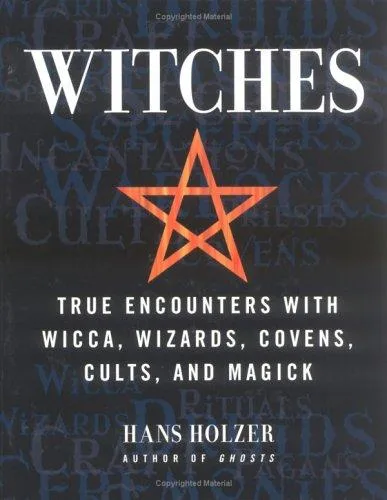



More Free Magic & Ritual Books
View all →