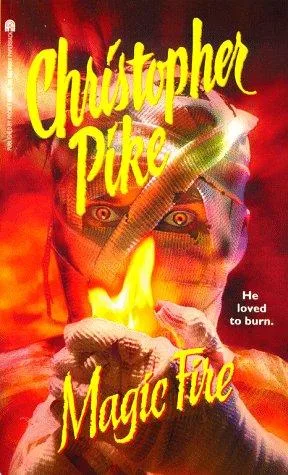
Magic fire
 70
70

Magic fire


Isolde Whitaker, Sacred Texts Editor: Christopher Pike's 'Magic Fire' transcends typical young adult fare, offering a potent exploration of pyromania as a gateway to darker, esoteric forces. Pike adeptly captures the volatile emotional landscape of adolescence, intertwining it with a palpable sense of encroaching malevolence. The novel's strength lies in its subtle yet persistent evocation of ancient elemental magic, suggesting that the protagonist's destructive impulses are not entirely his own but are amplified by unseen entities. This is a must-read for young seekers and seasoned occultists alike, offering a compelling entry point into the interplay between human desire and spiritual darkness, all wrapped in a gripping narrative that keeps readers enthralled.
📝 Description
70
Christopher Pike's 1980 novel 'Magic Fire' examines adolescent obsession with pyromania.
Set in Southern California, 'Magic Fire' follows a high school senior consumed by an obsession with fire. This fascination escalates beyond mere destruction, drawing him into occult forces and a lurking evil that exploits raw desire. The narrative is not simply about teenage rebellion; it warns of elemental power's seductive nature and the unseen currents that can lead a person to ruin.
The book uses fire as a symbol of both creation and destruction, representing profound transformation and utter annihilation. Pike's work appeals to those drawn to the unknown, to forbidden knowledge, and to the often frightening link between human passion and powers beyond ordinary perception. It acts as an entry point into the esoteric roots of desire and the spiritual struggles that occur within the human psyche.
This novel touches upon themes found in Western esoteric traditions that explore the relationship between human psychology and elemental forces. It presents fire not just as a physical element but as a manifestation of primal energy and spiritual will. The text hints at a hidden reality where unchecked desires can become conduits for darker influences, a concept explored in various occult philosophies concerning the manipulation of natural and psychic energies. Pike uses the character's obsession to illustrate how intense focus, even on destructive elements, can open pathways to forces beyond conventional understanding.
💡 Why Read This Book?
Uncover the potent symbolism of fire as a catalyst for both destruction and transformation. 'Magic Fire' offers a compelling blend of psychological suspense and occult mystery, exploring the dangerous allure of elemental forces. Ideal for seekers of hidden knowledge, fans of dark fantasy, and those intrigued by the esoteric underpinnings of human desire. This novel provides a unique lens through which to examine the shadows that can be awakened within.
⭐ Reader Reviews
Honest opinions from readers who have explored this book.
❓ Frequently Asked Questions
Is 'Magic Fire' a horror novel?
While 'Magic Fire' contains elements of horror and suspense, it delves deeper into supernatural and occult themes, exploring the psychological and spiritual dimensions of a young protagonist's descent into destructive urges.
What esoteric traditions are hinted at in the book?
The novel subtly alludes to ancient elemental magic, the concept of spiritual entities feeding on negative energy, and the idea of a 'greater evil' that can manipulate human desires, drawing parallels to older occult philosophies.
Who is the intended audience for this book?
The book is primarily aimed at young adults and older teens who are drawn to mystery, supernatural fiction, and themes of self-discovery, but it also appeals to adult readers interested in Christopher Pike's unique brand of speculative fiction with spiritual undertones.
What is the main symbolic meaning of fire in the story?
Fire in 'Magic Fire' symbolizes not only destruction and chaos but also passion, transformation, and the raw, untamed energy of desire. It represents a dangerous power that can both cleanse and consume.
Does the book offer any solutions or resolutions?
The novel presents a complex narrative arc where the protagonist grapples with his actions and the forces influencing him. While not offering simple answers, it explores the consequences of unchecked desires and the struggle against external malevolence.
🔮 Key Themes & Symbolism
The Allure of Elemental Power
The narrative centers on the primal, almost spiritual, fascination with fire, exploring its dual nature as a force of creation and destruction. This theme studies how unchecked desire for such elemental power can become a conduit for darker influences, blurring the lines between personal inclination and external manipulation. It examines the seductive call of forbidden knowledge and the dangerous freedom found in embracing destructive tendencies, hinting at ancient rituals and the inherent risks of tampering with forces beyond human comprehension.
Adolescent Turmoil and Spiritual Vulnerability
Pike masterfully captures the volatile emotional field of adolescence, portraying a high school senior whose inner turmoil and burgeoning desires make him susceptible to a greater, insidious evil. This theme explores how periods of intense personal growth and confusion can create spiritual vulnerabilities, making individuals more prone to external psychic or occult influences. The story suggests that the intensity of teenage emotions, particularly anger and rebellion, can serve as an attractive energy source for malevolent entities seeking to manifest or exert control.
The Manifestation of Greater Evil
Beyond the protagonist's personal struggles, 'Magic Fire' introduces the concept of a 'greater evil' that operates behind the scenes, manipulating events and individuals. This theme explores the esoteric idea that certain forces thrive on chaos, fear, and destruction, actively seeking out receptive vessels. The narrative hints at an ancient, primal malevolence that can exploit human weaknesses, suggesting a cosmic battle where the mundane world is merely a stage for deeper, unseen spiritual conflicts. It prompts reflection on the nature of evil and its potential to influence human actions.
💬 Memorable Quotes
Direct passages from the work, attributed to the author.
“Some fires burn to cleanse, others to consume.”
— This highlights the duality of fire, serving as a potent metaphor for actions and desires. It questions the intent behind destructive urges, hinting at a spiritual dimension where motivations determine the ultimate outcome.
“The shadows in this town were older than the buildings.”
— This evocative line suggests a hidden history and a pervasive sense of unseen forces lurking beneath the surface of everyday life, hinting at ancient evils or lingering spiritual energies.
“The dry autumn held its breath, waiting.”
— This personification of the season creates an atmosphere of suspense and anticipation, suggesting that the natural world itself is aware of and perhaps complicit in the unfolding events, amplifying the sense of impending doom.
💡 Key Ideas
Editorial paraphrase of the work's core concepts — not direct quotes.
The heat wasn't just in the air; it was inside him.
This quote expresses the protagonist's internal struggle, suggesting his passion for fire is not merely an external interest but a deep-seated, consuming desire that mirrors the oppressive heat of his environment.
He felt the pull, a whisper from the flames.
This quote illustrates the supernatural influence at play, portraying fire as a sentient entity or a beacon for something malevolent that actively calls to the protagonist, drawing him deeper into its influence.
🌙 Esoteric Significance
Tradition
The novel implicitly draws upon ancient elemental magic, particularly the symbolism of fire as a primal force. It touches upon Gnostic ideas of a lurking, malevolent entity or 'greater evil' that preys on human desires and vulnerabilities. The concept of spiritual entities feeding on negative emotions and the idea of a hidden, spiritual reality influencing the physical world are also present, aligning with broader occult and esoteric philosophies that explore the unseen dimensions of existence.
Symbolism
Fire is the central symbol, representing passion, destruction, purification, and transformation. The 'dry, hot autumn' symbolizes a period of intense, unchecked desire and spiritual drought, creating fertile ground for destructive forces. The 'greater evil' can be seen as a manifestation of primal chaos or a predatory spiritual entity that exploits human weakness, representing the dark shadow self or external malevolent influences that can corrupt the innocent.
Modern Relevance
In a world increasingly saturated with stimuli and where inner turmoil can feel overwhelming, 'Magic Fire' resonates by exploring the potent connection between desire and potentially destructive forces. The novel's themes of vulnerability, manipulation, and the struggle against unseen influences remain relevant, prompting readers to consider the nature of their own desires and the energetic currents that may surround them. It encourages introspection on how personal passions can be either conduits for growth or pathways to darkness.
👥 Who Should Read This Book
Beginners to esoteric literature will find 'Magic Fire' an accessible yet thought-provoking entry point, as its narrative structure makes complex themes digestible. Scholars of occultism and mythology will appreciate Pike's subtle allusions to ancient beliefs and symbolic meanings. Seekers of spiritual knowledge will be drawn to the exploration of desire, darkness, and the unseen forces that shape our reality. Practitioners of the magical arts may find value in its cautionary narrative about the potent, and often dangerous, nature of elemental energies and unchecked ambition.
📜 Historical Context
Christopher Pike's 'Magic Fire' emerged during a period when young adult literature began to explore more complex and darker themes, moving beyond simple cautionary tales. The late 20th century saw a growing interest in the occult, paranormal, and psychological thrillers, fueled by a cultural fascination with the unexplained and the darker aspects of human nature. This era's increased visibility of alternative spiritualities and esoteric beliefs provided fertile ground for narratives like Pike's, which dared to blend coming-of-age stories with supernatural elements. The novel reflects a societal shift where the boundaries between the mundane and the mystical were increasingly blurred in popular culture, allowing for explorations of themes such as latent psychic abilities, the nature of evil, and the potential for spiritual corruption in seemingly ordinary settings.
📔 Journal Prompts
Reflect on a time you felt an overwhelming desire for something that felt slightly dangerous or forbidden. What were the underlying emotions?
Consider the symbolism of fire in your own life. What does it represent to you – passion, destruction, warmth, change?
Write a fictional account of a seemingly ordinary place that harbors an ancient or hidden 'evil.' What form does it take?
Explore the idea of external forces or influences that might amplify personal desires. How might these manifest in your own experiences?
Imagine a ritual or practice that harnesses the power of fire for positive transformation. What would it entail and what are its potential risks?
🗂️ Glossary
Pyromania
A recurrent behavioral disorder characterized by the deliberate and repeated setting of fires. In literature, it can symbolize uncontrolled passion, destructive urges, or a fascination with primal forces.
Esoteric
Intended for or likely to be understood by only a small number of people with a specialized knowledge or interest; relating to mystical, spiritual, or occult beliefs and practices.
Elemental Magic
A form of magic that draws power from and manipulates the classical elements: earth, air, fire, and water. Fire is often associated with passion, energy, destruction, and transformation.
Malevolence
The state or condition of being malevolent; ill will or the desire to harm others. In an esoteric context, it can refer to actively harmful spiritual entities or forces.
Occult
Relating to supernatural, mystical, or magical powers, practices, or phenomena. It often implies hidden knowledge or secret traditions.
This book appears in 2 collections
🔮 Readers Also Liked
Browse all →



More by Christopher Pike
All books →




From the “Ceremonial Magic” Collection
View all →





More Free Magic & Ritual Books
View all →