The Illustrated Wee Free Men
 82
82

The Illustrated Wee Free Men
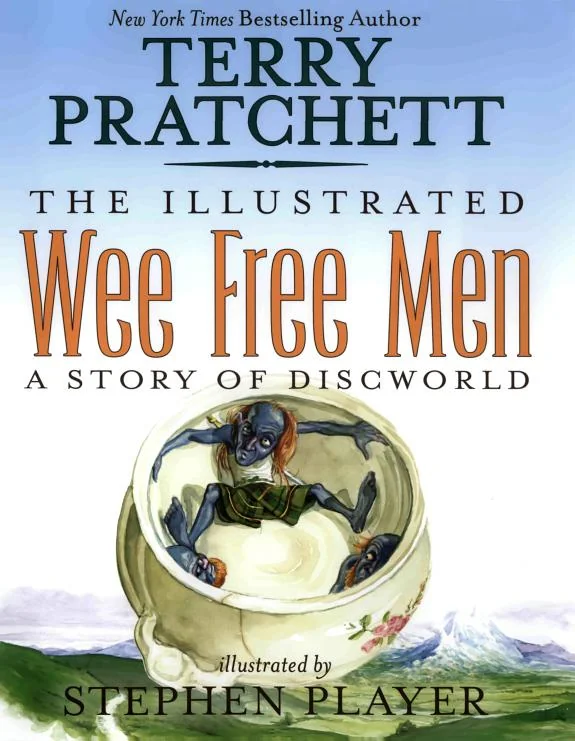
The Illustrated Wee Free Men presents a visually sumptuous upgrade to an already beloved tale. Pratchett’s 2003 novel, charting Tiffany Aching’s first encounter with the titular, fiercely independent Wee Free Men, is given new life through vibrant, full-color artwork and intriguing foldout sections. The addition of new material by Pratchett himself is a genuine treat, offering further glimpses into his creative process and the world of the Chalk. While the original story's charm, wit, and surprisingly potent themes of courage and self-reliance remain undimmed, this edition’s primary strength lies in its presentation. The illustrations, while generally effective, occasionally feel slightly at odds with the reader's internal visualization of Pratchett's distinct characters. Nevertheless, for collectors and new readers alike seeking a more immersive experience, this 2008 deluxe release is a worthy acquisition, bringing a tactile dimension to a narrative already rich in imagination.
📝 Description
82
Terry Pratchett's 2003 novel, The Wee Free Men, received a lavish illustrated edition in 2008.
This 2008 edition of The Wee Free Men enhances Terry Pratchett's 2003 novel with full-color illustrations and foldout elements. Pratchett himself contributed additional material, aiming to enrich the reader's connection to the characters and the world. The original story, part of the Tiffany Aching series, began as a children's book but found a wider audience through its sharp wit and substantial themes.
This special release arrived when deluxe fantasy editions were becoming popular. Pratchett, already a well-known satirist of fantasy conventions, had built a strong readership. The novel itself focuses on the titular Wee Free Men, a small, blue-skinned group of Pictsmen known for their independence and distinct speech. They represent a wild, elemental force tied to the land and old ways, standing against external dangers. The narrative examines bravery against great challenges, the value of collective action, and the interplay of belief and superstition, all presented with Pratchett's signature humor and social observation.
The Wee Free Men, often seen through the lens of Pratchett's broader Discworld series, engages with folkloric elements often considered 'esoteric' in their connection to non-rational forces. These tiny Pictsmen embody a primal, untamed spirit, drawing power from their link to the land and ancient traditions. Their existence and abilities, beyond the scope of conventional understanding, touch upon concepts of animism and the power of collective belief shaping reality. Pratchett uses them to explore how deeply ingrained cultural narratives and superstitions can manifest tangible effects, a common thread in many esoteric traditions that posit the mind's influence on the material world.
💡 Why Read This Book?
• Gain a deeper appreciation for Pratchett's world-building through enhanced visual storytelling, including unique foldouts that expand the narrative's scope beyond the text alone. • Understand the unique cultural and linguistic contributions of the Wee Free Men, a concept Pratchett develops with specific, memorable dialogue and customs. • Experience the original 2003 narrative with the added context of new authorial material, offering insight into the story's evolution and Pratchett's creative intentions.
⭐ Reader Reviews
Honest opinions from readers who have explored this book.
❓ Frequently Asked Questions
When was The Illustrated Wee Free Men first published?
The Illustrated Wee Free Men was first published in 2008, offering a special edition of Terry Pratchett's original 2003 novel with enhanced artwork and additional content.
What makes the illustrated edition different from the original?
This edition features full-color art, special foldout sections, and all-new material by Terry Pratchett, making it a visually richer and more expansive version of the 2003 novel.
Who are the Wee Free Men?
The Wee Free Men are a group of small, fierce, blue-skinned Pictsmen from the mountains, known for their independence, distinct dialect, and protective nature, particularly towards Tiffany Aching.
Is this book suitable for younger readers?
Yes, while the original novel was published in 2003 and is part of the Tiffany Aching series aimed at younger audiences, this illustrated edition's visual appeal makes it even more accessible.
What are some key themes explored in the book?
The book explores themes of courage, self-reliance, the importance of community, and the clash between tradition and encroaching forces, all presented with Pratchett's signature humor.
Who is the author of The Wee Free Men?
The author is Terry Pratchett, a celebrated British satirist and author, best known for his Discworld series, which includes the Tiffany Aching books.
🔮 Key Themes & Symbolism
The Power of the Small
The Wee Free Men, despite their diminutive stature, embody immense courage and a fierce sense of self-determination. Their existence challenges the notion that size dictates power. Pratchett uses these characters to explore the effectiveness of unconventional approaches to conflict and the strength found in unity, even among disparate individuals. Their unique dialect and customs highlight a form of folk magic deeply tied to the land and ancestral lore, contrasting with more formalized or 'civilized' forms of power.
Guardians of Tradition
The Pictsmen are deeply connected to the ancient ways and the spirit of the mountains they inhabit. They act as guardians against external threats that seek to disrupt the natural order or impose foreign ways. This theme touches on the importance of cultural heritage and the inherent value of preserving traditions, even those that might seem peculiar or anachronistic to outsiders. Their loyalty is not to abstract ideals but to the land and its inhabitants, embodying a fierce, protective spirit.
The Nature of Belief
Belief plays a crucial role, both in the abilities of the Wee Free Men and in the threats they face. Superstition, folklore, and genuine magical forces intertwine. Pratchett examines how belief can shape reality, empower individuals, and create formidable defenses. The narrative suggests that the conviction behind an action, rather than its perceived efficacy by outsiders, is what truly matters, especially when dealing with the more mystical elements of the Discworld.
Coming of Age and Responsibility
The story follows Tiffany Aching as she steps into a role of responsibility, confronting dangers far beyond her years. Her interactions with the Wee Free Men are important in her development, teaching her about leadership, resourcefulness, and the complexities of dealing with powerful, independent beings. This coming-of-age narrative is framed by the magical elements of the Chalk and the threats that emerge from the 'headology' of monsters.
💬 Memorable Quotes
Direct passages from the work, attributed to the author.
“‘Wee Free Men,’ he said. ‘That’s what they call us. We’re the last of the Pictsmen.’”
— This declaration introduces the core identity of the Wee Free Men, positioning them as an ancient, distinct group holding onto their heritage. It establishes their unique place within the world and hints at their dwindling numbers, emphasizing their role as protectors of tradition.
“‘The Nac Mac Feegle are warriors. They’ve been fighting since the dawn of time.’”
— This emphasizes the long and storied history of the Wee Free Men, framing them as an ancestral force. It highlights their inherent nature as fighters, suggesting a deep-seated instinct and tradition of conflict that defines their identity.
“‘The world is full of things that haven’t happened yet.’”
— This statement underscores the element of the unknown and the potential for future events, both good and bad. It speaks to the uncertainty of life and the importance of being prepared for whatever may come, a central theme in Tiffany's journey.
“‘They say the sheep are the real danger.’”
— This is a classic Pratchettian inversion, suggesting that even the most seemingly harmless elements can pose a threat. It plays on expectations and hints at the hidden complexities and dangers lurking beneath a pastoral surface.
💡 Key Ideas
Editorial paraphrase of the work's core concepts — not direct quotes.
‘There’s no magic in you,’ said the Queen. ‘Only a bit of knack.’
This quote, likely spoken about Tiffany Aching, distinguishes between overt, flashy magic and a more subtle, inherent 'knack' or talent. It suggests that true effectiveness often comes from innate ability and understanding, rather than just spell-casting.
🌙 Esoteric Significance
Tradition
While not strictly an esoteric text in the vein of the Hermetic Orders or Gnostic gospels, Pratchett's work, particularly the Tiffany Aching series, draws heavily on folk magic, animism, and a form of earth-based spirituality. The Wee Free Men themselves embody the spirit of ancient, untamed nature, reminiscent of elemental beings or ancient tribal guardians found in various folkloric traditions. Their connection to the land and their 'Pictish' heritage suggests a lineage tied to older, pre-Christian beliefs and practices, aligning with a broader interest in indigenous spiritualities and nature-based magic that has seen resurgence in modern esoteric thought.
Symbolism
The Wee Free Men themselves are potent symbols of fierce independence, ancestral spirit, and the untamed wild. Their blue skin and Pictish heritage evoke ancient Celtic lore and a connection to elemental forces. The sheep, often perceived as docile, become a symbol of hidden danger and the subversion of expectations, a common motif in magical thinking where the mundane can conceal the profound or perilous. The Chalk, as a landscape, symbolizes a liminal space between the ordinary world and the field of myth and magic, a place where ancient powers and modern challenges collide.
Modern Relevance
Contemporary practitioners and scholars of folklore and comparative mythology often cite Pratchett's ability to capture the essence of folk traditions and magical thinking. His work is seen as a modern interpretation of archetypal figures and narratives that resonate with current interests in paganism, animism, and the re-enchantment of the world. Thinkers exploring the intersection of storytelling and belief, as well as those interested in how modern literature can reflect and reinterpret ancient spiritual concepts, find value in the nuanced portrayal of magic and belief systems within his narratives.
👥 Who Should Read This Book
• Young readers aged 9-12 encountering fantasy literature who will appreciate the vibrant illustrations and accessible story of courage and self-discovery. • Fans of Terry Pratchett's Discworld series seeking a visually enhanced edition of a beloved novel, particularly those interested in the origins of the Tiffany Aching character. • Adults interested in modern interpretations of folklore and folk magic, who will find Pratchett's witty exploration of belief, tradition, and elemental forces engaging.
📜 Historical Context
The Illustrated Wee Free Men, released in 2008, emerged from Terry Pratchett's prolific career, which saw him become one of Britain's most beloved authors. The original novel, published in 2003, was part of the Tiffany Aching series, a spin-off from his popular Discworld sequence. By 2008, Pratchett was a significant literary figure, known for his satirical wit and surprisingly profound observations on society, often compared to satirists like Jonathan Swift. This period saw a surge in demand for deluxe editions of popular fantasy works, a trend exemplified by this visually enhanced release. While Pratchett's work often engaged with philosophical and social themes, it stood apart from more overtly serious fantasy epics of the time, like those by J.R.R. Tolkien, by consistently employing humor and a unique, accessible narrative voice. Reception for Pratchett's work was overwhelmingly positive, with accolades including multiple awards and widespread critical acclaim for his ability to blend humor with insightful commentary.
📔 Journal Prompts
The distinct dialect and customs of the Wee Free Men.
The concept of 'knack' versus overt magic as presented in the narrative.
Tiffany Aching's initial steps into leadership and responsibility.
The symbolic role of the sheep in the story's unfolding events.
The relationship between the Wee Free Men and the land they protect.
🗂️ Glossary
Wee Free Men
A group of small, blue-skinned, fierce warriors from the mountains of the Chalk, known for their distinctive dialect, independent nature, and fierce loyalty. They are the last of the Pictsmen.
Pictsmen
An ancient people, historically associated with Scotland, known for their supposed body art. In Pratchett's world, they are the ancestral lineage of the Wee Free Men, embodying a wild, untamed spirit.
The Chalk
The primary setting for the Tiffany Aching books, a region characterized by rolling hills, sheep farming, and ancient traditions. It is a place where the ordinary and the magical often intersect.
Kelda
The term for the spirit of the household or the land, particularly in relation to the Wee Free Men. A Kelda is a powerful, almost deified entity to them.
Headology
A term coined by Granny Weatherwax in Discworld, referring to the art of understanding and influencing minds, often through psychological manipulation and understanding what people expect or fear.
The Queen
A powerful, ancient entity associated with the land and its magic, who poses a significant threat to Tiffany Aching and the Wee Free Men. She represents a formidable, almost elemental, antagonistic force.
Crivens!
A common exclamation of surprise or alarm used by the Wee Free Men, reflecting their distinctive dialect and cultural expression.
This book appears in 1 collection
🔮 Readers Also Liked
Browse all →









From the “Fairies” Collection
View all →




More Free Occult Philosophy Books
View all →