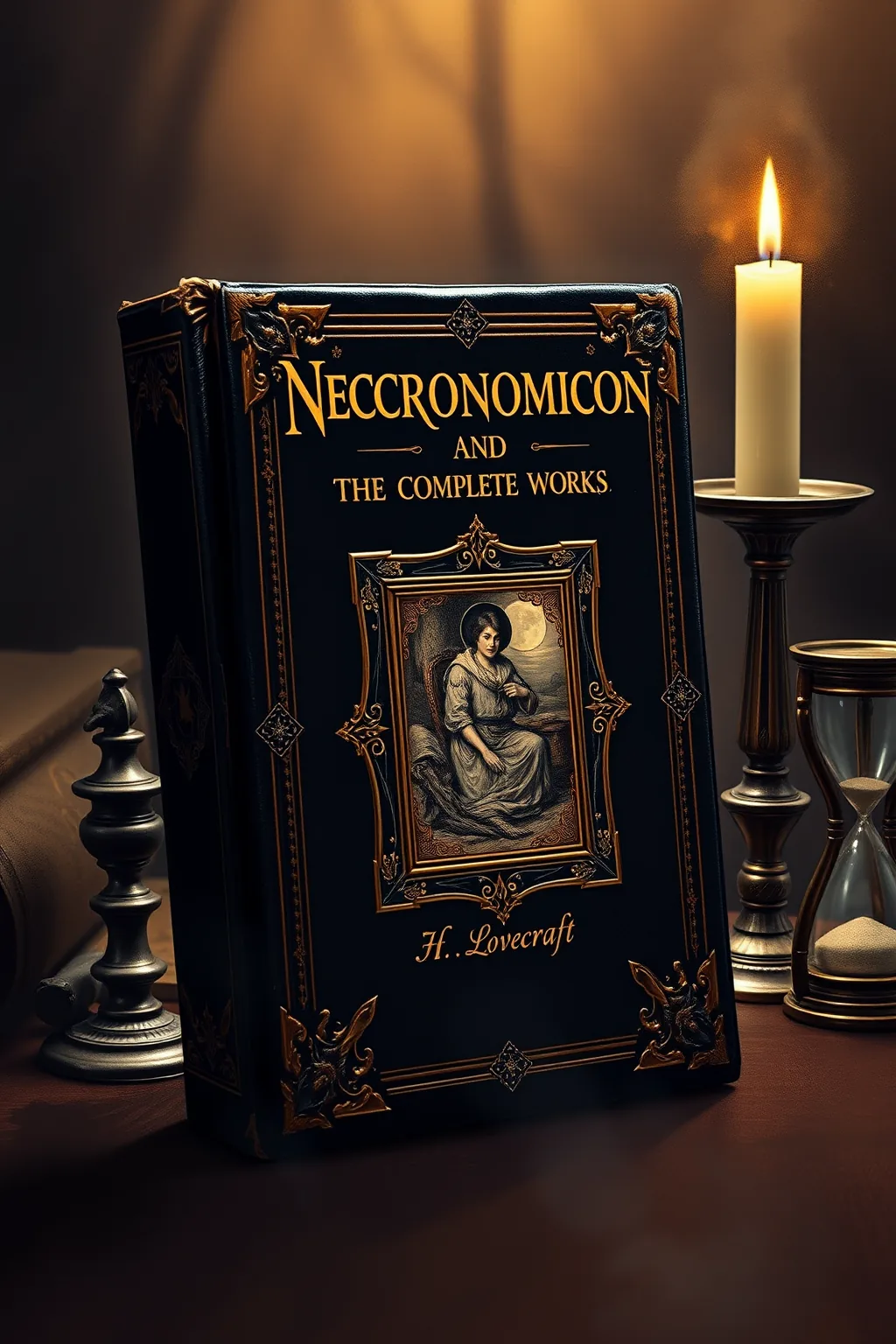
Necronomicon and the complete works of H. P. Lovecraft
 82
82

Necronomicon and the complete works of H. P. Lovecraft


Marcus Thorne (Esoteric Sciences Reviewer) — This definitive collection offers an unprecedented journey into the mythos of H.P. Lovecraft, centering on the enigmatic Necronomicon. Esoteric Library's presentation transcends mere fiction, delving into the philosophical underpinnings of Lovecraft's cosmicism and the potent symbolism woven throughout his tales. The 'complete works' aspect ensures a holistic understanding of his unique brand of occult philosophy, revealing how the Necronomicon, though fictional, functions as a potent archetype for forbidden lore. This volume is indispensable for scholars of the occult, practitioners seeking symbolic resonance, and anyone fascinated by the darker currents of metaphysical thought.
📝 Description
82
H.P. Lovecraft's complete works, including the fictional Necronomicon, were first compiled in this volume.
This collection gathers the entirety of H.P. Lovecraft's writings, centering on the mythos of the Necronomicon. The text details the imagined history and forbidden lore of this infamous grimoire, a central artifact in Lovecraft's tales. His distinctive prose builds a pervasive sense of dread, pushing readers to consider humanity's small place in a vast, uncaring universe. The stories grapple with ancient, alien entities that exist beyond human understanding. This book functions as more than simple fiction; it presents a philosophical inquiry into human insignificance and the terrifying beauty found in the unknown.
It appeals to those willing to confront the void and question fundamental assumptions about reality. The narratives often feature protagonists who stumble upon hidden knowledge, leading to madness or a chilling awareness of cosmic truths. Lovecraft's recurring motifs include forbidden books, degenerate cults, and the psychological toll of confronting the alien and the incomprehensible. The collection invites a deep engagement with themes of cosmic horror and the limits of human perception.
The Necronomicon, though a fictional creation of Lovecraft, has been adopted into various occult and esoteric circles. Its imagined contents, referencing ancient gods and forbidden rituals, resonate with traditions that seek knowledge outside mainstream understanding. Within Lovecraft's fiction, the book represents a dangerous accumulation of forbidden lore, a gateway to realities that destabilize the human psyche. Its presence in this compilation invites readers to engage with these concepts, blurring the lines between imaginative literature and genuine esoteric inquiry.
✍️ Author
author H. P. Lovecraft in his book Histor
History is the systematic study of the past, focusing primarily on the human past. As an academic discipline, it analyses and interprets evidence to construct narratives about what happened and explain why it happened.
💡 Why Read This Book?
Embark on a profound exploration of cosmic dread and forbidden knowledge. This collection offers a comprehensive immersion into H.P. Lovecraft's mythos, with the Necronomicon as its chilling centerpiece. Ideal for seekers of esoteric wisdom, scholars of the occult, and readers drawn to the philosophical depths of existential horror, it promises to expand your understanding of the universe and your place within it.
⭐ Reader Reviews
Honest opinions from readers who have explored this book.
❓ Frequently Asked Questions
Is the Necronomicon a real grimoire?
The Necronomicon, as presented by H.P. Lovecraft, is a fictional grimoire. However, its concept has inspired numerous real-world occult texts and practices, blurring the lines between fiction and esoteric reality for many.
What are the main themes in Lovecraft's works?
Key themes include cosmicism (human insignificance in a vast, indifferent universe), forbidden knowledge, ancient evils, madness, the limits of human understanding, and the unsettling nature of reality.
Who is Abdul Alhazred?
Abdul Alhazred is the fictional mad Arab poet and sorcerer credited with authoring the Necronomicon in Lovecraft's mythology. He is a shadowy figure whose life and death are shrouded in mystery.
How does the Necronomicon relate to occult philosophy?
The Necronomicon serves as a powerful symbol of forbidden knowledge and ancient, dangerous wisdom within occult traditions. It represents the pursuit of truths that lie beyond the established order, often at great personal cost.
Is this book suitable for beginners in occult studies?
While challenging, this collection offers a unique entry point into the intersection of literature, philosophy, and occult thought. It's best suited for those with an interest in darker themes and a willingness to engage with complex ideas.
🔮 Key Themes & Symbolism
The Abyss of Forbidden Knowledge
This theme looks at the potent allure and perilous consequences of seeking knowledge that transcends human comprehension. The Necronomicon symbolizes this forbidden lore, representing ancient texts filled with secrets of the cosmos, elder gods, and realities beyond our ken. Lovecraft masterfully illustrates how the pursuit of such knowledge often leads to madness, existential despair, and the shattering of one's perceived reality. It explores the ethical and psychological toll of unearthing truths that humanity is perhaps not meant to know, challenging the very foundations of our understanding.
Cosmic Indifference and Human Insignificance
Central to Lovecraft's philosophy is the concept of cosmicism, the chilling realization that humanity is a minuscule, transient speck in an unimaginably vast and uncaring universe. The alien intelligences and elder gods lurking in his narratives embody this indifference, operating on scales and with motives utterly alien to human concerns. This theme compels readers to confront their own insignificance, questioning the anthropocentric view of existence and embracing a humbling, albeit terrifying, perspective on our place in the grand cosmic range. It is a profound meditation on existential dread.
The Tenuousness of Sanity and Reality
Lovecraftian horror often hinges on the fragility of the human mind when confronted with the incomprehensible. The unveiling of cosmic truths and encounters with otherworldly entities relentlessly erode the sanity of his protagonists. This theme explores the thin veil separating order from chaos, sanity from madness, and the perceived reality from the true, terrifying nature of existence. It highlights how the human psyche is ill-equipped to process the sheer alienness of the cosmos, leading to psychological breakdown and a descent into a terrifying new awareness.
💬 Memorable Quotes
Direct passages from the work, attributed to the author.
“That is not dead which can eternal lie, And with strange aeons even death may die.”
— A chilling invocation from the Necronomicon, suggesting the cyclical nature of existence and the potential for ancient, dormant horrors to reawaken, transcending the mortal concept of death and time.
“The most merciful thing in the world, I think, is the inability of the human mind to correlate all its contents.”
— Here, Lovecraft suggests that ignorance and the inability to fully grasp the terrifying totality of existence is a form of mercy, protecting us from complete mental collapse.
“Ph'nglui mglw'nafh Cthulhu R'lyeh wgah'nagl fhtagn.”
— This iconic phrase, meaning 'In his house at R'lyeh, dead Cthulhu waits dreaming,' is a central chant associated with the Great Old Ones, symbolizing their slumbering power and potential return.
💡 Key Ideas
Editorial paraphrase of the work's core concepts — not direct quotes.
The oldest and strongest emotion of mankind is fear.
This quote expresses Lovecraft's central thesis that fear, particularly the fear of the unknown and the incomprehensible, is the primal driving force behind his narratives and a fundamental aspect of the human condition.
We are but a dream of a god, and when the god awakes, we shall vanish.
This quote powerfully illustrates the theme of cosmic insignificance, positing humanity as ephemeral beings subject to the whims of vast, unknowable cosmic powers.
🌙 Esoteric Significance
Tradition
Lovecraft's work, particularly the Necronomicon mythos, has become a significant touchstone within modern occultism and esoteric traditions, especially those focused on primal forces, cosmic entities, and forbidden knowledge. While not directly a grimoire, it functions as a potent archetype within chaos magic, Gnosticism, and certain branches of witchcraft, serving as a symbolic gateway to understanding the 'other' and challenging conventional reality frameworks. Its influence lies in its ability to evoke a sense of ancient, alien power and the pursuit of gnosis outside established channels.
Symbolism
The Necronomicon itself is a potent symbol of forbidden knowledge, ancient wisdom, and the dangerous allure of the unknown. Its fictional nature allows it to embody myriad esoteric interpretations, representing the shadow self, the unconscious mind, or even the raw, untamed forces of the cosmos. The entities it describes, like Cthulhu and the Great Old Ones, symbolize primordial chaos, cosmic indifference, and powers that dwarf human intellect. The very act of seeking and understanding these symbols within Lovecraft's narratives can be seen as an esoteric practice, pushing the boundaries of perception.
Modern Relevance
In an age of information overload and existential anxieties, Lovecraft's themes of cosmic insignificance and the fragility of reality remain profoundly relevant. The Necronomicon continues to inspire, serving as a powerful literary and symbolic artifact for those exploring the fringes of consciousness, the nature of belief, and the potential for hidden truths. Its influence permeates modern horror, speculative fiction, and even certain subcultures within the occult community, offering a framework for contemplating the vast, mysterious forces that may lie beyond our everyday experience and understanding.
👥 Who Should Read This Book
This comprehensive collection is a must-have for seasoned practitioners of occult philosophy, scholars of comparative mythology, and serious students of esoteric literature. Beginners fascinated by the darker, more philosophical aspects of the occult, particularly those drawn to cosmic horror and existential themes, will find it a challenging yet rewarding introduction. Writers seeking inspiration for their own dark tales, artists exploring themes of the sublime and the terrifying, and anyone with a curious mind eager to explore the boundaries of human knowledge and perception will discover a wealth of material to engage with.
📜 Historical Context
H.P. Lovecraft penned his seminal works during the early 20th century, a period marked by rapid technological advancement, societal upheaval, and a growing sense of existential uncertainty following World War I. This era saw the decline of traditional religious certainties and the rise of new scientific paradigms, fostering fertile ground for philosophical introspection and a questioning of humanity's place in the universe. Lovecraft's 'cosmicism' resonated with a growing unease about the vastness of space revealed by astronomy and the unknown depths of the human psyche explored by emerging psychology. The Necronomicon, though fictional, tapped into a historical fascination with ancient grimoires and forbidden texts, reflecting a cultural undercurrent of interest in the occult and the esoteric.
📔 Journal Prompts
Reflect on a time you felt a profound sense of insignificance in the face of something vast and incomprehensible. How did this experience shape your perspective?
Imagine you discover a forbidden text that promises ultimate truth but carries a great personal cost. What would be your decision and why?
Explore the concept of 'madness' in Lovecraft's work. Is it a descent into chaos, or an awakening to a deeper, albeit terrifying, reality?
Consider the symbolism of the Necronomicon. What does this fictional grimoire represent to you on a personal, philosophical, or spiritual level?
Write a short piece from the perspective of a character who has glimpsed the true nature of the cosmos. How do they cope with this terrifying knowledge?
🗂️ Glossary
Cosmicism
H.P. Lovecraft's philosophical viewpoint emphasizing humanity's insignificance in a vast, indifferent, and often hostile universe populated by incomprehensible cosmic entities.
Great Old Ones
A pantheon of ancient, powerful, and often malevolent cosmic beings in Lovecraft's mythology, such as Cthulhu, dwelling in the depths of space or on Earth's hidden realms.
Mythos
The collective body of lore, characters, and concepts created by H.P. Lovecraft and expanded upon by his literary successors, forming a shared fictional universe.
Gnosis
In esoteric traditions, a form of spiritual knowledge or insight, often attained through direct experience, that leads to salvation or enlightenment; in Lovecraft, often a dangerous, sanity-shattering awareness.
Archetype
A universally understood symbol, character, or pattern of behavior that recurs in literature and mythology, often representing fundamental human experiences or cosmic principles.
This book appears in 2 collections
🔮 Readers Also Liked
Browse all →








From the “Occultism” Collection
View all →



More Free Occult Philosophy Books
View all →