The Name of the Wind
 75
75

The Name of the Wind
Patrick Rothfuss’s The Name of the Wind presents a meticulously crafted world, introducing Kvothe as a compelling, if sometimes overly perfect, protagonist. The novel excels in its evocative prose and the detailed, almost academic, construction of its magic system, particularly sympathy. Rothfuss masterfully builds anticipation, drawing the reader into Kvothe’s multifaceted legend. However, the framing device of Kvothe telling his story, while effective, occasionally leads to exposition dumps that slow the pacing. The near-mythical status Kvothe achieves feels somewhat unearned within the text itself, a common pitfall of 'hero's journey' narratives. Despite these points, the sheer immersive quality of the prose and the compelling mysteries at its heart make it a significant entry in modern fantasy literature. It is a story that understands the power of a well-told tale.
📝 Description
75
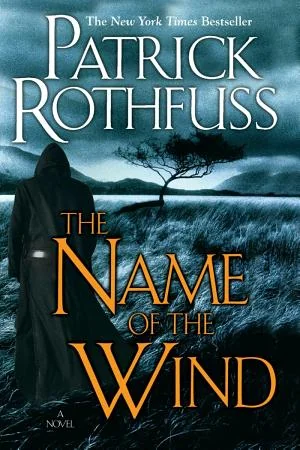
Patrick Rothfuss's 2007 novel, The Name of the Wind, begins Kvothe's life story.
The Name of the Wind, published in 2007, chronicles the early life of Kvothe, a young man with a mysterious past. This is the first volume in The Kingkiller Chronicle, a fantasy series that examines the legend of a man known by many names. The story is told as Kvothe recounts his life to a scribe. He details his beginnings as a talented child performer and his rise to become a notorious arcanist and adventurer.
Readers who enjoy detailed world-building and character development will find this novel appealing. Those interested in magic systems with a logical structure, such as the University's curriculum and the principles of sympathy, will find much to engage with. It is also suitable for individuals who like stories of personal growth set against a backdrop of myth and folklore.
The narrative examines the nature of stories and legends, how knowledge is acquired through different methods, and the results of ambition. It also looks at the concept of 'naming,' a deep understanding of the true nature of things that grants power. The development of sympathy, a magic system based on linking similar objects, is a key element that demands intellect and discipline.
While not directly tied to a specific esoteric movement, The Name of the Wind echoes themes found in earlier speculative fiction concerning hidden knowledge and complex magical systems. The novel's detailed approach to its magical and academic institutions, particularly the concept of 'naming' which implies a deep, intuitive understanding of reality, aligns with certain philosophical explorations of true knowledge and power. The magic system of sympathy, based on the link between similar objects, requires intellect and discipline, suggesting a structured, almost scientific approach to what might otherwise be considered occult practices.
💡 Why Read This Book?
• You will learn about the nuanced construction of magic systems, specifically the principles of sympathy, a form of sympathetic magic based on linked objects, as detailed in the University's curriculum. • You will experience the narrative power of a frame story where an older, legendary figure recounts his life, offering insights into how myths are built, as seen through Kvothe's own telling. • You will gain an appreciation for the concept of 'naming,' a profound understanding of the true nature of things, central to the world's hidden lore and magic, as Kvothe seeks to master it.
⭐ Reader Reviews
Honest opinions from readers who have explored this book.
❓ Frequently Asked Questions
When was Patrick Rothfuss's The Name of the Wind first published?
The Name of the Wind was first published on March 27, 2007, marking its entry into the contemporary fantasy literature landscape.
What is the primary magic system in The Name of the Wind?
The primary magic system is called sympathy, which relies on creating links between similar objects to transfer energy or influence one object through another.
Who is the protagonist of The Name of the Wind?
The protagonist is Kvothe, a young man of extraordinary talent and a mysterious past, who recounts his life story throughout the novel.
What is the name of the institution where magic is studied in the book?
The institution where magic and various other subjects are studied is known as the University.
What is the overarching goal of Kvothe in The Name of the Wind?
Kvothe's overarching goal is to uncover the truth about the Chandrian, a mythical group responsible for the death of his family and troupe.
Does The Name of the Wind contain elements of alchemy?
While not explicitly alchemical in the traditional sense, the book features 'artificing,' a discipline focused on creating magical devices and understanding material properties, which shares some conceptual ground.
🔮 Key Themes & Symbolism
The Power of Names
The concept of 'naming' in The Name of the Wind represents a profound, almost primal understanding of the fundamental essence of things. It's not merely knowing a word but grasping the true nature of an entity, be it the wind, a fire, or a person. This aligns with certain esoteric traditions that posit a direct correlation between true names and ultimate control or influence. Kvothe's pursuit of naming suggests a desire for mastery over the fundamental forces of his world, a quest for gnosis that transcends mere academic learning. The difficulty and danger associated with naming underscore its potent, almost sacred, status within the narrative's cosmology.
Knowledge as Power
The novel intricately details the pursuit and application of knowledge, particularly through the University's rigorous curriculum. This mirrors esoteric traditions that view knowledge, especially hidden or forbidden knowledge, as a primary source of power and influence. Kvothe's journey is one of relentless self-education, moving from street performer to a student of arcane arts, demonstrating that power is earned through study, discipline, and often, personal sacrifice. The narrative highlights both the intoxicating allure and the potential corrupting influence of accumulating significant power through intellectual and magical prowess.
The Nature of Legend
The story is framed by Kvothe, an older man, recounting his own legendary past. This self-aware narrative structure explores how stories are constructed, embellished, and ultimately become myth. It touches on the esoteric idea that collective belief can shape reality or at least perception. The gap between Kvothe's current humble existence as an innkeeper and the extraordinary tales told about him raises questions about identity, performance, and the subjective nature of truth. The legend itself becomes a character, influencing events and perceptions in ways Kvothe sometimes struggles to control.
Sympathy and Its Limits
Sympathy, the dominant magic system, operates on principles of connection and transference, requiring a deep understanding of the physical world and the links between similar things. This system, with its emphasis on logic, causality, and the manipulation of natural laws, can be seen as a fictionalized echo of Hermetic principles or alchemical processes focused on understanding and manipulating the material plane. The narrative emphasizes the 'cost' of sympathy – the physical toll it takes on the user – suggesting that even arcane power has natural limits and consequences, a recurring theme in many occult philosophies.
💬 Memorable Quotes
Direct passages from the work, attributed to the author.
“It was the silence that followed that was the most terrifying.”
— This interpretation speaks to the power of absence and the psychological impact of unresolved tension. In esoteric traditions, the void or the unmanifest often holds as much significance, if not more, than the manifest, representing potentiality or a profound, unsettling stillness.
“Words are pale shadows of thoughts.”
— This concept suggests that language is an imperfect tool for conveying deeper truths or understanding. It aligns with esoteric philosophies that emphasize direct experience, intuition, or gnosis over mere intellectual comprehension or verbal articulation.
“There’s no key to the University. You just have to know how to open the door.”
— This phrase implies that true access to knowledge or power isn't about following a prescribed, external method but about possessing an internal understanding or inherent ability to perceive and act. It mirrors the idea of inner initiation in many mystical paths.
“The Adem call the sword you mean 'a nameless thing'.”
— This refers to a specific cultural reference within the book, the Adem, and their unique philosophy regarding weapons. It suggests that true mastery or understanding transcends mere identification by name, hinting at a deeper, perhaps intuitive, connection with the object.
💡 Key Ideas
Editorial paraphrase of the work's core concepts — not direct quotes.
He was the Kingkiller, the Arcane, the Bloodless.
This paraphrase highlights the multiplicity of identities and reputations that Kvothe acquires throughout his life. It underscores the narrative's exploration of how legends are built and how a single individual can become associated with vastly different, often contradictory, epithets.
🌙 Esoteric Significance
Tradition
While not explicitly tied to a single esoteric lineage, The Name of the Wind engages with themes common in Hermeticism and Gnosticism. The pursuit of hidden knowledge, the idea of mastering fundamental forces through understanding their true nature (akin to 'Gnosis'), and the concept of sympathetic magic all resonate with Hermetic principles found in texts like the Corpus Hermeticum. The narrative’s focus on Kvothe’s quest for profound understanding and power positions him as a seeker of esoteric truths within his world.
Symbolism
The lute is a powerful symbol of Kvothe’s identity, skill, and connection to his past. Music itself often carries esoteric significance, representing harmony, cosmic order, or the vibration of creation. The wind, as suggested by the title, symbolizes change, unseen forces, and the elusive nature of power and knowledge. Kvothe's ability to 'name' the wind suggests a deep communion with natural forces, a mastery that transcends ordinary understanding.
Modern Relevance
Contemporary readers drawn to intricate world-building and well-defined magic systems often find parallels in modern fantasy that owes a debt to Rothfuss’s detailed approach. Thinkers and writers exploring the philosophy of magic, the nature of storytelling, and the construction of fictional realities may reference The Name of the Wind. Its success has influenced subsequent fantasy authors aiming to create immersive worlds with internally consistent, logically developed magical frameworks, appealing to those interested in speculative fiction with intellectual depth.
👥 Who Should Read This Book
• Aspiring authors and world-builders: Readers interested in the craft of fantasy literature will find value in Rothfuss's meticulous construction of magic systems, history, and culture. • Students of narrative structure: Those who appreciate complex storytelling and the use of frame narratives will find Kvothe's recounting of his life a compelling case study. • Fans of academic fantasy: Readers who enjoy stories set in or around universities, exploring the acquisition of knowledge and the social dynamics of scholarly environments, will be particularly drawn in.
📜 Historical Context
The Name of the Wind, published in 2007, entered a fantasy landscape dominated by established epics and a growing appetite for complex magic systems. While Patrick Rothfuss’s work doesn’t align with a specific historical esoteric movement, its detailed world-building and intricate magic system, particularly sympathy, echo the intellectual curiosity prevalent during periods like the Renaissance, where natural philosophy and nascent scientific inquiry often intertwined with more mystical pursuits. The novel’s meticulous construction of its academic institution, the University, and its various disciplines, can be seen as a modern fantasy analogue to the grand libraries and scholastic centers of earlier eras. It gained critical acclaim and commercial success, distinguishing itself from the more grimdark or high-action fantasies that were also popular, such as George R.R. Martin's A Song of Ice and Fire series, which had gained significant traction by the mid-2000s.
📔 Journal Prompts
Kvothe's mastery of sympathy requires understanding the links between objects. Reflect on a concept you have a strong 'link' to.
The Chandrian are figures of myth and fear. Consider a legend that has shaped your understanding of the world.
Kvothe’s journey involves learning the 'name of the wind.' Explore the power of understanding something’s true nature.
The University teaches many disciplines. What fictional or real-world institution would you most want to attend?
Kvothe often uses music to influence emotions. How does sound or music affect your own emotional state?
🗂️ Glossary
Sympathy
A form of magic based on the principle of linking two objects. Energy or influence applied to one object can be transferred to the other, requiring intense concentration and understanding of the objects' similarities.
Naming
A rare and profound form of magic that involves understanding the true essence or 'name' of a thing (e.g., wind, fire), granting the user significant power and control over it.
The University
A prestigious institution where students learn various disciplines, including sympathy, artificing, alchemy, and history, often through rigorous academic study and practical application.
Chandrian
A mysterious and feared group of mythical figures, central to Kvothe's personal quest, believed to be responsible for significant historical tragedies and the suppression of certain knowledge.
Arcanist
A practitioner of magic, particularly one skilled in the arts taught at the University, such as sympathy and artificing.
Artificing
A discipline focused on the creation of magical devices and understanding the physical properties of materials, often involving intricate craftsmanship and theoretical knowledge.
Denner Resin
A substance mentioned in the context of alchemy or artificing, likely used for its specific material properties in magical or scientific applications within the University's curriculum.
🔮 Readers Also Liked
Browse all →









More Free Occult Philosophy Books
View all →