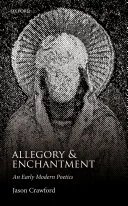
Allegory and Enchantment
 75
75

Allegory and Enchantment
Crawford's Allegory and Enchantment offers a refreshingly critical lens on the construction of modernity, moving beyond simplistic narratives of progress. His focus on the conscious rejection of older "idols" by 14th to 17th-century English writers is particularly illuminating. The strength of the book lies in its detailed textual analysis, showing how literary form itself was a battleground for defining the new. A limitation, however, is that the broad scope can sometimes make the connections between disparate authors feel asserted rather than fully demonstrated. The examination of John Dee's engagement with esoteric knowledge as a precursor to modern scientific thought is a standout section, revealing the complex lineage of intellectual inquiry. This is a valuable contribution for those weary of teleological accounts of Western thought.
📝 Description
75
Jason Crawford's 2023 book traces England's shift to modernity through its literature.
Allegory and Enchantment examines how English writers from the fourteenth to the seventeenth centuries shaped modernity. Jason Crawford analyzes how authors consciously separated themselves from older ways of thinking. They often rejected what they saw as outdated 'idols,' particularly in areas of magic and superstition, while developing new literary and philosophical approaches.
The book is for anyone interested in the intellectual history of early modern England, literary criticism, or the philosophy behind modernity. It will appeal to students and scholars of English literature, cultural studies, and the history of ideas. Those curious about the transition from medieval to modern thought will find its arguments particularly compelling.
Crawford places these literary efforts within a period of significant change. England experienced the Renaissance, the Reformation, and the beginnings of the Scientific Revolution. Writers contended with the remnants of scholasticism, a renewed interest in classical texts, and new methods of scientific observation. This era involved a deep questioning of traditional authorities, including those based on religious doctrine and what was then understood as natural magic or occult philosophy.
This work engages with the intellectual currents that informed early modern England's engagement with magic, occult philosophy, and superstition. It discusses how writers grappled with and often sought to distance themselves from these traditions as they constructed new intellectual frameworks. The book positions the literary practices of figures like John Dee within a climate where established authorities, including those tied to the occult, were being re-evaluated.
💡 Why Read This Book?
• Gain insight into how early modern English writers, such as those engaging with John Dee's work in the 16th century, actively constructed modernity by rejecting older forms of "magic" and "superstition." • Understand the specific literary strategies employed from the fourteenth to the seventeenth centuries to delineate the boundaries of the "modern" from the "pre-modern." • Appreciate the nuanced argument that the break from tradition was not a simple rejection but a complex negotiation of "allegory" and "enchantment" in shaping new cultural forms.
⭐ Reader Reviews
Honest opinions from readers who have explored this book.
❓ Frequently Asked Questions
What is the primary focus of Allegory and Enchantment regarding modernity?
The book focuses on how English writers from the 14th to 17th centuries defined modernity by consciously breaking away from older cultural forms, particularly those associated with magic and superstition.
Which historical periods does Allegory and Enchantment primarily cover?
It covers the period from the fourteenth to the seventeenth centuries, a crucial time of transition in English intellectual and cultural history.
What does the book mean by "enchantment" in the context of early modern literature?
"Enchantment" refers to the pervasive cultural and intellectual forces, often linked to magic and superstition, that writers of the period sought to either transform or discard to establish new modes of thought.
Who are some of the types of writers or thinkers discussed in Allegory and Enchantment?
The book examines English writers who were active at the threshold of modernity, engaging with cultural forms that included magic and superstition, implicitly referencing figures who navigated these complex intellectual landscapes.
What is the relationship between "allegory" and "enchantment" in Crawford's analysis?
Crawford explores how "allegory" was used as a tool by writers to reinterpret old traditions and how the concept of "enchantment" represented the cultural forces they were reacting against or transforming.
What questions does Allegory and Enchantment seek to answer about modernity?
It seeks to answer fundamental questions about the origins, boundaries, and future of modernity by examining the literary and cultural break from older traditions.
🔮 Key Themes & Symbolism
The Rejection of Idols
The book centers on how early modern English writers actively identified and rejected what they termed "idols" – particularly in the areas of magic, superstition, and older forms of thought. This process wasn't merely an abandonment but a deliberate act of cultural and intellectual self-definition. By consciously demarcating themselves from these perceived "old ways," writers sought to establish the foundations of a new era, often employing allegory as a means to reframe or distance themselves from the very traditions they were moving beyond.
Allegory as a Modernizing Tool
Crawford analyzes allegory not just as a literary technique but as a crucial mechanism for reading through the transition to modernity. Writers used allegorical forms to engage with, subvert, or reinterpret the "enchantment" of older belief systems. This allowed them to critique established ideas, including those related to magic and the supernatural, while simultaneously constructing new frameworks for understanding the world and human experience. The allegorical impulse became a way to process the dismantling of older certainties.
Defining Modernity's Boundaries
A core concern of the book is to interrogate the very concept of modernity by examining its perceived origins and limits. The 14th to 17th centuries were a period of intense flux, and authors grappled with defining what belonged to the "new" versus what was being left behind. By studying their literary efforts to break from magic and superstition, Crawford explores how the boundaries of modernity were actively constructed and contested through cultural production.
Enchantment and Its Disenchantment
The book investigates the complex relationship between "enchantment" – the pervasive sense of wonder, magic, and the supernatural – and its perceived "disenchantment" in the rise of modernity. Writers of the period wrestled with whether to purge enchantment entirely or to find new ways to express it within secular or rational frameworks. This tension highlights the often-ambivalent nature of modernity's emergence, where the allure of the old world lingered even as the new was being forged.
💬 Memorable Quotes
Direct passages from the work, attributed to the author.
“What is modernity? Where are modernitys points of origin? Where are its boundaries? And what lies beyond those boundaries?”
— This foundational question frames the entire inquiry, setting up the book's ambitious scope to dissect the very definition and historical trajectory of modernity through literary analysis.
“English writers at the threshold of modernity, and by considering,in particular, the cultural forms these writers want to leave behind.”
— This highlights the book's focus on a specific cohort of authors and their deliberate efforts to disassociate from prior cultural paradigms, particularly those involving magic and superstition.
“From the fourteenth to the seventeenth centuries, many English writers fashion themselves as engaged in breaking away from an array of old idols: magic, super”
— This points to the active, self-conscious role of authors in constructing modernity by repudiating specific elements of the past, identified here as "idols" like magic.
“The book explores these broad questions by considering the work of English writers at the threshold of modernity...”
— This emphasizes that the exploration of modernity's origins and boundaries is conducted through a close examination of specific literary texts and the authors who produced them.
“Crawford analyzes how these dichotomies were negotiated in the literature of the period, shaping the very definition of what it meant to be "modern."”
— This interpretation suggests that the book views literature as a primary site where the conceptual shifts defining modernity, such as the tension between magic and reason, were debated and solidified.
🌙 Esoteric Significance
Tradition
While not strictly a work *within* an esoteric tradition, Allegory and Enchantment critically examines the historical interactions and ruptures between esoteric practices (like magic and alchemy) and the emergent paradigms of modernity. It situates these esoteric pursuits not as fringe elements but as significant cultural forces that writers of the 14th-17th centuries felt compelled to address, reject, or transform in their own work. It thus offers an external, analytical perspective on how esoteric thought was perceived and dealt with during a key period of Western intellectual history.
Symbolism
The book implicitly engages with symbolism by discussing "idols" and "enchantment." These terms represent older symbolic systems and modes of perceiving reality that early modern writers sought to move away from. The allegorical methods discussed can be seen as a form of symbolic re-ordering, where traditional symbols were reinterpreted or replaced to construct new meanings aligned with emerging rational or secular worldviews. The act of breaking away from these "idols" itself becomes a symbolic gesture of transition.
Modern Relevance
Contemporary thinkers exploring the philosophical roots of disenchantment, the history of science, and the cultural construction of secularism find value in Crawford's analysis. Scholars of literary theory and cultural studies examining the transition from medieval to modern literature draw on his insights into how writers negotiated "magic" and "reason." The book's approach to understanding modernity through its "other" – the esoteric and the superstitious – remains relevant for critiques of Enlightenment narratives and for understanding the persistent appeal of non-rational modes of thought today.
👥 Who Should Read This Book
• Students of early modern English literature seeking to understand the cultural context and intellectual debates informing works from the 14th to 17th centuries. • Scholars of intellectual history interested in the philosophical transitions that defined modernity and the role of literary production in that process. • Readers of cultural studies and the history of ideas who want to analyze how concepts like "magic" and "enchantment" were negotiated as modernity emerged.
📜 Historical Context
The period from the fourteenth to the seventeenth centuries in England was a watershed moment, characterized by profound intellectual and cultural upheaval. The Renaissance revived classical learning, the Reformation challenged religious authority, and the nascent Scientific Revolution began to reshape understandings of the natural world. Writers like Edmund Spenser and John Dee navigated this complex terrain, consciously attempting to move beyond medieval scholasticism and the pervasive influence of magic and occult philosophies. They sought to establish new modes of expression and thought, often critiquing what they saw as "superstition" or "enchantment." This era also saw the rise of humanist scholarship and new forms of empirical inquiry, creating intellectual currents that competed with older traditions. The reception of these ideas was complex, with debates over heresy and the nature of knowledge shaping the intellectual landscape.
📔 Journal Prompts
The "old idols" of magic and superstition: How were they perceived by writers at the threshold of modernity?
Allegory's role in breaking away from tradition: What specific techniques did authors employ?
The boundaries of modernity: What marked the transition from older to newer modes of thought?
Negotiating "enchantment": How did writers grapple with magical or supernatural elements in their work?
The self-fashioning of modernity: In what ways did authors consciously construct a "new" era?
🗂️ Glossary
Modernity
The historical period and condition characterized by a break from tradition, emphasis on reason, individualism, and scientific inquiry, often considered to have begun in the early modern period.
Threshold of Modernity
Refers to the transitional period, roughly from the 14th to 17th centuries, when early modern writers began to question and depart from medieval modes of thought and expression.
Idols
In this context, "idols" refers to outdated beliefs, practices, or modes of thought (such as magic and superstition) that writers consciously sought to reject or move beyond.
Enchantment
The pervasive cultural and intellectual atmosphere characterized by magic, wonder, and the supernatural, which writers of the early modern period often engaged with as they moved towards more rationalistic frameworks.
Allegory
A literary device or narrative form in which characters, events, and settings represent abstract ideas or principles, used by early modern writers to reinterpret or critique older traditions.
Superstition
Belief or practice resulting from ignorance, fear of the unknown, or trust in magic or chance, which early modern writers often sought to disassociate from their work.
Cultural Forms
The various ways in which culture is expressed and organized, including literature, art, beliefs, and social practices, which writers in the period sought to reshape.
This book appears in 1 collection
🔮 Readers Also Liked
Browse all →









From the “Enchantment” Collection
View all →




More Free Occult Philosophy Books
View all →