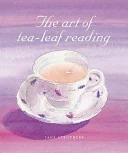
The Art of Tea Leaf Reading
 78
78

The Art of Tea Leaf Reading
Jane Struthers' "The Art of Tea Leaf Reading" presents a lucid and comprehensive guide to tasseography, distinguishing itself with a practical, almost therapeutic, approach. The book's primary strength lies in its extensive directory of over 300 shapes, offering a robust starting point for novice readers. Struthers' insistence on integrating intuition with symbolic meaning, rather than relying on rigid interpretations, is commendable. However, the sheer volume of symbols, while thorough, can occasionally feel overwhelming, potentially leading to analysis paralysis for some users. A particularly insightful section discusses the 'cup's edge' versus the 'bottom of the cup' as distinct zones of interpretation, a nuance often overlooked. Ultimately, the book serves as a valuable, accessible manual for anyone seeking to explore the reflective potential of tea leaves.
📝 Description
78
Jane Struthers' 2006 book demystifies tasseography, the practice of reading tea leaves.
Published in 2006, Jane Struthers' "The Art of Tea Leaf Reading" introduces the practice of tasseography. The book guides readers through interpreting the patterns left by tea leaves in a cup. It moves beyond memorizing symbols to foster a holistic understanding of the messages the leaves convey. Struthers presents tea leaf reading as a tool for introspection and daily guidance.
This book suits individuals curious about divination, especially those drawn to gentle, contemplative practices. It offers beginners a structured way to understand symbolism and intuition. Those interested in personal development, mindfulness, or developing a daily ritual for self-reflection will find its advice useful. The book also appeals to those who appreciate the historical and cultural background of divination.
Tea leaf reading, with roots possibly in ancient China or the Ottoman Empire, saw renewed Western interest around the time of this 2006 publication. Struthers' work aligns with a broader trend of engagement with esoteric practices outside mainstream occultism. The book contributes by providing an accessible guide to a divination method that emphasizes personal insight and reflection.
💡 Why Read This Book?
• Gain a practical framework for interpreting over 300 distinct tea leaf symbols, moving beyond rote memorization to understand their nuanced meanings within a reading, as detailed in the book's comprehensive directory. • Learn to employ tea leaf reading as a daily meditative practice for general guidance and self-reflection, transforming a simple cup of tea into a tool for introspection. • Understand the historical roots of tasseography, tracing its lineage and placing Struthers' accessible 2006 guide within the broader context of divination practices.
⭐ Reader Reviews
Honest opinions from readers who have explored this book.
❓ Frequently Asked Questions
What is the origin of tea leaf reading as a practice?
The practice of reading tea leaves, known as tasseography, has ancient roots, with origins often traced to ancient China. It later gained popularity in the Ottoman Empire and subsequently spread to Europe, becoming a recognized form of divination.
How many tea leaf symbols does Jane Struthers' book cover?
Jane Struthers' "The Art of Tea Leaf Reading" provides an extensive directory of over 300 shapes and symbols that can be found in tea leaves, offering a comprehensive reference for interpreters.
Can tea leaf reading be used for daily guidance, not just prediction?
Yes, "The Art of Tea Leaf Reading" specifically advocates for using the practice as a daily meditation for general guidance. This approach focuses on introspection and understanding the present moment rather than solely forecasting future events.
What type of tea is best for tea leaf reading?
While the book doesn't strictly mandate a type, loose-leaf tea, particularly black teas like Assam or Ceylon with broken leaves, are generally preferred. These leave more distinct patterns than fine tea dust found in tea bags.
Is "The Art of Tea Leaf Reading" suitable for absolute beginners?
Absolutely. The book is designed for newcomers, offering clear instructions on the process, from brewing the tea to interpreting the symbols, making it an accessible entry point into tasseography.
When was "The Art of Tea Leaf Reading" first published?
Jane Struthers' "The Art of Tea Leaf Reading" was first published in 2006, making it a relatively modern guide to this ancient divinatory art.
🔮 Key Themes & Symbolism
Symbolic Interpretation
The book meticulously details over 300 symbols found in tea leaves, each with potential interpretations. It emphasizes that meaning is derived not just from a fixed dictionary but also from the context of the reading and the intuition of the reader. This approach encourages a dynamic relationship with the symbols, viewing them as prompts for reflection rather than deterministic prophecies. The work explores how patterns like 'a ladder' might signify ascent or difficulty, depending on placement and surrounding shapes.
Meditative Practice
Struthers frames tea leaf reading as more than mere fortune-telling; it is presented as a mindful ritual. The act of brewing, observing, and interpreting becomes a form of daily meditation. This perspective aligns with contemporary mindfulness practices, offering a tangible way to connect with one's inner self and seek guidance. The book suggests performing a reading as a gentle daily exercise to gain clarity on current circumstances or upcoming decisions.
Intuitive Development
Central to the book's philosophy is the cultivation of intuition. While providing a comprehensive catalog of symbols, Struthers consistently encourages readers to trust their gut feelings and personal associations. The work suggests that the 'correct' interpretation often arises from a blend of learned knowledge and innate inner knowing. This empowers the reader, transforming them from a passive recipient of information into an active co-creator of meaning.
The Sacred Cup
The teacup itself is treated as a sacred space for divination. The book guides readers on how to properly prepare and use the cup, emphasizing the importance of the brewing process and the final patterns left behind. It details how different areas of the cup—the rim, the sides, the bottom—can represent different aspects of life or timeframes, adding layers of complexity to the interpretation.
💬 Memorable Quotes
Direct passages from the work, attributed to the author.
“Perform a reading as a daily meditation for general guidance.”
— This statement highlights the book's emphasis on tasseography as a tool for self-reflection and mindfulness, moving beyond simple prediction to a practice that fosters inner awareness and clarity.
“Includes a comprehensive directory of 300 shapes you might find in your cup and how to interpret them.”
— This points to the book's practical strength: a detailed catalog of symbols, providing readers with a solid foundation for understanding the visual language of tea leaves.
“Learn how to predict the future with the ancient art of tea-leaf reading.”
— This expresses the book's promise of teaching a divinatory skill, acknowledging the predictive aspect of tasseography while implying a structured method for achieving this.
“The patterns left by tea leaves offer insights into the querent's life.”
— This idea frames the tea leaves not just as random marks, but as meaningful patterns that can illuminate aspects of a person's circumstances, past, present, or future.
💡 Key Ideas
Editorial paraphrase of the work's core concepts — not direct quotes.
The interpretation of symbols is personal and intuitive.
This paraphrased concept underscores the book's approach, balancing a structured guide to symbols with the crucial element of individual intuition in discerning their meaning.
🌙 Esoteric Significance
Tradition
While tasseography predates many formalized esoteric systems, Struthers' approach aligns with modern practical mysticism and divination as spiritual tools. It fits within the broader Hermetic principle of correspondence ('As Above, So Below'), viewing the patterns in the cup as reflections of a larger reality or inner state. It departs from strictly Kabbalistic or Gnostic traditions by focusing on a more accessible, folk-magic-derived practice, emphasizing personal intuition over complex theoretical frameworks.
Symbolism
Key symbols explored include the 'anchor,' often representing stability or a connection to grounding forces, and the 'bird,' which can signify messages, freedom, or swift movement depending on its context. The 'tree' symbol is frequently interpreted as growth, life, or interconnectedness. The book guides readers to see these not as isolated signs but as part of a narrative within the cup, influenced by their position and surrounding imagery, reflecting archetypal patterns.
Modern Relevance
Contemporary practitioners of mindfulness, intuitive development, and self-help often draw upon accessible divination methods like tea leaf reading. Struthers' work provides a clear entry point for individuals exploring these areas outside of more complex systems like Tarot or astrology. Its emphasis on personal insight and meditative ritual appeals to modern wellness culture and the growing interest in finding meaning through everyday practices.
👥 Who Should Read This Book
['• Individuals new to divination seeking a gentle, structured introduction to reading symbols and developing intuition.', '• Practitioners of mindfulness or meditation looking for a tangible ritual to enhance self-awareness and daily reflection.', '• Enthusiasts of esoteric history interested in exploring a popular folk divination practice with practical application.']
📜 Historical Context
Jane Struthers' "The Art of Tea Leaf Reading," published in 2006, emerged during a period of significant renewed interest in esoteric practices within Western culture. Tasseography itself, though potentially originating in ancient China, gained widespread European popularity in the 18th and 19th centuries, becoming a staple in parlor divination alongside methods like palmistry and cartomancy. Struthers' work arrived decades after the foundational texts of figures like Aleister Crowley and Dion Fortune, who had codified many occult traditions. It also followed the New Age movement's popularization of various spiritual and divinatory arts in the late 20th century. Unlike earlier, more esoteric or strictly predictive manuals, Struthers' book offered a contemporary, accessible approach, emphasizing personal development and mindfulness, reflecting a broader cultural shift towards integrating spiritual practices into daily life.
📔 Journal Prompts
Tea leaf patterns as reflections of daily concerns.
The symbolism of the 'anchor' in your personal life.
Interpreting a 'bird' symbol for incoming messages.
The 'tree' symbol and your personal growth trajectory.
Connecting the cup's rim interpretation to immediate thoughts.
🗂️ Glossary
Tasseography
The practice of reading and interpreting patterns formed by tea leaves, coffee grounds, or wine sediments in a cup to gain insight or predict future events.
Divination
The practice of seeking knowledge of the future or the unknown by supernatural means, such as through omens, supernatural signs, or the interpretation of symbols.
Symbolism
The use of symbols to represent ideas and qualities, the study or interpretation of symbols, particularly in relation to meaning within a divinatory context.
Intuition
The ability to understand something immediately, without the need for conscious reasoning; often considered inner knowing or gut feeling, crucial in interpreting divinatory symbols.
Querent
The person for whom a divination reading is performed; the individual seeking insight or guidance from the reading.
Loose-leaf tea
Tea that is not in tea bags, consisting of whole or broken tea leaves. Preferred for tasseography as it leaves more distinct patterns.
Meditation
A practice where an individual uses a technique – such as mindfulness, or focusing the mind on a particular object, thought, or activity – to train attention and awareness, and achieve a mentally clear and emotionally calm state.
This book appears in 1 collection
🔮 Readers Also Liked
Browse all →









From the “Tea Leaf Reading” Collection
View all →





More Free Astrology & Cosmology Books
View all →






![The celestial science of astrology vindicated, from the calumny of those who are biggotted [sic] against what they do not understand, by R. Phillips. 1785](/img/thumb/the-celestial-science-of-astrology-vindicated-from-the-calumny-of-those-who-are-biggotted-sic-against-what-they-do-not-understand-by-r-phillips-1785-phillips-r-astrologer.webp)