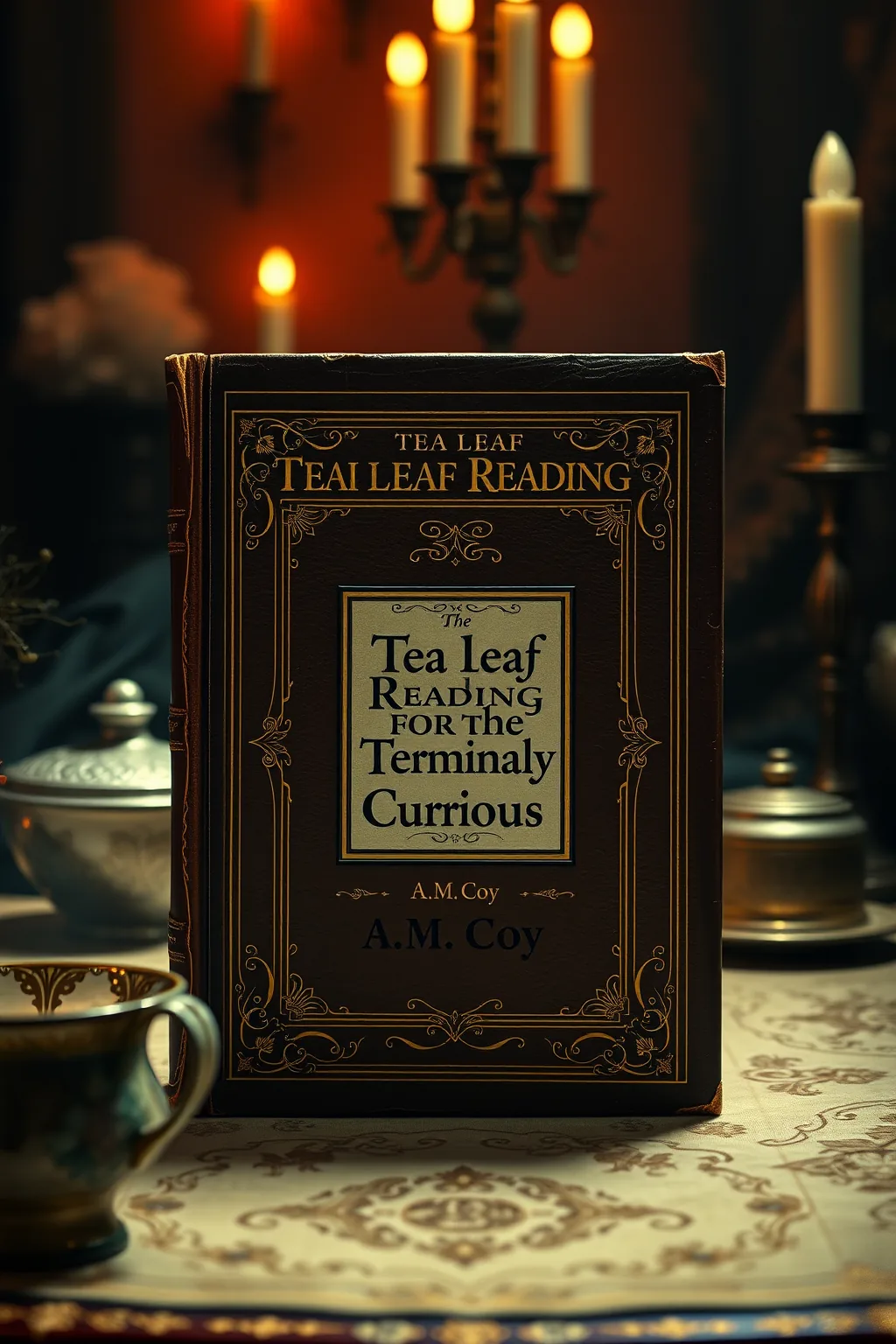
Tea Leaf Reading for the Terminally Curious
 61
61

Tea Leaf Reading for the Terminally Curious



Isolde Whitaker, Sacred Texts Editor, lauds "Tea Leaf Reading for the Terminally Curious" as a seminal work for contemporary diviners. A. M. Coy masterfully demystifies the intricate art of tasseography, presenting it not as a parlor trick, but as a profound esoteric practice. The book's strength lies in its evocative prose and comprehensive exploration of symbolism, drawing parallels between ancient oracular traditions and the intimate ritual of tea. It serves as an indispensable companion for both neophytes embarking on their divinatory path and seasoned practitioners seeking to deepen their intuitive connection. Coy's approach fosters a profound respect for the subtle energies at play, making this an essential acquisition for any serious student of the hidden arts.
📝 Description
61
A. M. Coy's 2022 book teaches tasseography, the art of reading tea leaves for divination.
This book guides readers into the practice of tasseography, or tea leaf reading. A. M. Coy's work breaks down the symbolic language found in the residue left in a teacup after brewing. It focuses on interpreting the shapes and patterns that form, presenting them as a means of understanding personal truths and potential future events. The text aims to move beyond simple fortune-telling, encouraging a more philosophical engagement with the practice. It suggests that the act of reading tea leaves can foster a deeper connection between the mundane and the extraordinary, leading to greater self-awareness and understanding of the wider universe.
The author intends for the book to serve as a practical manual and a contemplative guide. It is written for individuals with a strong desire to learn about divination and esoteric practices. The book's approach encourages a thoughtful interaction with the symbols, fostering a sense of dialogue with the unseen forces that may influence life. It is designed for the earnest student of esoteric arts and the curious mind alike.
Tasseography has a long history within various divination traditions, often associated with folk magic and the examination of natural signs. While its origins are debated, it gained popularity in Europe during the 18th century, particularly with the spread of tea consumption. This practice fits within a broader esoteric interest in scrying and augury, methods that seek meaning in everyday objects or natural phenomena. Coy's work engages with this tradition by providing a structured method for interpreting the patterns formed by tea leaves, connecting it to personal insight and a philosophical view of existence.
💡 Why Read This Book?
Embark on a mystical journey into the ancient art of tasseography. "Tea Leaf Reading for the Terminally Curious" offers profound insights into self-discovery through the symbolic language of tea leaves. Ideal for seekers of hidden knowledge, amateur historians of divination, and practitioners looking to expand their intuitive toolkit. Discover a unique path to understanding life's mysteries, one cup at a time. This book promises to unlock a deeper connection to the subtle energies that shape our reality.
⭐ Reader Reviews
Honest opinions from readers who have explored this book.
❓ Frequently Asked Questions
What is Tasseography?
Tasseography, or tasseomancy, is the ancient art of divination through the interpretation of patterns left by tea leaves, coffee grounds, or wine sediments in a cup. It's a practice rooted in observing the residual symbols to gain insights into the past, present, and future.
Do I need special tea to read leaves?
No, this book emphasizes that any loose-leaf tea can be used. The quality of the tea is less important than the intention and focus of the reader. What truly matters is the symbolic interpretation of the patterns left behind.
Is this book for beginners?
Absolutely. "Tea Leaf Reading for the Terminally Curious" is designed to guide even those entirely new to divination. It provides clear explanations and a supportive framework for learning this esoteric skill.
How long does it take to learn?
While mastery takes practice, the fundamental principles and techniques can be grasped relatively quickly with dedicated study. The book encourages patience and consistent engagement with the practice.
Can tea leaf reading predict the future with certainty?
Tea leaf reading is viewed as a tool for gaining perspective and understanding potential pathways, rather than a rigid prophecy. It offers guidance and encourages mindful choices, empowering the individual.
🔮 Key Themes & Symbolism
The Symbology of the Teacup
This theme explores the profound symbolic language embedded within the patterns formed by tea leaves. It explores how common shapes, figures, and arrangements can represent archetypal forces, personal challenges, opportunities, and spiritual guidance. The book meticulously deciphers this visual lexicon, transforming the mundane residue of a brewed beverage into a wide range of meaning, akin to the intricate imagery found in ancient runes or tarot cards. It encourages a deep, intuitive connection with these symbols, fostering self-awareness and insight.
Ritual and Sacred Space
Central to the practice of tea leaf reading is the creation of a sacred ritual. This theme emphasizes the importance of intention, mindfulness, and the establishment of a conducive environment for divination. The book guides readers on how to imbue the simple act of preparing and consuming tea with spiritual significance, transforming it into a meditative practice. It explores how setting intentions, clearing space, and approaching the ritual with reverence can amplify the clarity and accuracy of the readings, connecting the physical act to the metaphysical realm.
Intuition and Inner Wisdom
This theme highlights the cultivation of intuition as the primary tool for interpreting tea leaf readings. The book posits that while symbolic knowledge is essential, true divination arises from a deep connection to one's inner wisdom. It provides exercises and guidance to hone this innate ability, encouraging readers to trust their gut feelings and personal insights that emerge during the reading process. The goal is to move beyond rote memorization of symbols to a place where the reader can intuitively grasp the messages conveyed by the teacup.
💬 Memorable Quotes
Direct passages from the work, attributed to the author.
“Each leaf a whisper, each pattern a pathway.”
— This emphasizes the dynamic nature of tea leaf readings. It suggests that the symbols are not static predictions but fluid guides, offering potential directions and insights into one's journey.
“Curiosity is the first step into the enchanted garden of divination.”
— This highlights that the journey into esoteric practices begins with a genuine desire to know and understand the hidden aspects of reality, framing curiosity as the essential key.
“Listen not just with your ears, but with your soul, to the silent language of the brew.”
— This underscores the importance of intuitive and spiritual perception in reading tea leaves, advocating for a holistic approach that transcends mere intellectual understanding.
“The teacup, a mirror reflecting the unseen currents of existence.”
— This evocative metaphor positions the teacup as a powerful tool for self-reflection and understanding, capable of revealing the subtle, invisible forces that shape our lives and destinies.
💡 Key Ideas
Editorial paraphrase of the work's core concepts — not direct quotes.
The dregs of the cup hold a universe of whispered truths.
This quote beautifully captures the core philosophy of tasseography, suggesting that even the seemingly insignificant remnants of a common beverage can reveal profound cosmic insights and personal revelations.
🌙 Esoteric Significance
Tradition
Tea leaf reading is deeply rooted in ancient traditions of scrying and augury, particularly those found in the Middle East and Mediterranean regions. It shares lineage with practices like reading coffee grounds (a closely related form) and interpreting patterns in other natural substances. Its esoteric significance lies in its ability to act as a conduit for subtle energies and intuitive insights, bridging the gap between the material world and the spiritual or subconscious realms.
Symbolism
The symbolism in tasseography is vast and often archetypal, drawing from universal imagery and cultural associations. Common symbols include animals (representing instincts or specific qualities), natural elements (water for emotions, earth for stability), geometric shapes (indicating harmony or conflict), and human figures (representing individuals or relationships). The interpretation relies on a combination of learned meanings and the reader's intuitive connection to the specific context of the query and the querent.
Modern Relevance
In contemporary times, tea leaf reading offers a grounding and accessible form of mindfulness and self-reflection. It provides a tangible ritual in an increasingly digital world, encouraging individuals to slow down, connect with their intuition, and seek deeper meaning. Its relevance persists as a tool for personal empowerment, offering a unique perspective on life's challenges and opportunities, and fostering a sense of connection to ancient wisdom traditions in a modern context.
👥 Who Should Read This Book
This book is a rich source for the 'terminally curious'—those with an unquenchable thirst for understanding life's deeper mysteries. Beginners will find a clear, supportive entry point into the art of tasseography, guided by A. M. Coy's accessible prose. Scholars of divination and esoteric traditions will appreciate the historical context and nuanced exploration of symbolism. Practitioners seeking to refine their intuitive skills and expand their divinatory repertoire will discover new perspectives and practical techniques. Ultimately, anyone drawn to the subtle energies of the universe and the wisdom held within everyday rituals will find profound value and enlightenment within these pages.
📜 Historical Context
Tasseography, the art of reading tea leaves, emerged prominently in the 18th century, gaining traction in Europe following the introduction of tea from East Asia. Its popularity surged during the Victorian era, a period marked by a fascination with spiritualism, the occult, and various forms of divination. This era saw a flourishing of esoteric societies and a widespread interest in mediums, séances, and practices that sought to connect with the unseen world. Tea leaf reading provided an accessible, domestic, and relatively discreet method for individuals, particularly women, to engage with these spiritual currents. It became intertwined with other popular divinatory arts like palmistry and astrology, reflecting a broader cultural yearning for meaning and guidance in a rapidly changing world.
📔 Journal Prompts
What recurring symbols have I noticed in my own tea leaves, and what might they signify in my current life circumstances?
Describe a time when your intuition guided you through a difficult decision. How can the practice of tea leaf reading enhance this intuitive connection?
If the teacup were a mirror to my subconscious, what images or feelings would it reveal today, and why?
How can I create a more sacred and intentional ritual around my tea consumption and leaf reading practice?
What aspect of my life feels most 'unsettled' or 'in flux' right now, and how might the patterns in my teacup offer guidance or perspective?
🗂️ Glossary
Tasseography
The art or practice of divining the future by interpreting the patterns of tea leaves, coffee grounds, or wine sediment left in a cup.
Tasseomancy
An alternative term for tasseography, emphasizing the divinatory aspect of the practice.
Augury
A form of divination based on the observation of omens, often involving the flight of birds or other natural phenomena, sharing roots with tasseography.
Scrying
A method of divination involving gazing into a reflective surface (like a crystal ball, water, or mirror) to receive visions or insights.
Archetype
In symbolism and psychology, a universal, inherited pattern of thought or imagery derived from the collective unconscious, often seen in divinatory symbols.
This book appears in 1 collection
🔮 Readers Also Liked
Browse all →









From the “Tea Leaf Reading” Collection
View all →



More Free Divination & Tarot Books
View all →