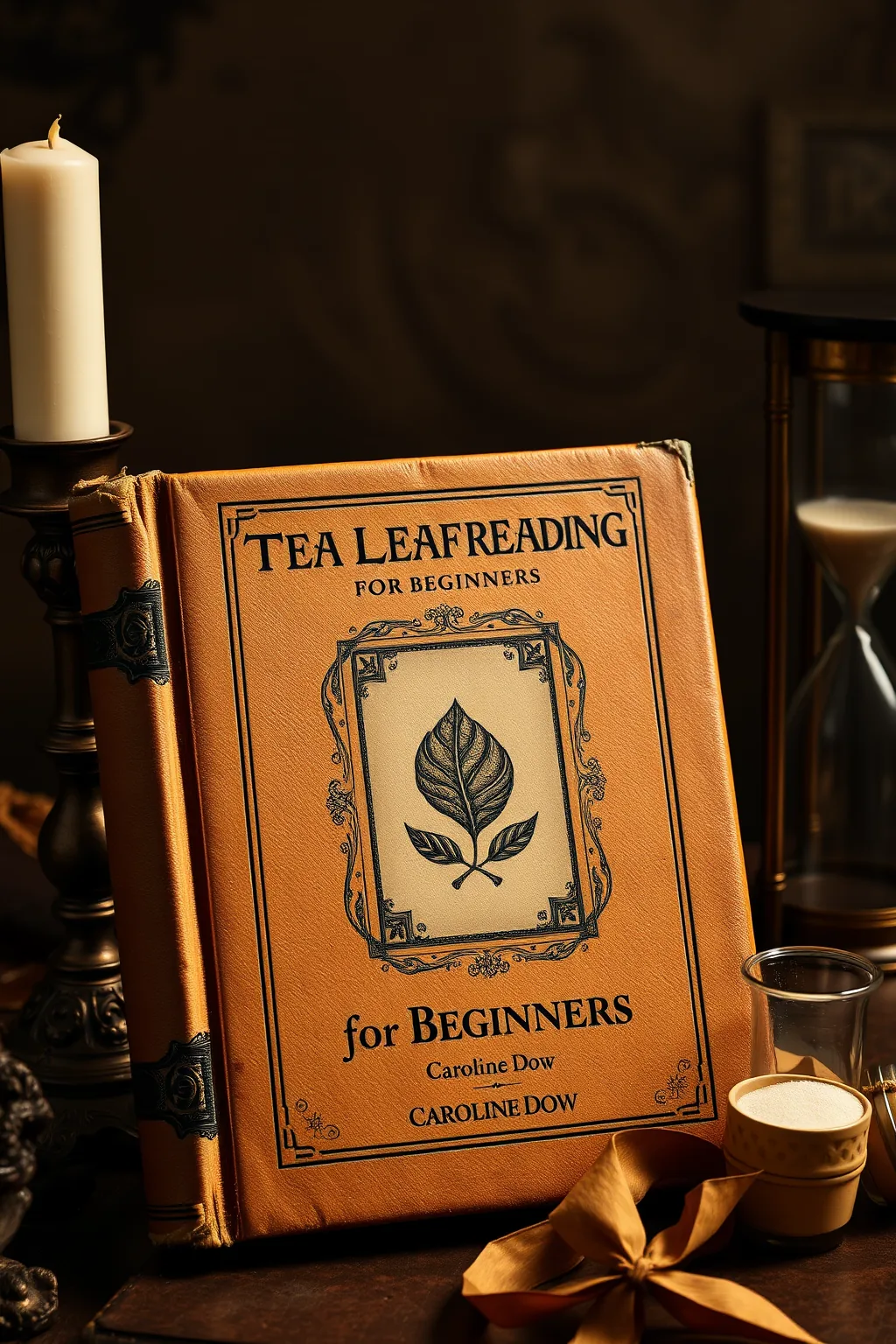
Tea Leaf Reading for Beginners
 61
61

Tea Leaf Reading for Beginners



Caroline Dow's 'Tea Leaf Reading for Beginners' is a masterful entry into the realm of divination, offering a clear yet profoundly esoteric path for neophytes. Dow distills centuries of practice into accessible lessons, demystifying Tasseography without sacrificing its inherent magic. Her approach emphasizes the intuitive connection between reader and leaf, fostering a personal relationship with symbolic language. This is not simply a how-to guide, but an invitation to cultivate inner sight and embrace a more mystical worldview. Ideal for those new to divination or seeking to deepen their understanding of symbolic interpretation, this book is a cornerstone for any modern occult library.
📝 Description
61
Caroline Dow's 'Tea Leaf Reading for Beginners' explains tasseography, the art of reading fortunes in tea leaves, in 1998.
Caroline Dow's 1998 book, 'Tea Leaf Reading for Beginners,' serves as an introduction to tasseography. The author details the process of preparing tea specifically for divination and then interpreting the patterns left by the leaves in the cup. This practice is presented not just as fortune-telling, but as a method for understanding symbolic language and developing intuition. Dow guides readers through observing the shapes and arrangements of the leaves, suggesting they can offer insights into personal questions and the subconscious mind. The book aims to transform a common daily ritual into a contemplative practice. It connects the physical act of drinking tea with a spiritual or metaphysical dimension, providing a way to seek guidance and reflect on life's unfolding events.
Tasseography, or tea leaf reading, is an ancient practice found in various cultures, including Chinese fortune telling and Middle Eastern divination methods. It is often associated with folk magic and esoteric traditions that seek meaning in natural phenomena and everyday objects. This book places itself within that lineage, presenting the reading of tea leaves as a method of spiritual communication and personal insight. It aligns with a broader interest in esoteric arts that bridge the material world with unseen influences and intuitive knowledge, offering a tangible practice for those seeking connection to subtle energies.
💡 Why Read This Book?
Embark on a mystical journey to decipher the whispers of fate held within your teacup. 'Tea Leaf Reading for Beginners' offers a gentle yet profound introduction to Tasseography, transforming a simple ritual into a potent tool for self-discovery and spiritual connection. Ideal for intuitive seekers, budding psychics, and anyone yearning to explore ancient divinatory arts, this book unlocks a hidden language of symbols and intuition.
⭐ Reader Reviews
Honest opinions from readers who have explored this book.
❓ Frequently Asked Questions
What is Tasseography?
Tasseography, or tasseomancy, is the ancient art of reading tea leaves to gain insights into the past, present, and future. It involves interpreting the patterns left behind in a teacup after the tea has been consumed.
What type of tea is best for reading?
Loose-leaf teas, particularly black teas with smaller leaf particles, are traditionally preferred as they leave more discernible patterns. However, the intention and focus of the reader are paramount, and many types of tea can be used.
Do I need special equipment to start?
Beyond a teacup, saucer, and your preferred loose-leaf tea, no special equipment is strictly necessary. The most crucial elements are an open mind, a curious spirit, and a willingness to connect with the symbolism.
How long does it take to become proficient?
Proficiency in tea leaf reading is a journey of practice and intuition. While this book provides a strong foundation, consistent reading and personal reflection will deepen your ability to interpret the symbols over time.
Can tea leaf reading predict specific events?
Tea leaf reading is more about understanding energies, potential outcomes, and guidance rather than rigid predictions. It offers insights into prevailing influences and encourages mindful choices, empowering the querent.
🔮 Key Themes & Symbolism
The Sacred Ritual of Tea Divination
This theme explores the ancient practice of Tasseography, transforming the simple act of drinking tea into a profound ritual of self-discovery and connection to the unseen. It explores the spiritual significance of preparing the tea, the mindful observation of the leaves, and the creation of a sacred space conducive to receiving intuitive guidance. The process is presented not merely as a method of fortune-telling, but as a meditative practice that cultivates present moment awareness and attunes the reader to subtle energetic currents within themselves and the environment.
Symbolism and Intuitive Interpretation
This core theme focuses on the wide range of symbols found within tea leaves and the crucial role of intuition in their interpretation. It moves beyond rote memorization of meanings, encouraging readers to develop a personal dialogue with the symbols, understanding their complex nature and their resonance with the querent's life. The book guides practitioners in recognizing common motifs – animals, objects, celestial bodies – and understanding how their placement and combination offer unique insights into the querent's journey, fostering a deeper understanding of the subconscious mind and universal archetypes.
Bridging the Mundane and the Metaphysical
This theme highlights how 'Tea Leaf Reading for Beginners' elegantly bridges the gap between everyday life and the esoteric realms. It demonstrates that profound wisdom and guidance are accessible through simple, accessible practices, requiring no elaborate tools or esoteric knowledge beyond what is presented. The book empowers readers to find the extraordinary within the ordinary, suggesting that the answers we seek are often present in the mundane aspects of our lives, waiting to be perceived through a lens of heightened awareness and spiritual receptivity.
💬 Memorable Quotes
Direct passages from the work, attributed to the author.
“Each swirl is a story, each pattern a possibility.”
— This highlights the dynamic and fluid nature of divination. It implies that tea leaf readings are not fixed prophecies but offer a spectrum of potential paths and narratives that can be explored and influenced through awareness.
“In the humble brew, we find reflections of the cosmos.”
— This speaks to the microcosm-macrocosm principle, suggesting that the patterns observed in a teacup can mirror larger universal forces and truths, connecting the individual experience to the grander cosmic order.
“Let intention be your guide, and intuition your translator.”
— This emphasizes the dual pillars of successful divination. A clear intention sets the purpose of the reading, while intuition provides the means to understand and interpret the symbolic language presented by the tea leaves.
“The future is not written in stone, but brewed in the cup.”
— This conveys a message of empowerment and agency. It suggests that while influences and potentials can be seen, the ultimate unfolding of events is subject to choice and action, offering a hopeful perspective on destiny.
💡 Key Ideas
Editorial paraphrase of the work's core concepts — not direct quotes.
The leaves whisper secrets only the patient heart can hear.
This quote emphasizes the importance of stillness and focused attention in tea leaf reading. It suggests that true understanding comes not from rushing, but from allowing the subtle messages within the tea leaves to reveal themselves to a receptive and calm mind.
🌙 Esoteric Significance
Tradition
Tea leaf reading is deeply rooted in the broader tradition of scrying and sympathetic magic, where mundane objects are used as mirrors for the subconscious and the divine. It aligns with practices found in folk magic, divination systems like I Ching, and hermetic principles that emphasize the interconnectedness of all things. This practice encourages the development of intuitive faculties, a central to many esoteric paths, allowing practitioners to access inner wisdom and perceive subtle energetic patterns.
Symbolism
The symbolism in tea leaf reading is vast and complex, drawing from archetypal imagery, nature, and everyday life. Common symbols like birds can represent messages or freedom, hearts signify love or emotion, and serpents often denote transformation or hidden knowledge. The placement of symbols within the cup – near the rim for the immediate future, the base for the distant past – adds another layer of meaning, allowing for a nuanced interpretation of the querent's journey through a rich visual language.
Modern Relevance
In an era often characterized by digital overload and disconnection, tea leaf reading offers a grounding, tactile, and deeply personal form of divination. It encourages mindfulness, introspection, and the cultivation of intuition, skills increasingly valued for mental well-being and spiritual growth. 'Tea Leaf Reading for Beginners' makes this ancient art accessible, providing a tangible tool for self-exploration, stress reduction, and fostering a sense of wonder and connection in a fast-paced world. It empowers individuals to find wisdom within simple, everyday rituals.
👥 Who Should Read This Book
This book is an invaluable resource for the absolute beginner eager to explore the mystical art of Tasseography, offering clear, step-by-step guidance. It will also resonate with those interested in divination and symbolism seeking to expand their repertoire beyond tarot or runes. Spiritual seekers and practitioners of various esoteric traditions will find it a practical tool for honing their intuitive abilities and deepening their connection to subtle energies. For anyone drawn to the quiet magic of everyday rituals and the wisdom found in unexpected places, 'Tea Leaf Reading for Beginners' provides an accessible and enriching journey.
📜 Historical Context
Tea leaf reading, or Tasseography, emerged as a popular divinatory practice alongside the increasing global trade and consumption of tea, particularly from the 17th century onwards. Originating likely in ancient Greece and Rome with other forms of scrying, its modern form flourished in Europe, especially in Britain and Russia. It became a parlor game and a serious spiritual practice for many, often associated with folk magic and women's intuitive knowledge. During the Victorian era, its popularity surged, intertwining with spiritualism and theosophy, as people sought guidance amidst rapid societal changes. 'Tea Leaf Reading for Beginners' taps into this rich historical current, presenting a practice that has resonated through centuries, connecting personal insights with the broader currents of esoteric thought and tradition.
📔 Journal Prompts
After reading a cup, what symbol resonated most strongly with you and why?
Describe a time you felt a strong intuitive connection while reading tea leaves.
How does the act of preparing and drinking tea for divination differ from casual tea consumption?
What personal beliefs or expectations did you have about tea leaf reading before starting, and how have they evolved?
If a specific symbol appeared repeatedly in your readings, what might it be urging you to consider or address?
🗂️ Glossary
Tasseography
The art or practice of reading fortunes by interpreting the patterns of tea leaves, coffee grounds, or wine sediments left in a cup.
Scrying
A form of divination involving gazing into a reflective surface (like water, a mirror, or crystal) to receive visions or insights.
Intuition
The ability to understand something immediately, without the need for conscious reasoning; a gut feeling or inner knowing.
Archetype
A very typical example of a certain person or thing; a recurring symbol or motif in literature, art, and mythology that represents universal patterns of human nature.
Querent
The person for whom a divination reading is performed; the individual seeking insight or answers.
This book appears in 1 collection
🔮 Readers Also Liked
Browse all →







![The New-England primre [sic] improved.](/img/thumb/the-new-england-primre-sic-improved.webp)

More by Caroline Dow
All books →
From the “Tea Leaf Reading” Collection
View all →


More Free Divination & Tarot Books
View all →