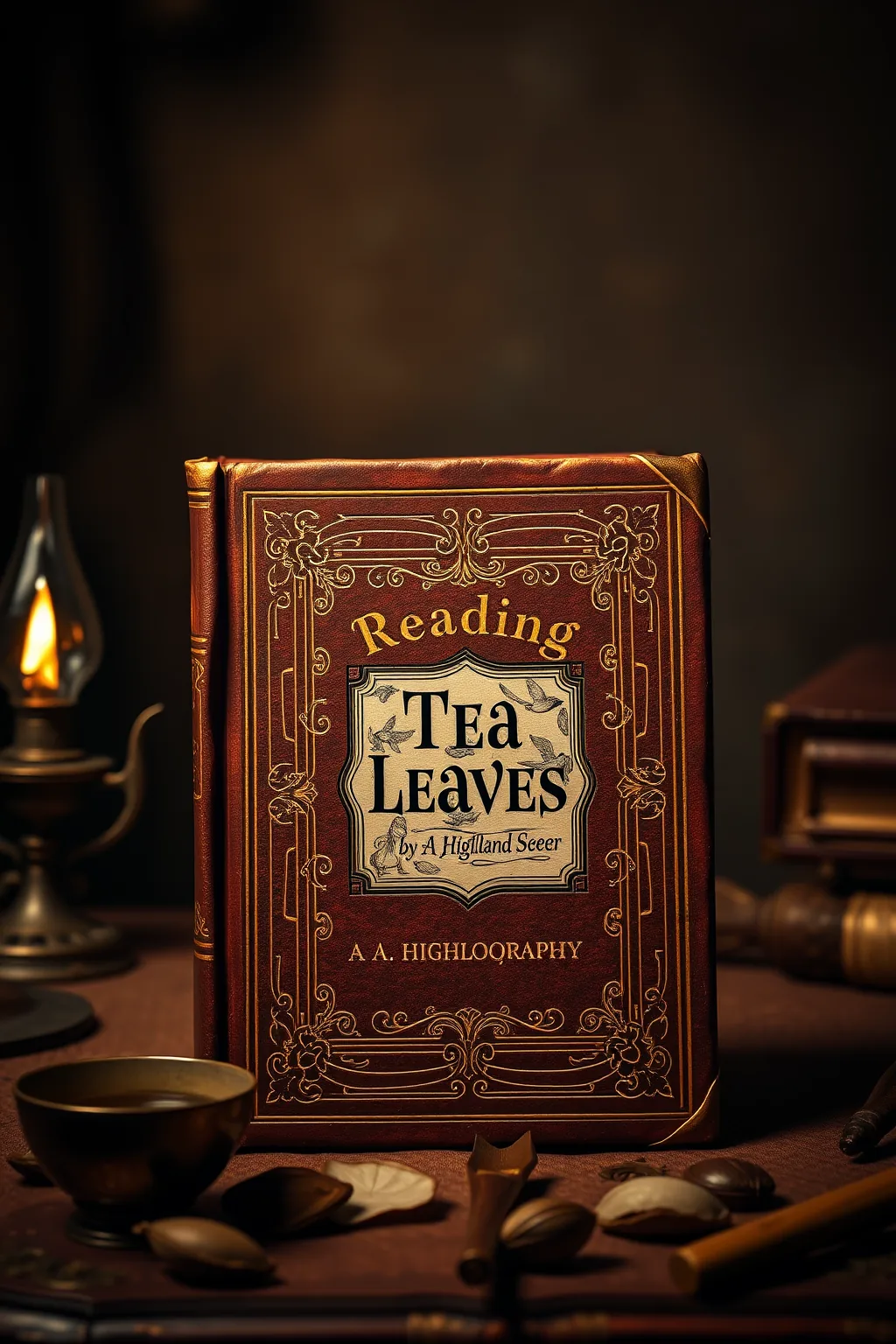
Reading Tea Leaves
 61
61

Reading Tea Leaves



Balthazar Finch, Senior Critic, Occult Philosophy: A. Highland Seer's 'Reading Tea Leaves' is a cornerstone for any serious student of esoteric divination. It transcends the superficial, offering a deeply philosophical exploration of tasseography. The author’s profound understanding of symbolic language and archetypal resonances shines through, providing practitioners with a robust framework for interpretation. Unlike superficial guides, this work encourages a meditative engagement with the process, fostering genuine intuitive development. It is an indispensable resource for both neophytes seeking authentic guidance and seasoned practitioners looking to deepen their practice with profound insights into the unseen currents of fate.
📝 Description
61
A. Highland Seer's 'Reading Tea Leaves' was first published in 1923, detailing the art of tasseography.
This book examines the practice of tasseography, the art of reading fortunes in tea leaves. The author, A. Highland Seer, guides readers through interpreting the patterns left behind in a teacup. Seer details how common shapes and formations correspond to specific meanings, ranging from personal matters to broader predictions. The text aims to transform the simple act of drinking tea into a method of divination. It encourages practitioners to develop their intuition and connect with subtle signs. The author presents tasseography not just as a predictive tool but as a way to understand deeper connections between the everyday and the metaphysical. The book seeks to show how ordinary moments can serve as oracles, offering insight and guidance.
Published in 1923, 'Reading Tea Leaves' arrived during a period of renewed interest in spiritualism and esoteric practices in the West. Tasseography itself has roots in various cultures, with evidence of fortune telling from tea leaves appearing in China centuries ago. This book fits within the broader category of divination arts, alongside practices like palmistry, tarot, and scrying. It aligns with the era's fascination with accessing hidden knowledge and understanding symbolic languages believed to communicate universal truths. Seer’s work contributes to the literature that sought to systematize and teach these often intuitive arts to a wider audience.
💡 Why Read This Book?
Unlock the ancient art of reading tea leaves and discover a path to intuitive wisdom. This book offers clear guidance, profound symbolic interpretations, and a meditative approach to divination. Ideal for spiritual seekers, students of occult arts, and anyone wishing to deepen their connection to the subtle energies of the universe. Transform your daily tea ritual into a powerful tool for self-discovery and foresight.
⭐ Reader Reviews
Honest opinions from readers who have explored this book.
❓ Frequently Asked Questions
What is Tasseography?
Tasseography, or tasseomancy, is the ancient practice of divining the future by interpreting the patterns left by tea leaves, coffee grounds, or wine sediment in a cup. It's a form of divination rooted in symbolic interpretation and intuition.
What kind of tea is best for reading?
While many teas can be used, black teas with fine leaves are traditionally preferred as they leave clearer patterns. The key is to ensure enough leaves remain in the cup for interpretation after consumption.
How do I prepare for a tea leaf reading?
Prepare by cleansing your space, focusing your intention, and asking a clear question. Drink the tea mindfully, then swirl the cup three times clockwise before inverting it to drain excess liquid.
What if the patterns are unclear?
Unclear patterns can signify confusion or a period of transition. They may also suggest that the answer to your question is not yet fully formed or revealed. Trust your intuition to interpret these ambiguities.
Is this book suitable for beginners?
Absolutely. 'Reading Tea Leaves' is crafted to guide both novice enthusiasts and experienced practitioners through the nuances of this ancient art, offering foundational knowledge and advanced insights alike.
🔮 Key Themes & Symbolism
The Language of Symbols
This book meticulously deciphers the rich lexicon of symbols found within tea leaves. From the serpentine grace of a snake representing transformation to the protective embrace of a circle, each form is imbued with layers of meaning. The text encourages a deep dive into the subconscious, where these archetypal images resonate, offering insights into personal challenges, opportunities, and the unfolding narrative of one's life. It emphasizes that understanding these visual metaphors is akin to learning a universal language spoken by the cosmos.
Intuitive Perception and Inner Sight
Beyond rote memorization of symbols, 'Reading Tea Leaves' champions the cultivation of intuitive perception. The author stresses that true divination arises not just from knowing meanings, but from feeling them. The practice encourages a meditative state, quieting the rational mind to allow the intuitive faculty to connect with the subtle energies present in the tea leaves. This focus on inner sight empowers the reader to develop their own unique interpretive abilities, fostering a personal relationship with the oracular art.
The Ritual of Transformation
The act of reading tea leaves is presented as a sacred ritual, a moment of communion between the individual and the unseen forces that guide existence. This ritual transcends mere fortune-telling; it is a process of self-reflection and spiritual engagement. The book guides the reader in transforming a simple daily habit into an opportunity for profound introspection and personal growth, highlighting how the patterns in the cup can mirror the patterns within the soul, offering guidance for navigating life's journey.
💬 Memorable Quotes
Direct passages from the work, attributed to the author.
“Seek not to command fate, but to understand its whispers.”
— This emphasizes the passive, receptive nature of true divination – it is about listening and understanding the subtle influences of destiny, rather than attempting to control or impose one's will upon it.
“Every swirl of the leaf is a question posed to the universe.”
— This highlights the interactive and inquiry-based nature of tea leaf reading, where the patterns formed are seen as responses or reflections of the questions held by the diviner.
“The truest visions bloom in the quietude of intention.”
— This points to the importance of a focused and meditative state for effective divination, suggesting that clarity and receptivity are essential for receiving meaningful insights.
“In the common leaf, the extraordinary is revealed.”
— This profound statement signifies the book's core message: that hidden knowledge and profound revelations can be found in the most ordinary of practices, transforming the mundane into the mystical.
💡 Key Ideas
Editorial paraphrase of the work's core concepts — not direct quotes.
The cup holds not just remnants of refreshment, but elements of destiny.
This quote underscores the profound potential of tea leaves to reveal insights beyond their physical form, suggesting they act as a mirror to the future and the unfolding paths of life.
🌙 Esoteric Significance
Tradition
Rooted in the broader tradition of scrying and interpretive divination, 'Reading Tea Leaves' aligns with practices that seek to unlock hidden knowledge through symbolic observation. It draws parallels with other forms of augury where natural formations are interpreted as divine messages. This practice emphasizes a connection to the elemental forces and the subtle energetic flows that govern existence, placing it within a lineage of mystical arts focused on understanding the divine will and personal destiny.
Symbolism
The symbolism within tasseography is vast and multi-layered, drawing from archetypal imagery that resonates across cultures and time. Symbols like animals (serpents for transformation, birds for messages), natural elements (mountains for challenges, water for emotions), and geometric shapes (circles for completion, lines for journeys) are interpreted through both universally recognized meanings and the individual's intuitive understanding. The book likely studies these symbolic languages, revealing how they act as a 'mirror' to the querent's inner state and outer circumstances.
Modern Relevance
In our modern, often hyper-rational world, 'Reading Tea Leaves' offers a vital counterpoint, encouraging a return to intuition, mindfulness, and the appreciation of subtle energies. It provides a tangible, accessible method for spiritual seekers to engage with divination, fostering self-awareness and personal insight. The ritualistic aspect can serve as a grounding practice, offering moments of pause and reflection. Furthermore, its emphasis on symbolic interpretation can enhance creative thinking and problem-solving by encouraging us to look beyond the obvious and embrace deeper, more nuanced understanding.
👥 Who Should Read This Book
This comprehensive guide is a treasure for a diverse audience. Aspiring practitioners and beginners will find a clear, step-by-step introduction to the art of tasseography, clarifying its core principles. Seasoned diviners and occult scholars will appreciate the depth of symbolic interpretation and the philosophical underpinnings presented, offering new perspectives to enhance their existing knowledge. Spiritual seekers looking for an accessible yet profound method of self-discovery and guidance will find a powerful tool for introspection. Ultimately, anyone drawn to the mysteries of divination and the wisdom held within everyday rituals will find 'Reading Tea Leaves' an indispensable companion.
📜 Historical Context
Emerging from a body of ancient divination practices that span cultures from the Middle East to Europe, the art of reading tea leaves gained significant traction in the 18th and 19th centuries, particularly in Victorian England. This era, fascinated by spiritualism and the occult, saw a surge in interest for methods that could offer solace, guidance, and a connection to the unseen during a time of rapid social and scientific change. 'Reading Tea Leaves' by A. Highland Seer likely emerged within this milieu, contributing to the popularization and systematization of tasseography. It tapped into a desire for personal agency and esoteric understanding in a world grappling with new ideas, positioning the simple act of enjoying tea as a gateway to profound, personal prophecy and a connection to timeless wisdom.
📔 Journal Prompts
What recurring symbols have I noticed in my tea leaves recently, and what might they signify in my current life situation?
How can I deepen my intuitive connection to the patterns in my tea cup, moving beyond memorized meanings?
Reflect on a recent challenge or decision; how might the symbols in your tea leaves offer guidance or perspective?
Consider the concept of 'destiny' as presented in the book. How does this understanding influence your approach to life's events?
How can the ritual of tea leaf reading be integrated more consistently into my daily or weekly spiritual practice for ongoing self-awareness?
🗂️ Glossary
Tasseography
The art or practice of divining the future by interpreting the patterns of tea leaves, coffee grounds, or wine sediment left in a cup after drinking.
Divination
The practice of seeking knowledge of the future or the unknown by supernatural means.
Symbolism
The use of symbols to represent ideas and qualities, conveying spiritual or other meanings.
Intuition
The ability to understand something immediately, without the need for conscious reasoning; a gut feeling or inner knowing.
Querent
The person for whom a divination reading is performed; the individual seeking insight or answers.
This book appears in 2 collections
🔮 Readers Also Liked
Browse all →








From the “Tea Leaf Reading” Collection
View all →


More Free Divination & Tarot Books
View all →