Celestial Configurations of Africa and the Caribbean
 78
78

Celestial Configurations of Africa and the Caribbean
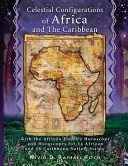
Fitch's "Celestial Configurations of Africa and the Caribbean" is a monumental undertaking, offering a data-rich astrological examination of 64 nations. Its strength lies in its sheer scope and meticulous documentation, drawing independence charts for each state to analyze planetary influences on their historical trajectories. The work is particularly commendable for extending astrological inquiry into regions often underrepresented in esoteric literature. However, the dense presentation, while admirable for its academic rigor, can occasionally obscure the broader narrative for readers less versed in astrological calculation. A striking example is the detailed analysis of Ghana's independence chart, linking specific planetary aspects to its post-colonial challenges. While the book provides an unparalleled resource for Mundane Astrology, its encyclopedic nature might benefit from more synthesized summaries of key findings. Nonetheless, it remains an indispensable reference for anyone studying the astrological underpinnings of global political events.
📝 Description
78
Published in 2012, Kevin David Fitch's book analyzes 64 African and Caribbean nations through astrological charts.
Kevin David Fitch's "Celestial Configurations of Africa and the Caribbean" presents a detailed astrological examination of 64 nations across Africa and the Caribbean. The author correlates astronomical events, specifically planetary cycles, with the historical and political circumstances surrounding each nation's independence. This method provides a distinct perspective on the socio-economic and political paths these regions have taken.
The volume is intended for students of Mundane Astrology, comparative political science, and African and Caribbean history. It will appeal to researchers looking for empirical connections between celestial movements and earthly events, as well as those interested in how astrological factors shape national identities and development. The work is especially useful for those who wish to consider astrological influences outside of Western traditions.
Fitch grounds his astrological calculations in the independence dates of each nation, a core element for Mundane Astrology. The book's 2012 publication date aligns with a recent increase in interest in astrological applications to global affairs. Fitch's work stands out for its broad geographic coverage, focusing on areas less frequently studied in traditional astrological texts.
This work fits within the tradition of Mundane Astrology, which applies astrological principles to the affairs of nations and large groups of people. By correlating independence dates with planetary positions, Fitch engages with a practice that seeks to understand collective destiny through celestial patterns. His focus on non-Western regions challenges the Eurocentric tendencies often found in astrological literature, situating his research within a broader, more inclusive application of astrological thought to global history and politics.
💡 Why Read This Book?
• Gain a unique perspective on national development by understanding how specific planetary cycles, such as those analyzed for Ghana's independence in 1957, may correlate with historical events and socio-economic trends. • Explore astrological interpretations beyond Western-centric frameworks, learning how celestial influences are applied to the diverse political histories of African and Caribbean states. • Access a rigorously documented study that meticulously calculates astrological charts based on precise independence dates, providing a factual basis for understanding the purported link between astronomical phenomena and national destinies.
⭐ Reader Reviews
Honest opinions from readers who have explored this book.
❓ Frequently Asked Questions
What astrological concepts does "Celestial Configurations of Africa and the Caribbean" focus on?
The book primarily focuses on planetary cycles and their conjunctions, oppositions, and other aspects as they relate to the astrological charts calculated from each nation's independence date.
How many nations are covered in Kevin David Fitch's study?
The study meticulously analyzes the celestial configurations for 64 African and Caribbean nations, offering a broad geographical scope.
What is the primary source for the astrological charts in the book?
The astrological charts are calculated based on the exact date and time of each nation-state's independence, serving as their political nativity or birth chart.
Is "Celestial Configurations of Africa and the Caribbean" suitable for beginners in astrology?
While the book is factually rich, its dense academic style and specialized focus on Mundane Astrology might be more suited for intermediate to advanced students and researchers.
What is Mundane Astrology as discussed in this book?
Mundane Astrology applies astrological principles to the affairs of nations, cities, and global events, correlating celestial movements with political, social, and economic conditions.
When was "Celestial Configurations of Africa and the Caribbean" first published?
The book was first published in 2012, making it a relatively recent contribution to the field of Mundane Astrology.
🔮 Key Themes & Symbolism
Planetary Cycles and National Destiny
The core of Fitch's work lies in the hypothesis that planetary cycles directly influence the socio-political and economic fates of nations. By calculating astrological charts based on independence dates—such as Ghana's in 1957—the book posits that the precise celestial alignments at a nation's 'birth' dictate its subsequent historical narrative and challenges. This theme explores how specific planetary movements and aspects are interpreted as having tangible effects on national development, governance, and collective well-being.
African and Caribbean Political Astrology
This study significantly expands the scope of Mundane Astrology by focusing on 64 African and Caribbean states, regions often underrepresented in traditional astrological literature. It examines how astrological principles can be applied to diverse historical contexts, from colonial legacies to post-independence struggles. The work challenges a Eurocentric view of astrology by demonstrating its potential relevance to the unique political and cultural landscapes of these continents and islands.
Independence Charts as Political Nativity
Fitch utilizes the independence date of each nation as its definitive astrological nativity. This concept treats the moment a nation achieves sovereignty as its symbolic birth, around which an astrological chart is cast. The book systematically analyzes these charts, looking for correlations between planetary positions and significant historical events, political shifts, and economic conditions experienced by nations like Jamaica or Nigeria post-independence.
Empirical Research in Mundane Astrology
The book distinguishes itself through its rigorous, data-driven approach. Fitch meticulously documents his research, referencing astronomical ephemerides and historical records to support his analyses. This emphasis on verifiable facts and extensive footnoting elevates the study beyond speculative astrology, aiming for a more scientific or empirical understanding of celestial influences on global affairs and national trajectories.
💬 Memorable Quotes
Direct passages from the work, attributed to the author.
“The astrological charts are calculated based on the independence times for each nation-state.”
— This statement highlights the foundational methodology of the book, emphasizing that each nation's political nativity is derived from its specific moment of sovereignty, a key tenet in Mundane Astrology.
“Planetary cycles and their confluence with the political, social, and economic life of these nations.”
— This captures the central thesis: that astronomical movements are not isolated phenomena but are intrinsically linked to, and influence, the tangible realities of national existence and development.
“An encyclopedia of Mundane Astrology.”
— This description suggests the book's comprehensive nature and its role as a definitive reference work for the sub-discipline of Mundane Astrology, covering a vast array of nations.
“Originally researched and carefully documented study of astronomic events in-confluence with historical and political conditions.”
— This emphasizes the scholarly rigor and originality of Fitch's work, positioning it as a serious investigation rather than mere conjecture.
“Focuses on planetary cycles and their confluence with the political, social, and economic life.”
— This reiterates the book's core focus, stressing the interconnectedness between celestial mechanics and the lived experiences of nations and their populations.
🌙 Esoteric Significance
Tradition
This work fits within the broader tradition of Mundane Astrology, a branch of the art concerned with the affairs of nations, states, and global events. It draws upon the foundational principles of Hellenistic and later European astrological systems but applies them to a contemporary and geographically specific context. While not strictly tied to a single lineage like Hermeticism or Kabbalah, it utilizes the symbolic language and calculational methods common across Western esoteric traditions to interpret terrestrial events.
Symbolism
The primary symbols are the planets themselves (e.g., Mars for conflict, Jupiter for expansion, Saturn for restriction) and their configurations within the zodiacal wheel at the moment of a nation's independence. The 'independence chart' itself acts as a potent symbol, representing the political nativity or birth moment of a nation-state, from which its subsequent character and destiny are astrologically inferred. The conjunctions, oppositions, and other aspects between these celestial bodies are imbued with meaning related to national fortunes.
Modern Relevance
Contemporary practitioners of Mundane Astrology and comparative political scientists interested in non-traditional analytical frameworks find significant value in Fitch's meticulous research. Thinkers exploring post-colonial studies through esoteric lenses, or those seeking to decolonize astrological interpretation by applying it to diverse global contexts, draw upon this work. It serves as a vital resource for understanding how astrological symbolism can be adapted to analyze the unique historical trajectories of African and Caribbean nations beyond 2012.
👥 Who Should Read This Book
• Students of Mundane Astrology seeking a comprehensive, data-driven analysis of non-Western national charts. • Historians and political scientists interested in alternative frameworks for understanding national development and historical events in Africa and the Caribbean. • Esoteric practitioners aiming to broaden their understanding of astrological applications beyond individual horoscopes to geopolitical contexts.
📜 Historical Context
Published in 2012, Kevin David Fitch's "Celestial Configurations of Africa and the Caribbean" emerged during a period of renewed academic and public interest in astrology's application to global affairs, often termed Mundane Astrology. This resurgence built upon earlier 20th-century foundational works that explored similar correlations, though Fitch's contribution stands out for its outstanding geographic focus on 64 African and Caribbean nations. His work can be seen as a direct engagement with the tradition of astrological history-writing, offering empirical data and detailed chart analyses for regions frequently overlooked in earlier, more Western-centric astrological studies. While contemporary astrological thought might debate deterministic interpretations, Fitch's meticulously referenced approach aligns with a growing desire for evidence-based esotericism. The book's reception likely appealed to scholars and practitioners seeking to broaden astrological inquiry beyond its traditional confines, challenging purely symbolic interpretations with data derived from specific historical events like the independence of nations in the mid-20th century.
📔 Journal Prompts
Ghana's independence chart and its post-colonial trajectory.
The influence of Saturn in the national nativity of a Caribbean state.
Comparing the astrological approach to political analysis with conventional methods.
The symbolic meaning of planetary cycles at the moment of national sovereignty.
African nations' celestial configurations and their representation in the book.
🗂️ Glossary
Mundane Astrology
A branch of astrology that deals with the affairs of nations, cities, international relations, and global events, as opposed to individual horoscopes.
Independence Chart
An astrological chart cast for the specific date and time a nation gained its political independence, considered its political nativity or birth chart.
Planetary Cycles
The regular, predictable movements of planets in their orbits around the Sun, which astrologers believe influence terrestrial events and human affairs.
Confluence
In this context, the simultaneous occurrence or alignment of astronomical events with historical, political, social, or economic conditions.
Nativity
An astrological chart cast for the moment of a person's birth, or, in Mundane Astrology, for the birth or founding moment of a nation or entity.
Aspects
The angular relationships between celestial bodies in an astrological chart, such as conjunctions (0°), oppositions (180°), and squares (90°), each carrying specific symbolic interpretations.
Political Astrology
Often used interchangeably with Mundane Astrology, this field applies astrological principles to the study of politics, governance, and national affairs.
This book appears in 1 collection
🔮 Readers Also Liked
Browse all →









From the “Mundane Astrology” Collection
View all →







More Free Astrology & Cosmology Books
View all →