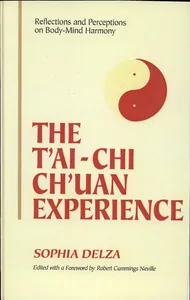
The Analects of Confucius

 79
79

The Analects of Confucius
Arthur Waley's rendition of The Analects, first appearing in 1938, offers a stark departure from earlier, commentary-laden translations. Its strength lies in its deliberate attempt to excise the medieval interpretations that had accrued around Confucius's words, presenting the sayings more directly. Waley’s prose is clear, allowing the aphoristic nature of the text to shine. For instance, the repeated emphasis on *Ren* (benevolence) and *Li* (propriety) feels immediate, stripped of centuries of philosophical debate. However, this very directness can sometimes feel stark, lacking the layered exposition that later traditions provide. While Waley succeeds in isolating the fifth-century BCE voice, the absence of context, however intentional, can leave a reader unfamiliar with the broader Confucian tradition wanting more interpretive depth. The limitation is not in the translation itself, but in the reader's potential lack of a guide through the philosophical landscape Waley intentionally simplifies. It is a valuable, albeit unadorned, encounter with ancient wisdom.
📝 Description
79
Arthur Waley's 1938 translation of The Analects of Confucius presents the philosopher's sayings directly, bypassing later commentary.
The Analects of Confucius is a collection of sayings and dialogues attributed to Confucius and his followers, compiled after his death. Arthur Waley's 1938 translation aimed to present these teachings without the overlay of later scholastic interpretations. Confucius lived from 551 to 479 BCE, a period of considerable social and political change in China. His philosophy centered on moral self-cultivation, the importance of ritual, and effective governance as paths to social harmony.
This edition focuses on the original intent of Confucius's teachings from the 5th century BCE. It is valuable for students of ancient philosophy, comparative religion, and political thought. Readers interested in the historical development of Confucianism and those who prefer translations that seek to reveal the text's immediate context will find Waley's approach useful. The work engages with core Confucian concepts, offering insights into the ethical foundations that influenced East Asian thought for centuries.
While not typically categorized as esoteric in the Western sense, Confucianism, as presented in The Analects, offers a path of inner cultivation and ethical discipline that resonates with esoteric traditions focused on self-transformation. The emphasis on becoming a 'junzi' or noble person through disciplined practice and adherence to 'li' (propriety and ritual) mirrors practices found in various mystical or philosophical systems. The text provides a framework for understanding social order through individual moral development, a concept that can be seen as a form of applied esoteric knowledge aimed at harmonizing the self with the social and cosmic order.
💡 Why Read This Book?
• Gain a direct appreciation for the foundational ethical principles of *Ren* (benevolence) and *Li* (propriety) as articulated in the 5th century BCE, bypassing later Neo-Confucian interpretations. • Understand Confucius's concept of the *Junzi* (noble person) as a model for personal cultivation and ethical leadership, directly from the source material. • Engage with the intellectual currents of the Spring and Autumn period through Waley's 1938 translation, which specifically sought to recover the philosopher's original voice.
⭐ Reader Reviews
Honest opinions from readers who have explored this book.
❓ Frequently Asked Questions
What is the significance of Arthur Waley's translation of The Analects?
Arthur Waley's 1938 translation is significant for its attempt to detach Confucius's sayings from subsequent scholastic interpretations, aiming to present the philosopher's original ideas from the 5th century BCE more directly.
When did Confucius live and what historical period was this?
Confucius lived from 551 to 479 BCE during China's Spring and Autumn period, a time of significant social and political change.
What does the concept of 'Ren' mean in The Analects?
'Ren' (仁) is a central concept, often translated as benevolence, humanity, or goodness, representing the ideal moral quality in Confucian ethics.
What is 'Li' according to The Analects?
'Li' (禮) refers to rites, ceremonies, social etiquette, and propriety, which Confucius believed were essential for maintaining social order and harmony.
Who is the 'Junzi' in Confucian philosophy?
The 'Junzi' (君子) is the ideal person or 'noble person' in Confucianism, characterized by moral cultivation, ethical conduct, and a commitment to righteousness.
Why does Waley's translation differ from medieval interpretations?
Waley's translation aims to reflect the philosophy of the 5th century BCE, rather than the 12th century AD, by removing the layers of interpretation that had accumulated over centuries.
🔮 Key Themes & Symbolism
Moral Cultivation and Self-Improvement
The Analects places immense value on the continuous process of self-cultivation. The ideal of the *Junzi* (noble person) is not innate but achieved through diligent study, ethical reflection, and the consistent practice of virtues like *Ren* (benevolence) and *Yi* (righteousness). This focus on personal growth as the bedrock of societal well-being offers a timeless framework for ethical development, emphasizing that individual transformation is the precursor to collective harmony and effective governance.
The Role of Ritual and Propriety
Central to Confucian thought is *Li* (禮), encompassing rites, ceremonies, social norms, and proper conduct. The Analects argues that *Li* provides the structure necessary for social order and moral expression. It is not merely superficial etiquette but a means of cultivating respect, sincerity, and social harmony. By adhering to established rituals and demonstrating proper deference, individuals learn to navigate social relationships ethically, fostering a stable and respectful community grounded in shared understanding and practice.
Ethical Governance and Leadership
Confucius offered a vision of governance centered on the moral character of the ruler and officials. The Analects emphasizes that a leader's primary duty is to govern through virtue and example, rather than coercion or strict laws. By embodying *Ren* and leading with integrity, a ruler inspires righteousness in the populace, creating a more effective and harmonious state. This principle suggests that true leadership stems from moral authority and a deep commitment to the welfare of the people.
The Importance of Education and Learning
Education is portrayed as a lifelong pursuit essential for moral development and the attainment of wisdom. The Analects stresses that learning should be active and reflective, involving the assimilation of knowledge and its application to ethical conduct. Confucius advocated for studying the past, particularly the wisdom of ancient sages, as a means to understand present challenges and cultivate virtuous character. This emphasis underscores the transformative power of knowledge when coupled with ethical practice.
💬 Memorable Quotes
Direct passages from the work, attributed to the author.
“Interpretation: The Master said, 'Learning without thought is labor lost; thought without learning is perilous.'”
— This aphorism highlights the balanced approach Confucius advocated for intellectual and moral development. True understanding requires both the acquisition of knowledge through study and the critical reflection upon that knowledge to integrate it meaningfully.
“Interpretation: The Master said, 'Do not worry about not being in office; worry about your qualifications for office. Do not worry about not being known; seek to be worthy of recognition.'”
— This emphasizes inner worth over external validation. Confucius encouraged individuals to focus on self-improvement and developing their character and skills, rather than seeking fame or position.
“Interpretation: The Master said, 'To learn and then have occasion to practice what you have learned—is this not a pleasure?'”
— This expresses the joy derived from effective learning and application. It suggests that the true reward of education lies not just in acquiring knowledge, but in the ability to use it wisely and effectively in practice.
“Interpretation: The Master said, 'When you meet good people, think of becoming their equal. When you meet bad people, look within and examine yourself.'”
— This points to the value of social interaction as a catalyst for self-reflection and moral progress. Encounters with others serve as opportunities for both inspiration and critical self-assessment.
“Interpretation: The Master said, 'The superior man is modest in his speech, but exceeds in his actions.'”
— This highlights the Confucian ideal of action speaking louder than words. True virtue is demonstrated through consistent, impactful deeds, rather than boastful pronouncements or empty promises.
🌙 Esoteric Significance
Tradition
While not directly aligned with Western esoteric traditions like Hermeticism or Kabbalah, The Analects offers a profound ethical and philosophical system that shares common ground with many spiritual paths. Its emphasis on self-cultivation, moral rectitude, and the cultivation of inner virtue can be seen as analogous to practices found in various contemplative traditions aiming for spiritual refinement and alignment with a higher order or universal principle.
Symbolism
The concept of the *Junzi* (君子), the 'noble person,' functions as a potent symbol of achieved ethical perfection and balanced character. Similarly, *Ren* (仁), benevolence or humanity, symbolizes the ideal state of interconnectedness and empathy that Confucius believed should guide all human interactions. The emphasis on *Li* (禮), ritual and propriety, symbolizes the structured expression of virtue and respect essential for social harmony.
Modern Relevance
Contemporary thinkers and practitioners in fields ranging from ethics and political philosophy to psychology and business leadership continue to draw upon Confucian principles. The emphasis on character-based ethics, the importance of social harmony, and the ideal of virtuous leadership remain relevant. Schools of thought focusing on virtue ethics, and discussions on moral leadership in global contexts, often find resonance with the enduring wisdom presented in The Analects.
👥 Who Should Read This Book
• Students of comparative philosophy and Eastern thought seeking foundational texts that shaped global ethics. • Individuals interested in ancient Chinese history and the intellectual responses to periods of social upheaval. • Practitioners of ethical disciplines and those exploring models of virtuous leadership and personal development.
📜 Historical Context
Confucius (551-479 BCE) emerged during China's Spring and Autumn period, a time of intense political fragmentation and intellectual ferment. Against this backdrop of feudal warfare and shifting alliances, Confucius championed a vision of social order rooted in ethics, ritual, and good governance. His teachings, compiled in The Analects, were a response to the perceived moral decay of the era. Arthur Waley's translation, first published in 1938, deliberately sought to bypass the Neo-Confucian interpretations that had dominated Chinese thought for centuries, particularly those from the Song Dynasty (960-1279 CE). Waley aimed to present the text as it might have been understood in the 5th century BCE, free from the scholasticism of later thinkers like Zhu Xi. This approach placed Waley's work within a scholarly tradition of critical philology, seeking to recover the historical voice of ancient texts, and offered a distinct perspective compared to contemporary translations focused on philosophical systematization.
📔 Journal Prompts
The practice of *Ren* (benevolence) in daily interactions.
Reflecting on the balance between learning and thought as articulated by Confucius.
The role of *Li* (propriety) in fostering social harmony.
Defining personal qualifications for leadership or significant roles.
Identifying opportunities for self-examination inspired by encounters with others.
🗂️ Glossary
Ren (仁)
A core Confucian virtue, often translated as benevolence, humanity, goodness, or humaneness. It represents the ideal moral quality of a person and the essence of ethical relationships.
Li (禮)
Encompasses rites, ceremonies, social etiquette, customs, and propriety. Confucius considered Li essential for maintaining social order, cultivating virtue, and expressing respect.
Junzi (君子)
Literally 'son of a ruler,' but translated as the 'noble person,' 'superior person,' or 'exemplary person.' It represents the ideal of moral cultivation and ethical perfection.
Yi (義)
Righteousness or justice. It refers to doing what is morally right and appropriate in a given situation, often contrasted with personal profit or expediency.
Xiao (孝)
Filial piety, the virtue of respect for one's parents, elders, and ancestors. It is a core part of Confucian ethics and social order.
Spring and Autumn period
A period in ancient Chinese history (c. 771–476 BCE) characterized by political fragmentation, warfare between states, and significant intellectual development, during which Confucius lived.
Scholastic interpretation
Interpretations of classical texts developed by scholars over time, which can sometimes become entrenched and potentially obscure the original meaning, as argued by Waley regarding medieval interpretations of The Analects.
This book appears in 1 collection
🔮 Readers Also Liked
Browse all →









From the “Confucianism” Collection
View all →





More Free Occult Philosophy Books
View all →