Tarot Magic
 77
77

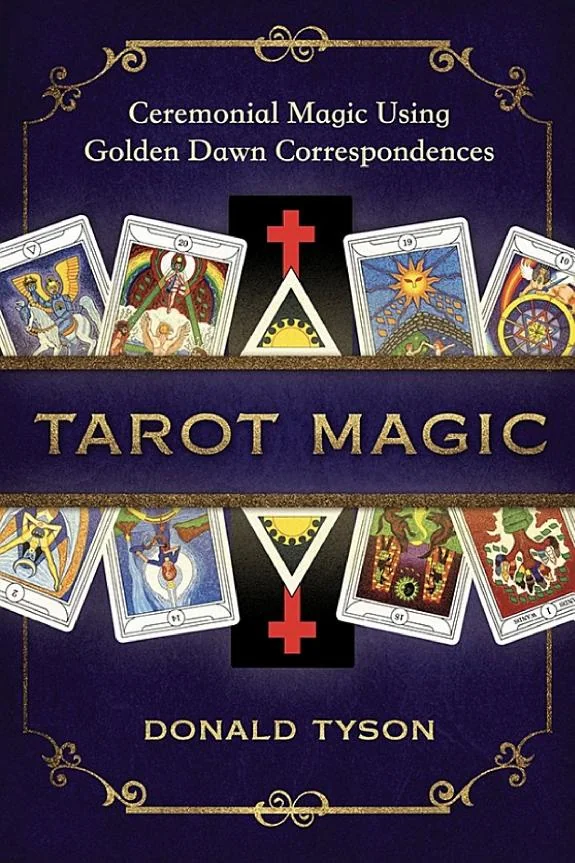
Tarot Magic
Donald Tyson's "Tarot Magic" tackles a bold proposition: reducing complex ceremonial magic to the manipulation of a 78-card deck. The strength of this work lies in its ingenious simplification. Tyson skillfully draws parallels between the visual lexicon of tarot, particularly as understood through the Golden Dawn tradition, and the fundamental elements of ritual. His explanation of how to project awareness into the astral via card imagery is particularly compelling, offering a tangible method for those intimidated by more traditional approaches. However, the book's efficiency, while a virtue, sometimes borders on oversimplification. For instance, the detailed correspondences and attributions within the Golden Dawn system, which Tyson abbreviates, are crucial for many practitioners and might feel glossed over here. A specific passage detailing the use of the Ace of Wands to invoke elemental fire feels both innovative and perhaps a touch too direct for those deeply versed in the nuances of Rosicrucian symbolism. Ultimately, "Tarot Magic" provides a practical, albeit streamlined, pathway into ritual work for the modern magician.
📝 Description
77
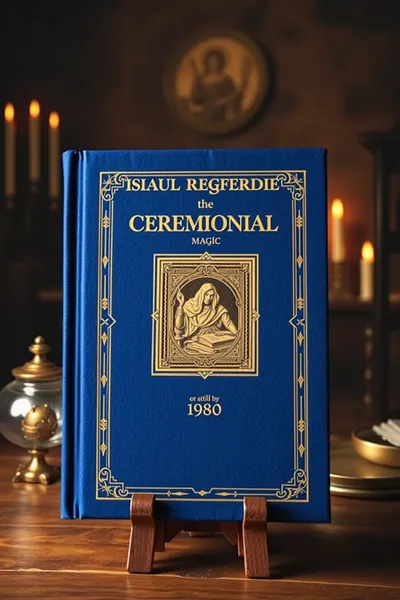
Donald Tyson's 2025 book, Tarot Magic, argues a standard tarot deck can perform complex ceremonial magic.
Donald Tyson's "Tarot Magic," published in 2025, proposes that a standard 78-card tarot deck is sufficient for performing ceremonial magic. Tyson asserts that the inherent correspondences within tarot imagery, particularly those aligned with the Golden Dawn tradition, act as a direct conduit for astral manipulation. The book advocates for a streamlined approach, suggesting that the visual and symbolic language of the cards can replace elaborate paraphernalia. This makes potent ritual accessible with minimal external tools. The work is intended for practitioners who wish to simplify their magical practice without sacrificing effectiveness. It will appeal to those interested in the Golden Dawn system seeking a more portable or less resource-intensive method of ritual. Individuals curious about the intersection of tarot symbolism and practical magic, especially those finding traditional ceremonial setups cumbersome, will find Tyson's method particularly relevant. It provides a way to engage with elemental forces and create charms using a universally recognized tool.
Donald Tyson's "Tarot Magic" emerges within an era of re-examining and synthesizing esoteric traditions. While the book draws from the Golden Dawn, a late 19th-century order that blended Kabbalah, Hermeticism, and Rosicrucianism, it significantly departs from the tradition's complex ceremonial requirements. The Golden Dawn was instrumental in reviving Western esotericism. Tyson's work distills this framework into a single, symbolic system, adapting its principles for contemporary practitioners by focusing on the tarot deck as a primary magical instrument.
💡 Why Read This Book?
• Learn a simplified ritual system based on the Golden Dawn tradition, using only a tarot deck for invoking elemental forces and creating charms, as detailed in "Tarot Magic" (2025). • Discover how to project your consciousness into the astral plane by utilizing the symbolic language and imagery inherent in a standard 78-card tarot deck. • Gain practical techniques for crafting potent charms and manipulating natural forces, bypassing the need for traditional ceremonial tools and paraphernalia.
⭐ Reader Reviews
Honest opinions from readers who have explored this book.
❓ Frequently Asked Questions
What makes Donald Tyson's approach to tarot magic different from traditional methods?
Tyson's "Tarot Magic" eliminates the need for robes, incense, candles, and oils. It proposes that a standard 78-card tarot deck, with its rich symbolism aligned to traditions like the Golden Dawn, is sufficient for performing complex ceremonial magic on the astral level.
Can beginners use "Tarot Magic" even if they have no prior ceremonial experience?
Yes, the book is designed for accessibility. By focusing on the tarot deck as the sole tool, Tyson makes ritual practice more approachable, particularly for those new to esoteric disciplines or finding traditional setups daunting.
What is the historical lineage of the magic described in "Tarot Magic"?
The system is based on the Golden Dawn tradition, a significant esoteric order influential in the late 19th and early 20th centuries. Tyson adapts its principles for a simplified, tarot-centric practice.
How does the book explain working magic on the astral level?
Tyson teaches practitioners to project their awareness into the ritual space created by tarot imagery. The cards serve as focal points and symbolic representations, allowing for manipulation of energies and forces.
Is a specific type of tarot deck required for "Tarot Magic"?
The book specifies that a standard 78-card deck is sufficient. The emphasis is on the inherent correspondences within the tarot imagery, suggesting most widely available decks will function effectively.
What kinds of magical operations can be performed with this method?
The book outlines methods for manipulating elemental forces of nature and creating potent charms. Essentially, any ceremonial ritual that traditionally requires specific tools can be adapted using the tarot deck.
🔮 Key Themes & Symbolism
Tarot as Sole Ritual Tool
This core concept revolutionizes traditional magical practice. Donald Tyson argues that the 78 cards of a standard tarot deck possess sufficient symbolic depth and inherent correspondences to replace the elaborate paraphernalia typically associated with ceremonial magic. From elemental invocations to the crafting of charms, the book demonstrates how each card can function as a sigil, an altar, or a conduit for specific energies, making potent ritual accessible with a single, portable tool.
Astral Projection via Tarot Imagery
Tyson presents a method for engaging with the astral plane by using tarot cards as gateways. The process involves projecting one's awareness into the visualized space evoked by the card's artwork and symbolism. This technique allows practitioners to conduct magical operations on a subtler level, influencing the astral realm through focused intent and the symbolic language of the cards, as outlined in his 2025 publication.
Golden Dawn System Adaptation
The magical framework in "Tarot Magic" is explicitly rooted in the Golden Dawn tradition, a highly influential esoteric order. Tyson adapts its complex system of correspondences, elemental attributions, and symbolic language into a more streamlined format. This adaptation makes the powerful techniques of the Golden Dawn accessible to a wider audience, particularly those who may find the original order's extensive rituals and requirements challenging to implement.
Elemental Force Manipulation
A significant application of this tarot-based magic involves the direct manipulation of elemental forces – Earth, Air, Fire, and Water. The book provides techniques for using specific tarot cards, like the Ace of Wands for Fire or the Ace of Cups for Water, as focal points to invoke, direct, and work with these fundamental energies for magical purposes. This offers a tangible way to interact with the natural world through symbolic representation.
💬 Memorable Quotes
Direct passages from the work, attributed to the author.
“All ceremonial rituals can be performed with a standard 78-card deck.”
— This statement expresses the book's central thesis: that the tarot is a self-contained system for ritual magic, capable of replacing traditional tools and complex setups, thereby democratizing esoteric practice.
“Tyson's efficient system of tarot magic is based on the Golden Dawn tradition.”
— This highlights the book's methodological foundation, grounding its innovative approach in a historically significant and complex magical system, while emphasizing its streamlined nature.
“He teaches how to work magic on the astral level by projecting one's awareness into the ritual.”
— This points to a key technique within the book, focusing on the internal, psychological, and energetic aspects of magic, using the tarot as a vehicle for consciousness expansion and manipulation.
“Say goodbye to ceremonial robes, incense, candles, and oils.”
— This provocative opening suggests a radical simplification of magical practice, appealing to those who find traditional methods elaborate or inaccessible, and setting the stage for the tarot-centric approach.
“From manipulating elemental forces of nature to making potent charms, all ceremonial rituals can be performed with a standard 78-card deck.”
— This expands on the book's core promise, illustrating the breadth of magical applications possible through tarot, from broad elemental work to specific charm creation, reinforcing its practical utility.
🌙 Esoteric Significance
Tradition
This work is deeply situated within the Western Esoteric Tradition, specifically drawing from the Hermetic and Kabbalistic frameworks popularized by the Hermetic Order of the Golden Dawn. Tyson adapts the Golden Dawn's intricate system of correspondences, which links tarot imagery to elements, planets, Hebrew letters, and divine names, presenting it as a self-sufficient magical system. It departs from strict Golden Dawn practice by advocating for the tarot deck itself as the complete ceremonial apparatus, simplifying the execution of rituals within this lineage.
Symbolism
The key symbols leveraged are the Major and Minor Arcana of the tarot deck. Each card, from the Fool to the World, and the suits of Wands, Cups, Swords, and Pentacles, is presented not just for divination but as a potent symbol embodying specific elemental forces, psychological states, or magical intentions. For instance, the Aces are treated as primary conduits for their respective elements, and the court cards as archetypal personalities or agents within a magical operation, aligning with Golden Dawn attributions.
Modern Relevance
In contemporary esoteric circles, "Tarot Magic" appeals to practitioners seeking efficient, portable, and modern applications of established magical systems. Thinkers and practitioners focused on minimalist magic, psychological astrology, or simplified ritual practices, such as those found in some modern Wiccan or Chaos Magic circles, might find Tyson's approach appealing. Its emphasis on internal visualization and symbolic power aligns with current trends in consciousness studies and applied esotericism.
👥 Who Should Read This Book
['• Practicing magicians familiar with the Golden Dawn tradition seeking to simplify their ritual toolkit and explore tarot-centric workings.', '• Students of esoteric symbolism interested in applying tarot imagery to active magical operations beyond divination.', '• Individuals seeking practical, portable methods for ritual magic who find traditional ceremonial setups resource-intensive or impractical for daily life.']
📜 Historical Context
Donald Tyson's "Tarot Magic," published in 2025, enters a range of esoteric literature that has seen a resurgence of interest in foundational magical systems like the Hermetic Order of the Golden Dawn. The Golden Dawn, established in London in 1888 by William Wynn Westcott, Samuel Liddell MacGregor Mathers, and William Robert Woodman, aimed to synthesize various esoteric traditions, including Kabbalah, Hermeticism, and Rosicrucianism, into a structured magical curriculum. Tyson’s work represents a significant departure from the Golden Dawn’s notoriously elaborate ceremonial requirements, which often involved specific temple setups, ritual tools, and extensive preparatory work. While contemporaries like Aleister Crowley, who was himself a member of the Golden Dawn before forging his own path with Thelema, explored the outer reaches of ceremonial magic, Tyson’s focus is on distillation and accessibility. "Tarot Magic" offers a practical counterpoint to the historical emphasis on complex ritual apparatus, suggesting that the symbolic core of the tarot, particularly as interpreted through Golden Dawn correspondences, can achieve similar ends with far fewer external resources.
📔 Journal Prompts
Reflect on the Ace of Wands as a conduit for elemental Fire, considering its symbolic representation in your own ritual context.
Consider the implications of using the tarot deck as your sole magical tool; what rituals could you adapt?
How does projecting awareness into tarot imagery, as Tyson describes, differ from traditional visualization techniques?
Analyze the correspondences between a specific Major Arcana card (e.g., The Magician) and its potential use in elemental manipulation.
Explore the concept of 'Symbolic Substitution' in your own magical practice using a chosen tarot card.
🗂️ Glossary
Astral Level
Refers to the plane of existence distinct from the physical, often associated with consciousness, thought-forms, and subtle energies. Magic performed on the astral level influences these non-physical realms.
Ceremonial Magic
A structured form of magic involving specific rituals, tools, and symbolic actions, often derived from ancient traditions like Hermeticism or Kabbalah, intended to invoke forces or effect change.
Golden Dawn Tradition
A magical order founded in late 19th-century Britain, influential in Western esotericism, known for its systematic approach to ritual, Kabbalah, tarot, astrology, and elemental magic.
Elemental Forces
The fundamental energies of nature as traditionally understood in esoteric systems: Earth, Air, Fire, and Water, each associated with specific qualities and correspondences.
Potent Charms
Magical objects or talismans imbued with specific energies or intentions, designed to attract, protect, or influence a person, situation, or outcome.
Symbolic Substitution
The practice of using one symbol or object to represent another in magical workings, allowing for flexibility and adaptation when specific tools are unavailable.
Tarot Correspondences
The system of symbolic associations linking tarot cards to other esoteric elements like planets, zodiac signs, Hebrew letters, or divine names, crucial for ritual application.
This book appears in 1 collection
🔮 Readers Also Liked
Browse all →

From the “Golden Dawn” Collection
View all →

More Free Occult Philosophy Books
View all →