Confucianism
 74
74

Confucianism
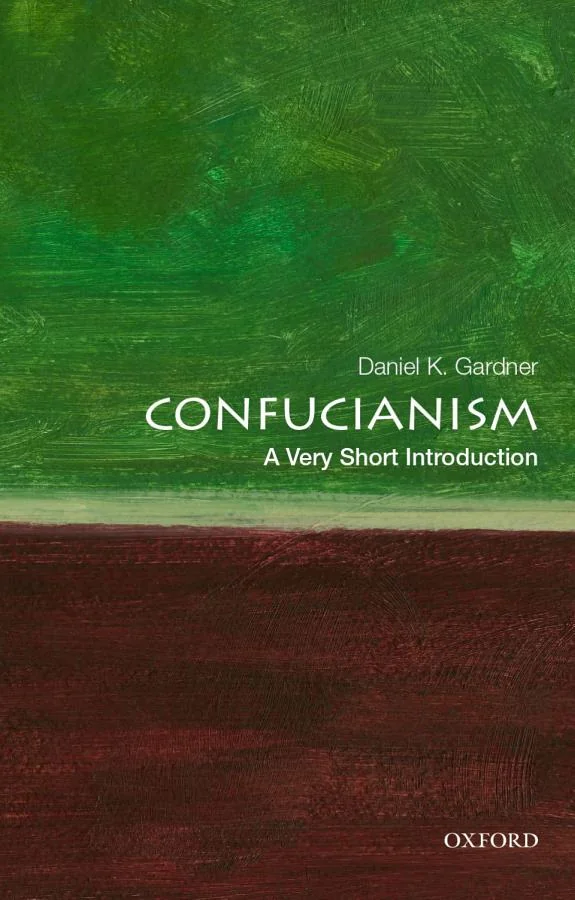
Daniel K. Gardner’s study of Confucianism provides a sober, detailed account of its pervasive influence and eventual crisis. The work's signal strength lies in its meticulous tracing of how the Sage’s doctrines were implemented, from the examination system’s mechanics to the structuring of family life. Gardner avoids hagiography, critically assessing the tradition's adaptation and resistance to Western modernity in the 19th and 20th centuries.
One limitation is the occasionally dry prose, which can obscure the profound human drama of Confucianism's decline. However, the chapter detailing the debates among intellectuals grappling with Western thought offers a particularly lucid depiction of this intellectual struggle. The exploration of how *Ren* (benevolence) was interpreted and applied, or failed to be, in specific historical moments is compelling.
Read more ↓
Ultimately, Gardner delivers a solid, scholarly overview that clarifies the deep-seated role of Confucianism in shaping Chinese civilization.
📝 Description
74
Daniel K. Gardner's 2007 book examines Confucianism's historical role and its 19th and 20th-century transformations.
Daniel K. Gardner's study traces the historical trajectory and societal impact of Confucianism in China. The book details how Confucius's teachings influenced state ideology, the civil service examination system, imperial administration, and the fundamental structures of family and social life. It also addresses the challenges and changes the tradition faced during the 19th and 20th centuries.
Gardner places Confucianism within the larger currents of Chinese history, from its early development to its critical encounters with modernity. The analysis covers the pressures from Western and Japanese powers in the 19th and 20th centuries, a time of significant debate among Chinese intellectuals. Some scholars worked to adapt Confucian ideas for current needs, while others argued for full adoption of Western models.
While often understood as a mainstream philosophy, Confucianism's deep integration into the fabric of Chinese governance and social order, particularly its role in shaping intellectual and bureaucratic elites, lends it an esoteric dimension. Gardner's work reveals how the systematic study and application of its core principles, such as *Ren*, *Li*, and *Xiao*, created a specific intellectual framework that governed imperial China. The tradition's evolution and its confrontations with Western thought in the modern era highlight the complex, often hidden, systems of belief and practice that sustained a civilization for centuries.
💡 Why Read This Book?
• Gain a nuanced understanding of how Confucian principles like *Ren* (benevolence) structured Chinese governance and social life, moving beyond simplistic interpretations. • Analyze the intellectual responses to Westernization in the 19th and 20th centuries, focusing on specific reformist and rejectionist arguments presented by Chinese intellectuals. • Appreciate the historical trajectory of the civil service examination system, understanding its foundation in Confucian texts and its eventual obsolescence.
⭐ Reader Reviews
Honest opinions from readers who have explored this book.
❓ Frequently Asked Questions
What is the primary focus of Daniel K. Gardner's book on Confucianism?
The book primarily focuses on the extensive influence of Confucian teachings on Chinese history, encompassing state ideology, governance, and social relations, and its subsequent challenges during the 19th and 20th centuries.
How does the book address the impact of Westernization on Confucianism?
It details how Chinese intellectuals in the 19th and 20th centuries debated Confucianism's relevance, with some attempting reforms and others advocating for Western philosophical alternatives.
Which core Confucian concepts are explored in the text?
Key concepts such as *Ren* (benevolence), *Li* (ritual propriety), and *Xiao* (filial piety) are examined for their role in shaping Chinese society and governance.
What historical periods does the book cover regarding Confucianism?
The book spans from the foundational influence of Confucius's teachings throughout imperial Chinese history up to the critical period of the 19th and 20th centuries.
Who would benefit most from reading this book?
Scholars of East Asian history, philosophy, and religious studies, as well as anyone interested in the enduring impact of classical thought on political and social structures, will find this volume valuable.
Does the book discuss the civil service examination system?
Yes, the book specifically details the influence of Confucianism on the civil service examination system and its role in imperial government.
🔮 Key Themes & Symbolism
Confucianism and Statecraft
This theme examines how Confucian principles were systematically integrated into the fabric of Chinese governance. It details the role of the civil service examination system, which selected officials based on their mastery of Confucian classics, ensuring a bureaucracy steeped in the Sage's philosophy. The book illustrates how imperial rulers utilized Confucianism to legitimize their authority and maintain social order, exploring concepts like the Mandate of Heaven and the ruler's moral example.
Social and Familial Structures
The work elucidates the lasting impact of Confucianism on the organization of Chinese society, with a particular emphasis on the family. Concepts like *Xiao* (filial piety) and the Five Relationships are presented as foundational to interpersonal conduct, defining duties and hierarchies within the household and extending outwards to community and state. Gardner shows how these familial norms reinforced social stability and shaped individual identity.
Encounter with Modernity
A significant portion of the book is dedicated to Confucianism's struggle for relevance in the face of Western and Japanese modernization during the 19th and 20th centuries. It chronicles the intellectual debates where traditionalists clashed with reformers and revolutionaries. The text analyzes attempts to adapt Confucianism to new challenges and the arguments for its complete abandonment in favor of Western ideologies.
Core Ethical Tenets
Gardner explores the bedrock ethical principles of Confucianism, such as *Ren* (benevolence or humaneness), *Yi* (righteousness), and *Li* (ritual propriety). The book explores how these virtues were understood not merely as abstract ideals but as practical guides for personal cultivation and virtuous leadership, essential for both individual well-being and the harmonious functioning of society.
💬 Memorable Quotes
Direct passages from the work, attributed to the author.
“The Sage's teachings permeated state ideology, the civil service examination system, and imperial government.”
— This highlights the pervasive and institutionalized nature of Confucianism, demonstrating its foundational role in structuring Chinese political and administrative life for centuries.
“Chinese intellectuals debated jettisoning Confucianism in favor of Western ideas.”
— This points to the critical intellectual schism of the late 19th and 20th centuries, where traditional Chinese thought faced immense pressure from external modernizing forces.
“Confucianism shaped family and social relations.”
— This emphasizes the deeply personal and everyday impact of Confucian ethics, extending beyond the court and bureaucracy to the core of human interaction.
“Reformers attempted to adapt the Confucian tradition to new needs.”
— This captures the dynamic, rather than static, nature of Confucianism, showing its capacity for adaptation and the intellectual efforts to reconcile it with changing historical circumstances.
“The work analyzes Confucianism's fate alongside a modernizing West and Japan.”
— This frames the study within a crucial historical context of global interaction and the challenges posed by competing political and economic systems to established traditions.
🌙 Esoteric Significance
Tradition
While Confucianism is primarily considered a philosophical and ethical system, its emphasis on self-cultivation, the cultivation of virtue, and the harmonious ordering of society aligns with certain esoteric traditions focused on personal and collective transformation. It can be viewed as a form of 'social alchemy,' where the principles of ethical living are intended to purify and perfect both the individual and the state, mirroring Daoist and Buddhist ideals of inner refinement within a societal context.
Symbolism
Key symbols within the Confucian tradition include the Sage himself, Confucius, representing enlightened wisdom and moral authority. The concept of the *Junzi* (gentleman or noble person) symbolizes the ideal cultivated individual striving for benevolence (*Ren*) and propriety (*Li*). The recurring motif of harmonious social order, often represented by well-ordered rituals and familial relationships, signifies the ultimate goal of Confucian practice – a society where all elements function in balance and accord.
Modern Relevance
Contemporary thinkers and movements focused on ethics, leadership development, and cross-cultural understanding often draw upon Confucian principles. Neo-Confucian revivalism in East Asia continues to explore its relevance, while Western scholars of comparative philosophy and ethics engage with its sophisticated ethical framework. Its emphasis on relational selfhood and social responsibility offers a counterpoint to Western individualism, finding resonance in discussions about community building and applied ethics.
👥 Who Should Read This Book
• Students of East Asian studies seeking a foundational text on the historical role and philosophical underpinnings of Confucianism in China. • Scholars of comparative religion and philosophy interested in understanding a major world tradition's ethical system and its societal impact. • Individuals interested in the history of ideas and how belief systems interact with political and social change, particularly during periods of modernization.
📜 Historical Context
Daniel K. Gardner’s work emerges from a period of intense re-evaluation of China's past in light of its turbulent encounters with the West. The late 19th and early 20th centuries, marked by the Opium Wars and the collapse of the Qing Dynasty in 1912, saw a profound crisis of confidence in traditional Chinese institutions. Intellectuals like Hu Shih and Chen Duxiu, influenced by pragmatism and Marxism respectively, actively questioned Confucianism's viability, advocating for scientific reason and Western political models. Gardner situates his analysis within this intellectual ferment, examining the specific mechanisms by which Confucianism operated—from the examination system that shaped the scholar-official class to its role in family law—and how these were challenged. The reception of such studies was often tied to broader nationalistic and modernization discourses, making the historical analysis of Confucianism itself a politically charged act.
📔 Journal Prompts
The influence of *Ren* on governance and social harmony.
The evolving interpretation of *Xiao* (filial piety) across historical periods.
Confucianism's response to the challenges posed by Westernization in the 19th and 20th centuries.
The structure and purpose of the civil service examination system.
The ideal of the *Junzi* (noble person) and its personal implications.
🗂️ Glossary
Ren (仁)
Often translated as benevolence, humaneness, or goodness. It is the core virtue in Confucianism, representing the ideal quality of compassion and empathy towards others.
Li (禮)
Encompasses ritual propriety, etiquette, and social customs. *Li* provides the framework for social interactions, ensuring harmony and order through prescribed conduct.
Xiao (孝)
Filial piety, the virtue of respect for one's parents, elders, and ancestors. It is a central to Confucian social ethics, emphasizing obedience and care within the family.
Junzi (君子)
Literally 'son of a ruler,' but commonly translated as gentleman or noble person. It refers to the ideal moral character cultivated through education and self-reflection in Confucianism.
Civil Service Examination System
A system established in imperial China to select officials based on merit, primarily through rigorous examinations on Confucian classics and literary skills.
The Sage
Refers to Confucius (Kong Fuzi), revered as the foremost philosopher and teacher whose teachings form the basis of Confucianism.
Mandate of Heaven
A traditional Chinese philosophical concept that heaven grants emperors the right to rule based on their ability to govern well and justly.
This book appears in 1 collection
🔮 Readers Also Liked
Browse all →









From the “Confucianism” Collection
View all →



More Free Occult Philosophy Books
View all →