How to Deal: Tarot for Everyday Life
 77
77

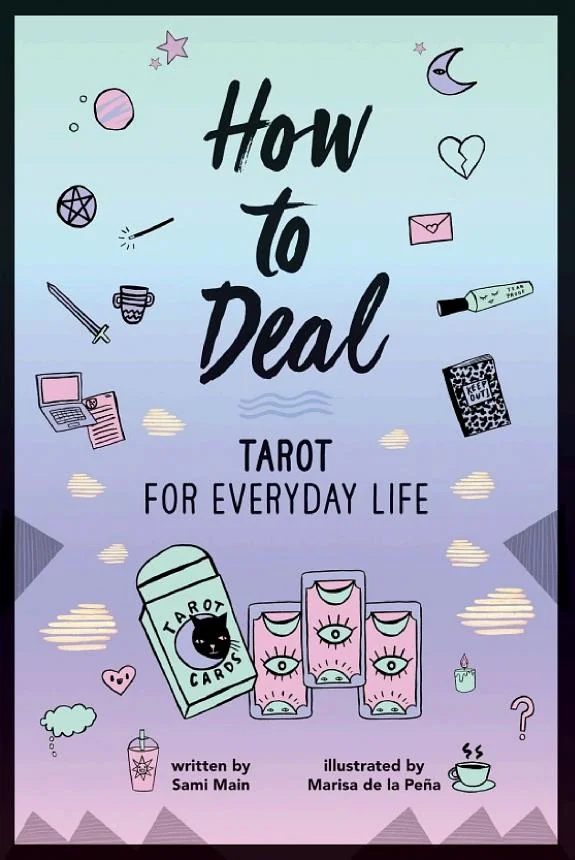
How to Deal: Tarot for Everyday Life
Sami Main's "How to Deal" offers a refreshing perspective on tarot, positioning it as an accessible dialogue with the subconscious rather than a mystical oracle. The book's strength lies in its practical, exercise-driven approach, particularly evident in sections that guide readers through applying card meanings to specific, relatable dilemmas. Main effectively bridges the gap between esoteric symbolism and everyday concerns. However, for seasoned readers seeking deep dives into complex historical or Kabbalistic associations, the book might feel somewhat introductory. The emphasis remains firmly on immediate application, which, while a benefit for novices, may leave some wanting more theoretical depth. A particularly well-executed concept is the framing of the 'Six of Swords' not just as literal travel, but as a necessary, sometimes difficult, transition away from troubled waters, a potent metaphor for personal growth.
This is a pragmatic guide for integrating tarot into daily life.
📝 Description
77
Sami Main published 'How to Deal' in May 2018, reframing tarot for everyday decision-making.
Published in May 2018, Sami Main's 'How to Deal: Tarot for Everyday Life' positions the tarot as a practical instrument for daily choices and self-awareness. The book moves past simple fortune-telling, instead presenting the cards as a system for accessing inner guidance. It combines symbolic readings with practical exercises. These are designed to help readers apply tarot insights to real-life situations, covering areas from personal connections to career decisions. The book is structured for ease of understanding, welcoming both newcomers to the tarot and those who already have some experience. It specifically speaks to people wanting to make the cards more accessible and use them in their daily routines. Readers who learn best through hands-on methods and benefit from visual help will find its approach useful. The goal is to enable users to discover their own answers, rather than depending on outside interpretations.
Sami Main's 2018 work arrives during a period of renewed interest in divination and esoteric practices. While figures like A.E. Waite and Pamela Colman Smith shaped tarot imagery earlier in the 20th century, Main's book reflects a modern focus on psychological and practical use. It diverges from strictly divinatory or occult interpretations, aligning with contemporary trends in mindfulness and personal development. The book builds on existing tarot scholarship but emphasizes its application in everyday life.
💡 Why Read This Book?
• Learn to interpret tarot not as fate, but as a tool for intuitive problem-solving, drawing on the practical exercises presented in "How to Deal" to address specific life challenges. • Gain a grounded understanding of how tarot archetypes, such as those depicted in the Minor Arcana, can reflect psychological states and inform decision-making, as detailed in the book's interpretive framework. • Discover how to use the tarot for direct, actionable advice on everyday matters, employing the book's unique layouts and prompts to seek guidance on personal and professional situations.
⭐ Reader Reviews
Honest opinions from readers who have explored this book.
❓ Frequently Asked Questions
When was How to Deal: Tarot for Everyday Life first published?
Sami Main's "How to Deal: Tarot for Everyday Life" was first published on May 1, 2018. This date places it within the contemporary wave of accessible, practical guides to esoteric practices.
Is How to Deal suitable for absolute beginners to tarot?
Yes, the book is explicitly written for novices and seasoned readers alike. It breaks down tarot concepts in an accessible manner, offering practical exercises and artwork to aid understanding for those new to the cards.
What kind of exercises does the book offer?
The book includes prompts, exercises, and specific card layouts designed to help readers find answers to everyday questions. These are geared towards practical application and intuitive guidance, moving beyond simple fortune-telling.
Does the book focus on traditional tarot meanings?
While building on traditional interpretations, "How to Deal" emphasizes applying tarot symbolism to contemporary, everyday situations. It frames the cards as a tool for personal insight and decision-making rather than solely predictive divination.
What makes this tarot guide different from others?
Its primary distinction is its strong focus on practical, everyday problem-solving. The book aims to channel the 'power of the cosmos' into actionable advice for relatable life issues, supported by integrated artwork and exercises.
🔮 Key Themes & Symbolism
Tarot as Practical Tool
The central theme is reframing the tarot from a mystical oracle to a pragmatic instrument for navigating daily life. Main argues that the cards offer concrete guidance on everything from interpersonal conflicts to career paths. The book provides exercises and layouts specifically designed to extract actionable advice, making the esoteric accessible for mundane concerns and personal growth.
Intuitive Guidance and Self-Reflection
This work emphasizes the tarot's role in unlocking inner wisdom. It encourages readers to use the cards as a mirror for self-reflection, prompting introspection on personal challenges and aspirations. By integrating artwork and specific prompts, Main facilitates a dialogue between the reader's subconscious and the symbolic language of the cards.
Archetypes in Everyday Life
The book explores how the archetypal figures and situations represented by the tarot cards (e.g., The Fool's journey, the conflict in the Five of Swords) manifest in contemporary human experience. It bridges the gap between ancient symbolism and modern dilemmas, showing readers how to connect with these universal patterns to understand their own circumstances.
Accessible Esoteric Application
A key theme is making esoteric knowledge practical and understandable. "How to Deal" breaks down complex symbolism into digestible concepts, supported by visual aids and straightforward exercises. The goal is to explain the tarot, empowering individuals to use it confidently for personal insight without needing extensive prior knowledge.
💬 Memorable Quotes
Direct passages from the work, attributed to the author.
“This accessible and practical guide is for you [if you want to channel the power of the cosmos through tarot].”
— This statement defines the target audience and primary benefit. It promises to explain esoteric concepts like 'channeling cosmic power,' making them tangible and usable for the reader through practical application.
“How to Deal is packed with artwork and includes prompts, exercises, and layouts to give you the answers you're looking for.”
— This highlights the book's pedagogical approach. The inclusion of artwork, prompts, and layouts signifies a hands-on, interactive learning experience designed to empower readers to discover their own answers via the tarot.
“Written for novices and seasoned readers alike.”
— This indicates the book's broad appeal and carefully structured content. It aims to be equally valuable for those entirely new to tarot and for experienced practitioners seeking fresh perspectives or practical applications.
💡 Key Ideas
Editorial paraphrase of the work's core concepts — not direct quotes.
Sometimes you just need the universe to tell you whether your crush likes you or how to handle that awkward family situation.
This quote expresses the book's core appeal: bridging the gap between profound cosmic forces and the relatable, often mundane, challenges of everyday existence. It highlights the tarot's potential as a practical advisor for common human experiences.
Sami Main breaks down how the cards relate to one [another and to specific life situations].
This paraphrase points to the book's instructional value. It suggests that Main offers clear explanations of tarot card interrelationships and their relevance to practical, real-world scenarios, making interpretation less abstract.
🌙 Esoteric Significance
Tradition
This work operates primarily within the modern, psychologically-oriented branch of Western Esotericism, specifically drawing from the popularization of tarot in the 20th century. While not explicitly aligning with a specific lineage like Hermeticism or Kabbalah, it builds upon the widespread adoption of the Rider-Waite-Smith deck and its archetypal imagery. It departs from more rigid, traditional interpretations by focusing on intuitive application and personal meaning-making over strict adherence to historical occult doctrines.
Symbolism
The book likely engages with core tarot symbols such as The Fool, representing new beginnings and leaps of faith, and the court cards (Page, Knight, Queen, King), which can symbolize different facets of personality or stages of development. The suits (Wands, Cups, Swords, Pentacles) are probably presented as representing distinct areas of life experience—creativity/action, emotions/relationships, intellect/conflict, and material world/practicality, respectively, in line with common modern interpretations.
Modern Relevance
Contemporary practitioners of mindfulness, self-help, and intuitive coaching often draw on accessible tarot guides like Main's. Its focus on practical application appeals to digital-native spiritual seekers who utilize platforms like Instagram and TikTok for esoteric content. The book's approach aligns with modern therapeutic concepts of self-discovery and narrative crafting, making it relevant to individuals integrating spiritual tools into secular self-improvement practices.
👥 Who Should Read This Book
• Individuals new to tarot seeking a practical, non-intimidating introduction to understanding and using the cards for everyday guidance. • Those interested in self-help and personal development who want to explore a symbolic system for decision-making and self-reflection. • Existing tarot readers looking for fresh perspectives on applying card meanings to concrete, contemporary life situations beyond traditional fortune-telling.
📜 Historical Context
Sami Main's "How to Deal: Tarot for Everyday Life," published in 2018, arrived during a period of significant popular resurgence in divination and esoteric practices, particularly among millennials and Gen Z. This era saw a growing interest in self-care, mindfulness, and alternative spiritualities, moving beyond the more rigid occultism of the early 20th century. While figures like Aleister Crowley and A.E. Waite had previously established complex systems and iconic decks, Main's work reflects a contemporary trend towards psychological interpretation and practical application, often divorced from traditional ceremonial magic or strict Kabbalistic frameworks. Unlike the academic or occult-focused tarot studies of the mid-20th century, which might engage with scholars like Gertrude Moakley, Main's approach prioritizes accessibility and immediate utility, aligning with a broader cultural shift towards self-help and personalized spirituality.
📔 Journal Prompts
Reflect on the 'awkward family situation' prompt and how the cards offered insight.
Analyze the meaning of the 'crush's' potential feelings using a specific tarot spread from the book.
Consider the life path guidance sought and the symbolic language of the chosen cards.
Examine the artwork's contribution to understanding the 'Six of Swords' concept.
Map the 'card correspondence' principles to a recent personal decision.
🗂️ Glossary
Tarot
A deck of 78 cards featuring symbolic imagery, used for divination, introspection, and guidance. Comprises the Major Arcana (22 cards) and Minor Arcana (56 cards in four suits).
Major Arcana
The 22 trump cards of the tarot deck, representing significant life lessons, archetypal figures, and spiritual milestones (e.g., The Fool, The Magician, The World).
Minor Arcana
The 56 cards divided into four suits (Wands, Cups, Swords, Pentacles), typically representing everyday events, challenges, and experiences.
Spreads/Layouts
Specific arrangements of tarot cards used to address particular questions or explore different facets of a situation. Examples include the Celtic Cross or simple three-card draws.
Archetype
In tarot, universal symbolic patterns or figures (e.g., The Emperor, The High Priestess) that represent fundamental human experiences and psychological energies.
Divination
The practice of seeking knowledge of the future or the unknown by supernatural means, often through tools like tarot cards.
Intuition
The ability to understand something immediately, without the need for conscious reasoning; in tarot, often seen as the inner voice that interprets the cards' meanings.
This book appears in 1 collection
🔮 Readers Also Liked
Browse all →
From the “Minor Arcana” Collection
View all →


More Free Occult Philosophy Books
View all →