Ritual
 76
76

Ritual
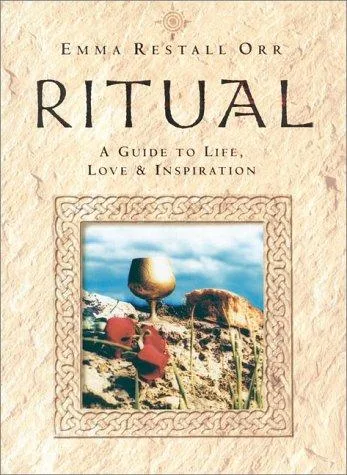
Emma Orr’s *Ritual* offers a refreshingly direct look at the architecture of ceremonial practice. Rather than waxing poetic about mystical experiences, Orr dissects the practical mechanics, a welcome approach for those who find much esoteric writing overly vague. Her exploration of the ‘Lesser Banishing Ritual of the Pentagram’ (LBRP) in Chapter 4, detailing its specific gestures and incantations, provides a concrete anchor for understanding abstract principles. However, the book’s dense academic style, while laudable for its rigor, occasionally hinders accessibility for newcomers to the subject. The prose can be quite dry, demanding sustained attention from the reader. Despite this, *Ritual* succeeds in demystifying a core element of many esoteric paths. It is a valuable resource for practitioners and scholars alike seeking a grounded understanding of ceremonial magic.
📝 Description
76
Emma Orr's *Ritual*, published in 2000, analyzes ceremonial practice in esoteric traditions.
Emma Orr's *Ritual* systematically examines ceremonial practice within esoteric traditions. Published in 2000, the book analyzes the structure, intent, and symbolic language of various ritualistic forms. Orr moves beyond simple description to investigate the psychological and energetic foundations that contribute to the effectiveness of these ceremonies for practitioners. The work is intended for serious students of comparative religion, occult history, and practical esotericism who wish to understand the mechanics of ritual rather than just its outward appearance.
Individuals interested in the historical development of Western magical orders and the philosophical bases of ceremonial work will find substantial material. The book breaks down ritual components, including the roles of space, time, intention, visualization, invocation, and banishing. It highlights the importance of symbolic correspondences and the use of specific tools within a ceremonial context. Orr also discusses the subjective experience of the practitioner and the collective efficacy that can arise from shared ritualistic practice.
Published in 2000, *Ritual* emerged during a period of renewed interest in Western esotericism, following earlier scholarship on traditions like Theosophy and the Golden Dawn. Orr's work differentiates itself by concentrating on the functional aspects of ritual. It draws from sources that predate contemporary New Age interpretations, situating its publication year between foundational esoteric texts and modern adaptations of older magical systems.
💡 Why Read This Book?
• Gain a methodical breakdown of ritual components, such as the specific roles of consecrated space and precise gestural language, as detailed in Orr’s analysis of the LBRP. • Understand the psychological and energetic mechanics behind ceremonial effectiveness, moving beyond mere belief to grasp how intent and visualization function within a structured framework, as discussed in the early chapters. • Acquire a historical perspective on ritualistic practices, contextualizing them within the development of Western esoteric traditions since the late 20th century, providing a foundation for understanding contemporary practices.
⭐ Reader Reviews
Honest opinions from readers who have explored this book.
❓ Frequently Asked Questions
What specific esoteric traditions does Emma Orr reference in Ritual?
Emma Orr's *Ritual* draws heavily from the Western Esoteric Tradition, particularly referencing practices associated with Hermeticism and ceremonial magic orders that gained prominence in the late 19th and early 20th centuries, such as those influenced by the Hermetic Order of the Golden Dawn.
When was Ritual first published and what was the intellectual climate like?
Ritual was first published in 2000. This period saw a resurgence of interest in occult and esoteric studies, with scholars and practitioners alike re-examining foundational texts and practices from earlier eras.
Does Ritual offer practical instructions for performing rituals?
While *Ritual* is analytical and explanatory, it provides a deep understanding of the principles behind ritual construction. It uses examples like the Lesser Banishing Ritual of the Pentagram to illustrate concepts, enabling practitioners to better construct or perform their own ceremonies.
What is the significance of symbolic language in Orr's Ritual?
Orr emphasizes that symbolic language is not merely decorative but is the very medium through which ritual operates. The book explores how specific symbols, when correctly employed within a ritual framework, can evoke precise psychological and energetic responses.
How does Ritual differ from more general books on spirituality or meditation?
*Ritual* focuses specifically on the structured, often formal, practices of ceremonial magic and religious ritual. Unlike broader spirituality books, it dissects the components, intent, and historical lineage of these specific practices, rather than offering generalized advice.
Can beginners benefit from reading Ritual, or is it for advanced practitioners only?
While its analytical depth can challenge newcomers, beginners who are serious about understanding the 'how' and 'why' of ritual will find it invaluable. Orr’s explanations of foundational concepts, like the consecration of space, are particularly useful for those starting out.
🔮 Key Themes & Symbolism
Structure and Intent
Orr argues that the efficacy of any ritual hinges on its precise structure and the clarity of the practitioner's intent. The book meticulously dissects how elements like timing, spatial arrangement, and the sequence of actions contribute to the ritual's overall purpose. It posits that intent acts as the driving force, shaping the energetic currents invoked or directed. This focus distinguishes it from more spontaneous or emotionally driven spiritual practices, highlighting ritual as a deliberate technology for manifesting change.
Symbolic Language
The work explores the profound significance of symbols within ritual practice. Orr explains that symbols are not arbitrary but are potent carriers of meaning and energy, deeply embedded in human consciousness and specific esoteric traditions. From geometric forms to elemental associations, each symbol employed in a ritual serves to communicate with subconscious and supra-conscious levels, facilitating the intended magical or spiritual outcome. Understanding this symbolic lexicon is presented as crucial for effective ceremonial work.
Energetic Dynamics
A central theme is the exploration of the energetic forces that rituals are designed to engage. Orr discusses concepts such as the manipulation of subtle energies, the creation of sacred space as a focal point for power, and the role of visualization in directing these energies. The book suggests that rituals act as conduits, allowing practitioners to tap into and channel energies that influence both the inner and outer worlds, moving beyond purely psychological interpretations to acknowledge a tangible energetic dimension.
Historical and Comparative Analysis
Orr situates the practices discussed within their historical and cultural contexts, tracing lineages and influences. The book examines how similar ritualistic structures and symbolic motifs appear across different traditions, suggesting underlying universal principles. This comparative approach provides a framework for understanding the evolution of ritual and its adaptation over time, offering insights into why certain forms persist and remain potent for practitioners seeking connection to ancient wisdom.
💬 Memorable Quotes
Direct passages from the work, attributed to the author.
“The consecration of space is not merely symbolic; it is the creation of a distinct energetic field.”
— This statement underscores Orr's functionalist view of ritual. It suggests that setting up a ritual space actively alters its energetic properties, making it suitable for focused work, rather than just being a representational act.
“Clarity of intent is the fulcrum upon which the lever of ritual rests.”
— This highlights the critical role of the practitioner's mental focus. Without a well-defined purpose, the ritual's actions and symbols lack direction and power, akin to a tool without a clear task.
“Symbols are the language of the deeper mind; ritual provides the grammar and syntax.”
— This interpretation frames ritual as a structured communication system. It posits that symbols, the vocabulary, are made effective through the formal structure and application provided by the ritual itself.
“The banishing ritual, often seen as defensive, is equally a foundational act of establishing order.”
— This reframes a common ritualistic act. Orr suggests that clearing space isn't just about removal, but about creating the necessary conditions for subsequent, more constructive magical operations to occur successfully.
“Effective ritual demands an integration of will, imagination, and precise execution.”
— This emphasizes the multi-faceted nature of successful ritual work. It requires not just desire (will) and mental imagery (imagination), but also the disciplined, accurate performance of the prescribed actions.
🌙 Esoteric Significance
Tradition
Ritual firmly sits within the Western Esoteric Tradition, specifically drawing from the lineage of ceremonial magic influenced by Hermeticism and figures like Eliphas Lévi and later Golden Dawn practitioners. It departs from purely philosophical or theological interpretations by focusing on the practical, operative aspects of ritual as a technology for spiritual and psychological transformation. It seeks to explain the 'how' and 'why' of magical operations, rather than merely recounting their history or philosophical underpinnings.
Symbolism
Key symbols explored include the pentagram, often discussed in relation to the Lesser Banishing Ritual, representing the microcosm of humanity and the elements. The circle, fundamental to creating sacred space, symbolizes wholeness, eternity, and the divine feminine. Orr also examines the significance of specific gestures and vocalizations within ritual, illustrating how these actions act as symbolic keys to unlock deeper states of consciousness and manipulate subtle energies.
Modern Relevance
Contemporary practitioners of ceremonial magic, chaos magic, and even some forms of modern witchcraft continue to draw on the foundational principles articulated in *Ritual*. Thinkers and practitioners interested in the psychology of ritual, the efficacy of symbolic action, and the disciplined application of will find Orr’s systematic analysis highly relevant. It provides a framework for understanding and refining personal practice in an era where esoteric knowledge is widely accessible but often lacks rigorous structure.
👥 Who Should Read This Book
• Aspiring ceremonial magicians seeking to understand the foundational principles of ritual construction and execution. • Students of comparative religion interested in the practical application of symbolic systems across different esoteric traditions. • Experienced practitioners looking to refine their understanding of intent, visualization, and energetic dynamics within their own magical work.
📜 Historical Context
Published in 2000, Emma Orr’s *Ritual* emerged during a period when academic and popular interest in Western esotericism was experiencing a significant revival. Following key works on ceremonial magic and Hermeticism in the late 20th century, Orr’s book offered a more analytical and functionalist perspective. It distinguished itself from the burgeoning New Age movement's often eclectic and less structured approaches by grounding its analysis in the principles of established magical orders, particularly those influenced by the Hermetic Order of the Golden Dawn. While not directly engaging in public debate, its publication occurred alongside scholarly works examining figures like Aleister Crowley and the broader history of occultism, contributing to a more rigorous study of these traditions. The book’s reception within the esoteric community was notable for its systematic approach, providing a counterpoint to more experiential or purely historical accounts.
📔 Journal Prompts
The consecration of space: how does your personal environment influence your focus?
Ritual structure and intent: map out a simple ritual for a personal goal.
Symbolic language: identify three symbols that hold personal significance for you.
The energetic dynamics of invocation: reflect on a time you felt a strong presence.
Integration of will, imagination, and execution: assess your personal balance in practice.
🗂️ Glossary
Consecration
The act of dedicating or setting apart a space, object, or person for a sacred or specific purpose, often involving ritualistic purification and blessing.
Lesser Banishing Ritual of the Pentagram (LBRP)
A foundational ritual in Western ceremonial magic, used for clearing space, establishing energetic boundaries, and invoking protective forces.
Invocation
The act of calling upon or inviting a divine power, spirit, or energy to be present or to act within a ritual context.
Banishing
The practice of repelling or sending away unwanted energies, entities, or influences, often achieved through specific rituals or symbolic actions.
Subtle Energies
Non-physical forces or energies believed to permeate the universe and human beings, often manipulated or directed in esoteric practices.
Symbolic Correspondences
The system of associations between different elements, planets, colors, numbers, and other symbols within an esoteric tradition, used to create meaning and structure in ritual.
Microcosm
The idea that a smaller part (like a human being or a ritual space) reflects the patterns and structure of the greater whole (the universe).
🔮 Readers Also Liked
Browse all →








More by Emma Orr
All books →

More Free Occult Philosophy Books
View all →