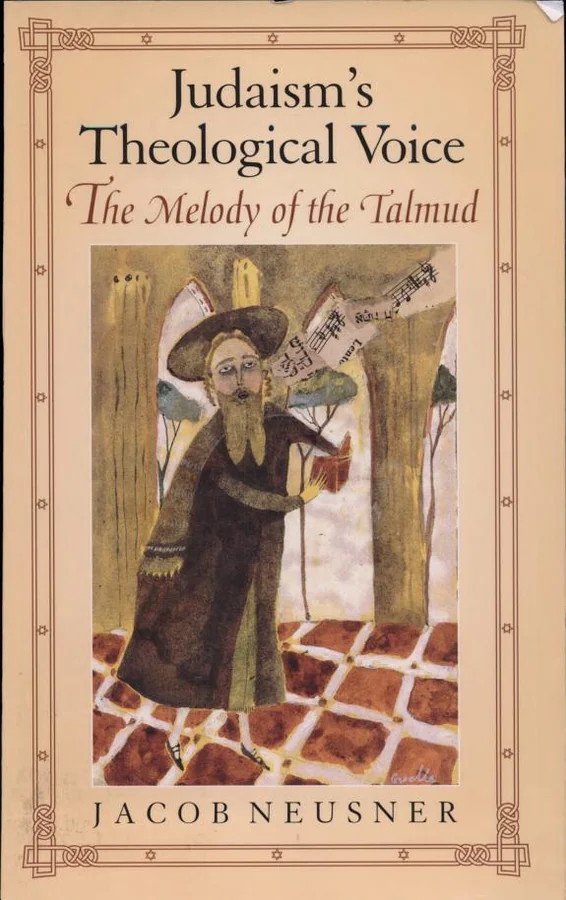
Judaism's Theological Voice
 72
72

Judaism's Theological Voice
Jacob Neusner’s "Judaism's Theological Voice" is a bold attempt to ground theology in the lived experience of contemporary Judaism. Neusner, renowned for his historical scholarship, ventures into constructive theology by asking where and how the community of Israel meets God. His central thesis, that the Torah functions as "sung theology" encountered in everyday life, is compelling. The work's strength lies in its intellectual rigor and its direct engagement with the practicalities of faith. However, the prose can be dense, occasionally obscuring the very lived experience it seeks to illuminate. The exploration of the "holy community" meeting God through practice, particularly detailed in his discussions on the Torah’s form, offers a unique perspective. Ultimately, Neusner provides a challenging, scholarly framework for understanding contemporary Jewish theological expression.
📝 Description
72
Jacob Neusner's 1995 book shifts from historical analysis to constructive theology.
Jacob Neusner's "Judaism's Theological Voice," published in 1995, moves beyond historical study to engage in constructive theological inquiry. Neusner examines how contemporary Jewish faith understands its encounter with the divine in everyday life. He identifies specific times, places, and ways this sacred meeting happens, viewing the Torah as the active theology of the Jewish community.
This work is for theologians, scholars of religion, and dedicated students of Judaism interested in its practice beyond historical scholarship. It appeals to those who study religious experience, especially within Judaism. Readers looking for a connection between rabbinic texts and modern spiritual life will find Neusner's method useful.
Emerging in the mid-1990s, the book appeared when academic religious studies often focused on history or sociology. Neusner, a noted historian of Judaism, turned his attention to constructive theology. This was a time of discussion about religious belief in secular societies. His work joined the theological conversations following thinkers like Martin Buber and Abraham Joshua Heschel, presenting a systematic view of Torah as theology from lived Jewish experience.
This book engages with a specific theological interpretation of Judaism, viewing the Torah not just as scripture but as a dynamic, lived theology. It emphasizes the communal and experiential aspects of faith, aligning with traditions that see religious texts as active forces shaping daily life and divine connection. Neusner's focus on the "holy community" and its direct encounter with God through practice situates the work within broader discussions of immanent divinity and the sacredness of everyday existence, particularly as expressed through textual observance and interpretation.
💡 Why Read This Book?
• Understand the Torah as "sung theology": Learn how Neusner posits the Torah is not just scripture but a dynamic, lived expression of faith encountered daily within the community of Israel. • Explore the "holy community's" encounter with God: Discover Neusner's specific ideas on where and how the community of Israel meets the divine in contemporary life. • Gain a unique theological perspective from 1995: Grasp the constructive theological approach developed by a leading historian of Judaism, offering insights distinct from purely historical or sociological studies.
⭐ Reader Reviews
Honest opinions from readers who have explored this book.
❓ Frequently Asked Questions
What is the primary focus of Jacob Neusner's "Judaism's Theological Voice"?
The book focuses on constructive theology within contemporary Judaism, exploring how the community of Israel encounters God through the lived experience of the Torah.
When was "Judaism's Theological Voice" first published?
Jacob Neusner's "Judaism's Theological Voice" was first published in May 1995.
What does Neusner mean by the Torah as 'sung theology'?
He means the Torah functions not just as a written text, but as a living, dynamic expression of theology that is encountered and enacted through the community's practices and daily life.
Who is the intended audience for this book?
The book is intended for theologians, scholars of religion, and students of Judaism interested in the intersection of historical study and constructive theological inquiry.
How does Neusner approach the concept of 'Israel' in this work?
Neusner refers to 'Israel' as the holy community, the collective of contemporary Jews, and examines their specific encounters with God within their everyday religious lives.
What is the author's background?
Jacob Neusner was a distinguished historian of Judaism, widely recognized for his extensive scholarship on rabbinic literature and Jewish history.
🔮 Key Themes & Symbolism
Torah as Sung Theology
Neusner posits the Torah is not static scripture but a dynamic theological voice sung by the community of Israel. This 'sung theology' is encountered through daily practice and communal life, shaping the very form and content of Jewish belief. The work moves beyond textual analysis to explore how the Torah is lived and experienced, forming the bedrock of theological understanding in contemporary Judaism. This perspective highlights the performative and communal dimensions of theological expression within the tradition.
The Holy Community's Encounter with God
A central theme is the specific moment and mode of encounter between 'Israel' (the holy community) and God. Neusner meticulously questions where this meeting takes place within the fabric of everyday life and what constitutes the medium of this sacred interaction. This investigation grounds theology in the lived reality of contemporary Jewish existence, moving past abstract doctrines to focus on tangible, communal experiences of the divine.
Constructive Theology from Everyday Life
Unlike purely historical scholarship, this book builds a theological framework starting from the concrete realities of contemporary Jewish life. Neusner uses the practices and experiences of today's faithful as the foundation for theological reflection. This approach offers a fresh perspective on how religious traditions can maintain their theological vitality and relevance by rooting inquiry in the lived experience of their adherents.
The Form and Structure of Theology
The work looks at the inherent structure and character of the Torah as it functions theologically. Neusner examines how the very form of the Torah, particularly as it is 'sung' through communal practice, dictates its theological message. This concept of form shaping theological content is crucial for understanding how the tradition perpetuates itself and conveys its divine message across generations.
💬 Memorable Quotes
Direct passages from the work, attributed to the author.
“When in the life of the living faith of the Torah does Israel, the holy community, meet God?”
— This central question frames Neusner's entire theological project, emphasizing the lived experience and communal aspect of encountering the divine within contemporary Judaism.
“Where does the meeting take place?”
— This probe focuses the theological inquiry onto the specific, quotidian spaces and moments where the sacred interaction between the community and God is believed to occur.
“What is the medium of the encounter?”
— Neusner seeks to identify the tangible means or practices through which the community of Israel experiences God, highlighting the active role of lived religion in theological understanding.
“Neusner sets forth the character and the form of the Torah as sung theology.”
— This statement expresses the book's core argument: the Torah's structure and expression in communal practice constitute its theological essence.
“Israel, the holy community”
— This recurring phrase defines the subject of Neusner's theological exploration – the collective body of contemporary Jews as the locus of divine encounter and theological expression.
🌙 Esoteric Significance
Tradition
While not explicitly aligned with a single esoteric lineage like Kabbalah or Hermeticism, Neusner's work draws from a tradition of immanent theology found within Jewish mysticism and Hasidism, which emphasizes God's presence in the everyday. His focus on the 'holy community' and the transformative power of Torah practice echoes concepts of divine immanence and the sanctification of ordinary life, central to many esoteric paths seeking the divine within the mundane.
Symbolism
The primary symbol is the Torah itself, elevated from text to a living, 'sung theology.' The concept of 'Israel' as the 'holy community' acts as a symbolic vessel for divine encounter. The everyday life of contemporary Judaism is presented as the symbolic landscape where the sacred manifests, transforming mundane actions and communal interactions into sites of theological significance.
Modern Relevance
Contemporary thinkers exploring lived theology, phenomenological approaches to religion, and the intersection of practice and belief can find resonance in Neusner's work. Modern movements emphasizing embodied spirituality and the search for immanence within secular contexts may draw inspiration from his framing of daily life as a theological arena. His approach offers a model for grounding theological reflection in communal experience, relevant to current dialogues on applied theology and practical spirituality.
👥 Who Should Read This Book
• Students of Judaism seeking theological depth beyond historical study: Gain insight into Neusner's framework for understanding contemporary Jewish belief as rooted in lived experience and communal practice. • Scholars of religion interested in constructive theology: Explore how a leading historian constructs theological arguments from the ground up, using the Torah and community as foundational elements. • Individuals exploring the intersection of daily life and spirituality: Discover how the mundane aspects of communal religious life can be understood as profound theological encounters.
📜 Historical Context
Published in May 1995, "Judaism's Theological Voice" emerged from a prolific career in Jewish historical scholarship by Jacob Neusner. The book represented a significant turn toward constructive theology, moving beyond analysis to proposition. This period saw ongoing academic discussions about the nature of religious truth and practice in a postmodern world. Neusner's work can be seen as engaging with the legacy of thinkers like Abraham Joshua Heschel, who also sought to articulate the lived theology of Judaism. While not a direct engagement, Neusner's focus on the communal experience of Torah as theology offered an alternative to both purely historical-critical methods and more philosophical theological systems prevalent at the time. The reception was primarily within academic circles, acknowledging Neusner's authority in Jewish studies and his ambitious attempt to redefine theological discourse.
📔 Journal Prompts
The Torah as sung theology: How does your own practice express theological understanding?
The holy community's encounter with God: Reflect on moments of communal spiritual connection you have experienced.
The medium of encounter: What practices or symbols facilitate your sense of the divine?
Constructive theology from everyday life: Identify a mundane aspect of your routine that holds theological significance for you.
The form and character of faith: How does the structure of your religious or spiritual practice shape its meaning?
🗂️ Glossary
Israel
In Neusner's theological context, 'Israel' refers to the holy community of contemporary Jews, the collective body through which God is encountered and theology is lived.
Torah
Beyond its meaning as scripture, Neusner views the Torah as 'sung theology,' representing the dynamic, lived expression of divine will and presence enacted by the community.
Sung Theology
A concept coined by Neusner, describing the Torah as theology that is expressed, performed, and encountered through the communal practices and daily life of the Jewish people.
Holy Community
The collective body of adherents of a religion, in this case, contemporary Judaism, understood as the locus for experiencing and expressing theological truths.
Constructive Theology
A branch of theology focused on building theological arguments and systems from foundational principles, often drawing from lived experience rather than solely historical texts.
Medium of the Encounter
The specific means, practices, rituals, or communal activities through which individuals or groups experience a connection or encounter with the divine.
Form of the Torah
Refers to the inherent structure, character, and expression of the Torah as it functions theologically within the life of the community, not just its textual content.
This book appears in 1 collection
🔮 Readers Also Liked
Browse all →









From the “Revelation” Collection
View all →
![A LITTLE HISTORY - [ Truth about ] THE SHEPHERDING MOVEMENT](/img/thumb/a-little-history-truth-about-the-shepherding-movement-allan-clare-bill-hamon-ern-baxter-charles-simpson-derek-prince-don-basham-bob-mumford-john-bevere-r-c-sproul-bredesen-juan-carlos-ortiz-bruce-metz.webp)





![[Elements. English. Selections] Elements of geometry; containing the first six books of Euclid, with two books on the geometry of solids. To which are added, elements of plane and sperical trigonometry. By John Playfair. 1795](/img/thumb/elements-english-selections-elements-of-geometry-containing-the-first-six-books-of-euclid-with-two-books-on-the-geometry-of-solids-to-which-are-added-elements-of-plane-and-sperical-trigonometry-by-joh.webp)
More Free Sacred Texts & Gnosticism Books
View all →