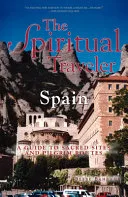
The Spiritual Traveler
 72
72

The Spiritual Traveler
Beebe Bahrami's "The Spiritual Traveler" offers a compelling, if occasionally diffuse, exploration of Spain's sacred geography. Bahrami demonstrates a deep familiarity with the Iberian peninsula, moving beyond mere description to connect sites with their historical and mythological underpinnings. A particular strength lies in her ability to link ancient Iberian sacred geography with later Christian and Islamic pilgrimage routes, showing a continuity of devotion. For instance, the discussion of sites along the Camino de Santiago, referencing its medieval significance, is well-grounded. However, the work sometimes struggles with maintaining a consistent focus, occasionally feeling more like a travelogue than a rigorous esoteric study. The concept of "energetic imprints" on the landscape, while central, could benefit from clearer articulation and theoretical grounding. Despite this, "The Spiritual Traveler" serves as an informative guide for those seeking to understand the deeper spiritual currents flowing through Spain.
📝 Description
72
Beebe Bahrami's 2009 book maps Spain's spiritual topography, connecting ancient practices to modern pilgrimage.
The Spiritual Traveler charts the sacred routes and sites across Spain that have drawn spiritual seekers for centuries. Bahrami connects the country's deep history, reaching back before Roman times, to its ongoing spiritual significance. The book examines how geography and human devotion combine to create places imbued with sacred energy and meaning. This work is for anyone interested in the spiritual dimension of travel, whether a seasoned pilgrim or an armchair explorer. It will appeal to those curious about Western esotericism, comparative religion, and the nature of sacred spaces. Readers interested in Iberian history, mythology, and the enduring power of pilgrimage will find a wealth of information.
Bahrami traces Spain's sacred geography from its earliest spiritual practices to contemporary expressions. The book acknowledges the layered influences from indigenous Iberian beliefs, Roman paganism, early Christianity, and Islamic mysticism. All these traditions have shaped the spiritual character of the land. The work considers concepts like ley lines, pilgrimage as a transformative practice, and the energetic imprint of sacred sites. It highlights the idea that these locations retain a palpable spiritual essence, accessible through focused intention and physical presence.
This book fits within the tradition of spiritual geography and comparative mysticism. It follows in the footsteps of writers who have sought to understand the energetic qualities of places and how they relate to human consciousness. Bahrami's work connects to a lineage that views pilgrimage not merely as travel, but as a path to inner transformation and connection with subtle energies. It touches on concepts found in geomancy and sacred site studies, viewing specific locations as nodes of power or consciousness.
💡 Why Read This Book?
• Gain practical knowledge of Spain's sacred sites, such as understanding the historical significance of the Santiago de Compostela pilgrimage route as it existed in the Middle Ages, offering a specific lens for your own explorations. • Discover the concept of spiritual geography and how ancient Iberian sites were consecrated, providing a framework for interpreting the energetic qualities of landscapes beyond Spain. • Learn about the confluence of different spiritual traditions on the Iberian peninsula, enabling you to perceive the layered historical and mystical influences present in sacred locations worldwide.
⭐ Reader Reviews
Honest opinions from readers who have explored this book.
❓ Frequently Asked Questions
What specific historical periods does "The Spiritual Traveler" cover regarding Spain's sacred sites?
The book spans from pre-Roman indigenous spiritual practices through Roman paganism, early Christianity, and the influence of Islamic mysticism, up to its publication in 2009.
Does the book discuss the Camino de Santiago?
Yes, "The Spiritual Traveler" extensively discusses the Camino de Santiago, exploring its historical routes, sacred sites, and its role as a major pilgrimage destination throughout the centuries.
What kind of spiritual traditions are explored in relation to Spain's geography?
It examines indigenous Iberian beliefs, Roman religious practices, Christian pilgrimage traditions, and elements of Islamic mysticism, highlighting their interaction and integration into the landscape.
What does the author mean by 'sacred geography'?
The author uses 'sacred geography' to describe how specific locations, landscapes, and routes become imbued with spiritual significance and energetic qualities due to historical events, devotion, and belief systems.
Is this book a practical guide for planning a pilgrimage?
While it offers insights into sacred sites and routes, it functions more as an exploration and contextualization of these places rather than a step-by-step itinerary planner.
What is the primary focus of the book's exploration of Spain?
The primary focus is on understanding the deep historical and spiritual layers of Spain's land, connecting its ancient past to its present through its sacred sites and pilgrim routes.
🔮 Key Themes & Symbolism
Sacred Landscapes of Iberia
The book posits that Spain's geography is not merely physical but holds a profound spiritual dimension. It explores how ancient indigenous sites, Roman temples, and later Christian and Islamic holy places have layered meaning onto the land. Bahrami examines how specific locations, from megalithic monuments to pilgrimage shrines like Santiago de Compostela, act as energetic focal points, shaped by centuries of human belief and ritual. This perspective invites readers to view landscape as a living repository of spiritual history and power.
Continuity of Pilgrimage
A central theme is the enduring nature of pilgrimage across different eras and cultures in Spain. The work traces the evolution of pilgrimage routes, notably the Camino de Santiago, from its medieval zenith through periods of decline and modern revival. Bahrami highlights how the impulse to journey to sacred places persists, connecting contemporary seekers with the intentions of ancient travelers. This continuity underscores the human need for sacred journeys as paths to transformation and connection.
Interplay of Traditions
The book meticulously details the syncretic spiritual field of Spain, where diverse traditions have coexisted and influenced one another. It investigates how pre-Christian Iberian beliefs, Roman religious practices, early Christian devotion, and Sufi mysticism have all contributed to the sacred character of specific sites. This interplay reveals how sacred geography often transcends singular religious doctrines, embodying a more complex, multi-layered spiritual heritage.
Energetic Resonance of Sites
Bahrami explores the concept that sacred sites possess a unique energetic resonance, an imprint left by historical events, spiritual practices, and collective devotion. This energetic quality is presented as a palpable force that pilgrims and seekers can connect with. The book encourages readers to be sensitive to these subtle energies, suggesting that a deeper understanding of Spain's spiritual heritage comes from attuning oneself to these ancient vibrations.
💬 Memorable Quotes
Direct passages from the work, attributed to the author.
“The land itself remembers.”
— This suggests that geographical locations retain an energetic or spiritual imprint from past events, beliefs, and practices, acting as a living archive accessible to those who are attuned.
“Pilgrimage is a dialogue between the traveler and the sacred.”
— This highlights the active, reciprocal nature of the pilgrimage experience, where the journey is not just a physical movement but an engagement with spiritual forces and personal introspection.
“Spain's sacred geography is a palimpsest of devotion.”
— This metaphor suggests that the spiritual field of Spain is layered with the influences of multiple religious and cultural traditions, each written over the other yet still discernible.
“Ancient sites often lie at the nexus of natural energies.”
— This points to the idea that many locations chosen for spiritual significance were originally selected due to their alignment with natural energetic currents or geographical features.
“The path itself holds as much power as the destination.”
— This emphasizes the transformative process inherent in the journey, suggesting that the experiences and insights gained while traveling to a sacred site are as crucial as reaching the final goal.
🌙 Esoteric Significance
Tradition
This work aligns with the Western Esoteric tradition, particularly drawing from geomancy, sacred geography, and the study of pilgrimage as a spiritual practice. It echoes traditions that view the Earth itself as a sacred, living entity, imbued with energetic currents and spiritual significance. Bahrami's approach connects to practices that seek to understand and interact with these terrestrial energies, often linking ancient pagan beliefs with later mystical interpretations within Christianity and Islam.
Symbolism
Key symbols include the **Camino de Santiago** itself, representing the pilgrim's journey toward self-discovery and spiritual realization, and the **megalithic sites** scattered across the Iberian peninsula, symbolizing ancient connections to celestial cycles and earth energies. The **crossroads** motif also appears, signifying points of spiritual decision and the intersection of different energetic pathways or traditions.
Modern Relevance
Contemporary thinkers and practitioners in fields like ecospirituality, psychogeography, and modern paganism continue to draw inspiration from works that explore the energetic qualities of landscapes. Bahrami's approach appeals to those seeking to understand the spiritual dimensions of place in an increasingly secularized world, offering a framework for reconnecting with the Earth's subtle energies and historical spiritual currents.
👥 Who Should Read This Book
• Armchair travelers and history enthusiasts interested in the spiritual evolution of Spain, particularly those curious about the layers of belief from pre-Roman times through medieval pilgrimage. • Devotees of the Camino de Santiago or other pilgrimage routes seeking a deeper understanding of the historical and energetic context of their chosen path. • Students of comparative religion and Western Esotericism looking for practical examples of how sacred geography and cross-cultural spiritual influences manifest in a specific region.
📜 Historical Context
Published in 2009, Beebe Bahrami's "The Spiritual Traveler" emerged during a period of renewed global interest in pilgrimage and the exploration of sacred sites. Its focus on Spain's deep past, from indigenous Iberian traditions to the layered influences of Christianity and Islam, places it within a growing field of comparative religious studies and psychogeography. At the time, authors like Karen Armstrong were popularizing accessible histories of religion, and scholars like Paul Devereux were exploring ancient landscapes. Bahrami's work engages with these broader currents by examining the tangible spiritual geography of a specific region. The book's approach, connecting ancient ley lines and megalithic sites with medieval pilgrimage routes such as the Camino de Santiago, offered a synthesized view for a public increasingly interested in esoteric interpretations of history and place. Its reception was within the niche of spiritual travel and esoteric literature, a field largely distinct from mainstream academic discourse but influential in popular understanding.
📔 Journal Prompts
The energetic imprints on Spain's sacred sites.
Reflecting on the symbolism of the Camino de Santiago.
Connections between ancient Iberian beliefs and later spiritual practices.
The role of natural energies in the location of sacred places.
Personal experiences of sacred geography.
🗂️ Glossary
Sacred Geography
The study of how specific places, landscapes, and routes are imbued with spiritual significance, energetic qualities, and historical meaning due to human belief, ritual, and natural phenomena.
Pilgrimage
A journey undertaken to a sacred place for religious or spiritual reasons, often involving hardship and self-reflection, seen as a path toward transformation or divine connection.
Megalithic Sites
Ancient structures, such as stone circles, dolmens, and menhirs, typically dating from the Neolithic period, believed to have served astronomical, ritualistic, or spiritual purposes.
Ley Lines
Hypothetical straight lines or alignments connecting ancient sites, natural features, or places of spiritual significance, believed by some to represent flows of terrestrial energy.
Geomancy
A form of divination or earth-based divination that interprets patterns in the landscape or uses astrological alignments to understand terrestrial energies and influences.
Iberian Peninsula
The peninsula in southwestern Europe comprising Spain, Portugal, Andorra, and Gibraltar, known for its diverse historical influences and ancient spiritual traditions.
Syncretism
The blending of different religious, cultural, or philosophical beliefs and practices, often seen in the layering of traditions on sacred sites throughout history.