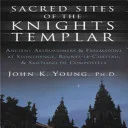
Sacred Sites of the Knights Templar
 79
79

Sacred Sites of the Knights Templar
John K Young's "Sacred Sites of the Knights Templar" offers a compelling, albeit sometimes speculative, look at Europe's ancient stone circles. The author rightly points out that Stonehenge is merely one example within a vast network of megalithic constructions, a crucial distinction often overlooked. Young's strength lies in his ability to connect these disparate sites, suggesting a cohesive ancient worldview. However, the book occasionally falters in its attempts to definitively link these prehistoric monuments to the Knights Templar, a leap that requires considerable interpretive latitude. A particularly interesting passage discusses the potential solar alignments at sites like Avebury, hinting at sophisticated astronomical knowledge. While the Templar connection remains tenuous, the exploration of the megalithic landscape itself is illuminating. It serves as a valuable resource for those interested in pre-Christian European sacred sites, even if its central thesis invites skepticism.
📝 Description
79
John K. Young's 2005 book examines prehistoric stone monuments and their connection to the Knights Templar.
Sacred Sites of the Knights Templar looks at the large stone structures across Europe that predate recorded history. Young questions who built these megaliths and what meaning they held for their creators. He moves beyond famous examples like Stonehenge to show a larger pattern in ancient sacred geography.
The book is for those interested in ancient mysteries, archaeoastronomy, and esoteric interpretations of old sites. Readers curious about links between early European cultures, megalith building, and later secret societies will find much to consider. It aims to help readers grasp the symbolic or spiritual purposes behind stone circles and ancient buildings.
Published in 2005, this work arrived during a time of growing interest in both megalithic research and the Knights Templar. The book confronts ongoing discussions about Europe's past and the spread of knowledge, questioning standard archaeological timelines and views of ancient monumental sites. It discusses sacred geography, suggesting ancient people related to the land in complex ways. The author also considers astronomical alignments at these sites and their possible use for rituals or storing forgotten information. Furthermore, it investigates how groups like the Knights Templar may have found and used these old sacred places.
This book fits within the broader esoteric tradition that seeks hidden meanings in ancient structures and historical events. It engages with ideas of sacred geometry and ley lines, common in traditions that view the Earth itself as a living organism with potent energy points. The focus on the Knights Templar also connects it to traditions that see this order as a custodian of ancient knowledge or a bridge between different spiritual eras. Young's work encourages a reevaluation of historical sites not just as archaeological artifacts but as active centers of spiritual or symbolic power.
💡 Why Read This Book?
• Understand the vast network of European megalithic sites beyond Stonehenge, learning about their potential astronomical alignments and ritualistic purposes as detailed in the book's analysis of sites predating 2000 BCE. • Explore the theories connecting ancient sacred geography with later esoteric orders, specifically the Knights Templar's possible interaction with sites established millennia earlier. • Gain a unique perspective on how prehistoric cultures perceived and interacted with their landscape, moving beyond conventional archaeological interpretations of monumental structures.
⭐ Reader Reviews
Honest opinions from readers who have explored this book.
❓ Frequently Asked Questions
What is the main focus of Sacred Sites of the Knights Templar?
The book investigates the origins, purpose, and potential connections of prehistoric megalithic sites across Europe, particularly exploring how later groups like the Knights Templar may have interacted with these ancient sacred locations.
What is a megalithic site?
Megalithic sites are ancient structures constructed from large stones, such as Stonehenge or Avebury, often dating back thousands of years to prehistoric periods and believed to have had ritualistic or astronomical significance.
Does the book claim the Knights Templar built the megaliths?
No, the book explores the theory that the Knights Templar, a medieval military order founded in the early 12th century, may have identified and utilized pre-existing megalithic sites for their own purposes, rather than constructing them.
Who was John K Young?
John K Young is the author of "Sacred Sites of the Knights Templar," first published in 2005, who specializes in exploring historical mysteries and esoteric connections.
What kind of evidence does the book present for Templar connections?
The work presents architectural similarities, potential geographical alignments between Templar commanderies and megalithic sites, and symbolic interpretations of structures and artifacts from the medieval period.
Is this book for beginners or advanced students of esoteric history?
The book is suitable for both, offering accessible introductions to megalithic sites and Templar history while also providing deeper analysis for those already familiar with esoteric studies.
🔮 Key Themes & Symbolism
Megalithic Landscapes
The book posits that Europe is dotted with vast networks of prehistoric stone monuments, far beyond the fame of Stonehenge. These structures, often aligned with celestial events, suggest a sophisticated understanding of astronomy and a deep spiritual connection to the land. Young examines the architectural commonalities and geographical distribution of these sites, suggesting they were not isolated constructions but part of a cohesive sacred geography utilized by ancient cultures for millennia.
Templar Legacy
A central thesis explores how the Knights Templar, a powerful medieval order active from the 12th century, may have recognized and repurposed these ancient megalithic sites. The work investigates potential Templar interest in the spiritual or energetic properties of these locations, suggesting they incorporated them into their own network of commanderies and pilgrimage routes, seeking to harness their inherent power or historical significance.
Ancient Sacred Geography
This theme explores the idea that ancient civilizations viewed the landscape not merely as territory but as a sacred map. Megalithic sites are presented as nodes within this map, imbued with specific energies or symbolic meanings. The book suggests that understanding these sites requires looking beyond their physical construction to their role in ancient cosmologies and ritual practices, potentially influencing later esoteric traditions.
Lost Knowledge
The enduring mystery of who built the megaliths and why fuels the concept of lost knowledge. The book implies that these structures were repositories of profound wisdom, perhaps related to celestial cycles, earth energies, or spiritual truths, which has largely vanished from mainstream historical understanding. The Templar connection is examined as a possible conduit for preserving or reinterpreting fragments of this ancient lore.
💬 Memorable Quotes
Direct passages from the work, attributed to the author.
“Stonehenge is but one example of a continent-wide phenomenon.”
— This highlights the book's core argument: that isolated discoveries of ancient stone structures are part of a much larger, interconnected system of prehistoric sacred sites across Europe, demanding a broader perspective.
“The builders of these monuments have been largely erased by time.”
— This emphasizes the profound mystery surrounding the creators of megalithic structures, suggesting a deliberate or gradual disappearance of their culture and the knowledge they possessed, leaving behind only enigmatic stone testaments.
“Why were these stones significant to them?”
— This question serves as the driving force behind the author's exploration, pushing the reader to consider the spiritual, astronomical, or ritualistic purposes these ancient peoples ascribed to their monumental constructions.
“Prehistoric stone monuments resisting centuries of weathering.”
— This phrase underscores the incredible durability and resilience of these ancient structures, serving as tangible links to distant pasts that have survived assaults from both natural elements and human history.
“The Knights Templar may have recognized the power inherent in these ancient places.”
— This interpretation suggests that the medieval Knights Templar sought out and potentially utilized existing prehistoric sacred sites, believing them to possess a unique spiritual or energetic quality that could be integrated into their own order's practices.
🌙 Esoteric Significance
Tradition
The work draws from traditions of archaeoastronomy and sacred geography, which often intersect with Western Esotericism. It aligns with a lineage that seeks hidden spiritual or cosmological meaning in ancient monuments, a practice found in Hermeticism and various pagan revival movements. While not strictly adhering to a single lineage, it reflects the Theosophical interest in lost ancient wisdom and Gnostic explorations of cosmic order.
Symbolism
Key symbols include the megalithic stone itself, representing endurance, connection to earth energies, and ancient wisdom. Celestial bodies, particularly the sun and moon, are vital, symbolizing cosmic cycles, divine power, and the astronomical alignments integral to site construction. Geometric patterns and directional alignments also feature, representing order, cosmic harmony, and pathways for spiritual ascent or communion.
Modern Relevance
Contemporary practitioners of earth-based spirituality, neo-paganism, and esoteric geomancy often reference megalithic sites as power spots or places of significant energetic resonance. Thinkers in the field of archaeoastronomy continue to explore the astronomical sophistication of ancient peoples, sometimes drawing parallels to modern esoteric principles. The enduring mystery of the Templars also keeps such sites in the popular esoteric imagination.
👥 Who Should Read This Book
• Students of archaeoastronomy and ancient European cultures seeking to understand the broader context of megalithic construction beyond well-known examples. • Esoteric researchers interested in the potential historical or symbolic links between prehistoric sacred sites and later medieval orders like the Knights Templar. • Individuals fascinated by sacred geography and the theories surrounding how ancient peoples perceived and interacted with their landscape on a spiritual level.
📜 Historical Context
Published in 2005, "Sacred Sites of the Knights Templar" emerged during a period of burgeoning interest in alternative histories and esoteric interpretations of ancient sites. The early 21st century saw numerous authors exploring the supposed connections between various historical groups and mysterious locations, often challenging established archaeological consensus. The work engages with a lineage of research that began in the 19th century, seeking to uncover pre-Roman European cultures and their potentially sophisticated knowledge systems. Contemporaries like Graham Hancock were also popularizing theories about advanced ancient civilizations. While direct academic engagement or controversy surrounding Young's specific thesis is not widely documented, the book fits within a broader field of popular esoteric literature that often existed outside mainstream academic discourse, appealing to readers seeking hidden narratives.
📔 Journal Prompts
The enduring mystery of the megalith builders.
Templar utilization of prehistoric sacred sites.
Connections between celestial cycles and stone monuments.
The concept of sacred geography in ancient Europe.
The resilience of ancient stone structures across millennia.
🗂️ Glossary
Megalith
A large, prehistoric stone used in the construction of monuments or structures, such as Stonehenge or dolmens. These stones were often transported and erected with significant effort, suggesting communal purpose.
Sacred Geography
The study and interpretation of how ancient cultures perceived and mapped their environment, imbuing specific locations with spiritual, cosmological, or ritualistic significance.
Archaeoastronomy
The interdisciplinary study of how people in past cultures understood astronomical phenomena and how those understandings influenced their structures, art, and beliefs.
Knights Templar
A medieval Catholic military order founded in the early 12th century, originally tasked with protecting pilgrims to the Holy Land. They became a powerful financial and military institution before their suppression in the early 14th century.
Prehistoric
The period of human history before the advent of written records. Megalithic constructions generally fall within this broad category, often dating back to the Neolithic or Bronze Age.
Sacred Site
A location considered holy or significant due to its perceived spiritual power, historical importance, or connection to religious or esoteric beliefs and practices.
Commanderies
Administrative or residential headquarters of the Knights Templar, often established in castles or large estates across Europe.