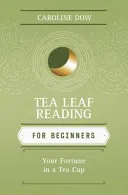
Tea Leaf Reading Companion
 73
73

Tea Leaf Reading Companion
Juliet Vrakas's *Tea Leaf Reading Companion* arrives with the quiet authority of someone who has spent fifty years with a teacup in hand. The book’s primary strength lies in its unpretentious directness; it eschews decorative prose for clear, step-by-step instruction on preparing tea for divination and interpreting the resulting patterns. Vrakas’s emphasis on "common sense guidance" is a welcome antidote to more esoteric or overly symbolic approaches. However, the absence of any visual aids, as noted by the author, presents a significant limitation for a practice so reliant on visual recognition. While the text meticulously describes symbols, a beginner might struggle to connect these descriptions to the actual leaf formations without accompanying imagery. The section on "positions of a teacup" is particularly well-articulated, providing a useful framework for spatial interpretation.
Ultimately, this companion offers a solid, if visually sparse, manual for the dedicated novice in tasseography.
📝 Description
73
Juliet Vrakas published *Tea Leaf Reading Companion* in August 2021 to demystify tasseography.
This guide offers a straightforward introduction to reading tea leaves, focusing on practical instruction rather than extensive historical detail or complex theory. Vrakas, who has practiced tasseography for fifty years, aims to equip readers with the skills to interpret the patterns left in their teacups. The book is structured for self-study, assuming no prior experience and covering everything from tea preparation to the final reading.
It is written for those new to divination or who prefer direct advice. Readers interested in developing a personal practice or seeking clear, no-nonsense guidance will find its approach useful. The book's methodology draws from centuries of tasseography, emphasizing accessible interpretation and common sense. It details core principles like preparing tea for scrying, understanding cup positions and leaf meanings, telling time from patterns, and interpreting symbols. A key aspect is integrating the reader's personal context into the divination process.
Drawing from a tradition with roots stretching back centuries, Vrakas's *Tea Leaf Reading Companion* fits within a lineage of practical divination techniques. Tasseography, the art of reading tea leaves, has manifested in various forms across different cultures. This book aligns with a strand of esoteric practice that values clear, accessible wisdom over obscure or exclusive knowledge. It provides methods that modern practitioners can use to engage with a grounded form of divination.
💡 Why Read This Book?
• Gain practical, step-by-step instructions for preparing tea specifically for divination, a crucial first step often overlooked in general guides, as detailed in the "Preparing your tea leaf reading" section. • Learn the specific method for "telling the time" from tea leaf patterns, a unique temporal divination technique that offers a distinct advantage over books that only focus on symbolic meaning. • Understand how your personal "world view" influences interpretation, empowering you to connect the symbolic language of tea leaves to your individual life context, as emphasized by Vrakas.
⭐ Reader Reviews
Honest opinions from readers who have explored this book.
❓ Frequently Asked Questions
What is the significance of the 'positions of a teacup' in tea leaf reading according to Juliet Vrakas?
Juliet Vrakas's *Tea Leaf Reading Companion* outlines specific areas within the teacup, such as the handle or rim, each holding distinct interpretive significance. These positions help contextualize the meaning of the symbols that appear, providing a spatial map for the divination.
Does 'Tea Leaf Reading Companion' by Juliet Vrakas include pictures of tea leaf symbols?
No, the book explicitly states it contains no pictures. The author, Juliet Vrakas, provides descriptions of tea leaf symbols and guidance on interpretation without visual aids, focusing on conceptual understanding and common sense.
How does Juliet Vrakas suggest reading one's own tea leaves?
The companion details a process that includes preparing the tea, focusing intent, and then interpreting the patterns left behind. Vrakas emphasizes integrating personal 'world view' and understanding symbol meanings within the specific context of the cup's positions.
What is the experience level recommended for 'Tea Leaf Reading Companion'?
This book is ideal for beginners and those seeking a foundational understanding of tasseography. Juliet Vrakas, with over 50 years of experience, provides 'common sense guidance' suitable for individuals new to the practice of reading tea leaves.
When was Juliet Vrakas's 'Tea Leaf Reading Companion' first published?
Juliet Vrakas's *Tea Leaf Reading Companion* was first published in August 2021. This edition marked the author's initial published work specifically on the subject of tea leaf divination.
What does the 'Tea Leaf Reading Companion' say about interpreting time from tea leaves?
The book includes a specific section dedicated to 'telling the time' using tea leaf formations. This unique aspect allows practitioners to glean temporal information from the patterns, adding another layer to the divination process.
🔮 Key Themes & Symbolism
Foundational Tasseography
This work firmly establishes the groundwork for tasseography, or tea leaf reading. It moves beyond mere symbol dictionaries to present a holistic method. Vrakas stresses the importance of the ritualistic preparation of the tea itself, suggesting that the act of making the brew is integral to the divination. The book guides readers through understanding the teacup as a symbolic landscape, detailing how different areas, from the rim to the base, hold distinct meanings. This structured approach provides a tangible framework for beginners to engage with the practice.
Symbolic Language of Leaves
Central to the companion is the exploration of tea leaf symbols. Vrakas presents a lexicon of common symbols, offering interpretations grounded in practicality and common sense. Unlike overly academic or obscure texts, this book aims to make the symbolic language accessible. The interpretation is not solely reliant on rigid definitions; the author incorporates the concept of the reader's 'world view,' suggesting that personal context and intuition play a vital role in unlocking the messages conveyed by the leaves, fostering a personalized approach to divination.
Personal Divination Practice
The *Tea Leaf Reading Companion* is designed to empower individuals to conduct their own divinations. Vrakas dedicates a significant portion to 'reading your own tea leaves,' providing the tools and understanding necessary for self-exploration. This emphasis on personal practice aligns with a modern esoteric trend valuing direct experience and self-discovery. The book encourages consistency and mindful engagement, positioning tea leaf reading not just as a predictive tool, but as a method for self-reflection and gaining clarity on personal matters.
Temporal Divination
An often-overlooked aspect of tasseography, the 'telling the time' element, is specifically addressed in this companion. Vrakas provides a method to interpret the patterns of tea leaves to ascertain temporal information, such as the proximity or timing of events. This adds a unique dimension to the practice, allowing for more nuanced readings. By integrating temporal interpretation alongside symbolic meanings, the book offers a more comprehensive approach to divining insights from the tea leaves, catering to a desire for practical, actionable information.
💬 Memorable Quotes
Direct passages from the work, attributed to the author.
“Preparing your tea leaf reading”
— This phrase highlights the book's practical, process-oriented approach, emphasizing that the ritual of preparation is as crucial as the interpretation itself for effective tasseography.
“Reading your own tea leaves”
— This points to the book's focus on empowering the individual practitioner, encouraging self-divination rather than relying on external interpreters.
“Positions of a teacup”
— This indicates the book's structured methodology, treating the teacup as a symbolic map where different locations yield specific interpretive clues.
“Tea leaf symbols”
— This refers to the core content of the book: a guide to understanding the visual language left by tea leaves, essential for any tasseographer.
“Your world view”
— This concept underscores the book's nuanced perspective, suggesting that personal context and subjective understanding are vital components of accurate divination.
🌙 Esoteric Significance
Tradition
The *Tea Leaf Reading Companion* fits within the broad tradition of Western folk magic and divination, particularly its practical, kitchen-witchcraft adjacent branches. While not explicitly tied to Hermeticism, Kabbalah, or Gnosticism, it shares a common goal of seeking hidden knowledge and divine guidance through accessible means. Tasseography, as practiced here, emphasizes intuitive interpretation and the symbolic resonance of everyday objects, a practice found across many non-denominational esoteric traditions that seek to imbue the mundane with the sacred.
Symbolism
Key symbols in tasseography, as explored in the companion, often draw from archetypal imagery. For instance, the 'snake' might symbolize transformation or hidden danger, while the 'bird' could represent messages or freedom. The 'cup' itself, and specifically its positions like the 'handle' (representing the querent or immediate matters) or the 'rim' (representing the present or near future), act as a symbolic map, grounding abstract interpretations within a tangible, personal space.
Modern Relevance
Vrakas's work appeals to contemporary practitioners interested in self-divination and mindfulness. It aligns with modern paganism and witchcraft movements that emphasize personal connection to intuition and accessible ritual. Thinkers and communities focused on practical magic, intuitive development, and the 'kitchen witch' aesthetic find value in its straightforward approach, offering a counterpoint to more complex or historically dense esoteric systems.
👥 Who Should Read This Book
['• Novice practitioners of divination seeking a clear, step-by-step introduction to tasseography without overwhelming theoretical concepts.', '• Individuals interested in developing personal intuitive skills through a tangible, ritualistic practice using everyday items like tea.', '• Readers who appreciate straightforward, common-sense guidance in esoteric arts and prefer practical application over historical or academic study.']
📜 Historical Context
Published in August 2021, Juliet Vrakas's *Tea Leaf Reading Companion* enters a contemporary esoteric landscape where interest in practical divination arts is experiencing a resurgence. While tasseography itself boasts a history stretching back centuries, with documented practices in regions like Turkey, Greece, and Britain, Vrakas’s work offers a modern, accessible entry. It emerged in an era where many occult texts lean towards dense historical analysis or complex ceremonial systems. In contrast, Vrakas’s approach aligns with a lineage of popular divination guides that prioritize clarity and usability for the layperson, a tradition exemplified by early 20th-century figures who sought to democratize esoteric knowledge. Unlike the more academically focused or culturally specific analyses found in works by scholars like Michael Psellos (who described divination methods centuries earlier) or modern folklorists, Vrakas’s book focuses on a direct, personal application, eschewing extensive historical or comparative analysis for straightforward instruction.
📔 Journal Prompts
Reflect on the 'tea leaf symbols' for 'bird' and 'snake' and their potential relevance to current personal situations.
Consider the 'positions of a teacup' and how a symbol appearing on the rim versus the base might alter its interpretation.
Describe the process of 'preparing your tea leaf reading' and how the intention setting influences your mindset.
Analyze how your personal 'world view' might color your interpretation of a common tea leaf symbol.
Document a reading conducted using the 'reading your own tea leaves' method, noting any challenges or insights.
🗂️ Glossary
Tasseography
The practice of divining the future or gaining insight by interpreting the patterns formed by tea leaves, coffee grounds, or wine sediments in a cup.
Divination
The practice of seeking knowledge of the future or the unknown by supernatural means. It encompasses various methods used to gain insight or guidance.
Symbolism
The use of symbols to represent ideas and qualities, providing a visual language through which abstract concepts or future events can be communicated.
Querent
The person for whom a divination reading is being performed. In tea leaf reading, the querent is often the reader themselves.
Interpretation
The act or process of explaining the meaning of something, in this context, the meaning of the patterns and symbols found in a teacup.
Common Sense Guidance
Practical, logical advice that relies on basic reasoning and everyday understanding, as opposed to esoteric or complex theoretical knowledge.
World View
The fundamental cognitive orientation of an individual or society encompassing the whole of the individual's or society's knowledge and point of view.