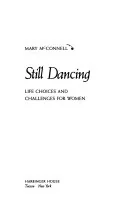
Still Dancing
 74
74

Still Dancing
Mary McConnell’s *Still Dancing*, a 1990 publication, offers a quiet yet persistent challenge to how we perceive our existence. The strength of the book lies in its subtle, almost conversational tone, which avoids the heavy-handedness found in much esoteric writing. McConnell’s exploration of "attunement" is particularly compelling; she frames it not as a mystical achievement but as a fundamental, often overlooked, mode of engagement with the world. A point of limitation, however, is the book’s brevity. Certain concepts, like the "energetic residue" left by past events, feel ripe for deeper elaboration, but are often touched upon and then moved past. The passage discussing the "inner landscape" as a direct analogue to our external environment provides a potent example of the book’s suggestive power. *Still Dancing* offers a refreshing, introspective perspective on consciousness and reality.
📝 Description
74
Mary McConnell's 1990 book *Still Dancing* questions how consciousness interacts with the material world.
Mary McConnell's *Still Dancing*, published in 1990, offers a contemplative look at consciousness and the material world. The book avoids rigid doctrines, instead presenting observations that encourage readers to reconsider familiar ideas from fresh viewpoints. It speaks to those seeking understandings beyond conventional explanations of reality. Readers interested in philosophical thought, contemplative practices, and subjective experience will find this text engaging. It challenges assumptions and prompts personal insight.
The work proposes 'attunement' as a main way of interacting with existence, suggesting perception is an active alignment of internal states with external events. It also discusses 'energetic residue,' the subtle marks left by occurrences and emotions, and their present impact. The book examines how 'inner landscapes' directly relate to the perceived external world. This approach moves away from more common trends in esoteric literature of the time.
Published in 1990, *Still Dancing* appeared during a time of renewed interest in esoteric traditions and New Age philosophies. Unlike many popular works of that period that focused on channeling or specific occult rituals, McConnell's book took a more introspective and philosophical stance. It distinguished itself from more dogmatic or commercial spiritual materials prevalent then, favoring a personal approach to understanding subtle energies and perception.
💡 Why Read This Book?
• Gain a nuanced understanding of "attunement" as presented in the 1990 publication, learning how to actively align your inner state with external phenomena beyond conventional perception. • Explore the concept of "energetic residue" as described by McConnell, understanding how subtle imprints from past events can influence your present experiences and perceptions. • Discover the relationship between "inner landscapes" and the external world, as detailed in the book, to re-evaluate how your internal state shapes your perceived reality.
⭐ Reader Reviews
Honest opinions from readers who have explored this book.
❓ Frequently Asked Questions
What is the central philosophy behind Mary McConnell's *Still Dancing*?
The book centers on the idea of "attunement" as a primary mode of interacting with reality, suggesting that our perception is an active alignment rather than passive reception. It explores how inner states shape external experience.
When was *Still Dancing* first published and what was the context?
First published in 1990, *Still Dancing* emerged during a period of rising interest in New Age thought. It offered a more introspective and philosophical take compared to other esoteric works of the era.
Does *Still Dancing* offer practical exercises for readers?
While not a manual of step-by-step exercises, the book encourages contemplation and reflection on concepts like "attunement" and "inner landscapes," prompting readers to apply these ideas to their own lives.
What is the concept of "energetic residue" in *Still Dancing*?
McConnell uses "energetic residue" to describe the subtle imprint left by emotions and events. The book suggests that understanding and acknowledging this residue can offer insight into present circumstances.
Is *Still Dancing* suitable for beginners in esoteric studies?
Yes, its reflective and non-dogmatic approach makes it accessible for beginners. Readers new to esoteric concepts will find its exploration of consciousness and perception to be an inviting entry point.
What makes *Still Dancing* different from other esoteric books published around 1990?
Unlike many contemporary works focused on specific practices or channeling, *Still Dancing* emphasizes philosophical introspection and a nuanced examination of subjective experience, particularly the concept of "attunement."
🔮 Key Themes & Symbolism
The Nature of Attunement
McConnell posits "attunement" as a fundamental principle of existence, suggesting that consciousness actively aligns itself with the world rather than passively observing it. This concept moves beyond mere sympathetic vibration, implying a conscious choice or tendency to resonate with specific frequencies of reality. The book explores how this attunement shapes our experiences, from mundane interactions to profound realizations. It challenges the reader to recognize their own role in co-creating their perceived environment through deliberate or unconscious alignment.
Energetic Residue and Memory
The book introduces the idea of "energetic residue," the subtle imprint left behind by significant events, emotions, or presences. This residue is not merely a psychological echo but an energetic phenomenon that can influence a space or an individual. McConnell suggests that understanding this residue allows for a deeper comprehension of place-based energies and personal histories. It implies that environments carry a form of subtle memory that can be perceived and interacted with, offering insights into past occurrences and their lingering effects.
The Inner Landscape
A core theme is the direct correlation between one's "inner landscape" and the external world. McConnell argues that the perceived reality is a projection or manifestation of our internal state. This is not presented as a simplistic affirmation technique, but as a fundamental principle of consciousness. The book encourages an exploration of one's internal terrain – thoughts, emotions, beliefs – as the primary source for understanding and influencing external circumstances, suggesting a profound interconnectedness between the subjective and objective realms.
Consciousness and Perception
McConnell probes the mechanisms of consciousness and perception, questioning the assumption of an objective, external reality independent of the observer. The work suggests that perception is an active, creative process, deeply intertwined with the nature of consciousness itself. It explores how our habitual ways of thinking and feeling create filters through which we experience the world. The book invites a re-examination of what it means to be conscious, highlighting its role in shaping not just our understanding, but the very fabric of our experienced reality.
💬 Memorable Quotes
Direct passages from the work, attributed to the author.
“Spaces retain a subtle memory, an energetic residue of what transpired within them.”
— This concept points to the idea that locations can hold energetic imprints from past events or emotions. It suggests that these residues can be sensed and understood, offering a unique perspective on the history and atmosphere of a place.
“Attunement is less about effort and more about receptivity to the existing resonances.”
— This interpretation emphasizes McConnell's view of 'attunement' not as a strenuous achievement but as a natural capacity for alignment. It suggests that by becoming more receptive, we can naturally connect with the subtle energies and frequencies around us.
“To understand the outer, one must first explore the contours of the inner landscape.”
— This idea emphasizes the introspective approach advocated in the book. It posits that genuine understanding of the external world begins with a thorough exploration and comprehension of one's own internal psychological and energetic terrain.
💡 Key Ideas
Editorial paraphrase of the work's core concepts — not direct quotes.
The world we perceive is not a fixed stage, but a responsive echo of our inner state.
This paraphrased concept highlights McConnell's view that external reality is deeply influenced by our internal consciousness. It suggests an active, participatory relationship between the observer and the observed, challenging the notion of a purely objective world.
Our habitual filters of thought and emotion shape the very light by which we see.
This paraphrased concept underscores the role of internal biases and patterns in shaping perception. It suggests that our mental and emotional frameworks act as lenses, influencing how we interpret and experience the external world.
🌙 Esoteric Significance
Tradition
While not strictly aligned with a single esoteric lineage, *Still Dancing* draws from and synthesizes elements reminiscent of Hermetic philosophy's emphasis on correspondence between the microcosm and macrocosm, and certain Gnostic ideas concerning perception and reality. It departs from rigid dogma, offering a more fluid and personal exploration of consciousness. The work fits within the broader Western Esoteric Tradition by focusing on subjective experience and the subtle energies that underpin manifest reality, encouraging direct inner exploration rather than adherence to external authority.
Symbolism
The book implicitly uses the concept of the "inner landscape" as a potent symbol for the subjective area of consciousness, mirroring the external world. "Attunement" functions symbolically as a bridge, representing the active resonance and alignment between this inner landscape and the outer environment. "Energetic residue" can be seen as a symbol for the lingering imprints of past experiences or emotions, suggesting that time and events leave subtle, perceptible traces within the fabric of existence and space.
Modern Relevance
Contemporary thinkers and practitioners in fields like consciousness studies, contemplative psychology, and subtle energy work echo McConnell's themes. Her ideas on "attunement" and the influence of "inner landscapes" resonate with modern mindfulness practices and the growing interest in the mind-body connection. Concepts similar to "energetic residue" can be found in discussions of psychogeography and place-based consciousness, indicating the enduring relevance of her 1990 observations for those exploring the subtle dimensions of reality today.
👥 Who Should Read This Book
• Individuals interested in philosophical explorations of consciousness and reality who appreciate introspective rather than prescriptive texts. • Readers drawn to concepts of subtle energies and subjective experience, seeking to understand how internal states might influence external perception. • Those who enjoy reflective writing that encourages contemplation on the nature of perception, memory, and the interconnectedness of all things.
📜 Historical Context
Published in 1990, Mary McConnell’s *Still Dancing* emerged during a period of significant interest in esoteric and New Age philosophies, following the spiritual explorations of the 1970s and 80s. While many contemporary authors focused on channeling or specific occult practices, McConnell’s work offered a more introspective and philosophical contribution. It eschewed the often dogmatic pronouncements found in some popular spiritual literature of the era. The book’s gentle, reflective approach stood in contrast to the more assertive claims made by figures like Shirley MacLaine, who was popularizing concepts of past lives and reincarnation around the same time. *Still Dancing* contributed to a quieter, more contemplative strand within the broader esoteric discourse, appealing to those seeking a nuanced understanding of consciousness and reality.
📔 Journal Prompts
Reflect on your current "inner landscape" and its potential correlation with your immediate surroundings.
Consider the "energetic residue" you might perceive in a place you frequent.
How does your practice of "attunement" manifest in daily interactions?
Analyze the "filters of thought and emotion" that shape your perception of a specific event.
Explore the "responsive echo" your external world seems to offer based on your internal state.
🗂️ Glossary
Attunement
The process or state of aligning one's inner consciousness or energetic state with external phenomena or specific frequencies of reality, moving beyond passive observation to active resonance.
Energetic Residue
The subtle, lingering imprint or energetic impression left behind by significant events, emotions, or presences within a physical space or on an individual.
Inner Landscape
The internal area of consciousness, encompassing thoughts, emotions, beliefs, memories, and subjective experiences, viewed as a dynamic and influential aspect of reality.
Filters of Thought and Emotion
Habitual patterns of thinking and feeling that act as lenses, shaping how an individual perceives, interprets, and experiences the external world.
Responsive Echo
The idea that the external world reflects or responds to the internal state of the observer, suggesting a dynamic interplay between consciousness and manifestation.
Perception
The process by which sensory information is organized, identified, and understood; in the context of the book, it is presented as an active, consciousness-driven phenomenon.
Resonances
The inherent vibrations or frequencies within reality to which consciousness can align or become receptive, forming the basis of attunement.
This book appears in 1 collection
🔮 Readers Also Liked
Browse all →







From the “Affirmations” Collection
View all →








More Free Occult Philosophy Books
View all →